Booking abandonment video: three recovery paths for hotels
The 81.7% sits on every hotelier's dashboard like a quiet accusation. That's the share of travelers who arrive at a direct booking engine, lean into the process, and walk away without reserving a…
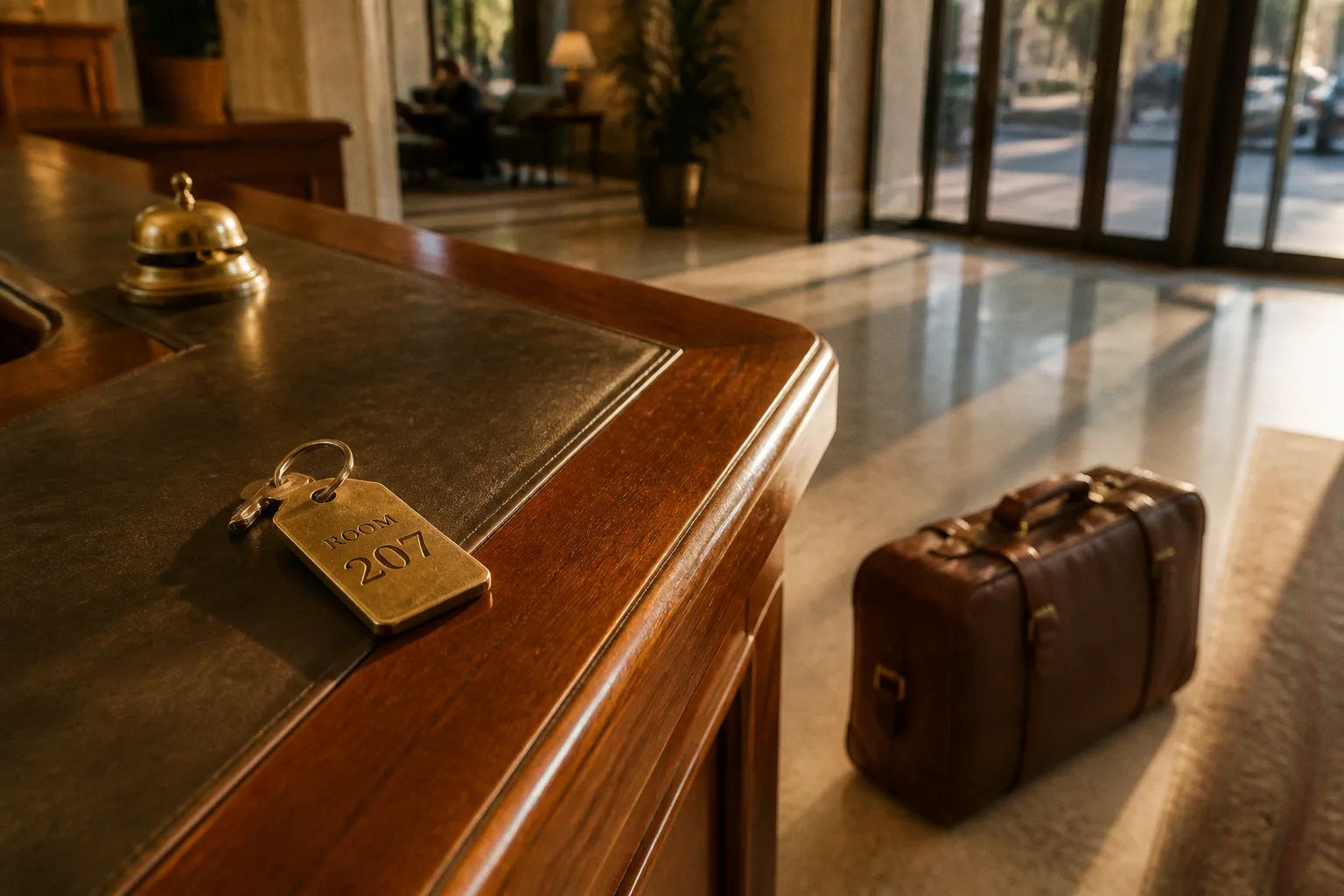
The 81.7% sits on every hotelier's dashboard like a quiet accusation. That's the share of travelers who arrive at a direct booking engine, lean into the process, and walk away without reserving a room — and within hospitality, the range stretches even higher, with 70% to 80% of visitors leaving before they confirm. I have watched this number do its slow, expensive work across boutique properties, beach resorts, and urban independents for the better part of a decade, and what I keep returning to is this: the moment a guest drifts away from your site, they aren't lost to you — they're lost to context. They've forgotten the feeling of the lobby, the linen, the terrace at golden hour, the way the concierge remembered a name at check-in. Your job, in that fragile window, is to give the context back.
Compare car rental deals in United Kingdom
See available offersPartner link — DiscoverCars comparisonThis is where video quietly outperforms every static workaround an operations team has tried. Below, I want to walk you through the three recovery paths I deploy with my hospitality clients — on-site exit-intent, email follow-up, and high-intent retargeting — and show you how weaving a visual narrative through each one transforms abandonment from a leak into a second conversation.
The 81% Problem: Why Static Recovery Fails to Convert
Most hotels I audit are running some form of recovery — and most are recovering far less than they think they are. An email-only strategy, which is the industry default, typically recaptures 15% to 18% of abandoned bookings. That's a real number, but it's a thin slice of a much larger pie, and the reason isn't effort; it's alignment. A plain-text reminder lands in a guest's inbox looking like every other transactional email in their day, and the booking engine's polite "you left something behind" carries none of the texture that made the guest consider the property in the first place.
When a guest hesitates on a booking page, the friction is rarely about price. It's about confidence — confidence that the room matches the photograph, that the neighborhood is what they imagined, that the experience justifies the commitment. Static imagery, particularly the well-lit but compositionally flat photos that populate most booking flows, has already done its work once. Repeating it in a recovery touchpoint doesn't deepen the impression; it just confirms the hesitation.
The recovery moment isn't a transactional reminder — it's the second impression your property gets to make.
Video works in recovery because it restores what made the original visit feel alive — the sense of place, the human warmth, the rhythm of the property. It doesn't need to be a 60-second cinematic piece. A 12-second walk through the suite, the soft thud of a door closing on a quiet courtyard, a host speaking directly to camera about the morning at the breakfast table — these are the textures that close the gap between hesitation and commitment.
Exit-Intent Video Popups: Capturing Guests Before They Leave
The first recovery path lives on your own property — the moment a visitor's cursor drifts toward the browser tab or back button. Exit-intent technology has been around long enough to feel routine, and a well-tuned static campaign can already recover 10% to 15% of abandoning users, with top performers clearing 26% and beyond. The reason it works is timing: you're catching the guest at the exact hinge point where doubt and curiosity meet.
Where the format starts to underperform is when the offer itself is generic. "Wait — 10% off your stay" treats every hesitation the same. A guest leaving because they're comparison-shopping needs a different nudge than a guest leaving because they couldn't tell whether the suite they wanted had a sea view. Video in this slot does something a discount can't — it lets the guest re-enter the property emotionally before they leave it.
In practice, I have clients map their exit-intent triggers to specific hesitation patterns. If the mouse hovers near the close button on the room page, a 15-second video of the actual suite — unedited, no voiceover, just the room waking up — plays in a small, tasteful corner module. If the visitor lingers on the rates page, a short interview with the general manager, or a brief kitchen vignette, plays instead. The result is a recovery asset that behaves like a host, not a banner ad.
A practical note: keep the player muted by default with a clear opt-in to sound, and design the module so it can be dismissed in one click. The goal isn't to ambush the guest — it's to interrupt the exit with enough context to restart the decision.
| Recovery Path | Best Trigger | Asset Length | Core Strength | Watch Out For |
|---|---|---|---|---|
| Exit-intent video popup | Cursor leaves viewport / scrolls up fast | 10–20 seconds | Catches the highest-intent abandoners in real time | Aggressive placement erodes trust — keep the design editorial, not interruptive |
| Video email sequence | Booking form abandoned | 20–60 seconds | Re-engages during the longer decision window | Static thumbnail kills open rate — the thumbnail matters more than the length |
| Video retargeting ads | Past-site visitor, 7–21 day window | 6–15 seconds | Reaches guests still weighing options across multiple tabs | Frequency cap carefully — over-exposure burns the budget |
Video-Enhanced Email Sequences: Beyond the Standard Follow-Up
The second path is the most underutilized, and the data backs that up. A standard three-email recovery cadence — first within 20 to 30 minutes, second within one to two days, third within two to four days — is the architecture most hospitality brands adopt, and it works. Adding the second and third email to a drip can double the overall conversion rate, and purchases made through these sequences historically post a 14.2% higher average order value than standard bookings, because the guests who return are more deliberate.
What most teams miss is that the medium of the email hasn't changed in years. Plain text, a single hero image, a "complete your booking" button. The hospitality email open rate averages around 36%, which sounds respectable until you compare it to WhatsApp, where open rates run 71% to 93% — a channel where video is native, where a 20-second walk-through arrives feeling like a message rather than marketing. Even within email, an embedded video thumbnail doesn't just lift engagement; it changes the texture of the message itself, shifting the read from notification to invitation.
I encourage my clients to think of the recovery sequence as a slow re-introduction rather than a reminder chain. The first email arrives within half an hour and stays light — a thank you for considering us, a quiet confirmation that the room is still available, with a small video preview of the suite as the visual anchor. The second email, sent a day or two later, shifts the framing: a guest testimonial recorded on property, a chef describing the breakfast, a quick pan across the spa. The third email, arriving in the third to fourth day window, is where you can offer something other than a discount — a room upgrade subject to availability, a late checkout, a welcome amenity. Discounting too early trains guests to expect a lower number on every future visit; the goal here is to recover with margin intact, and value-adds protect that margin while still moving the guest forward.
A recovery email should feel like a note from the front desk — not a notification from the booking engine.
High-Intent Retargeting: Using Video to Close the 21-Day Decision Cycle
The third path is where the longer arc of hospitality decision-making lives. The typical tourist doesn't book impulsively. The decision cycle runs from 7 to 21 days, sometimes longer for higher-value stays, and during that window the guest is comparing three to six properties, asking friends, checking flights, returning to the original site at odd hours. Static retargeting banners catch the eye, and they perform adequately — but video retargeting ads convert at roughly 2 to 3 times the rate of cold-audience campaigns because they speak to a guest who has already raised a hand.
The trick, in my experience, is sequencing the creative across the window rather than running one spot on repeat. In the first week after abandonment, I run a property-led piece — a 10-second walk through the suite, the lobby, the view from the terrace. In the second week, I shift to social proof: a guest speaking to camera about their stay, a staff moment, a quick taste of the breakfast service. By the third week, the creative tightens around the booking action itself — a soft call to return, a direct invitation, often with a date-specific anchor ("weekends in October are filling quickly") that creates gentle urgency without leaning on price.
Platform mechanics matter here. YouTube, Meta Reels, and programmatic display all reward different aspect ratios and pacing, and a hotel that runs the same vertical hero asset across all three is leaving performance on the table. I work with my clients to build a small library — three to five cuts of the same property, each shaped for its destination — so the campaign can rotate without becoming wallpaper.
A practical caution: cap frequency aggressively. A guest who sees the same hotel video six times in three days stops feeling welcomed and starts feeling surveilled. The recovery is in the texture of the impression, not the volume of impressions.
Optimizing the Booking Path: Reducing Friction to Support Video Recovery
None of these three paths perform well if the booking engine itself is the bottleneck. A recovery video that successfully returns a hesitant guest to a friction-heavy form simply restarts the abandonment cycle — and that guest, having been chased once, is unlikely to forgive the same obstacle twice.
The two benchmarks I hold my clients to are simple. The booking form should contain fewer than eight total fields — name, email, phone, payment, and the essentials — and the entire mobile booking flow should resolve in under two minutes. Everything else is a candidate for a later step or a deletion. Address fields beyond country, special-request boxes that don't influence fulfillment, account-creation requirements — these all add seconds that compound into exits, and they do so silently, because the analytics team is usually looking at the wrong funnel.
This is also where alignment between the recovery asset and the destination page matters most. A guest who clicks through from a video email expecting the suite they just watched should land on the suite they just watched, with the rate they were quoted, with the dates they selected already populated. Discontinuity at this step is the most expensive mistake I see in hospitality booking flows — the recovery worked, the guest returned, and the site failed to remember why they came.
The deeper principle is that the booking path and the recovery system are not separate projects. They are one continuous guest journey, and every break in that journey — a form field that didn't need to exist, a video that doesn't match the room type, a popup that fires on the confirmation page — is a small vote against the property. When the path is clean and the recovery is textured, the 81.7% starts to soften. Not to zero — never to zero — but to a number your revenue team can plan around, and a guest experience that feels considered rather than transactional.
The honest truth about booking abandonment is that the 81.7% is not a problem to be solved — it is a guest journey to be honored. Most of those abandoners weren't rejecting your property; they were paused. Video, in its best form, is the connective tissue that lets you re-enter that pause with context, with the sense of place your static pages can't quite carry, with the small human signals that say we noticed you, and we'd like to host you. Across exit-intent, email, and retargeting, the path is the same: meet the hesitation with texture, meet the click with continuity, and treat the second impression with the same care you gave the first. That's where the recovered bookings live — and where the brand quietly compounds.