Why Hospitality Brands Must Adopt TV-Grade Production for Their Video Marketing
According to Big News Network, branded content production values are climbing across the corporate sector — a change that directly affects how hotels and short-stay operators should budget for…
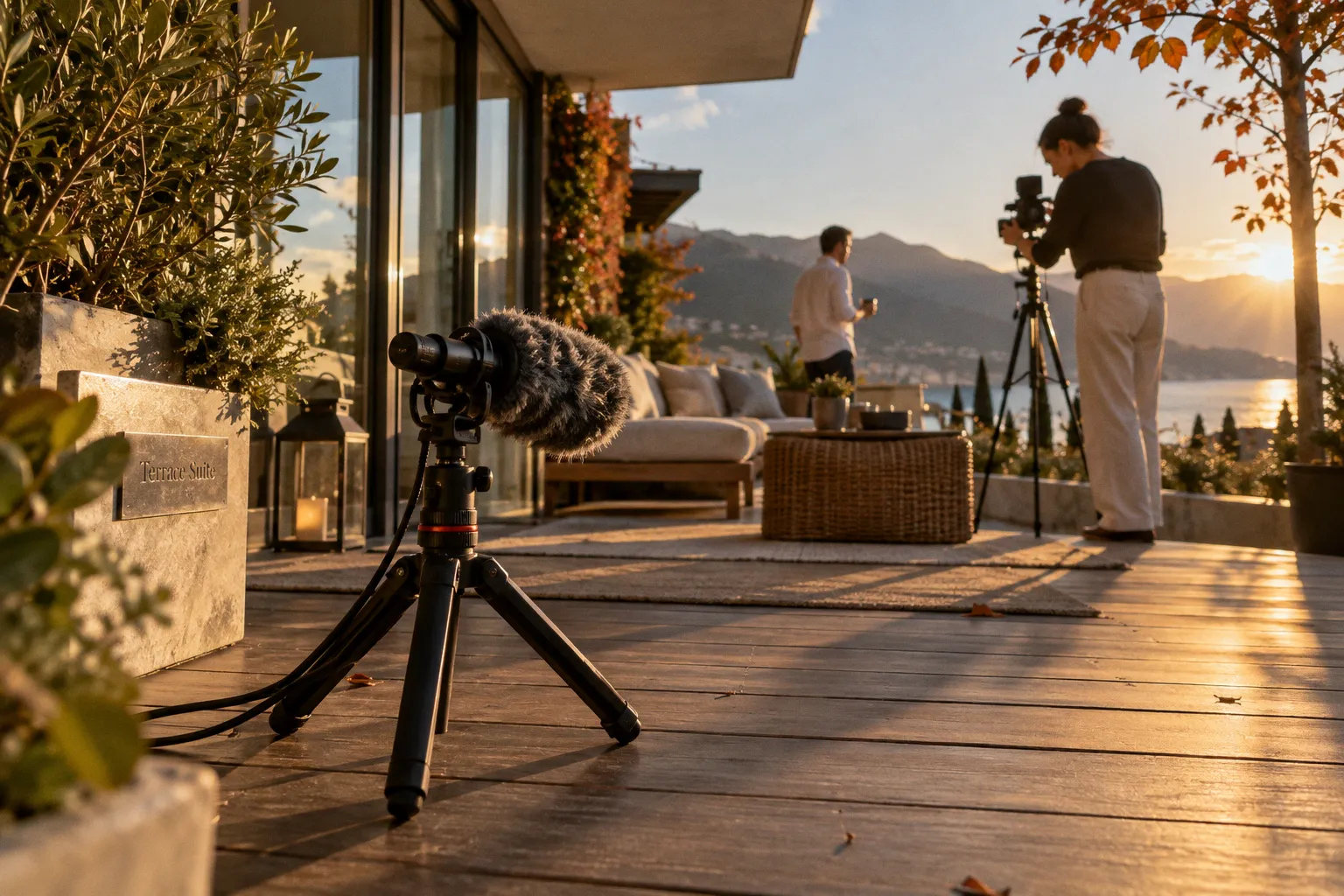
Corporate video is migrating toward TV-grade production standards, and the shift is now hitting hospitality marketing budgets that have long under-weighted motion content. According to Big News Network, branded content production values are climbing across the corporate sector — a change that directly affects how hotels and short-stay operators should budget for trust-building video on booking pages.
Why the production bar moved up
The coverage frames this as a structural shift: viewers no longer separate "ad" from "show." That collapse narrows the tolerance for low-fi lighting, flat audio, and weak pacing on a property detail page. Search Engine Land maps the SEO-side payoff in a separate piece, noting that YouTube increasingly functions as a ranking surface rather than a passive embed. Production quality now feeds both conversion rate and organic visibility — two metrics hospitality marketers track weekly.
Timeline compression matters more than the price tag
AnyMind Group documents a case where AI-assisted content creation cut EtoeyEjan's production time by more than 50%. The number is the headline. If a boutique hotel or apartment operator can halve shoot-and-edit cycles, the unit economics of refreshing room, suite, and amenity footage on a quarterly cadence start to work — without the six-figure overhead that previously priced motion content out of independent properties.
Supply is widening
ANI News reports Surat-based Cinesta expanding multi-format video production across corporate, retail, and public-sector markets. The signal for hospitality operators: supply is broadening. That should compress vendor pricing over the next two quarters and lower the barrier to commissioning property-grade footage from regional vendors who previously only serviced enterprise accounts.
What to measure on the booking page
Three numbers, tracked weekly:
- Thumb-stop ratio on the first-frame hero still. Below 40% scroll-past at the room-detail stage means production bar hasn't been met.
- Time-to-trust signal in the opening five seconds of the property video. Room scale, light direction, and bed configuration must register before narration starts.
- Drop-off at the CTA frame. A spike between the final beauty shot and the booking button is a pacing failure, not a pricing failure.
Operational checklist
- Audit current hero video against TV-grade reference frames. Hard compare, not vibe.
- Test a 6-second vertical cut for mobile booking funnels.
- Split-test AI-assisted edit timelines against manual edits on the same property shoot. Track output quality alongside speed.
- Renegotiate per-asset pricing now that regional supply is expanding into hospitality verticals.