Adapting Hotel Visual Strategy for the Era of AI-Driven Search and Agentic Booking
According to PhocusWire, travel and hotel marketing leaders gathered in London last week to grapple with a shift that's been quietly rewiring how guests discover properties—generative AI and…
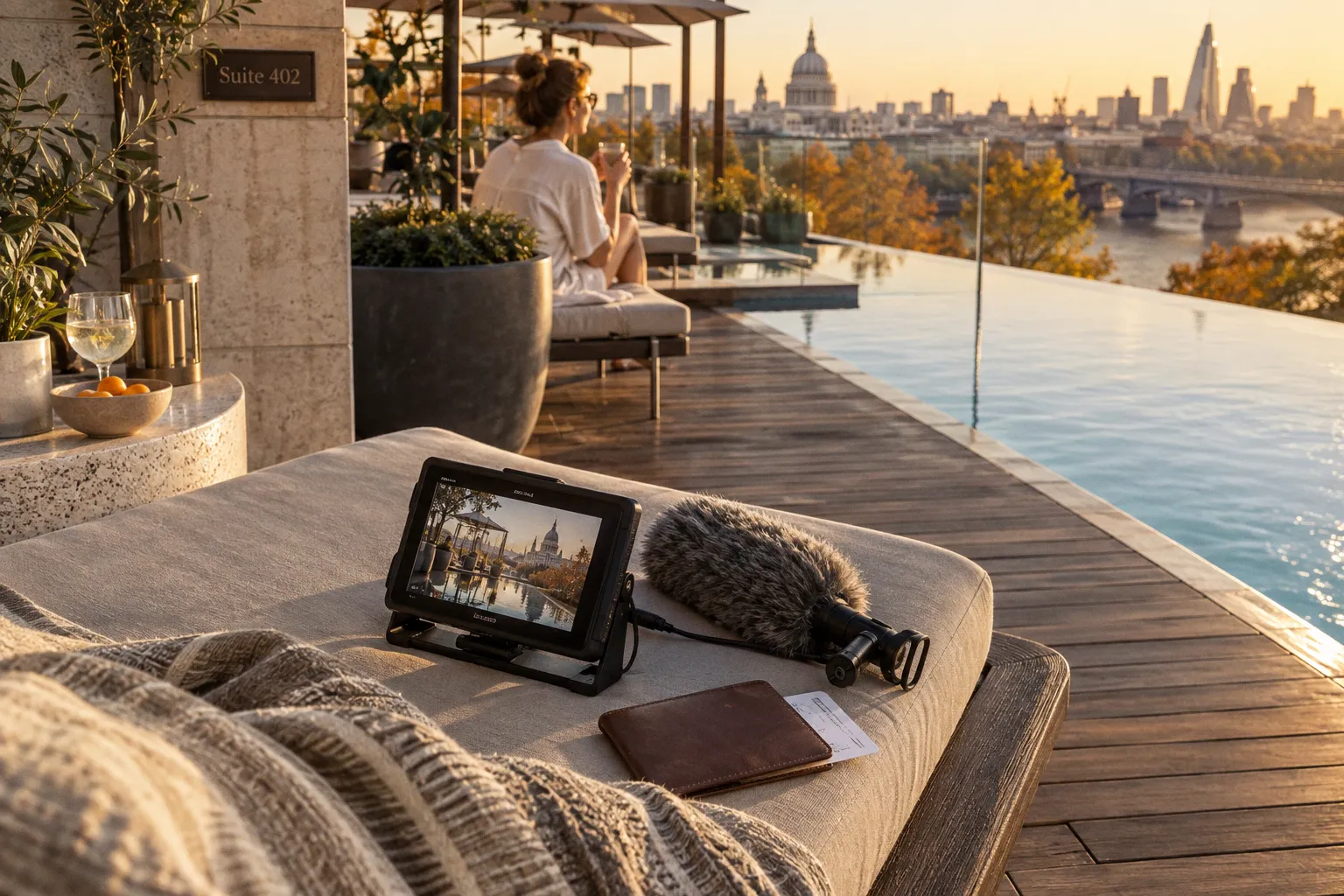
According to PhocusWire, travel and hotel marketing leaders gathered in London last week to grapple with a shift that's been quietly rewiring how guests discover properties—generative AI and automated agentic booking engines are now mediating the first conversation a traveller has with your brand. The concern, as reported from the meeting, wasn't theoretical: if conversational search is the new front door, hoteliers need their content to speak fluently to machines, not just humans. For anyone investing in architectural photography, spatial styling, and the kind of visual narrative that converts browsers into bookers, that brief just got heavier.
The new search reality for visual brands
Speakers at the London gathering emphasised a pivot in content strategy—brands have to retain presence inside AI interfaces, not just rank on traditional SERPs. I've been watching this from the consulting side, and here's what I'm seeing with clients: a single hero shot of a lobby is no longer enough. Generative engines pull, reframe, and re-contextualise imagery based on what a traveller asks—show me a quiet suite with a sea view, find me a boutique hotel near the old town—and your visual library needs to answer those prompts with confidence.
What that looks like in practice: consistent alt-text that reads like a guest's own description, captions anchored to sensory texture (the weight of linen, the grain of reclaimed timber, the quality of morning light through a courtyard), and image metadata that maps to the way people actually talk about stays. If your property photography was built to win a homepage banner, it may struggle in this new conversation where the curator is a machine.
The direct-booking squeeze
The AI shift isn't happening in a vacuum. As Hospitality Net reported, Google has rolled out new search layout updates in Europe to comply with the EU Digital Markets Act, and the effect is unmistakable—comparison sites and OTAs are now getting more prominent placement than direct hotel booking links. For hotels that have spent the last decade carefully building direct funnels, that's a meaningful disruption to the guest journey at its most vulnerable point. The marketers I work with are already rethinking acquisition spend, and visual content is being repositioned not just as inspiration but as the carrier of trust signals that persuade a traveller to bypass intermediaries entirely.
What to track next
Two things I'd put on your watchlist this quarter. First, audit how your property surfaces when you ask an AI assistant—something like "find me a design-led boutique hotel in Lisbon with a rooftop." If your name doesn't appear, or appears with a stale or mismatched thumbnail, that's the new visibility check worth running. Second, the industry education pipeline is shifting: per Accessible Hospitality, HOSPA has acquired the National Hotel Marketing Conference from The Tourism Business, and the move is explicitly aimed at addressing evolving digital innovation and guest behaviour trends. Expect more sessions, more case studies, and more practical frameworks on direct conversion strategy landing in the months ahead.
The throughline is simple—visual production has always been about persuading a human to book. Now it's about persuading an algorithm to recommend you to one. Same craft, sharper tools, and a brief that's no longer optional.