Beyond Influencers: How Vertical Drama is Redefining Hospitality Storytelling
As reported by Hollywood Life, a feature on filmmaker Hao Chen examines the shift from influencer marketing to global vertical drama — content built for vertical, scroll-native formats.
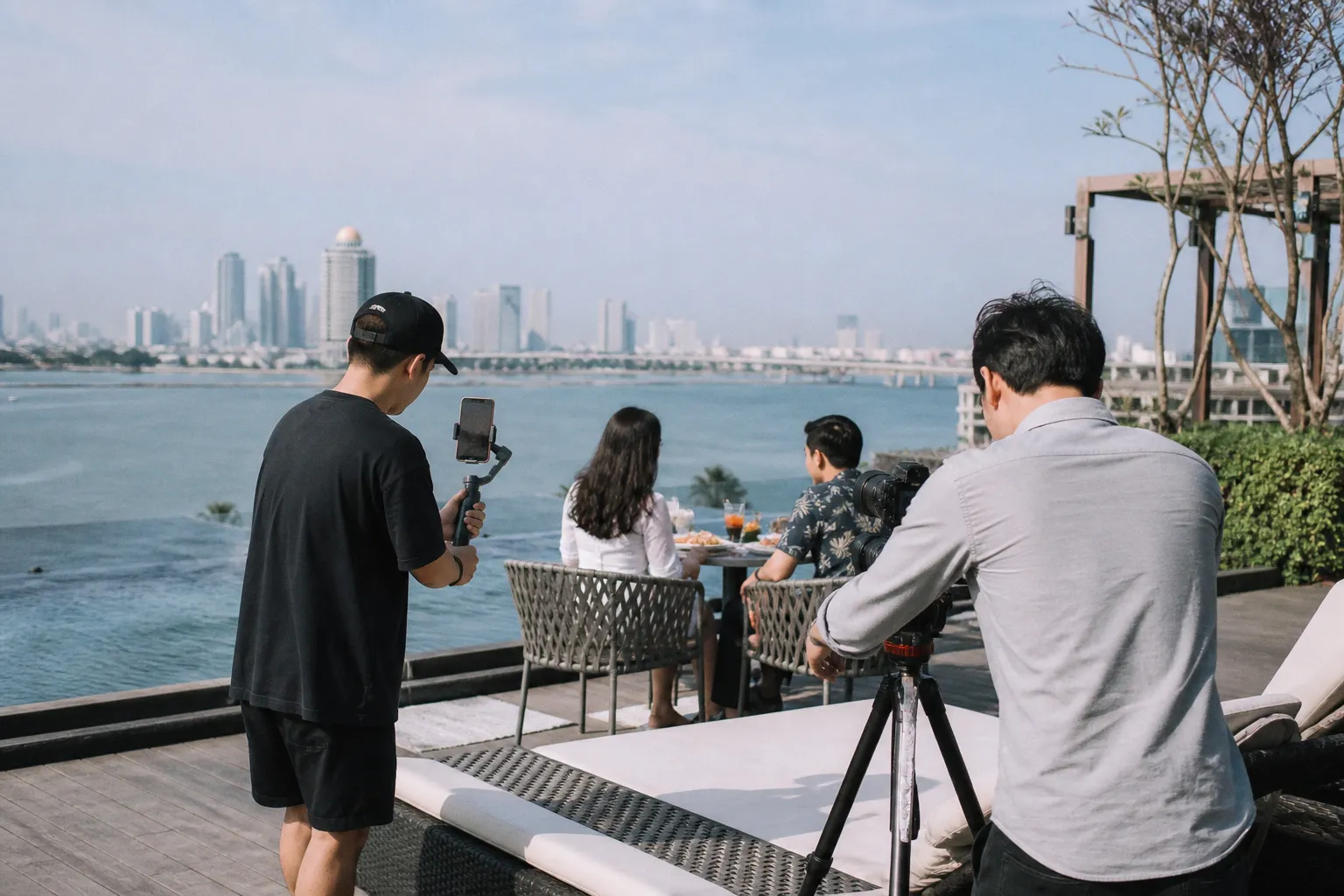
Vertical Video and the Creator Economy: What Hospitality Marketers Should Track
A cluster of recent coverage points in one direction: short-form, mobile-native storytelling is now the default, and influencer marketing is being rebuilt around it. As reported by Hollywood Life, a feature on filmmaker Hao Chen examines the shift from influencer marketing to global vertical drama — content built for vertical, scroll-native formats. Storyboard18's parallel piece on India's influencer evolution and a PwC India forecast covered by Passionate In Marketing both reinforce the same underlying data: vertical, short-form, and AI-assisted content are reshaping how brands reach audiences.
The Data That Matters
The clearest signal comes from Storyboard18's deep-dive on India's creator economy. Several numbers translate directly to any brand planning mobile-first content:
- The share of marketers considering influencer campaigns "effective" rose from 89% in 2018 to broader adoption by 2023–24, with 76% calling the channel essential for brand building.
- Short-form video became the dominant discovery format after Instagram Reels and YouTube Shorts expanded post-TikTok-ban in India. By 2021, influencer marketing spend had risen 40% year-on-year; micro-influencer earnings grew more than 35%; vernacular campaigns grew around 15%.
- Hyperlocal content now dominates. A 2022 study of 1,500+ micro-influencers across 35 cities found 67% of brand language preferences were regional or bilingual.
- Scale has outpaced formal estimates. One report cited in the piece puts actual deployment at over Rs 10,000 crore against a formal estimate near Rs 3,375 crore — a 3x gap between tracked and real spend.
The takeaway is structural. Creator content has moved from media placement to operating layer, connecting commerce, brand, and public communication.
What This Means for Hotel and Real Estate Content
For hospitality brands, the implication is concrete:
- Vertical-first asset planning. Reels, Shorts, and TikTok-native formats are no longer optional testing ground. They are the primary discovery surface for under-35 travel planners. Static carousels will under-deliver.
- Hyperlocal beats generic. The Storyboard18 data shows regional and bilingual creators outperform national creators on cultural proximity. A boutique hotel in Lisbon converts better through a Portuguese-speaking local creator than through a generic travel influencer with broad reach.
- Creator-as-studio, not media buy. Brands still buying "posts and views" are buying the old unit. The 2023–24 finding that 64% of marketers now use creator content to support sales directly — not just awareness — should reset the brief from exposure to funnel outcome.
- AI enters production, not just ideation. The PwC India forecast covered this week projects the E&M industry to USD 36.7 bn by 2030, with AI reshaping creation and monetisation. Practical version for hotels: AI tooling now handles rough cuts, captioning, localisation, and A/B variant generation. The constraint is no longer production cost — it's distribution strategy.
What to Watch — and What's Still Unclear
The Hao Chen coverage, per its headline, frames vertical drama as a global format, not a regional experiment. The specifics of his thesis are not in the available source material. Treat the trend signal as confirmed; treat any specific methodology or case study as not yet verifiable.
Three operational checkpoints for the next quarter:
1. Reallocate at least one production slot from horizontal to vertical, native to Reels/Shorts, with a hook in the first 2 seconds.
2. Test one hyperlocal creator against one national creator in the same market. Measure booking-page conversion, not follower count.
3. Track the AI-content productivity delta — hours saved per delivered asset — before scaling spend on additional creators.
Coverage from Influencer Marketing Hub on the 11 best content creation platforms in 2026 will surface specific tooling comparisons; cross-reference that against your current stack before committing.
The format shift is documented. The execution gap is where most hospitality brands will lose or gain ground this year.