SonicOrigin Is Embedding Creator Rights Into Digital Content To Govern AI Training
According to netinfluencer.com, SonicOrigin is embedding inaudible-but-durable identifiers inside audio, video, and image files to register ownership, licensing terms, and AI-training preferences — a…
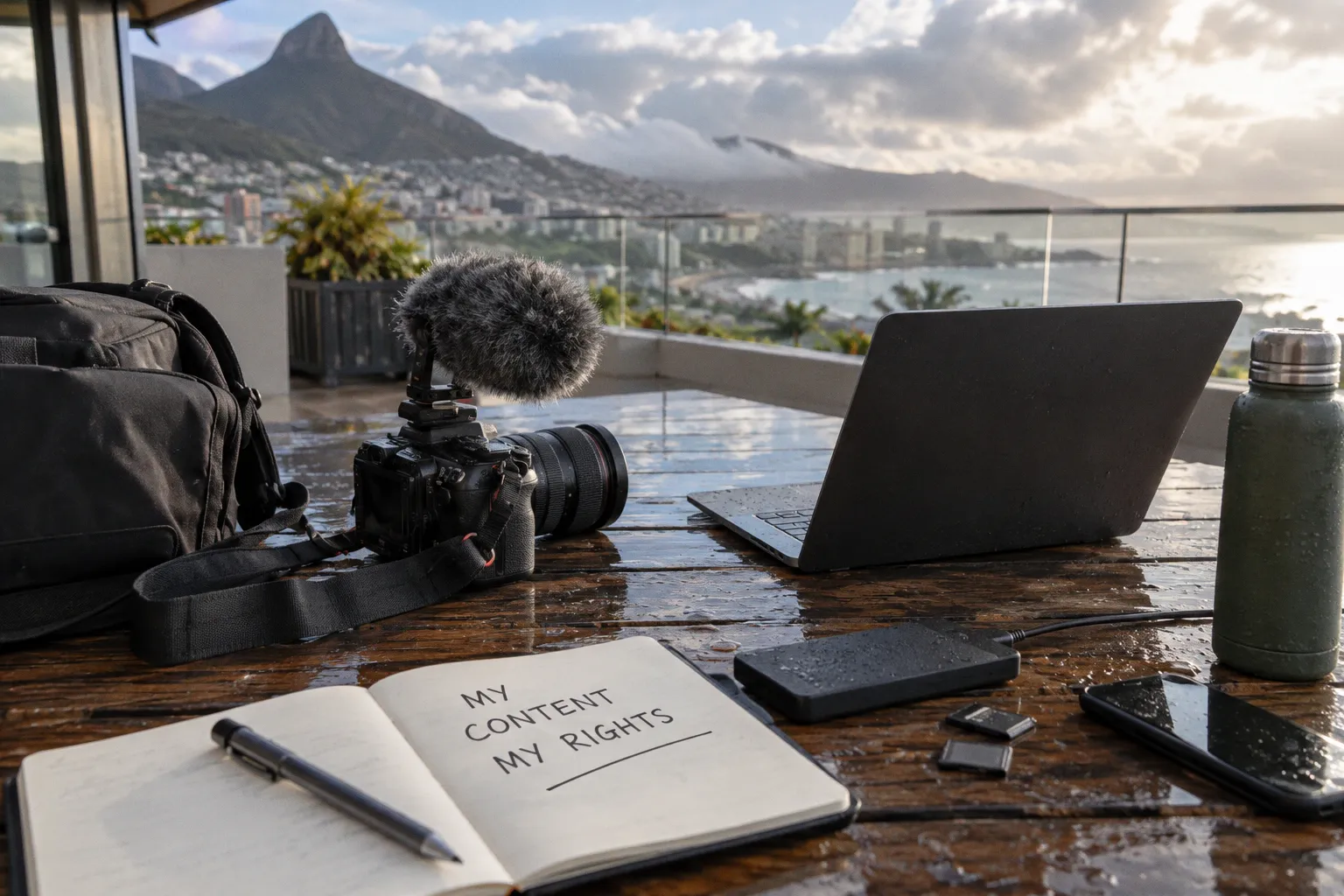
According to netinfluencer.com, SonicOrigin is embedding inaudible-but-durable identifiers inside audio, video, and image files to register ownership, licensing terms, and AI-training preferences — a provenance layer the company says survives MP3 compression, re-encoding, clipping, and stem separation. For hotels and real estate brands running their own architectural photo and video pipelines, the announcement lands inside a market where 90% of creators already report using AI automation to scale output, per Adobe's 2026 Creators' Toolkit Report.
Provenance as production infrastructure
The West Hollywood company, founded in 2017, embeds a structural signal in the audible range — imperceptible to listeners by the company's claims, resistant to standard edit workflows by design. Per CEO Marc Gray, "It doesn't matter if you take a 1.5-second clip; it doesn't matter if you speed it up, slow it down. If you separate it into stems, you will never lose it." The identifier connects to a registry capturing rights data and an AI-training opt-in flag, deployed via API inside the client's existing ecosystem, with Marc describing implementation for rights holders as a single action that requires no change to production workflow.
Earlier audio watermarks failed for two documented reasons. Signals placed in the inaudible frequency range were stripped when streaming platforms compressed files to MP3. Signals placed in the audible range survived compression but introduced perceptible artifacts on finished commercial masters, disqualifying them for rights holders unwilling to accept compromised audio. SonicOrigin's approach relocates the signal inside the audible range at a level the company describes as below detection thresholds while remaining structurally durable across re-encoding.
Current clients are major studios, record labels, and advertisers. Independent creator access is positioned as the next phase, with a partnership through Entertainment Oxygen flagged as an early proof point in independent film workflows. Marc also serves as co-chair of the C2PA Audio Task Force, which works on audio-specific specifications for content provenance, and as a technical advisor to the World Intellectual Property Organization.
Distribution-layer friction
The technical backbone is not the bottleneck. Adoption is. Per Marc Gray, "For anything to be adopted, it needs to change from the top down. If you can't get Meta or Google or TikTok to make those changes, it's dead in the water." For hospitality brands, that maps directly to the platforms where room photography, drone footage, and video tours are amplified — Instagram, YouTube, TikTok, Google Business Profiles. Metadata attached at the source has no enforcement value if the distribution layer ignores it.
Adobe's Premiere Pro and After Effects update — shipping a Generative Media Tool for in-timeline footage and sound generation — confirms that synthetic output is now a default production option inside mainstream editing software, not an experimental edge case. Provenance metadata is the structural counter-move.
Audit checklist
- Registry control. Who owns the lookup database. How AI-training flags are added, updated, revoked.
- Platform compliance. Whether Meta, Google, and TikTok read metadata or treat it as decorative.
- Pre-ingest verification. Provenance checked before third-party assets enter AI training datasets.
- Workflow integration. One-click API embed confirmed inside the hotel or real estate brand's existing CMS and DAM stack.
The forensic question is documented and answered. The commercial question — whether rights metadata changes platform behavior or only documents infringement after the fact — remains open.