Anfield Stadium tickets: booking pitfalls for content creators
At Anfield, a screenshot is not a ticket. General admission entry requires a digital NFC pass stored in Apple Wallet or Google Pay. The pass must be available on the device used at the turnstile.
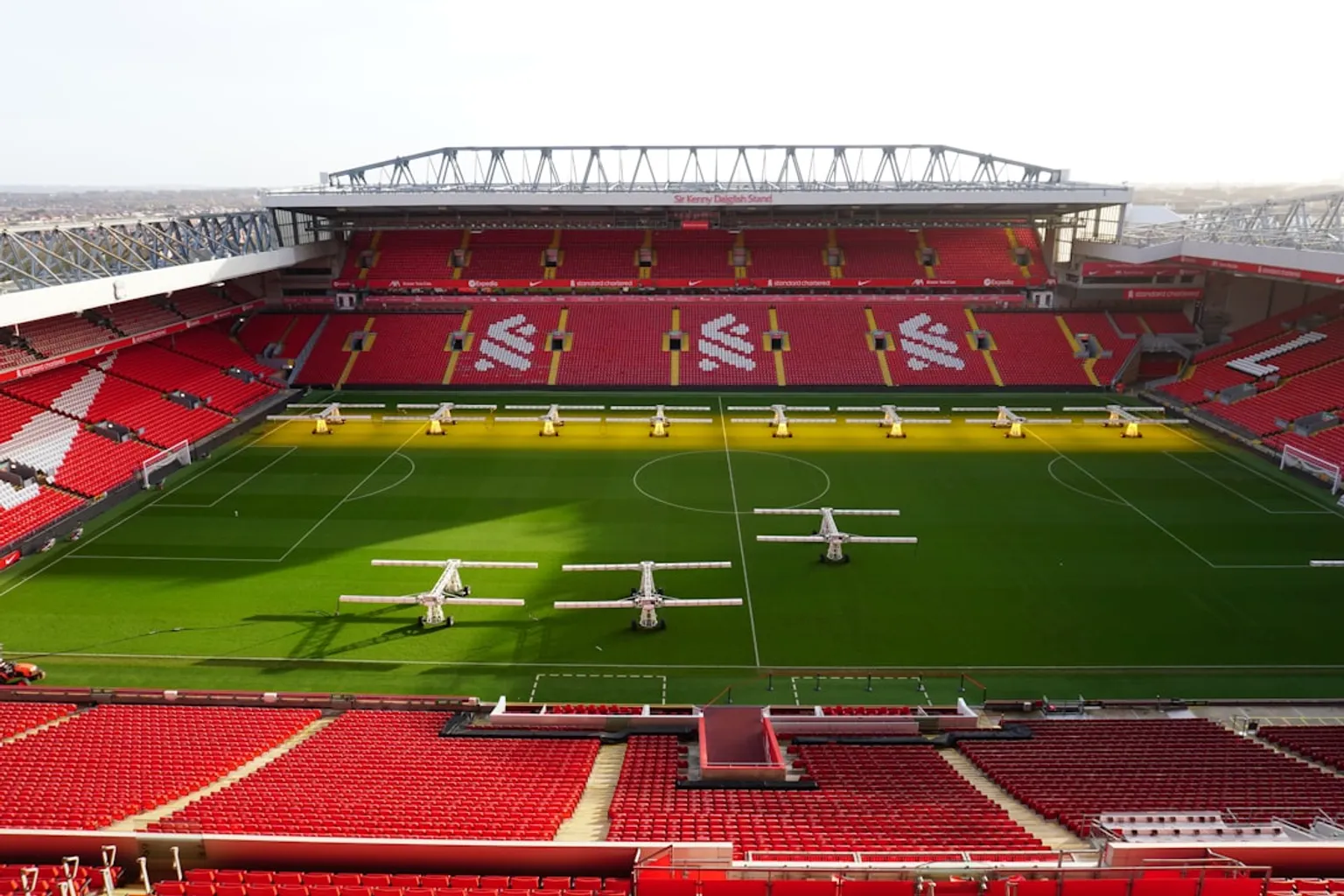
That single requirement invalidates the standard workflow many visitors use when buying event access online: purchase, download PDF, save screenshot, arrive at the stadium. At Liverpool FC, that workflow creates friction at the final conversion point. The booking is complete. The entry is not.
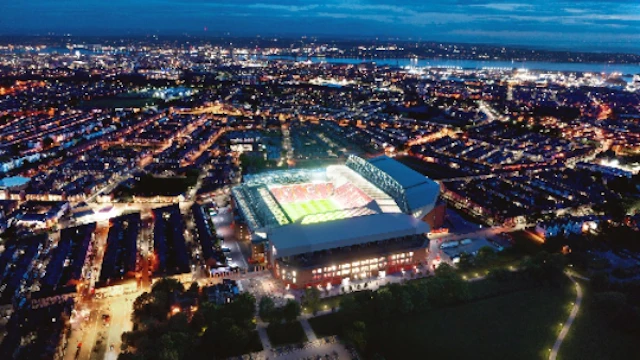 Liverpool
Tickets and prices
Anfield Stadium
Guided tour · 4 hours
fromGBP43.67
Book onlineOfficial ticket · Upper tier
fromGBP45
Book onlineFor content creators, the risk is higher. A matchday visit combines ticket authentication, bag restrictions, camera controls, and strict rules around filming. A booking that looks acceptable in an inbox can fail at the stadium. The content plan then fails with it.
Match tickets and stadium tour tickets are different products
The first technical error is treating every Anfield ticket as the same type of access.
A Premier League match ticket gives access to a specific fixture, seat, and entry process. A stadium tour booking is a scheduled visitor experience. The tour can include areas such as the home team dressing room, players’ tunnel, the pitchside route, The Kop, and the Liverpool FC Story Museum, depending on the selected product and operating conditions.
The booking logic is different:
- Matchday access is tied to a fixture and uses the club’s digital NFC ticketing system.
- Anfield Stadium Tour access is tied to a timed visitor slot or tour product.
- Museum access may be included in a tour package or sold as part of a broader visitor experience.
- Hospitality access can have separate entry instructions, seating arrangements, and package conditions.
- Filming access is not created automatically by purchasing a visitor ticket.
This distinction matters when the goal is content production. A creator may want a stadium interior, branded architecture, crowd footage, and controlled access to restricted areas. Those are separate permissions, not one universal ticket entitlement.
The current visitor market includes several types of Anfield Stadium Tour booking, including combinations with city-tour products. Availability is date-specific. The correct approach is to confirm the product type, visit date, duration, access areas, and ticket delivery method before payment.
Do not infer match access from a tour booking. Do not infer filming permission from either.
A booking confirms the product you purchased. It does not expand your access rights inside the stadium.
What to confirm before buying
Buying Anfield tickets online becomes less risky when the transaction is treated as an access audit rather than a simple purchase.
Check these fields:
- The exact event or tour name.
- Whether the booking is for a match, stadium tour, museum visit, hospitality package, or combined activity.
- The date and local start time.
- The entry point or meeting point.
- The ticket delivery method.
- Whether the ticket is assigned to a named attendee.
- The cancellation and transfer conditions.
- Whether the product is official club inventory or an independently operated experience.
The last point is critical. A city tour that includes an Anfield-related stop is not necessarily the same as an official Liverpool FC stadium tour. The itinerary may be valid while offering no access to the dressing rooms, tunnel, stands, or museum. Product names often compress several services into one line. Read the inclusions.
The digital-only entry barrier
Liverpool FC uses digital NFC passes for match tickets. The pass is stored in Apple Wallet or Google Pay. It is not the same as a PDF attachment, a screenshot, or a printed document.
NFC entry creates a hardware and software dependency. The phone must be charged. The pass must be available. The wallet application must function. The ticket must correspond to the correct holder and access entitlement.
This is not theoretical administration. It is the point where a ticket is validated against the stadium access system.
Before matchday, run a technical check:
1. Open the ticket in the official wallet application.
2. Confirm that the pass displays the correct fixture and seat information.
3. Check that the ticket is assigned to the intended attendee.
4. Make sure the phone has sufficient battery for travel, queues, and entry.
5. Keep mobile data available in case the ticket needs to refresh.
6. Do not rely on a screenshot as a backup entry method.
7. Do not assume a forwarded email creates a valid transferable ticket.
Ticket transfers also have a defined structure. The recipient must be registered with Liverpool FC and added to the ticket holder’s official Friends & Family list before a legal transfer can be completed. Sending a digital image of a ticket does not replicate this process.
For a creator travelling with a team, this introduces an operational issue. One person cannot safely act as the storage point for every access credential. Each attendee should have the correct pass available on the device or account required by the club’s ticketing system. Shared phones and informal forwarding create failure points.
Device failure is an access failure
A content creator may carry multiple batteries for cameras and lights but overlook the phone holding the admission pass. That is the wrong priority sequence.
The phone is not an accessory on matchday. It is part of the ticket.
Use a charged device. Remove unnecessary lock-screen friction. Keep the relevant wallet application accessible. Avoid changing phones immediately before the fixture. If the club provides specific instructions for adding or activating the pass, complete that process before travelling to Anfield.
Do not build a production schedule around a narrow arrival window. Queues, security checks, and turnstile congestion can absorb time. A late arrival also reduces the margin for resolving account or transfer issues.
Buying through unofficial channels creates a separate risk profile
Secondary-market listings often present a clean commercial interface. The underlying ticket chain may not be clean.
Liverpool FC actively combats ticket touting with Merseyside Police. Authorities have detained more than £1.2 million in assets connected with organised ticket touts. The enforcement activity matters because it demonstrates that resale risk is not limited to a seller disappearing after payment.
A ticket can fail for several reasons:
- It may have been sold outside the club’s permitted transfer process.
- It may be linked to a cancelled or invalidated ticket.
- The seller may not control the original ticket entitlement.
- The pass may be duplicated or transferred to the wrong account.
- The listing may describe hospitality access while delivering a different product.
- The ticket may be withdrawn before the fixture.
- The ticket may appear valid online but fail at the turnstile.
The exact rejection rate for third-party tickets is not publicly established. That unknown should not be converted into a reassuring percentage. The practical conclusion is simpler: an unauthorised ticket carries an access risk that the buyer cannot independently eliminate.
For a tourist or production team, the financial impact is only one part of the exposure. A failed ticket can also create:
- Lost filming time.
- Non-refundable transport and accommodation costs.
- Missed access to a scheduled tour.
- A failed publishing calendar.
- Additional pressure on the remaining crew.
- A content gap that cannot be recreated remotely.
This is a conversion problem. The purchase may have converted. The visit has not.
Official membership versus tourist access
Official general admission availability for Liverpool FC home matches is limited. Membership-based access and club-controlled distribution sit at the lower-risk end of the market. Hospitality products provide another route, usually with different inventory and conditions.
The important distinction is not simply price. It is control.
Official routes give the buyer a clearer chain of custody:
| Booking route | Main advantage | Main failure point | Creator suitability |
|---|---|---|---|
| Liverpool FC official ticketing | Direct relationship with the club and controlled digital delivery | Limited availability and account requirements | Strong for legitimate matchday coverage |
| Official hospitality | Structured package with defined access conditions | Package restrictions and separate terms | Useful when access certainty matters more than seat selection |
| Official stadium tour booking | Predictable visitor format and scheduled access | It is not match admission or filming accreditation | Strong for controlled architectural and visitor content |
| Unofficial resale | Possible access when official inventory is unavailable | Ticket invalidation, transfer problems, and seller risk | Weak for time-critical production |
| Informal ticket transfer | May appear convenient between individuals | Recipient may not be registered or authorised | Unsafe unless completed through the official process |
A creator should not select a channel only because it displays availability. Select it because it provides a verifiable admission process.
Camera gear is a second turnstile problem
Anfield allows small compact cameras. Professional cameras and professional recording equipment are prohibited without prior approval.
The difficult part is classification. Public guidance does not establish an exact threshold separating a permitted high-end compact camera from a prohibited professional mirrorless or DSLR setup. Security staff retain operational discretion. There is no reliable basis for telling a creator that a particular body, lens, cage, microphone, or stabiliser will definitely pass.
That uncertainty affects the kit list.
A matchday content setup should be designed around the permitted minimum, not the ideal production package. Large bodies, interchangeable lenses, external recorders, tripods, gimbals, lighting equipment, and rigging hardware increase the chance of refusal. A camera that is technically handheld may still be treated as professional recording equipment when combined with accessories.
The restrictions are not only about camera bodies. Security may assess the complete setup:
- Camera dimensions.
- Lens size.
- Number of devices.
- External audio hardware.
- Stabilisation equipment.
- Bags and cases.
- Whether the equipment looks configured for commercial production.
- Whether the creator has prior permission.
The club’s public rules do not provide a guaranteed equipment matrix. Do not invent one.
Matchday kit: reduce the surface area
For a visitor attending as a fan, the safest content kit is compact and defensible.
A practical setup may include:
- A smartphone for short-form capture.
- A small compact camera, within the stadium’s permitted policy.
- One spare battery or approved power bank if allowed under the current rules.
- Minimal personal items.
- No tripod or large support system.
- No hard production case.
- No equipment that requires a separate explanation at the turnstile.
This is not a recommendation to conceal professional equipment. It is the opposite. If the work requires a professional camera system, treat approval as a precondition. Do not arrive and negotiate.
The same principle applies to audio. A small camera microphone may still attract scrutiny if the overall setup appears designed for commercial recording. A full audio bag, wireless kit, boom pole, or multi-camera arrangement belongs in an approved production plan, not in a general admission queue.
Bag limits are measurable
Anfield allows small handheld bags up to A5 size: 148.5 by 210 millimetres. Bags are subject to a visual search.
That limit is restrictive for creators. A compact shoulder bag may fit. A camera backpack built around a professional body, two lenses, audio equipment, and batteries may not.
Measure the bag. Do not rely on the manufacturer’s category labels such as small, compact, or day bag. Those terms have no operational value at security.
A useful packing test is physical:
- Measure the external dimensions, not the internal compartment.
- Include the bag’s padding and structural panels.
- Remove items that are not required for entry.
- Separate personal essentials from production equipment.
- Assume the bag will be opened for inspection.
- Keep the wallet ticket on the phone, not inside the bag.
The objective is to reduce friction at the security search. Every extra item adds a decision point.
Professional filming requires a different route
A commercial shoot at Anfield cannot be treated as enhanced sightseeing.
Professional media organisations seeking to film at Anfield or other Liverpool FC sites must complete and submit the official LFC filming permission form for approval. The approval process is separate from ticket purchase. It should be started before the creative treatment is finalised, because the permitted locations and equipment can affect the shot list.
A production request should define the operational facts clearly:
- Brand or client.
- Purpose of the content.
- Intended distribution channels.
- Shoot date and required time window.
- Crew size.
- Camera bodies and lenses.
- Audio equipment.
- Lighting and support equipment.
- Areas required.
- Talent or participants.
- Insurance and risk documentation, if requested.
- Deliverables and usage.
The request should also distinguish between editorial coverage and commercial production. A creator filming a personal matchday recap is not automatically operating under the same permissions as a hotel, agency, broadcaster, or sponsored campaign.
Do not use a general admission ticket as a substitute for filming approval. It gives access to the areas and conditions attached to that ticket. It does not authorise tripods, professional cameras, paid campaigns, interviews, controlled lighting, or location-based commercial production.
Permission changes the equipment decision
Approval is not a cosmetic formality. It changes the production architecture.
Without approval, the correct plan may be smartphone-led and handheld. With approval, the team may be able to define camera positions, access times, crew movement, and equipment requirements in advance. The difference is measurable in shot consistency and usable footage.
A professional shoot also needs to account for the stadium’s live-event environment. Matchday access can involve crowd density, restricted movement, security controls, and fixed timing. A camera plan that works in an empty architectural space may fail when the stadium is operating at capacity.
Anfield has an approximate capacity of 61,276 following the expansion of the Anfield Road Stand. That scale affects crew logistics. It affects sound. It affects movement. It affects how much time is available to reset a shot.
The practical sequence is:
1. Define the commercial purpose.
2. Identify the required areas.
3. Submit the filming request.
4. Wait for written approval and conditions.
5. Build the equipment list around those conditions.
6. Book travel and crew only after access is confirmed.
7. Carry the approval documentation on the day.
That sequence removes the most expensive assumption: that a paid ticket equals production access.
Planning an Anfield visit around the content objective
The correct booking depends on the content asset you need.
If the objective is matchday crowd coverage, you need legitimate fixture access and a compact setup that complies with stadium rules. If the objective is architectural content, an Anfield Stadium Tour may provide a more controlled environment. If the objective is a client campaign, a formal filming request is the correct starting point.
Each route produces different footage.
Matchday access
Matchday content provides:
- Live crowd movement.
- Stadium entry sequences.
- Seating-bowl scale.
- The Kop and surrounding concourse activity.
- Pre-match and post-match operational detail.
The constraints are severe. Lighting is uncontrolled. Audio is contaminated by crowd noise. Camera movement is limited. The production window is fixed by the fixture. Gear restrictions apply.
Matchday is effective for documentary-style short-form content. It is inefficient for repeatable architectural coverage.
Stadium tour access
A tour is better suited to:
- Interior architecture.
- The home team dressing room.
- The players’ tunnel.
- Museum displays.
- Club history content.
- Static composition and controlled narration.
- Visitor guides for accommodation or destination brands.
The tour remains subject to operating conditions and visitor rules. Access to particular areas can change. Matchday operations may affect availability. Confirm the current itinerary rather than assuming every listed location is open on every date.
For creators, a tour also provides a cleaner shot schedule. You can plan focal length, movement, and sequence order without depending on a live fixture. That improves production efficiency and reduces retakes.
Combined visitor products
A combined Anfield ticket and digital city tour can be useful for destination content. It creates a broader itinerary and may suit visitors producing Liverpool travel coverage rather than a dedicated stadium film.
The risk is scope confusion. A combined product may include transport, commentary, or an external city route while offering a defined Anfield component. It should not be described as full commercial access to the stadium.
Read the itinerary at the level of deliverables. Determine where the creator can film, how long the stop lasts, and whether the stadium element is a tour, an exterior visit, or another form of access.
Opening hours are not a stable production variable
Anfield visitor operations are date-dependent. Match fixtures, stadium events, maintenance, tour availability, and seasonal scheduling can alter access windows.
Do not publish or plan around a generic opening-hours statement without checking the selected date. For a production team, the booking confirmation is the controlling document. Confirm:
- First available entry slot.
- Last admission time.
- Tour duration.
- Check-in requirement.
- Matchday restrictions.
- Holiday or event changes.
- Whether the museum and tour operate together.
- Whether the itinerary includes time outside the stadium.
A visitor who arrives at the correct venue but the wrong time has not completed the booking workflow.
This is particularly relevant for hotels and destination brands. A guest itinerary that promises a stadium visit needs a date-specific handoff. The booking page, confirmation email, transport plan, and content schedule must use the same local time. Time-zone errors are avoidable. They are also common.
A technical booking workflow for creators
The cleanest way to book tickets for Anfield Stadium is to separate access, equipment, and publishing into distinct checks.
Before payment
- Define the content objective: matchday, tour, visitor guide, or commercial shoot.
- Confirm the product is appropriate for that objective.
- Review the date and time in local Liverpool time.
- Check the ticket delivery method.
- Confirm the attendee or account requirements.
- Review camera, recording, and bag restrictions.
- Decide whether formal filming permission is required.
After payment
- Add the digital match pass to Apple Wallet or Google Pay if the booking is for a fixture.
- Confirm that each attendee has the correct ticket.
- Complete any official Friends & Family transfer process.
- Save the booking confirmation for reference.
- Recheck the current access instructions before travel.
- Measure the bag and remove non-essential equipment.
- Prepare a compact backup content plan.
At the stadium
- Keep the phone charged and unlocked for ticket presentation.
- Follow the security search process.
- Do not present a screenshot as a substitute for the NFC pass.
- Do not argue that professional equipment is permitted because it fits inside the bag.
- Carry filming approval if the visit is commercial or professional.
- Stay within the areas and conditions attached to the booking.
- Record only what the venue rules and permission allow.
After the visit
- Log the footage against the booking and access type.
- Separate personal visitor content from client deliverables.
- Retain approval documentation with the project files.
- Record any restricted areas or missed shots for future planning.
- Update the venue risk notes before scheduling another shoot.
This is basic production control. It prevents a visitor booking from being mistaken for a location agreement.
The most reliable Anfield content plan is the one that assumes security will apply the published rules exactly.
The conversion cost of a bad ticket decision
A booking page is part of the conversion funnel, but the stadium turnstile is the final validation event.
If the ticket delivery is unclear, the user experiences friction. If the camera policy is vague, the creator delays purchase. If third-party access looks cheaper but carries invalidation risk, the apparent saving can become a failed trip. If the content team does not know whether a tour permits commercial filming, the footage may be unusable.
For hospitality brands, this has a direct marketing consequence. A hotel can drive a guest toward an Anfield visit and still damage trust if the itinerary ignores digital entry, bag size, or camera restrictions.
The booking content should state the practical facts:
- Match admission uses a digital NFC pass.
- Screenshots and paper substitutes should not be treated as valid general admission credentials.
- Small compact cameras may be allowed.
- Professional cameras and recording equipment require prior approval.
- Small handheld bags are limited to A5 dimensions and searched.
- Unofficial resale channels carry ticket invalidation and transfer risk.
- A stadium tour is not the same as match access.
- Commercial filming needs a separate permission process.
That is not excess detail. It is conversion protection.
Final technical checklist
Before you book tickets for Anfield Stadium, verify the following:
- You are buying the correct product.
- The booking matches the content objective.
- The date and time are confirmed.
- The ticket delivery method is understood.
- Match tickets can be stored in Apple Wallet or Google Pay.
- Every attendee has a valid, correctly assigned digital pass.
- Any transfer uses the official Friends & Family process.
- The bag is no larger than A5 if you are attending under the small-bag policy.
- The camera is a permitted compact model for the relevant visit.
- Professional recording equipment is not being taken without approval.
- The official LFC filming permission form has been submitted for commercial production.
- Tour access is not being described as match admission.
- A third-party ticket is not being treated as risk-free.
- The current date-specific visitor and entry conditions have been checked.
- The production schedule includes time for queues and security.
Anfield is not difficult to navigate when the access model is understood. It is difficult when a standard travel-booking workflow is applied to a controlled digital ticketing and media environment.
Use the official ticket path where possible. Match the booking to the intended footage. Keep the kit compact unless filming permission says otherwise. Treat the NFC pass as essential equipment.
That is the route with the lowest friction and the highest probability of leaving the stadium with usable content.
Practical info
Currency: GBP
Driving: on the left
Emergency number: 112