ARTIS Micropia ticket booking traps for video creators
A booking error at ARTIS Micropia does not stay inside the checkout flow. It propagates into the production schedule.
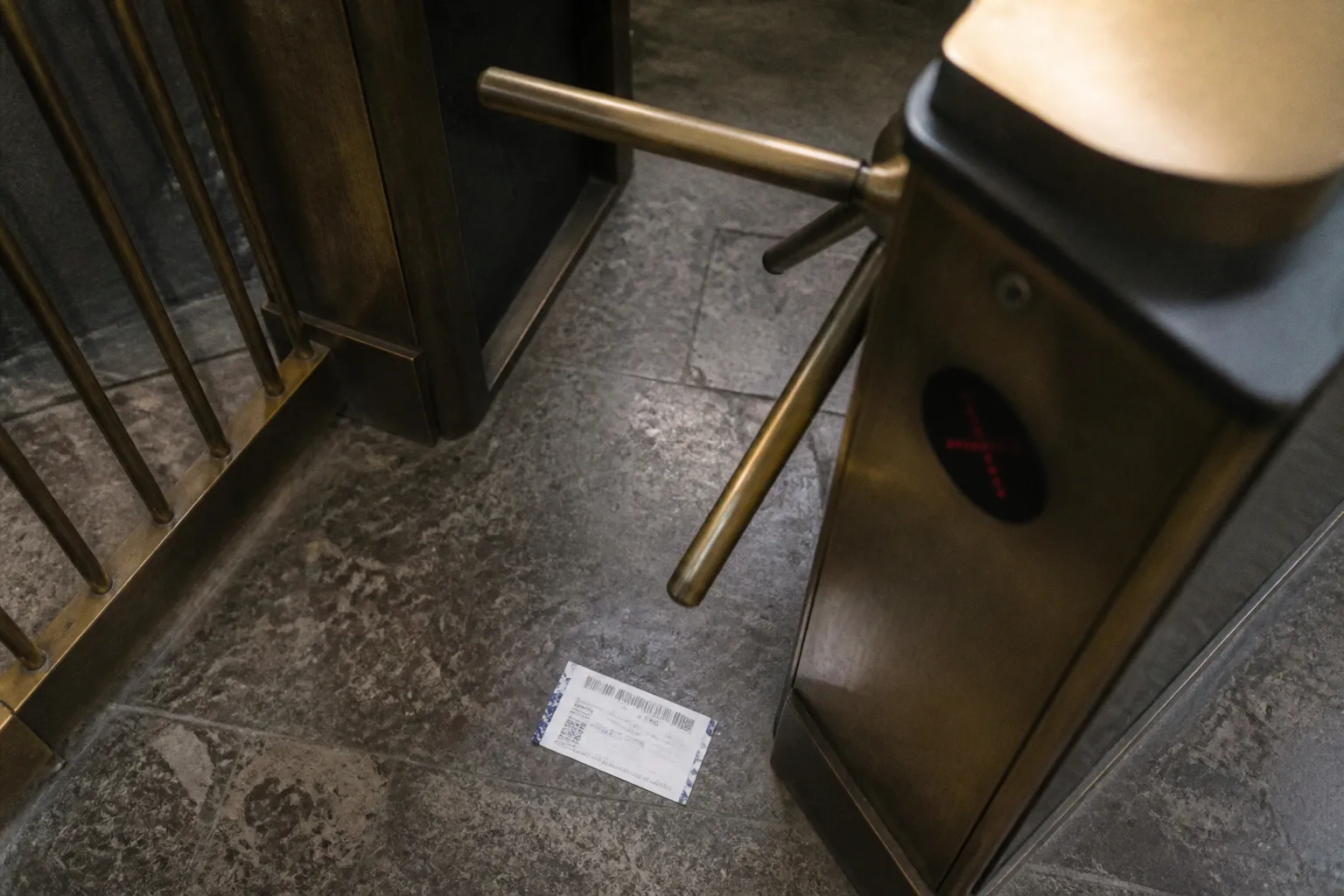
The wrong admission type can separate your team from the ARTIS Royal Zoo. A reseller ticket can lock the date and remove rescheduling options. A discount pass can still require an online time-slot reservation. The site is cashless. The standard visit window is limited to 10:00–17:00, and the usual tour takes about one to one and a half hours.
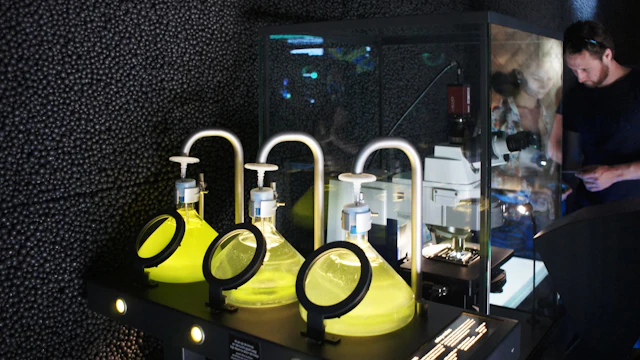
Prices checked on August 14, 2026 · current price on the partner page.
- Time to spend: 2–3 h
- Best time to visit: morning
Prices are indicative and may change — confirm the price and availability on the partner page.
Partner link — GetYourGuide ticketsFor a visitor, these are minor frictions. For a video crew, they are operational failures.
ARTIS-Micropia is Amsterdam’s microbe museum. It is also a controlled visitor environment with timed entry, separate attractions, restricted payment methods, and commercial filming rules that are not covered by a normal admission ticket. The correct booking strategy starts by separating those variables.
Micropia and ARTIS Zoo use separate admission logic
The first failure happens before payment. Visitors assume ARTIS is one site with one ticket. It is not.
ARTIS-Micropia, the ARTIS Royal Zoo, and the ARTIS-Groote Museum operate as adjacent attractions with distinct admission requirements. A standard Micropia ticket does not automatically open the zoo or the Groote Museum. If your production plan includes exterior footage, animal content, the museum, and the microbe exhibits, one Micropia booking is not enough.
This affects both budget and timing. It also affects the shot list. A crew entering through Micropia cannot simply move through the entire ARTIS complex because the names appear under the same brand.
The booking interface may present several product types:
- Micropia-only admission.
- ARTIS Royal Zoo admission.
- Combination access covering the zoo and Micropia.
- Discount-pass reservations.
- Third-party tickets or guided products.
These are not interchangeable products with different labels. They represent different access rights.
The access map
| Production requirement | Booking implication | Main failure mode |
|---|---|---|
| Film only inside Micropia as a visitor | Select Micropia admission and the required time slot | Assuming the ticket also covers the zoo |
| Film at Micropia and ARTIS Royal Zoo | Use a valid combination option or separate admissions | Building one continuous schedule around incompatible tickets |
| Use a Museumcard, CJP, or I amsterdam City Card | Reserve the free time-slot ticket online | Arriving with the pass but no reservation |
| Buy through a reseller | Read cancellation and date-change conditions before payment | Treating the booking as flexible |
| Capture commercial video | Confirm permission requirements separately | Assuming admission equals filming authorization |
The last row is the one most creators skip. Entry and production permission are different systems. A standard visitor ticket gives access under visitor conditions. It does not establish commercial usage rights, equipment clearance, tripod approval, lighting permission, or exhibit-specific filming access.
The available research does not establish the exact commercial video license fees or the precise on-site penalties for filming under a standard individual ticket. Do not invent those figures. Treat the absence of public detail as a reason to obtain written clarification before arrival.
A Micropia admission ticket solves entry. It does not solve access to every ARTIS attraction, and it does not automatically solve commercial filming permission.
Third-party tickets can break a fixed production schedule
A reseller is not automatically a bad choice. It can be useful when inventory is distributed across several platforms or when a visitor needs a bundled tour product. The operational risk is different: the ticket may be final once booked.
Tickets purchased through third-party providers such as Tiqets are non-refundable and cannot be rescheduled after booking, according to the available ticket conditions. That changes the risk profile for a production day.
A weather delay, transport disruption, model cancellation, late equipment delivery, or location change can make the selected slot unusable. A flexible direct booking and a non-refundable reseller booking should not be treated as equivalent inventory.
For content teams, the failure usually appears in the call sheet:
1. The crew books a third-party ticket for the expected visit date.
2. The schedule changes because another location runs over time.
3. The ticket cannot be moved.
4. The team either absorbs the lost booking or buys another admission.
5. The content plan is revised after the original shot window has already disappeared.
That is booking friction converted directly into production cost.
Direct booking versus reseller booking
| Variable | Direct ARTIS booking | Third-party booking |
|---|---|---|
| Price visibility | Controlled by the venue’s own ticketing flow | May vary by provider and product |
| Date changes | Governed by the selected direct-ticket conditions | Often restricted or unavailable |
| Refund exposure | Depends on the venue’s terms | Specific reseller terms apply |
| Product clarity | Easier to compare attraction access | Bundles may obscure what is included |
| Support path | Venue ticketing support | Reseller support and venue access may be separate |
| Production risk | Lower if the schedule is still moving | Higher when the ticket is non-refundable |
The point is not that direct tickets are always superior. The point is that flexibility has to be priced as a production variable.
If the shoot date is fixed and the team is already in Amsterdam, a final ticket may be acceptable. If the date is provisional, book after the schedule stabilizes. Do not reserve a reseller product simply because it shows availability for the next day.
The offer may say that tickets are available tomorrow. That indicates inventory. It does not guarantee that the booking can be changed, refunded, or adapted to a commercial shoot.
Discount passes still require a time slot
Discount-pass holders face a different failure. They may have a valid pass and still be denied entry if they arrive without the required reservation.
Holders of the Museumcard, CJP, or I amsterdam City Card must reserve a free “Time slot ticketholder” booking online. They must then present the physical or digital pass together with the reservation at the entrance.
This is a two-part access system:
- The pass establishes eligibility for the discount or free admission.
- The time-slot reservation establishes when the venue expects the holder.
One does not replace the other.
For a creator, this matters because a production call sheet often assumes that every attendee has already solved admission independently. That assumption fails when one member of the team uses a discount pass and another uses a standard ticket. The two people can end up with different booking references, different conditions, or different arrival requirements.
What to align before the shoot
- Every person on the crew should be linked to a specific admission type.
- Discount-pass users should have the reservation confirmation ready before travel.
- The pass itself must be available in the required physical or digital form.
- The selected time slot should match the rest of the team’s arrival window.
- Any combination access should be checked separately rather than inferred from the Micropia booking.
- The booking reference should be stored offline in case mobile reception or battery power becomes a problem.
The confirmation screen is not the same as the pass. The pass is not the same as the production authorization. These are separate documents with separate functions.
This is basic access control. Treat it like one.
Cashless payment creates a final-stage failure
ARTIS operates as a cashless site. Payments at the venue and on-site purchases require a pin-enabled method. Cash is not the fallback option.
That matters less when all tickets are purchased online. It matters more when a crew arrives with a last-minute change, needs an additional admission, or discovers that one team member booked the wrong product.
The common assumption is that cash can repair a booking error at the counter. It cannot.
There is also a difference between the ticketing economics of Micropia and the ARTIS Zoo. The available information indicates that ARTIS Zoo tickets bought at the physical ticket office carry an additional surcharge compared with online purchases, while Micropia ticket pricing is the same online and at the counter. The exact ticket price can change, so use the current booking widget rather than an archived article or screenshot.
For a production team, the payment policy produces three practical controls:
1. Confirm that every payment card supports pin transactions.
2. Keep a second payment method available for the group lead.
3. Do not rely on cash as an emergency reserve.
The card requirement is not a stylistic detail. It is a site-level constraint. If a card fails, the team loses time while still standing at the access point. That delay is particularly damaging when the booking has a fixed time slot.
The standard operating window is short for a multi-location shoot
ARTIS-Micropia’s standard operating hours are 10:00–17:00. The recommended visit duration is approximately one to one and a half hours.
That is enough for a focused visitor route. It is not automatically enough for a multi-location production.
A normal visit includes walking, reading, waiting, and moving through the exhibits at visitor speed. Filming adds setup time, repeated takes, equipment checks, and pauses for other guests. A room that takes ten minutes to observe may require considerably longer to record usable footage.
This is where the phrase “best time to visit Micropia Amsterdam for filming” needs a technical definition. There is no verified universal low-traffic slot in the available data. Do not publish or plan around an invented quiet period.
Instead, define the best window against the production objective:
- For a fast walkthrough, prioritize the earliest practical entry within operating hours.
- For controlled narration, allow time for repeated takes and audio checks.
- For a combined ARTIS itinerary, separate transit time from exhibit time.
- For visitor-facing content, expect movement and interruptions rather than treating the museum as a closed set.
- For commercial filming, obtain permission before building a shot list around specific exhibit access.
The 10:00–17:00 operating window is the outer boundary. It is not a guaranteed filming window for every exhibit, and it does not imply that commercial equipment can be used throughout the site.
Build the schedule from access constraints
A robust schedule separates the following blocks:
- Arrival and ticket verification.
- Entry and orientation.
- Equipment preparation.
- The planned filming route.
- Retakes and coverage shots.
- Exit buffer.
- Travel to any separate ARTIS attraction.
Do not allocate the full one-to-one-and-a-half-hour visitor duration to camera work. That figure describes a typical tour, not a guaranteed production runtime.
A simple visitor booking can tolerate small delays. A production booking cannot. The more people, cameras, lenses, and scripted shots involved, the more aggressively the plan should protect the first and last parts of the slot.
Camera planning: treat the museum as a constrained interior
Micropia is not a generic white-box location. The visual problem is technical.
Microbe exhibits depend on small-scale subjects, illuminated displays, glass, screens, dark backgrounds, and controlled sources of light. These conditions create predictable camera failures:
- Reflections from glass or acrylic surfaces.
- Clipped highlights in illuminated displays.
- Noise in dark exhibit areas.
- Autofocus hunting against transparent or low-contrast subjects.
- Excessive depth of field when the subject is too close.
- Visitors crossing the frame.
- Unstable exposure when moving between dark and bright zones.
A wide lens can establish the architecture, but it will not resolve microscopic content. A long focal length can isolate a display detail, but it compresses the scene and increases the risk of shooting over visitors. A macro lens may be optically appropriate for a small subject but operationally unsuitable if the exhibit is behind glass or protected by a minimum viewing distance.
The correct setup depends on the display, not on the camera body.
A practical camera setup review
- Use a focal length that separates the exhibit from the surrounding visitor traffic without forcing the camera into restricted space.
- Protect highlights. Illuminated screens and specimen displays can clip before the surrounding room reaches a usable exposure.
- Keep shutter speed high enough for handheld movement if tripods are not permitted.
- Test autofocus on the actual exhibit surface. Glass can become the dominant focus target.
- Record a short exposure and white-balance test before the main take.
- Avoid adding light until permission is confirmed. An LED panel can affect other visitors and the exhibit environment.
- Check dynamic range in the darkest gallery areas before committing to a flat picture profile.
- Capture clean room tone if the production requires narration or voiceover support.
- Leave physical clearance for visitors. A technically perfect frame that blocks circulation is not a workable shot.
This is not an argument for a larger kit. It is an argument for a smaller, controlled kit.
Every additional stand, light, or support system increases friction at the entrance and inside the exhibit route. A compact body, one wide lens, one normal or short-telephoto option, spare batteries, and a controlled audio plan may outperform a full commercial setup if the venue has strict access limitations.
Booking tickets for Micropia Amsterdam without contaminating the itinerary
The booking process should be treated as a dependency chain. Each decision affects the next one.
1. Identify the actual attraction
Write down whether the team needs Micropia only, Micropia plus the ARTIS Royal Zoo, or access to another adjacent museum. Do not use “ARTIS” as a complete production location. It is too broad.
2. Assign the correct ticket type to every attendee
Standard admission, combination access, discount-pass reservations, and reseller products have different conditions. Match each crew member to one category.
3. Select the time slot against the call sheet
The slot must include arrival margin. The booking time is not the same as the camera start time. Ticket inspection, group assembly, and equipment preparation happen before the first take.
4. Check refund and rescheduling exposure
If the ticket comes through a third party, assume the date may be fixed unless the published terms state otherwise. The available conditions for Tiqets tickets indicate no refund and no rescheduling after booking.
5. Confirm the payment method
ARTIS is pin-only. A cash reserve does not solve a failed card transaction.
6. Separate visitor access from filming authorization
If the content is commercial, contact the venue through the appropriate channel before the shoot. Ask about equipment, tripod use, lighting, audio, crew size, exhibit restrictions, and usage rights. The exact commercial fee structure is not established in the available facts, so do not rely on an assumed rate.
7. Save the evidence
Keep the ticket, time slot, pass details, product description, and any permission correspondence in one offline folder. Screenshots are useful when the booking page changes after payment.
The highest-risk booking is not the expensive one. It is the one that looks valid but covers the wrong attraction, the wrong person, or the wrong level of access.
The failure modes are predictable
The booking pitfalls at ARTIS Micropia are not random. They follow a short list of repeatable errors.
1. Buying Micropia access for a zoo-and-museum itinerary.
The brand name creates false continuity. The attractions have separate admission logic.
2. Using a reseller ticket as if it were a flexible reservation.
Third-party tickets may be non-refundable and fixed to the selected date.
3. Arriving with a discount pass but no time-slot reservation.
Eligibility and timed entry are separate requirements.
4. Assuming cash can solve a counter problem.
ARTIS is cashless and requires pin-enabled payment.
5. Planning a full production inside a visitor-duration estimate.
One to one and a half hours is a tour reference, not a guaranteed filming allocation.
6. Treating a normal ticket as a commercial permit.
Admission does not confirm tripod, lighting, crew, or content-use rights.
7. Optimizing the camera package before confirming venue rules.
A lens and light plan is irrelevant if the equipment is not cleared for use.
8. Using old price screenshots to brief the crew.
Ticket pricing varies. The current booking widget is the controlling reference.
The value of this list is diagnostic. If a booking fails, it usually fails at one of these interfaces: attraction, ticket type, time slot, payment, cancellation, or production permission.
A technical pre-arrival audit
Run this audit before the team leaves for the venue:
- Micropia is named explicitly in the booking.
- Any ARTIS Royal Zoo access is covered by a separate or combination ticket.
- The ARTIS-Groote Museum is not assumed to be included.
- Each discount-pass holder has a free time-slot reservation.
- Each pass is available in physical or digital form at the entrance.
- The reseller’s refund and rescheduling policy has been read.
- The crew has a pin-enabled payment method.
- Ticket confirmations are saved offline.
- The planned arrival time precedes the working shot window.
- The shot list accounts for visitor traffic and repeated takes.
- Commercial filming permission has been confirmed or the content plan has been reduced to permitted visitor activity.
- Tripod, lighting, audio, and equipment restrictions are known.
- The team understands that the operating window is 10:00–17:00.
- The schedule does not confuse a one-to-one-and-a-half-hour visitor route with a complete production block.
That is the useful endpoint. Not a generic recommendation to book ahead. A controlled chain from ticket selection to usable footage.
ARTIS Micropia can work as a strong location for hospitality and destination content because the subject is visually distinctive and the visitor proposition is specific. The conversion value depends on showing the experience accurately. The booking must be just as precise.
Buy tickets ARTIS Micropia only after defining the access requirement, the time slot, the cancellation risk, and the filming status. Then build the shot list around the rules that actually exist, not the ones the brand name seems to imply.
Practical info
Currency: EUR
Driving: on the right
Emergency number: 112