Local attraction video partnerships: common budget traps
A destination video budget can look controlled at $10,000 and finish at $18,000 without a single line-item error on the production estimate. The error happens earlier. The team budgets for a creator or a videographer.
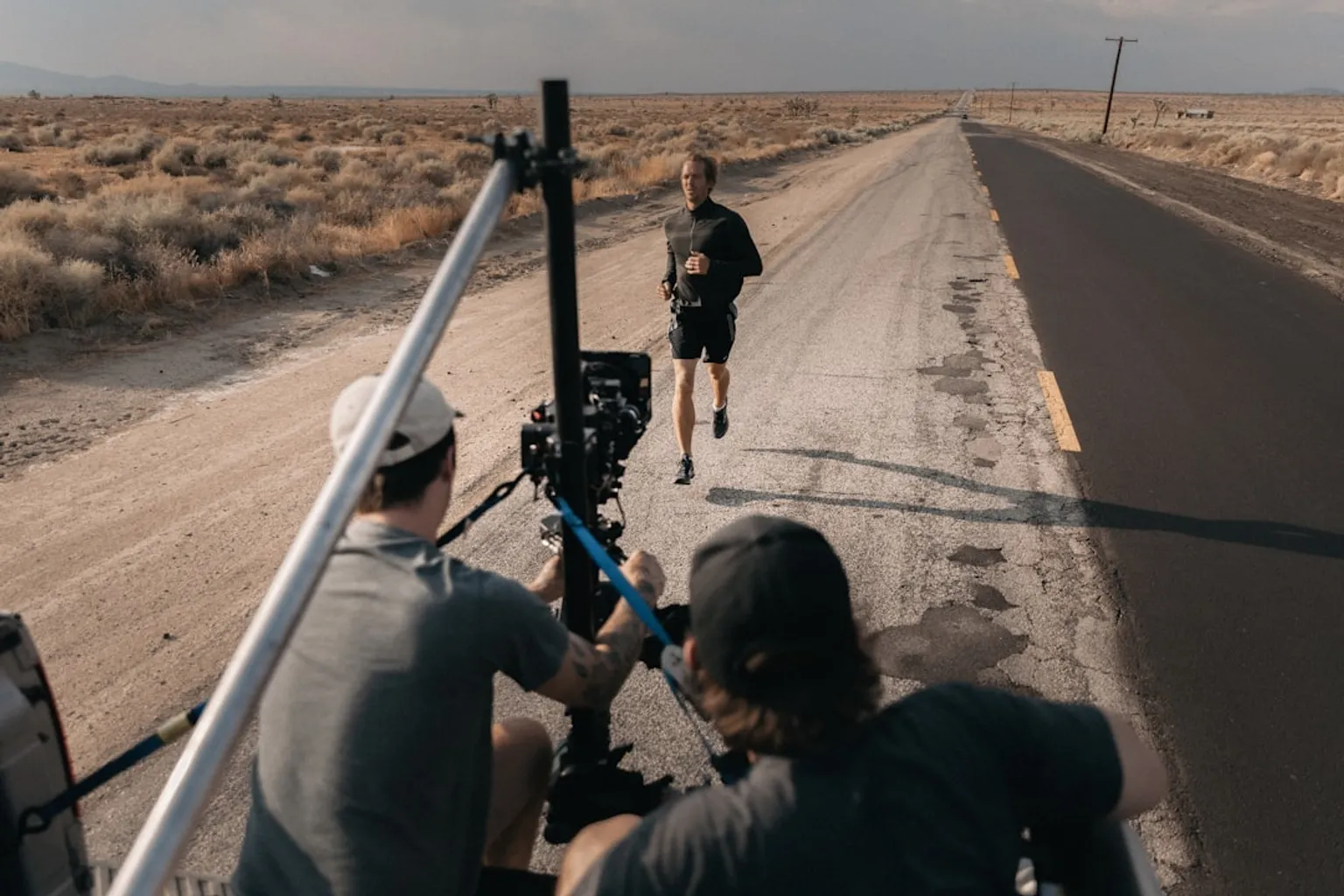
It does not budget for the system required to turn footage into bookings.
That is the recurring pattern behind local attraction video partnership mistakes. A hotel partners with a museum, trail operator, food tour, winery, or tourism board. Everyone agrees that a short-form video series will “show the destination.” The proposal covers a Reel, a two-day shoot, and a hosted stay. Then the invoice stack arrives: creator fees, additional nights, mileage, meals, overtime, licensed music, usage rights, paid amplification, edit revisions, and staff time that was never assigned to marketing.
The footage is not usually the failure. The budget model is.
A local attraction partnership is a co-marketing asset. It needs a defined audience, a distribution plan, a rights window, conversion tracking, and a cost structure that separates operational subsidy from marketing spend. Without those controls, destination video marketing becomes a visually competent expense with no measurable ROI.
Gifted access is not a creator fee. A hotel room is inventory with a cost. A video asset is paid labor with rights attached.
The gifted-stay myth breaks at the mid-tier level
The cheapest line in a partnership brief is often “hosted stay.” It is also the line most likely to distort the entire negotiation.
Hotels and attractions tend to calculate the stay at marginal cost: an unoccupied room, breakfast for two, attraction tickets, perhaps a transfer. That is an operations calculation. The creator is calculating opportunity cost. A three-day destination assignment blocks travel days, shooting days, editing time, client work, and often a paid campaign elsewhere.
Travel creators generally price 10% to 25% above comparable lifestyle creators. The reasons are mechanical:
- Travel requires transport, accommodation, equipment handling, and location scouting.
- The content often has a higher production burden than an apartment-shot product placement.
- A destination creator’s audience expects proof of experience, not a single branded frame.
- The creator carries more schedule risk. Weather, seasonal closures, delayed transport, and access restrictions all affect deliverables.
At the mid-tier range, typically 100,000 to 500,000 followers, a gifted stay alone is rarely a viable offer. Market benchmarks place cash fees around $3,000 to $12,000 for a post, while an Instagram Reel can range from $1,500 to $15,000, before fully covered travel expenses. The range is wide because follower count is not the pricing engine. Audience geography, average views, niche relevance, exclusivity, deliverables, production complexity, and usage rights drive the number.
A hotel and an attraction should not respond by filtering for whoever accepts barter. That selects for available inventory, not commercial fit. The result is frequently poor audience alignment, weak watch time, and an asset with no paid-media utility.
One documented press-trip pattern is blunt: more than 75% of invited travel influencers declined an uncompensated trip because accepting it meant turning down paid work. That is not entitlement. It is capacity planning.
Calculate the offer as two separate values
The hosted experience and the content fee should be shown independently in the deal sheet.
| Budget component | What it pays for | Common error |
|---|---|---|
| Hosted stay and attraction access | Room inventory, meals, tickets, experience access | Treated as full payment for professional content |
| Creator fee | Planning, travel time, filming, editing, publishing, audience access | Omitted because the experience is “valuable” |
| Travel reimbursement | Airfare, rail, car hire, fuel, baggage, local transfers | Added after the creator is already selected |
| Content usage license | Hotel and attraction use across owned, paid, and partner channels | Assumed to be included in the organic post |
| Exclusivity | Restriction on competing hotels, regions, or attractions | Requested without compensation |
| Paid amplification | Media spend, creator whitelisting, boosting, retargeting | Left unfunded after production |
This separation also improves negotiation. A creator may reduce their cash fee if the itinerary provides legitimate production value: private access, early entry, staff interviews, a multi-location route, or accommodation that supports the visual brief. But that adjustment should be explicit. It should not be hidden inside the phrase “in exchange for exposure.”
The same applies to local guides, outdoor operators, and cultural institutions. If a creator needs a guide for six hours, an after-hours museum slot, or a boat departure held for filming, those are operational contributions. Assign them a cost. Otherwise the attraction absorbs the expense while the hotel reports an artificially low campaign cost.
Logistics consume the margin before the first shot
Destination shoots fail budgets through small costs with no owner. Mileage is assigned to nobody. Meals appear as incidentals. A weather delay adds an overnight stay. A driver waits while the crew films a second location. The production day is now 13 hours.
For location-based video, logistics are not production overhead. They are production inputs.
A practical benchmark for vehicle travel is roughly $0.65 per mile. Overnight work can add $100 to $200 per night for accommodation and $50 to $75 per day for meals. These are not dramatic figures in isolation. They become material when the partnership includes a hotel, an attraction, a restaurant, an airport transfer, a guide, and multiple scattered points of interest.
The budget must model the route, not just the locations.
Build the shoot around a route sheet, not a wish list
A destination video brief often lists ten things to capture:
- the hotel exterior at sunrise;
- breakfast service;
- a room walkthrough;
- a local market;
- the attraction’s hero experience;
- a restaurant;
- transport between sites;
- a sunset viewpoint;
- guest-facing vertical clips;
- stills for paid social.
That is not a shoot plan. It is an overtime request.
A workable route sheet contains four layers:
1. Geography. Every location is mapped by actual travel time, parking access, loading constraints, public entry hours, and light direction. A destination that looks compact on a tourism map may produce 90 minutes of dead travel between two “nearby” stops.
2. Capture priority. Identify the footage that carries the booking page: arrival, room context, the attraction’s signature moment, and the return-to-hotel sequence. Everything else is secondary. If the primary four clips are not secured by hour six, the day is structurally unstable.
3. Access owner. Name the person who can unlock the venue, clear logos, move furniture, approve staff participation, or release a restricted area. A location without an access owner is not a confirmed location.
4. Contingency. Decide in advance what happens if rain closes the trail, wind cancels the boat, a museum gallery fills with visitors, or the chef misses the service window. The replacement scene must still serve the campaign’s conversion goal.
The most expensive local guide video traps are usually created by poor sequencing. A camera team shoots the property first because it is convenient. The team then reaches the attraction during peak visitor traffic and has no clean frame, no usable natural audio, and no time for a second pass. The edit becomes a generic montage. The paid campaign then needs more frequency to overcome weaker creative.
If the route is not timed to the minute, the production budget is an estimate with no ceiling.
Overtime is a planning problem, not a surprise fee
An 8- to 10-hour filming day is normal. It is not a target to exceed. Once the crew goes beyond the agreed day, rates commonly move to time-and-a-half after 10 hours and double time after 12.
A $1,000 videographer day rate can become an additional $187.50 per hour at time-and-a-half, depending on the agreed hourly structure. Add an assistant, sound operator, drone pilot, producer, driver, or local fixer and the overage compounds quickly.
The dangerous phrase in a partnership call is: “We will grab one more thing.”
One more thing may involve:
- resetting a room after a guest check-out;
- waiting for the attraction’s public area to clear;
- moving camera, lighting, and audio equipment to a second site;
- re-recording an interview because the first take has HVAC noise;
- shooting a vertical cut after the horizontal master;
- rescheduling an exterior frame for usable light.
None of that is inherently unreasonable. It becomes expensive when nobody has authority to cut the shot list.
Put a stop rule in the production agreement
The producer or campaign lead needs a documented stop rule. It should state what happens at hour eight, hour ten, and hour twelve.
At minimum, the hotel tourism partnership contract should define:
- the booked crew hours and the basis of the day rate;
- overtime thresholds and applicable multipliers;
- who can authorize extra hours;
- whether travel time counts toward the day;
- whether weather holds are billable;
- the number of included edit rounds;
- the delivery format for horizontal, vertical, and cutdown assets;
- the cost of reshoots caused by access failures or stakeholder changes.
The access failure clause matters. If the attraction promises a closed set and cannot provide it, the hotel should not automatically pay for a reshoot. If the hotel changes the room styling or asks to feature a new suite after the shoot, the attraction should not carry that cost either. Cost follows control.
This is not legal ornament. It prevents a familiar accounting fiction: the campaign was “within production budget,” while the partner absorbed overtime, staff hours, access disruption, and replacement inventory outside the marketing ledger.
Rights and amplification are where the real budget expands
A creator’s published Reel is not automatically a hotel ad. A videographer’s delivery folder is not automatically cleared for paid media. A local attraction’s logo may be visible, but that does not establish permission for a tourism board to repurpose the clip in a regional campaign.
Usage rights are a separate product.
A basic organic package may permit the creator to publish on their own channel and allow the hotel to repost on its organic social accounts for a limited period. It may not include paid social ads, website hero placement, OTA listing use, email campaigns, in-room screens, tourism-board distribution, or sublicensing to the attraction partner.
This distinction is where co-marketing video budget waste accelerates. The team shoots a strong asset, sees high completion rates, and then discovers it cannot legally be boosted or used on the booking funnel without a new license.
A realistic all-in budget often requires multiplying the planned creator-fee figure by 1.5x to 2x once travel, rights, editing, music, logistics, and amplification are included. That multiplier is not a universal rule. It is a corrective against a common false assumption: that the fee is the campaign cost.
License for the media plan you intend to run
Before production, specify the asset’s commercial route:
- Owned channels: hotel site, attraction site, email, organic social, lobby displays, and booking engine landing pages.
- Paid channels: Meta, TikTok, YouTube, programmatic video, search companion placements, and retargeting.
- Partner channels: tourism board accounts, destination campaigns, regional travel partners, and attraction channels.
- Duration: 30 days, six months, one year, or perpetual use. Each is a different commercial request.
- Territory: local, domestic, or global. A destination targeting international arrivals should not license only domestic paid usage by default.
- Edits: permission to crop, subtitle, cut down, add CTA end cards, localize language, and create aspect-ratio variants.
The most useful arrangement is rarely perpetual rights for every channel. That can be expensive and unnecessary. The efficient model aligns the license to the actual media plan. If the hotel plans a 90-day paid social test around a shoulder-season package, purchase the rights for that test window. If the asset becomes a proven booking driver, extend it based on performance.
Distribution needs its own budget line from day one. Video production without media allocation is content storage.
The creative quality also affects the distribution cost. A safe, interchangeable destination clip may require roughly 2.6 times more media spend to match the impact of a more distinctive, audience-relevant ad. This is not an argument for cinematic excess. It is an argument for specificity: a recognizable local experience, a clear guest route, a decisive opening frame, and an offer that matches the viewer’s intent.
A clean image of a hotel bed does not explain why a traveler should book this hotel to access this destination. A 15-second sequence showing arrival, transfer time, the actual attraction experience, and the return to the property does.
Separate marketing ROI from operating cost
A hotel gives away rooms. An attraction provides tickets. A restaurant provides a table. A marketing manager books a creator. The finance report records some of these items as overhead, some as guest relations, some as sales, and some not at all.
The result is unusable ROI.
Marketing spend must be separated from operational cost even when the campaign uses internal inventory. Otherwise the team cannot answer a simple question: did this local attraction partnership produce profitable demand, or did it merely consume capacity during a period that would have sold anyway?
Use a campaign ledger with distinct categories:
| Ledger category | Include | Exclude |
|---|---|---|
| Production | Crew, equipment, editing, travel, meals, lodging required for the shoot | General property maintenance and standard payroll |
| Creator partnership | Cash fee, travel reimbursement, deliverable fee, rights, exclusivity | The assumed promotional value of a creator’s audience |
| Partner contribution | Ticket value, guide hours, closed access, staff support, transport | Unpriced favors with no stated owner |
| Distribution | Paid media, boosting, creator whitelisting, ad management, landing-page tests | General website hosting or booking-platform subscriptions |
| Conversion infrastructure | Campaign landing page, tracked offer code, UTM governance, booking-engine configuration | Permanent software costs not attributable to the campaign |
The distinction is especially important for destination brands with multiple stakeholders. A tourism board may report video views. The hotel may report bookings. The attraction may report ticket sales. If no attribution structure exists, every party can claim success while nobody can calculate return.
Measure the route from view to booking
Views are diagnostic. They are not the commercial result.
For a hotel-attraction campaign, the reporting chain should include:
1. Creative performance: three-second hold, six-second hold, completion rate, thumb-stop rate, saves, shares, and comments that indicate travel intent rather than generic praise.
2. Traffic quality: click-through rate, landing-page engagement, bounce rate, scroll depth, and return visits. A high click-through rate paired with high bounce rate usually signals message mismatch or landing-page friction.
3. Booking behavior: package-page visits, availability searches, booking-engine progression, promo-code use, assisted conversions, and revenue by source.
4. Partner outcome: attraction ticket redemptions, guide bookings, restaurant covers, or itinerary downloads tied to the campaign.
5. Incrementality: compare campaign periods against a defensible baseline. Avoid crediting the video for demand created by school holidays, a major event, a seasonal rate drop, or a concurrent tourism-board media burst.
A practical split-test can isolate what the destination element contributes. Run one landing page led by the hotel room and amenity stack. Run another led by the attraction itinerary and the hotel’s role as the access point. Keep the offer, rate, audience, and media budget stable. Compare booking-engine starts and completed reservations, not only page engagement.
This is where conversion optimization changes the content brief. If the itinerary-led page produces more availability searches but fewer completed bookings, the problem may be price framing, package clarity, or rate-plan friction. It is not automatically a video problem. If the room-led page produces low click depth while the itinerary-led page holds attention, the destination experience is carrying the demand signal. Allocate the next shoot accordingly.
The budget should begin with a commercial decision
The correct question is not, “How much does a local creator cost?” It is, “What booking behavior must this partnership change, and what rights, production time, access, and media spend are required to test that change?”
That question removes most budget traps before they become invoices.
A disciplined local attraction partnership has a cash fee where cash is required. It prices travel and overnight logistics. It limits the shoot to a route that can be completed inside the booked hours. It licenses content for the channels that will actually distribute it. It assigns operational contributions a real value. It tracks conversion beyond the view count.
The final audit is short:
- The creator fee, hosted inventory, travel, and rights sit in separate budget lines.
- The schedule has an hour-ten stop rule and a named overtime approver.
- Every location has confirmed access, a production owner, and a fallback scene.
- The media plan is funded before the shoot starts.
- The contract defines usage, edits, duration, territory, and partner distribution.
- The campaign has a tracked landing page, a booking event, and a baseline for ROI.
If one of those lines is missing, the budget is not lean. It is incomplete.