Local attraction filming permits: a pre-production checklist
The most expensive filming-permit mistake in hotel destination marketing is assuming that “promotional” means “permit-free.” It does not.
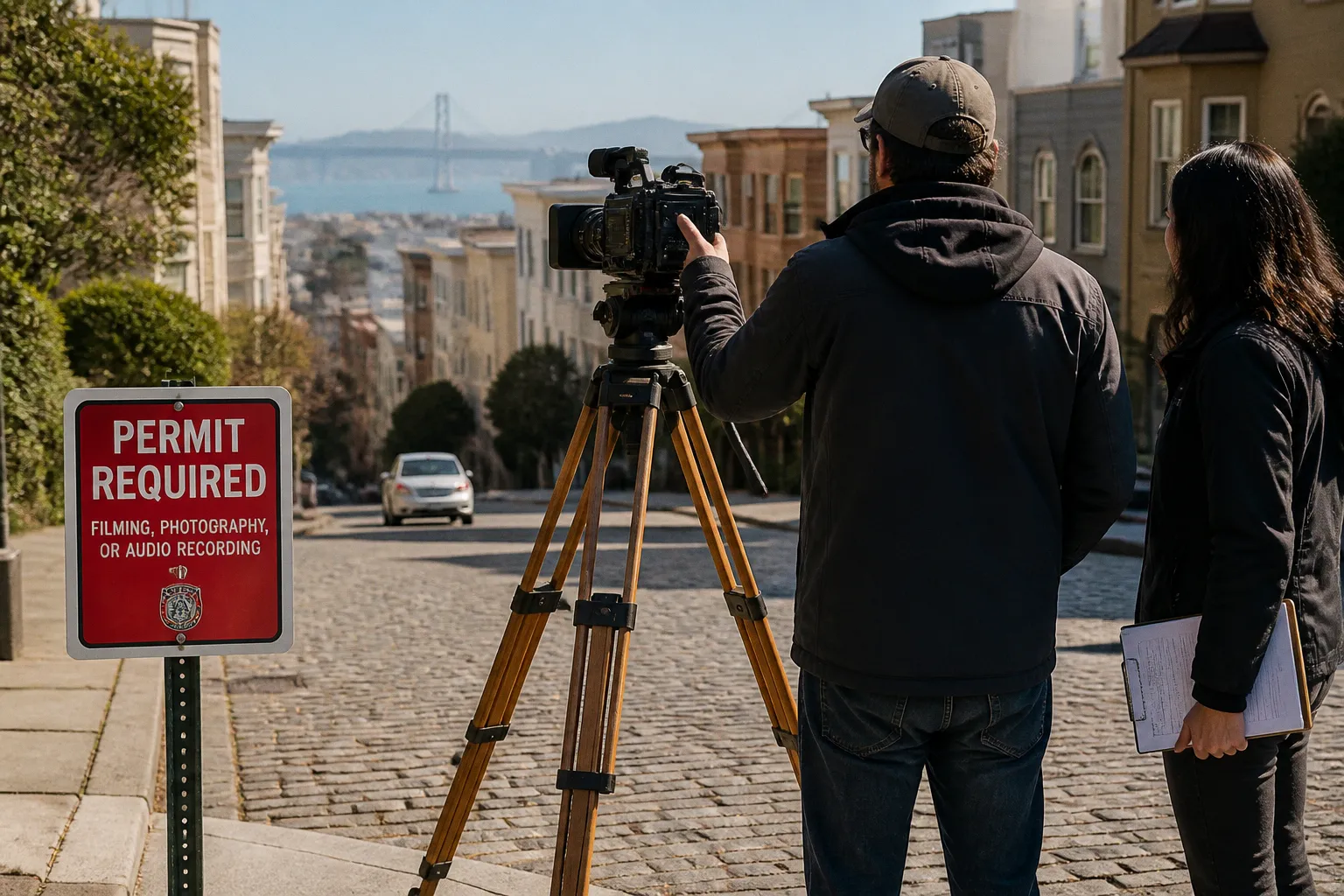
A hotel video can be beautifully branded, useful to travelers, and still trigger requirements from a city film office, attraction owner, state agency, federal land manager, FAA, transit authority, or all of them at once.
The location is not one permission. It is a stack of permissions.
That matters when your destination content includes a neighborhood guide, a local landmark, a national park viewpoint, a drone shot over a beach, or a quick walk-through of an attraction. A small crew with a mirrorless camera may be treated very differently from a crew with tripods, lighting, vehicles, talent, drones, and a plan to hold a public path for ten minutes.
Use this checklist before you book the crew, publish the shot list, or promise the hotel GM a launch date.
Start with the real question: who controls the location?
“Public” is not a jurisdiction. It is a vague label people use right before paperwork gets complicated.
A city park, a state beach, a national monument, a privately operated museum, a transit station, and a landmark owned by a port authority may all sit in the same destination. They do not share one permit system. A city film office cannot authorize filming on property controlled by a state agency, federal agency, transit authority, airport, tribal government, or private attraction.
The first item on your destination content production compliance checklist should therefore be a location-control map. For every proposed shot, record:
- The physical address and exact filming area.
- The legal owner or operating authority.
- The agency or office that handles filming requests.
- Whether the site is public, private, leased, or jointly managed.
- Whether the shoot affects pedestrian access, traffic, parking, queues, or normal operations.
- Whether you need exclusive use of any part of the location.
- Whether the shot includes signage, artwork, performances, branded exhibits, or identifiable guests.
Do not stop at the attraction’s marketing department. They may approve the creative idea while a separate property, safety, or municipal office controls the actual filming conditions.
A private attraction may give you written owner permission, but that does not automatically solve public-space problems. If your crew loads gear on a sidewalk, blocks a curb, manages traffic, parks production vehicles, or affects pedestrian flow, a city permit or additional authorization may still be required. New York City offers a useful example: filming entirely on private property with the owner’s permission may not require the city’s film permit when public space, traffic, pedestrian flow, and safety are unaffected. That is a local rule, not a universal shortcut.
A location release answers “can we use this property?” A government permit may answer “can we conduct this production here, in this way, on this date?”
Build a location-permission matrix
A simple matrix prevents the classic production failure: everyone thought someone else had handled it.
| Production element | Permission or approval to investigate | Common trigger |
|---|---|---|
| Filming inside an attraction | Owner or operator approval; location release | Commercial use, controlled exhibits, guest privacy |
| Exterior shots on a sidewalk or plaza | City film office or local authority | Tripods, crew footprint, pedestrian impact |
| State-owned land | State agency or film commission permit | Commercial production, equipment, vehicles |
| National Park Service site | NPS filming guidance and site-specific approval | Crew size, equipment, exclusive use, visitor impact |
| Transit, airport, port, or rail property | Controlling authority | Security, access control, operational disruption |
| Drone launch or landing | Property-owner permission plus applicable local rules | Takeoff or landing from controlled property |
| Drone flight | FAA registration and airspace authorization where required | Controlled airspace, operational conditions |
| Road, ramp, or lane closure | Transportation authority and traffic-control approval | Any interruption to normal traffic |
| Music, artwork, performances, logos | Separate rights clearance | Copyrighted or trademarked material in final video |
The matrix is not glamorous. Neither is discovering on shoot morning that the “quick landmark intro” requires a different authority, certificate of insurance, and two-week lead time.
Federal and state land: small crew does not mean zero rules
National Park Service locations have a specific threshold that is useful, but dangerously easy to overgeneralize.
At NPS sites, filming, photography, or audio recording involving eight or fewer people may proceed without a permit only when all relevant conditions are met. The activity must take place in an area open to the public, use hand-carried equipment, avoid exclusive use, not adversely affect park resources or visitors, and be unlikely to create additional NPS administrative costs. The park can still determine that a permit is necessary.
That means “we only have six people” is not the answer. It is one data point.
A permit may be required when:
- The group exceeds eight people.
- Equipment goes beyond hand-carried gear.
- You need exclusive use of a location.
- The area is closed or restricted.
- Visitors, resources, operations, or access may be affected.
- The production creates additional administrative work or cost.
- The specific park requires an application despite the apparent scale.
The NPS also treats filming consistently under its current guidance, whether the content is commercial, non-commercial, student-produced, creator-led, or news-related. A hotel destination video does not get a magical exemption because it is designed to promote tourism rather than sell a physical product.
The same discipline applies to state property, but the numbers and process can change sharply by state and agency. California is a useful warning sign. For filming on California state-owned or state-operated property, the California Film Commission requires evidence of commercial general liability insurance of at least $1 million per occurrence, with the State of California and its officers, agents, and employees named through an additional-insured endorsement.
That is not a national insurance standard. It is a jurisdiction-specific requirement.
California also lists higher or separate requirements for particular production elements, including at least $1 million per accident in automobile liability coverage for owned, hired, and non-owned vehicles, and at least $2 million in UAS coverage for drone filming on state property.
The lead times can also jump depending on what your shot requires:
- General California state-property applications: generally at least four business days, or 96 hours, before the first preparation or shooting day.
- Caltrans ramp or lane closures: at least 12 business days.
- Caltrans freeway closures: at least 16 business days.
- Some California State Parks: 14 to 30 days of advance notice.
A destination marketing team working across multiple states should treat these figures as examples of the problem, not as a reusable national template. Every location needs its own confirmation of fees, insurance, application portal, safety requirements, parking rules, and notification obligations.
The federal, state, and local approval check
Before the shoot is locked, ask the controlling authority these questions in writing:
1. Does this activity qualify as filming, photography, commercial production, or another regulated use?
2. Does the promotional purpose of the hotel video change the application requirements?
3. Does the crew size include talent, hotel staff, guides, agency representatives, and location personnel?
4. What counts as hand-carried equipment at this site?
5. Are tripods, sliders, LED panels, lavalier microphones, reflectors, or cases restricted?
6. Is a location release required in addition to the government permit?
7. Do vehicles, parking, generators, or catering require separate approval?
8. Will a monitor, public-safety officer, ranger, traffic marshal, or site representative be required?
9. What insurance certificates and additional-insured language are accepted?
10. When does the clock start: application submission, payment, insurance approval, or final permit issuance?
Get the answer attached to the project file. Memory is not documentation, and “the attraction said it was fine” is not a production plan.
Drone shots: the permit stack gets taller
A drone can turn a generic hotel video into scroll-stopping destination content. It can also turn a neat shot list into an aviation and property-access problem.
Under FAA Part 107, commercial operators of small drones weighing less than 55 pounds must register each drone, keep it within visual line of sight, and follow operating restrictions. Those include avoiding careless or reckless operations and generally not flying over people unless they are directly participating in the operation, subject to the applicable rules and conditions.
Controlled airspace adds another layer. Drone operations in Class B, C, D, and certain Class E airspace require prior FAA airspace authorization. Eligible operations may use LAANC for near-real-time authorization for flights under 400 feet. Further-coordination requests can be submitted up to 90 days before the flight and require at least 72 hours for manual coordination.
The FAA also advises applicants to submit DroneZone airspace-authorization requests at least 60 days before the proposed operation date. That recommendation is separate from the LAANC process. Do not mash the timelines together and assume one approval covers every kind of operation.
Your drone checklist should capture:
- Aircraft registration status.
- Pilot credentials and operating authority.
- Exact launch and landing points.
- Airspace classification.
- LAANC or DroneZone authorization route.
- Maximum altitude and flight area.
- Visual-line-of-sight plan.
- People, roads, buildings, and moving vehicles below the flight path.
- Weather and wind limits.
- Emergency landing procedure.
- Property-owner approval for takeoff and landing.
- Insurance requirements from the location owner or permitting authority.
- Any local restrictions affecting parks, beaches, events, stadiums, or protected areas.
Here is the detail that catches experienced teams: FAA authorization governs the flight. It does not grant permission to take off from the attraction’s property. A drone pilot may be legally authorized to operate in the airspace and still be prohibited from launching on-site. The attraction owner, city, park agency, or land manager can control the ground.
Do this: secure the location’s written launch and landing approval.
Not that: assume airspace authorization equals permission to use the property.
Location releases, insurance, and the cost of looking professional
Securing location release forms for travel content is not administrative decoration. The release should make clear what the hotel, destination marketing organization, production company, and distribution partners can do with the footage.
At minimum, confirm that the document addresses:
- The exact property or area covered.
- Filming dates and permitted hours.
- Approved uses and distribution channels.
- Paid media, social platforms, websites, booking pages, and editorial placements.
- The right to edit, crop, subtitle, translate, and reformat the footage.
- Identification of the attraction, destination, or surrounding area.
- Restrictions on logos, artwork, exhibits, performances, or guest areas.
- Cancellation, weather, rescheduling, and overtime terms.
- Required credits or brand approvals.
- Responsibility for damage, cleanup, security, and restoration.
- Insurance and indemnity requirements.
- Whether the attraction can review the final cut, and what that review actually covers.
A release from the attraction owner is not a blanket release for every person and object appearing in the frame. Identifiable guests, performers, artwork, branded installations, and third-party businesses can create separate clearance questions. The research does not support a universal model-release or location-release rule for every attraction. The answer depends on the owner, the people shown, the intended commercial use, and applicable law.
Insurance is where the production becomes real. Agencies often estimate crew and gear costs accurately while treating compliance as a rounding error. Then the attraction asks for a certificate of insurance, additional-insured endorsement, auto coverage, drone coverage, or a named security provider.
That request can affect budget and schedule immediately.
Track these costs before approving the creative:
- Permit and application fees.
- Location fees or minimum spends.
- Insurance premiums and certificate processing.
- Additional-insured endorsements.
- Security, ranger, marshal, or site-representative fees.
- Traffic control and parking.
- Vehicle access and loading.
- Power, generators, and cleanup.
- Overtime and restricted-hour surcharges.
- Drone pilot and aviation insurance.
- Weather holds and rescheduling.
- Required local crew or union labor.
- Accessibility and visitor-management measures.
The shot is not “free” because the camera is small. The real production footprint includes access, safety, paperwork, insurance, and the people your filming displaces.
The permit does not clear the soundtrack
One of the most persistent myths in destination video is that a filming permit covers whatever appears in the finished edit. It does not.
A permit may authorize your physical production at an attraction. It does not grant rights to copyrighted music, artwork, performances, logos, trademarks, or other third-party intellectual property.
For music in an audiovisual marketing video, you may need synchronization permission from the owner of the musical work and a separate license from the owner of the sound recording. Buying a track from a stock-music platform can help, but the license still needs to match the actual use: paid advertising, hotel website, social distribution, duration, territory, edits, and client ownership.
The same principle applies on location:
- A mural may be visible from a public street but still raise artwork-rights questions in a commercial video.
- A live musician may require performance and recording permissions.
- An attraction’s logo may be allowed in incidental background footage but restricted in paid campaigns.
- A branded exhibit may have its own usage rules.
- A restaurant or shop featured in a neighborhood guide may expect approval before commercial use of its name or interior.
- A guided tour may require permission from both the attraction and the guide or performer.
Do this: separate location permission from content clearance in the production tracker.
Not that: treat the signed filming permit as a universal “use anything in frame” license.
If the hotel wants to use the footage in a long-running campaign, ask for broader rights at the beginning. “We will sort out usage later” is how an inexpensive local landmark shot becomes an edit, reshoot, or takedown problem six months after launch.
The final pre-production gate
Before anyone travels to the location, the producer or digital content director should be able to open one folder and see the complete approval trail. Not scattered emails. Not a verbal promise. One usable record.
Destination content production compliance checklist
- Location owner or controlling authority is identified.
- City, state, federal, transit, airport, port, or other jurisdictional requirements are confirmed.
- The attraction has approved the proposed dates, areas, crew, and equipment.
- A location release or written permission is signed.
- Public access, pedestrian flow, traffic, parking, and guest operations have been assessed.
- Required filming permits have been submitted and issued.
- Application fees and location fees are included in the budget.
- Insurance certificates meet the location’s exact requirements.
- Additional-insured endorsements use the required legal name.
- Vehicle, lane-closure, security, or traffic-control approvals are complete where applicable.
- Drone registration, pilot documentation, and airspace authorization are confirmed.
- Drone launch and landing permission is separately documented.
- Weather, emergency, and cancellation procedures are agreed.
- Guest, talent, performer, and staff releases are addressed.
- Music licenses cover synchronization and sound-recording use.
- Artwork, logos, exhibits, and branded experiences have been reviewed.
- The final distribution plan matches the rights granted.
- Permit conditions are included in the call sheet and briefed to the crew.
- A named person is responsible for carrying permits and presenting them on-site.
The last point is operationally boring and strategically useful. A permit that exists in an inbox is not much help when security asks for it at 6:15 a.m.
Make compliance part of the creative route
The best destination videos do not treat permits as a brake on creativity. They design around the real access conditions.
If an attraction will not allow tripods, build a handheld or gimbal plan. If a public plaza cannot be held exclusively, shoot for short windows and keep the crew mobile. If a drone launch is prohibited, find a lawful nearby location or replace the aerial with an elevated architectural detail, moving vehicle shot, or stabilized walking route. If the landmark requires 30 days of notice, do not make it the opening shot of a campaign scheduled to launch next week.
Do this, not that:
- Do this: confirm the authority before writing the final shot list.
Not that: write the shot list around an image pulled from a mood board.
- Do this: plan the shoot by control zones and permissions.
Not that: assume one city permit covers every visible landmark.
- Do this: budget insurance, security, access, and waiting time.
Not that: call them miscellaneous costs after the quote is approved.
- Do this: clear music and recognizable creative elements before editing.
Not that: build the whole campaign around a track you cannot legally use.
- Do this: preserve written approvals with the final media archive.
Not that: rely on the producer remembering who said yes.
Local attraction filming permits for hotels are less about finding a universal form and more about identifying the authority behind every image. Once you map ownership, public impact, equipment, airspace, insurance, and intellectual property, the process becomes manageable.
Skip that mapping and the algorithm will not save you. The shoot may never happen.