Gardens by the Bay tickets: booking routes for creators
For a hotel, destination brand, or hospitality creator, booking Gardens by the Bay is not simply a matter of choosing an admission ticket and turning up with a camera.
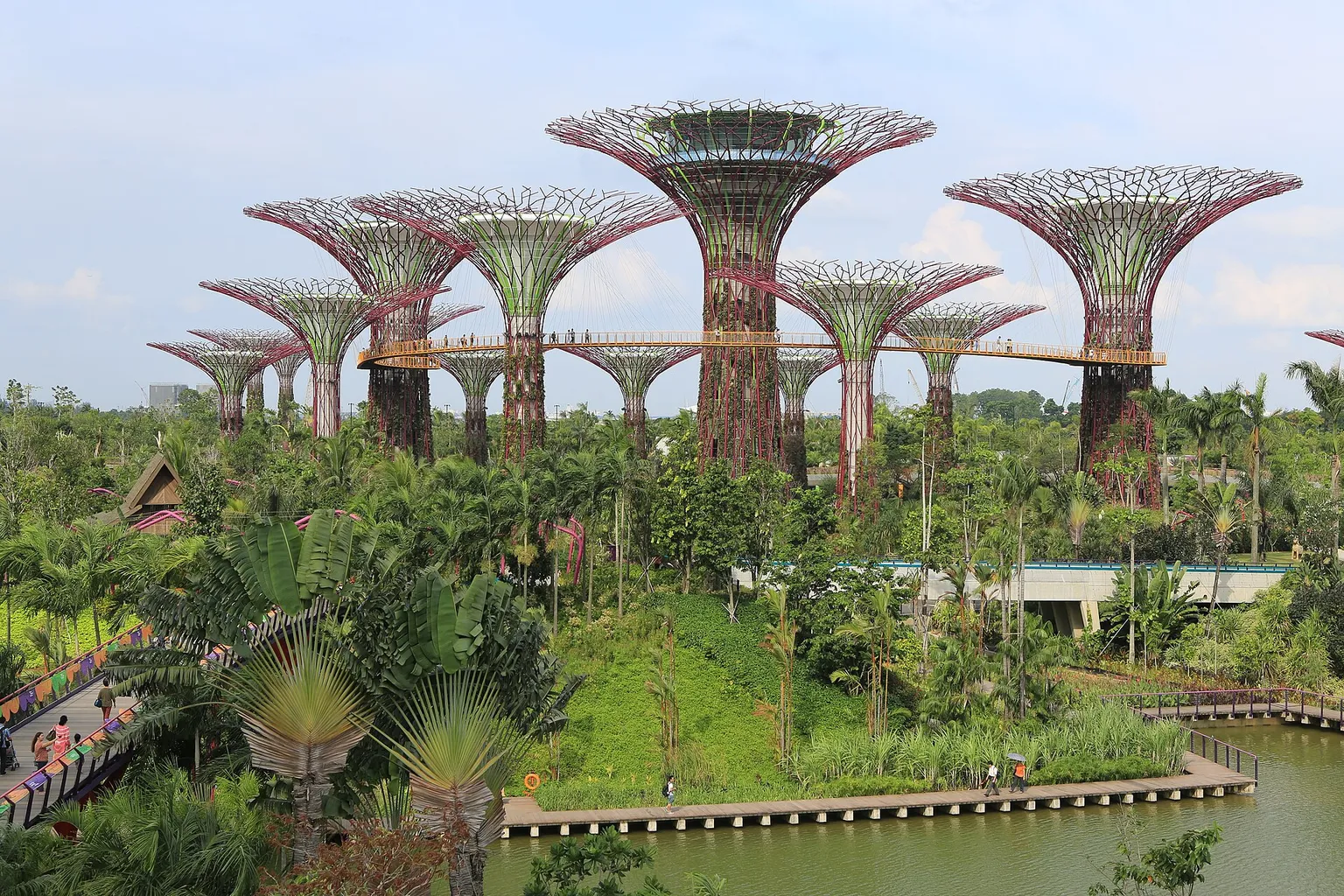
The right route depends on what you are trying to produce: a few atmospheric phone clips around Supertree Grove, a carefully styled personal shoot inside the conservatories, or a commercial production with crew, equipment, and a defined client deliverable.
 Singapore
Tickets and prices
Gardens by the Bay
Combo ticket · 1 hour to 1 day duration
fromSGD13.33
Book onlineOfficial ticket · Non-resident entry with shuttle
fromSGD51
Book onlineThat distinction is where many otherwise well-planned visits go wrong. A standard ticket may get you into a paid attraction, but it does not automatically give you permission to produce commercial content there. A free outdoor area may offer excellent visual material, but it has its own practical limits around crowd flow, equipment, and weather. And if your brief depends on a quiet, controlled frame inside Flower Dome or Cloud Forest, ordinary opening hours may be the least efficient part of the day to work.
When I help hospitality teams shape a visual itinerary in Singapore, I start with the guest journey and work backwards from the intended story. Gardens by the Bay is not one single attraction with one universal entry route. It is a collection of spaces, each with a different role in the visual narrative — and, in some cases, a different booking and permission structure.
The Gardens by the Bay ticket ecosystem is made of separate experiences
The first decision is not where to buy. It is what you need access to.
The outdoor gardens, including Supertree Grove and the Heritage Gardens, are free to enter. They operate daily from early morning until late at night, with access generally available from 5:00 AM to 2:00 AM. This makes them especially useful for hospitality content because you can build a flexible shoot around sunrise, blue hour, the evening light show, or a guest itinerary that does not depend on a timed indoor admission slot.
The paid attractions sit within a different rhythm. Cloud Forest and Flower Dome typically operate from 9:00 AM to 9:00 PM, with last admission at 8:30 PM. Floral Fantasy is also a ticketed attraction, while the OCBC Skyway is a separate experience and can be affected by weather conditions.
That separation matters because a ticket for one area should not be treated as a park-wide pass. A conservatory combination ticket may cover Cloud Forest and Flower Dome, but it does not automatically include every other attraction. Likewise, visiting Supertree Grove costs nothing in admission terms, but that does not make every type of photography or filming free of restrictions.
For a creator, the useful way to map the site is by content function:
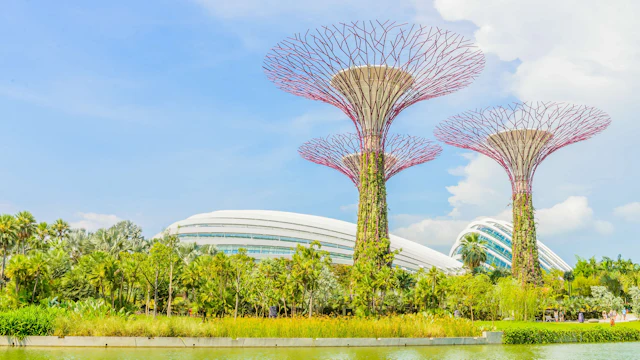
- Supertree Grove gives you scale, skyline, movement, and the strongest evening sense of place.
- Flower Dome offers controlled botanical texture, layered colour, and a more refined visual language for luxury hospitality.
- Cloud Forest provides height, mist, dramatic foliage, and a naturally cinematic sequence — but also more difficult light and heavier visitor traffic around the major viewpoints.
- Floral Fantasy is more immersive and theatrical, with a different spatial mood from the two main conservatories.
- OCBC Skyway adds elevation and a clear relationship between the Supertrees and the surrounding city, although access is weather dependent.
- Heritage Gardens and other outdoor areas are useful for lower-friction, editorial-style content when the brief does not require a controlled interior.
If your client wants a complete Singapore attraction itinerary rather than one isolated location, allow time for travel between the gardens and nearby transport connections. Bayfront MRT Station is a common arrival point, while Gardens by the Bay MRT Station provides another route depending on your starting point and the part of the site you want to reach first. The address commonly used for navigation is 18 Marina Gardens Drive, but the final walking route can feel longer than the map suggests because the site is expansive.
The best way to book Gardens by the Bay begins with the shot list, not the checkout page.
A practical route map for creators
| Your intended content | Most relevant access route | What it gives you | What it does not solve |
|---|---|---|---|
| Organic social clips and destination atmosphere | Free outdoor gardens | Flexible access to Supertree Grove and outdoor zones | Commercial filming permissions, controlled crowd conditions, specialist equipment |
| Indoor attraction coverage for editorial or personal use | Standard attraction admission | Entry to the selected conservatory or attraction | Automatic permission for commercial production |
| A polished personal, wedding, or pre-wedding shoot | Pre-opening personal photography package | Early access before normal conservatory opening | A substitute for larger commercial production approval |
| Branded campaign with crew or production equipment | Commercial filming request and venue approval | A formal route for planned commercial work | Instant access or guaranteed approval without advance planning |
| Evening destination content | Outdoor access around Garden Rhapsody | Free access to the show and Supertree Grove atmosphere | Quiet frames, exclusive positioning, or uninterrupted sound recording |
This table is deliberately less glamorous than the finished images. That is its value. The visual result is often decided by the access model long before anyone adjusts a lens.
Direct tickets versus third-party booking platforms
There are two main consumer booking routes for the paid attractions: purchasing through the official Gardens by the Bay website or using an authorised third-party platform.
The official route has a straightforward advantage — it is the primary source for attraction information, operating updates, maintenance closures, and venue-specific conditions. Direct tickets can generally be booked only within a short advance window, currently up to ten days. They are also non-refundable and non-transferable, so the booking is best suited to a visitor whose date and itinerary are already stable.
That limited window is not necessarily a problem for a casual traveller. For a content team coordinating accommodation, talent, permits, transport, and a weather-sensitive schedule, it can be less convenient. If you are planning a hotel campaign several weeks ahead, the official booking window may not align with the rest of your production calendar.
Authorised third-party platforms such as Klook and GetYourGuide may offer a broader advance booking window, instant QR-code entry, and cancellation terms that are more flexible in some cases — often allowing cancellation up to 24 hours before the visit, depending on the selected product. Those differences can be useful when your guest itinerary is still moving, when rain may affect the wider shoot, or when you are assembling several Singapore experiences in one booking flow.
The trade-off is that third-party listings require more careful reading. Products with similar names may include different combinations of attractions, different validity rules, or different entry instructions. A listing described as a Gardens by the Bay package is not automatically equivalent to a Cloud Forest and Flower Dome combination ticket. Read the inclusions as a production person would read a call sheet:
- Which attractions are actually included?
- Is the ticket for one date, a date range, or a specific time?
- Does it provide direct QR entry, or must you exchange a voucher?
- Are cancellation and rescheduling conditions stated clearly?
- Does the product include only admission, or also transport and a guided component?
- Is the attraction open on the selected date, with no planned closure affecting your sequence?
For a straightforward visitor itinerary, the most convenient option may be the one with instant entry and sensible cancellation terms. For a creator working on a defined visual brief, the better choice is the one that gives the clearest operational certainty — even if it requires a little more comparison before purchase.
The decision is really about flexibility
I tend to think of ticket options in terms of schedule risk.
Direct official booking is strongest when:
- the visit is close enough to fall within the booking window;
- your date is fixed;
- you want to work from the venue’s own attraction information;
- you do not need flexible cancellation.
Third-party booking is often more practical when:
- the itinerary is being planned further in advance;
- you need instant QR-code entry;
- you are comparing several package combinations;
- weather or client scheduling may force a change;
- cancellation flexibility has genuine value.
Neither route automatically provides a commercial filming entitlement. This is the point that should be printed at the top of every production brief. Admission and filming permission are separate questions.
Why pre-opening photography access changes the visual result
There is a substantial difference between photographing a conservatory during public opening hours and photographing it before the general visitor flow begins.
Gardens by the Bay offers personal photography sessions with pre-opening access for formats such as wedding and pre-wedding shoots. The available timing is typically 8:00 AM to 9:00 AM for the conservatories and 9:00 AM to 10:00 AM for Floral Fantasy. These sessions are arranged per location, and weekday and weekend or public holiday rates differ significantly. Because the fee structure changes, it is better to request current terms directly than to build a proposal around an old figure.
For a luxury hotel, bridal brand, or destination campaign, the value is not simply that there are fewer people in the background. Early access gives the visual team more control over the relationship between subject, architecture, and negative space. It becomes easier to create a sequence rather than a collection of disconnected shots:
1. Establish the scale of the conservatory before introducing the subject.
2. Move from a wide architectural frame into details of foliage, glass, pathways, and filtered light.
3. Use the quieter environment for walking footage, fabric movement, or a slower hospitality sequence.
4. Capture clean transitions between spaces without asking visitors to pause or move.
5. Finish with close details that give the destination a sense of texture rather than relying only on the recognisable landmark view.
That is a different visual narrative from a quick visitor reel. It has room for pacing.
The pre-opening package is especially relevant when the brief depends on wardrobe, styling, florals, a couple, or a carefully directed sequence. It is less relevant when the objective is to show an honest guest experience during normal hours. A hotel’s social audience may actually respond better to a busy but believable atmosphere if the content is intended to represent what an ordinary guest will encounter.
The key is alignment. Do not purchase early access simply because it sounds premium. Purchase it when the production needs control that ordinary admission cannot provide.
What personal photography access does not mean
A pre-opening personal photography package should not be treated as a blanket commercial production permit. The exact conditions, crew size, equipment rules, and permitted use should be confirmed with Gardens by the Bay before you commit to the creative plan.
If the project involves a paying client, multiple crew members, professional lighting, extensive equipment, staged scenes, or a campaign intended for advertising channels, describe it honestly in the enquiry. A smaller personal session may not cover that scope.
This is also where hospitality teams sometimes underestimate the importance of the final deliverable. A photographer taking a few personal portraits and a production creating paid brand assets may use similar cameras, but they are not the same operational activity. Venue teams assess the context, not just the size of the camera.
Commercial filming requires a separate conversation
Commercial filming or photography at Gardens by the Bay requires a dedicated filming request. The venue asks applicants to submit the request to [email protected] at least fourteen days in advance, and commercial filming fees can be substantial and quoted according to the project.
That lead time should be treated as a minimum planning point, not as a guaranteed approval deadline. A request may need to include the intended date, locations, crew size, equipment, activity, brand or client, production purpose, and distribution channels. If you are unsure whether your project is commercial, assume it is safer to ask before arriving with a professional setup.
In practical terms, a commercial filming request is particularly relevant if you plan to use:
- tripods or multiple camera bodies as part of a crew setup;
- lighting stands, reflectors, dollies, or other production equipment;
- talent direction or repeated takes in a visitor area;
- branded products, wardrobe, props, or signage;
- paid advertising, hotel campaigns, tourism promotions, or commissioned editorial assets;
- filming that may affect visitor circulation or require a reserved area.
Do not assume that holding a standard admission ticket makes any of this permissible. It does not. Nor should a creator rely on a vague interpretation of public access to justify a commercial shoot. A location may be open to visitors while still requiring separate approval for organised production.
The same caution applies to drones. Do not plan aerial footage inside the conservatories or public outdoor areas without obtaining the relevant permissions, including any requirements that may apply through NParks or the Civil Aviation Authority of Singapore. A drone may be visually attractive in a mood board and completely unusable in the approved production plan.
Admission gets you through the gate. It does not automatically give your brand the right to turn the venue into a set.
The production brief should be written before the ticket is bought
A concise request is more useful than an elaborate creative deck that avoids the operational detail. Before contacting the venue, prepare:
- the working title and client or brand;
- the intended filming date and backup date;
- the spaces you want to use;
- the number of people involved;
- camera, sound, lighting, and support equipment;
- whether talent, products, props, or wardrobe styling are involved;
- the estimated duration on site;
- the intended audience and distribution channels;
- whether the material is editorial, organic social, paid advertising, or internal content;
- any access, loading, storage, or power requirements.
This is not bureaucratic theatre. It helps the venue understand the footprint of the work and helps you discover whether your original concept is realistic.
A production that needs only a small camera and a few quiet clips may require a different conversation from a campaign with a full crew. The sooner that distinction is made, the less likely it is that a client will arrive expecting a luxury set and find that the booking only covers visitor admission.
Building a strong content plan around free access zones
The free outdoor areas are not a fallback for teams that failed to secure an indoor booking. They can be the strongest part of the visual plan when used deliberately.
Supertree Grove is particularly effective because its identity changes throughout the day. Early morning gives you a calmer, more spacious frame and softer light. Late afternoon introduces more dimensional shadows across the landscape. After dark, the illuminated structures create a recognisable Singapore sequence, especially when paired with the Garden Rhapsody light and sound show.
Garden Rhapsody takes place twice nightly, at 7:45 PM and 8:45 PM, and is free for visitors. It is tempting to build the entire shoot around the show, but there is a practical limitation: a free public performance is not a controlled filming environment. Expect crowds, changing sightlines, ambient noise, and competition for the most obvious viewpoints.
For organic content, those conditions can be helpful. The movement of visitors and the shared anticipation before the show communicate experience in a way that an empty frame cannot. For a polished brand film with clean audio and uninterrupted talent direction, the same conditions may be difficult.
A useful outdoor sequence might include:
- a wide arrival frame that establishes the relationship between the Supertrees and the skyline;
- a walking shot that follows the guest journey rather than presenting the structure as a static monument;
- close details of planting, pathways, shadows, and illuminated surfaces;
- an evening frame that captures the change from daylight into the Garden Rhapsody atmosphere;
- a practical transition showing how a guest moves onward to dinner, a hotel, or another Singapore destination.
This is where the idea of sense of place becomes concrete. Viewers do not book a hotel because they saw one attractive landmark in isolation. They book when they can imagine the whole experience around it — how the day begins, what the walk feels like, where the evening opens up, and whether the destination matches the promise made by the image.
Respect the difference between organic and commissioned content
Gardens by the Bay encourages visitors to share user-generated content on Instagram using #yesGBB. By submitting content with that tag, users grant Gardens by the Bay a non-exclusive, worldwide, non-revocable licence to repost and use the media across its marketing channels.
For a casual visitor, that may be an acceptable part of sharing the experience. For a hospitality brand or commissioned creator, it deserves a closer look. Make sure everyone involved understands the intended usage rights, particularly if the content includes hotel branding, paid talent, identifiable guests, or material created under a client contract.
Organic social content can be spontaneous and lightly directed. Commissioned content requires clearer control over permissions, music, likeness, brand usage, and distribution. The more commercial the project becomes, the less sensible it is to rely on the assumptions that apply to ordinary visitor-generated content.
How I would compare the main booking routes
When a client asks for the best way to buy Gardens by the Bay tickets, I do not answer with a single platform name. I ask what could go wrong in the itinerary.
If the team is visiting as guests and wants to cover Cloud Forest and Flower Dome, a combination ticket is usually the simplest starting point. If the date is fixed and close, official direct booking may be perfectly suitable. If the visit is being arranged further ahead or the itinerary needs cancellation flexibility, an authorised third-party platform may be more convenient.
If the visual brief requires a quiet conservatory, standard admission is not the right answer. Look at a pre-opening personal photography package and confirm whether the intended use, crew, and equipment fit the conditions.
If the shoot is commissioned, branded, or equipment-heavy, begin with the filming request rather than with consumer admission. Buying a ticket first may be necessary for a team member to visit for planning, but it does not replace venue approval.
| Booking need | Best starting point | Main advantage | Main risk |
|---|---|---|---|
| Flexible sightseeing itinerary | Authorised third-party platform | Broader advance booking and possible cancellation flexibility | Product inclusions and conditions vary |
| Fixed-date attraction visit | Official Gardens by the Bay site | Direct venue information and clear attraction selection | Short advance booking window; tickets are non-refundable and non-transferable |
| Quiet personal or pre-wedding photography | Pre-opening photography package | Better control over space and early light | Higher cost and location-specific conditions |
| Hotel campaign or paid brand production | Commercial filming request | Proper route for approval and planning | Requires advance notice and case-by-case fees |
| Destination-led social content | Free outdoor areas | Flexible access and strong sense of place | Crowds, weather, and restrictions on organised production |
The before-and-after difference in a content plan is often surprisingly simple. Before the access conversation, the team imagines one continuous shoot moving freely from Supertree Grove into Cloud Forest, pausing wherever the light looks good. After the conversation, the plan separates free outdoor storytelling, ticketed guest experiences, personal photography access, and commercial filming approval. The final storyboard is less ambitious on paper but far more achievable on location.
That is not a reduction in creativity. It is alignment between the visual idea and the conditions that will produce it.
Timing, closures, weather, and the small details that protect the day
Gardens by the Bay is large enough that a ticketed entry time does not remove the need for itinerary planning. Build in walking time between the transport arrival point, the outdoor gardens, the conservatories, and any scheduled show. If you are carrying equipment, moving with talent, or working under a venue-approved schedule, the distance between locations becomes part of the production rather than a footnote.
Check attraction maintenance dates and exhibition schedules before confirming a campaign. Conservatories may have planned closure periods, and special exhibitions can change the experience, access arrangements, and available visual background. The current calendar should always take precedence over a saved itinerary or an older production deck.
Weather affects more than the OCBC Skyway. Rain changes the quality of outdoor footage, visitor movement, reflections, and the relationship between the gardens and skyline. Heat and humidity affect talent, makeup, batteries, and the pace of a walking sequence. If the visual concept depends on both indoor and outdoor material, keep the indoor locations as the more reliable anchor and treat the outdoor sequence as a flexible layer.
For guest-facing content, the most useful details are often the least cinematic:
- choose footwear that can handle substantial walking;
- avoid building a tight transition between an outdoor show and a conservatory admission slot;
- keep an eye on last admission times, not just closing times;
- allow for bag handling and equipment movement;
- confirm whether the selected ticket covers every attraction in the intended route;
- save QR tickets where the team can access them quickly;
- keep a backup plan for rain, heat, or a temporary weather-related closure;
- decide in advance which shots are essential and which are optional.
A beautiful location can still create an awkward guest journey if the itinerary asks people to cross the site repeatedly, queue at the wrong entrance, or reach a final attraction after last admission.
The creator’s route through Gardens by the Bay
For most hospitality content teams, I would build the visit in layers.
Start with the free areas if the brief needs the recognisable Singapore context: Supertree Grove, the outdoor gardens, and the evening Garden Rhapsody atmosphere. These spaces provide the arrival and departure points of the story. They also give you flexibility if the day changes.
Add Cloud Forest and Flower Dome when the campaign needs richer environmental detail, a more immersive indoor sequence, or a clear guest-experience component. Compare direct tickets with authorised third-party options based on booking window, cancellation, and the exact attractions included — not simply on the headline product name.
Use pre-opening personal photography access when the value of the project lies in control: a couple, a styled rooming sequence, a bridal story, a luxury fashion collaboration, or any production where background movement would undermine the visual narrative.
Move to a formal commercial filming request when the work is commissioned, branded, equipment-heavy, or intended for paid distribution. Submit the request at least fourteen days in advance and provide enough detail for the venue to assess the production properly.
Finally, separate what the audience should see from what the production team needs. The viewer may only need a ten-second clip of mist moving through Cloud Forest or the Supertrees lighting up after dark. Creating that clip responsibly may require a much clearer understanding of tickets, permissions, timings, and visitor impact than the finished image suggests.
The best booking route for Gardens by the Bay is therefore not the one that promises the most access. It is the one that matches the intended content, the realities of the guest journey, and the level of control your production genuinely needs. Once that alignment is in place, the gardens stop being a collection of impressive backdrops and become what every strong hospitality location should be: a sequence of experiences that viewers can understand, feel, and eventually choose to book.
Practical info
Currency: SGD
Driving: on the left
Emergency number: 999
FAQ
Are the outdoor gardens at Gardens by the Bay free to enter?
Does a Gardens by the Bay ticket include all attractions?
Is commercial filming allowed with a standard Gardens by the Bay admission ticket?
How far in advance should I request commercial filming at Gardens by the Bay?
What does pre-opening photography access at Gardens by the Bay provide?
When does the Garden Rhapsody show take place?
Photo: Shiny Things . / CC BY 2.0 — Wikimedia Commons