High-Performance Laptops for Hospitality Video Production: Scaling Your Content Workflow
According to Digital Camera World's 2026 laptop roundup, the current benchmark for portable video editing hardware — the M5 Max MacBook Pro — tests at 17 hours per charge and renders 4K timelines in near-real time.
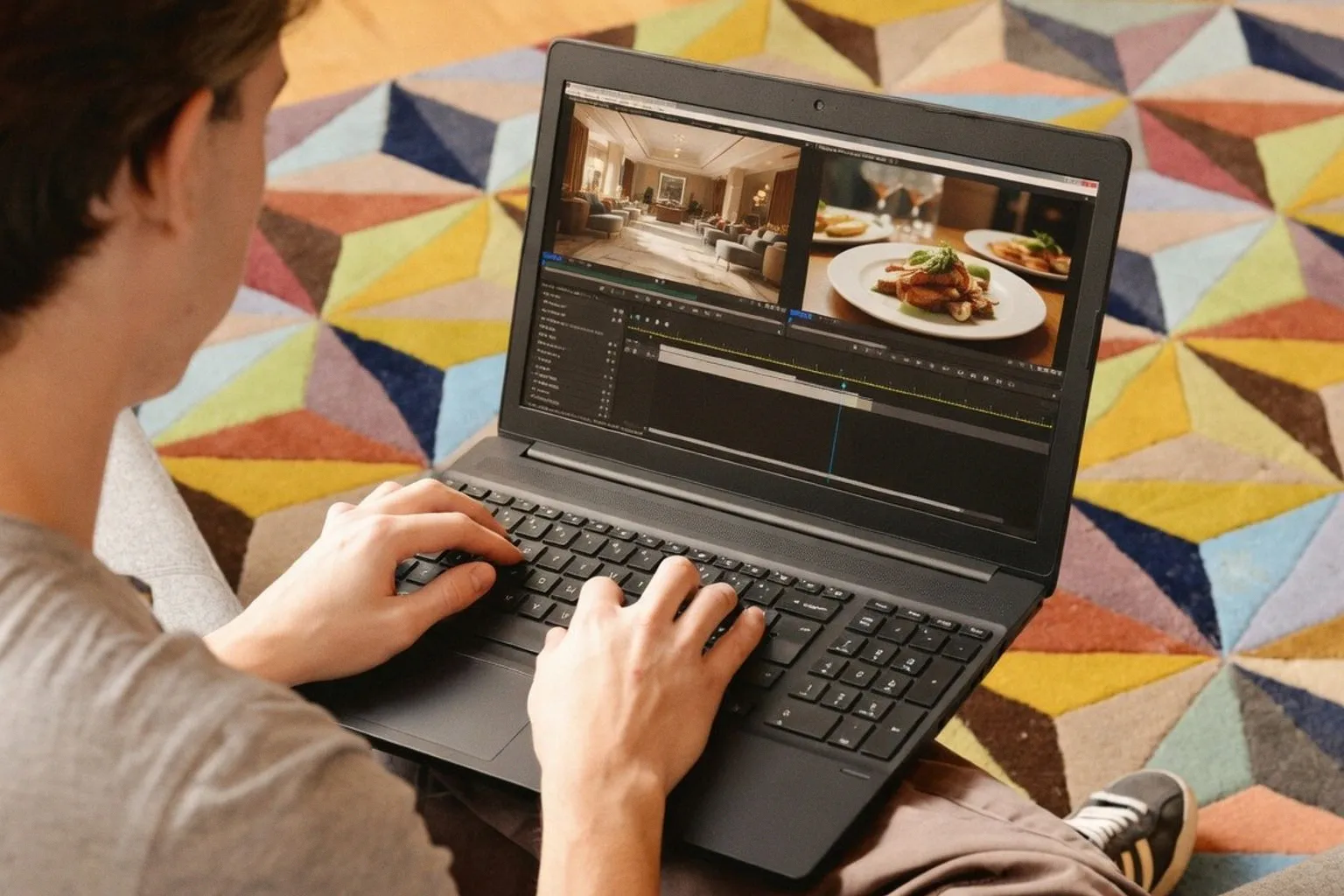
For hotel brands producing property video at scale, that spec delta directly controls how many shoots a content team completes per quarter. The hardware question is no longer a peripheral purchase; it is a production-rate variable.
The spec floor across two recent guides
Digital Camera World and Herzindagi converge on the same baseline. 16GB RAM is the workable floor; 32GB prevents slowdown once Premiere Pro and After Effects run concurrently. Dedicated GPU memory outweighs raw CPU clock speed for 4K export — the single biggest factor in encoding time. SSD read/write speed compounds the gain on large 4K projects. Core count matters only when timelines stack multiple 4K tracks.
Editor math: cutting 4 minutes off a 12-minute export on a 2-minute property reel saves roughly 40 minutes of waiting per finished cut. Across ten edits a month, that recoups days of billable editing capacity.
What the M5 Max changes on location
Digital Camera World's testing flagged four numbers worth tracking. Battery: 17 hours. Weight: 2.15kg. Display: 14.2-inch Liquid Retina XDR, 1,000 nits SDR, 1,600 nits peak HDR, P3 wide-gamut, 120Hz ProMotion. Optional nano-texture coating cuts glare without collapsing color accuracy — directly relevant for property shoots in bright atriums, pool decks, and south-facing suites where reflections kill the on-screen preview. Base configuration ships 36GB; the article flags price as a serious investment even at entry spec.
Hardware audit for content teams
For hospitality video producers, the purchase decision is a production audit. Five checkpoints cut through the marketing:
- RAM headroom: 16GB for solo editors, 32GB for any After Effects pipeline
- GPU memory: 6GB VRAM starts constraining at dense 6K or heavy color grading
- Display brightness: below 1,000 nits SDR loses visibility on lit-location shoots
- Weight ceiling: anything above 2.5kg becomes a liability across multi-site shoot days
- Upgrade path: expandable RAM or SSD storage — project files grow faster than projected
The cost of a laptop is the cost of the renders it finishes. Measure the export time, not the brand.