Why Hospitality Brands Must Stop Treating Content as Their Primary Business
According to a LinkedIn post reported by Storyboard18, creator and entrepreneur Ranveer Allahbadia has told peers that content is no longer the business.
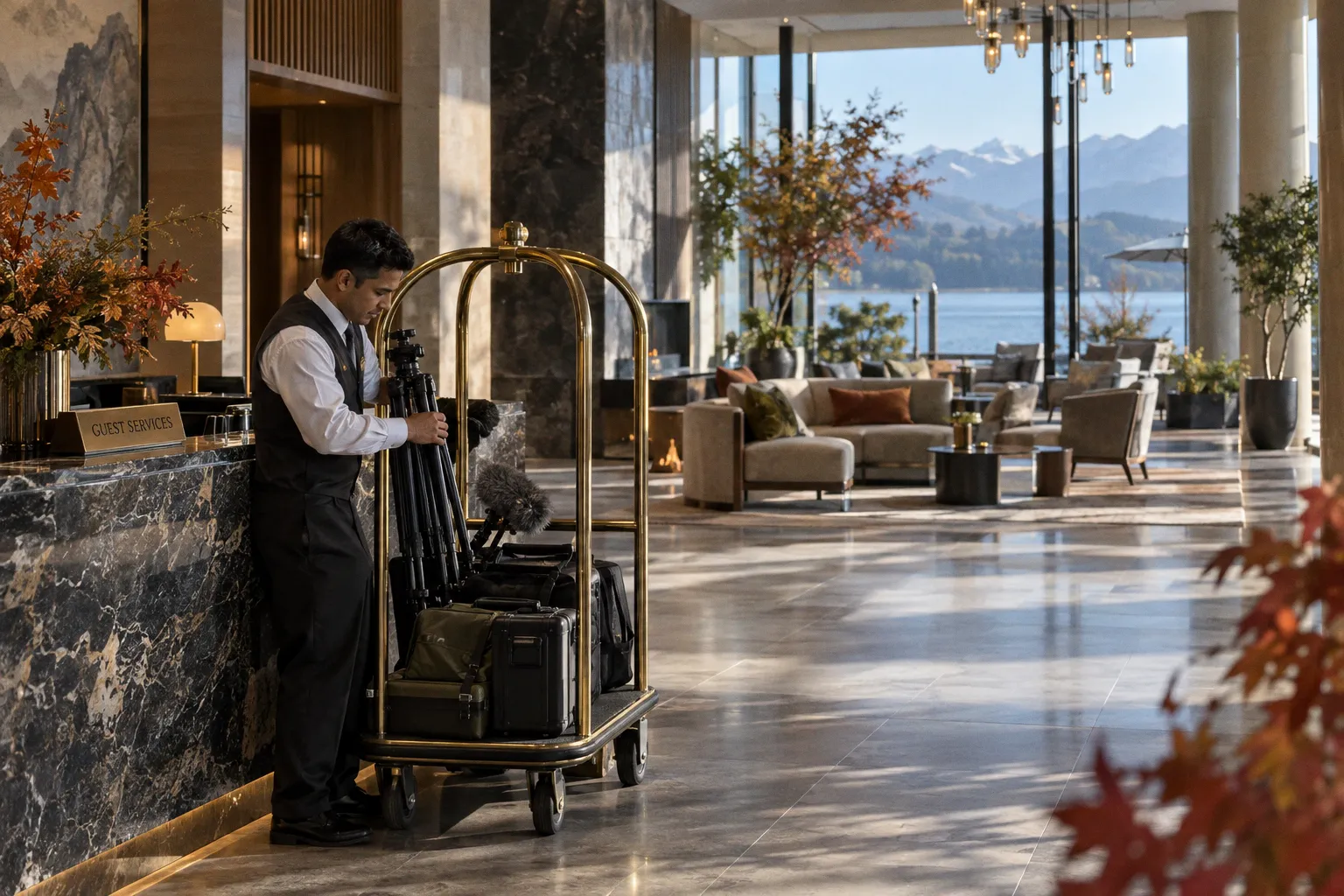
It is the marketing layer over the business. For hotel operators spending five figures annually on property photography and video, the framing matters: the room is the product. The gallery is the funnel.
The supply-side problem
Allahbadia co-founded Monk Entertainment with Viraj Sheth, betting at the outset that content creation would not have a fifty-year shelf life. His estimate for most creators: five or six good years. The constraint is not shrinking audiences. It is expanding supply. More creators chasing finite brand budgets compress per-creator economics downward.
Direct from the post, as reported: "The kind of money influencers have made over the last decade will not hold at that scale for much longer." Attention behaves like a commodity market. Production cost falling, creator count rising, fixed demand — the unit price resets lower.
What hotel and short-term rental operators should do
Allahbadia's prescription: "If you are just starting out in content right now, I am not going to tell you to go make more videos. I am going to tell you to start a business." Translated to hospitality: the room, the service, the location, the experience — that is the business. The photography, the reels, the drone footage — that is conversion infrastructure sitting on top of it. Break it down.
Audit checklist for 2026 content spend:
- Tag every asset to a funnel stage: awareness, consideration, direct booking.
- Track cost-per-booked-room by traffic source, not impressions or reach.
- Measure photo-to-room fidelity. A 15% lift in direct bookings from a better hero image is wiped out if guest reviews flag the gap between the listing and the actual room.
- Set the KPI as direct booking lift. Not content volume. Not follower count.
The same logic applies to brand-creator partnerships. A hotel paying an influencer for a reel is buying distribution into that creator's audience. Negotiate on cost-per-referred-session, not flat post fees. Measure downstream conversion through UTM parameters, not vanity metrics.
A second signal worth noting
Separately, Macau Business reports that Kling AI presented a human-directed AI filmmaking workflow at the TIFF Market panel, framing human creative direction as essential even as AI production costs drop. For property marketing teams, the implication is straightforward: marginal cost per visual asset is declining. Falling production cost does not equal rising direct bookings. Same audit. Different unit economics. The bottleneck was never the shoot day. It was the conversion path from image to booked room.
What to watch next: whether major OTAs and booking platforms begin publishing benchmarks on listing photo performance by tier. That data will let operators stop guessing and start testing.