Do Hotels Need Permission to Repost Guest Instagram Reels?
Drop the hashtag fallacy right now. Your branded hashtag — #StayWithUs, #GuestMoments, whatever pastel nonsense you have printed across bathroom mirrors and check-in cards — is not a universal…
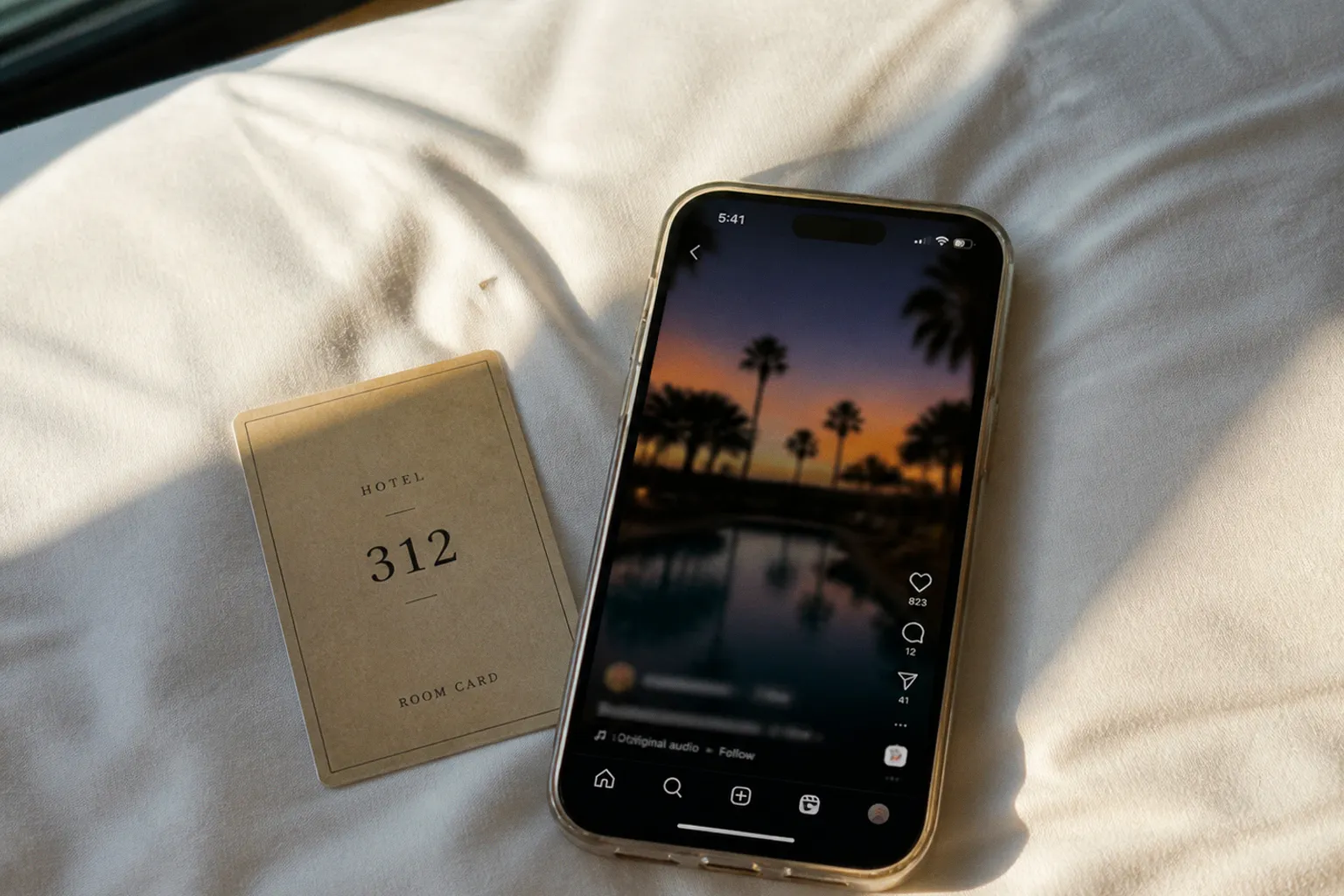
Do Hotels Need Permission to Repost Guest Instagram Reels? The Legal Reality Your Social Media Manager Won't Tell You
Drop the hashtag fallacy right now. Your branded hashtag — #StayWithUs, #GuestMoments, whatever pastel nonsense you have printed across bathroom mirrors and check-in cards — is not a universal license to repost, remix, download, or repurpose guest content.
A California federal court’s 2024 ruling involving a luxury hotel put the distinction in sharp relief: a branded hashtag may support an implied license for a particular kind of social sharing, but that permission can stop at the edge of the original context. It may not cover your website, product promotion, email campaigns, paid advertising, or every other place your marketing team wants to use the same image or Reel.
Here is the practical version. Guest content can be valuable because it shows the property as guests actually experience it: the room at sunrise, the pool when it is busy, the cocktail that really arrived at the table. That authenticity often makes it useful for hospitality brands. But there is no universal rule that guest content automatically performs better than professionally produced content, and there is certainly no rule that a hotel owns it because the guest tagged the property.
The moment a hotel downloads, edits, or distributes a guest Reel outside the original platform and context, it is no longer dealing with a casual social interaction. It is making a commercial use of someone else’s work. That requires a workflow, not wishful thinking.
The Myth of the Branded Hashtag: Why Implied Consent Fails in Court
Most hotel social teams operate under a dangerous assumption: if a guest tags the property, the property owns the moment.
Wrong. Extremely wrong.
The 2024 case Khachatryan v. 1 Hotel West Hollywood L.L.C. became a useful cautionary example for hospitality marketers. A guest used the hotel’s branded hashtag, #sharemy1pic, and the hotel reposted the photo on Instagram. That kind of use was treated differently from what happened next: the hotel also placed the same photo on its website to promote spa products.
The distinction mattered. The court found that the circumstances could support an implied license for sharing the image on Instagram, but that permission did not automatically extend to commercial website use or product promotion. The hotel could not treat one act of public sharing as a blank cheque for every later marketing use.
That is the part many teams miss. Consent is not only about whether the guest said yes. It is also about what, exactly, the guest said yes to.
A branded hashtag can communicate an invitation to participate in a social feature. It may help establish that a creator understood the possibility of being reposted by the brand. But the strength and scope of that argument depend on the facts: the wording of the campaign, the platform, the type of content, the way the hotel used it, and the surrounding communications. It is not a reliable substitute for a direct permission request, particularly when the proposed use is commercial or extends beyond Instagram.
A hashtag is a conversation starter, not a contract. Treat it like a DM, not a legal document.
The difference between these uses is substantial:
- Reposting a public guest Reel through Instagram’s native functionality may be close to the social sharing context the creator expected.
- Uploading a downloaded copy to the hotel’s own account may involve a different technical and legal act.
- Embedding the Reel on a booking page connects it directly to a commercial transaction.
- Using clips in a paid advertisement, sales presentation, email campaign, or digital display is plainly a broader marketing use.
- Cropping the content, adding a voice-over, changing the music, or combining it with branded claims introduces additional questions about editing and endorsement.
The safest approach is to ask for permission in writing and describe the intended use in ordinary language. “Can we share this on our Instagram?” is not the same request as “Can we use this in paid advertising, on our website, in email, and across our other social channels?”
If the hotel wants the wider rights, it should ask for the wider rights.
A comment such as “Thanks for sharing!” is not the same thing as consent. It may be friendly engagement. It may acknowledge that the hotel has seen the post. It does not clearly establish that the creator granted a commercial license, especially if the hotel later uses the content in a different medium.
Native Reposting vs. Manual Downloads: Understanding Instagram’s 2025 Update
Instagram introduced a native repost function on August 6, 2025. The feature allows users to reshare eligible public Reels and feed posts through Instagram, with attribution to the original creator and placement in a dedicated Reposts area on the profile.
For hotel teams, that is a meaningful workflow improvement. Native reposting is cleaner than the old routine of saving a Reel, downloading it through a third-party tool, removing or obscuring the original interface, and uploading a new copy. Attribution is built into the platform, and the original creator remains connected to the post.
But a native button does not turn someone else’s work into hotel property.
The feature provides a platform-level mechanism for sharing content within Instagram. It does not transfer copyright ownership. It does not guarantee that the creator has cleared every element in the Reel for commercial use. It does not automatically grant permission to place the Reel on a hotel website, use it in a paid campaign, publish it on another platform, or include it in a sales deck.
The practical rule is simple: separate the act of reposting from the right to reuse.
A native repost may be appropriate when the content is public, the intended use stays within Instagram, the creator is credited, and the post does not create a misleading impression of endorsement. It is still sensible to ask, especially if the hotel’s account is a commercial brand account rather than a personal profile.
Manual downloading is a different risk profile. It creates a new copy that the hotel controls and can distribute elsewhere. It also makes it easier to lose attribution, strip the creator’s caption, remove context, or accidentally alter the content. If a team member downloads a Reel “just in case,” that file can quickly end up in a content library, a paid social campaign, or a presentation months later, detached from the original post and any surrounding permission.
The native feature also has obvious boundaries:
- It applies to eligible public Reels and feed posts, not content hidden behind private-account settings.
- It does not make private posts, close-friends stories, or restricted content available for hotel use.
- It does not resolve rights in music, artwork, television footage, logos, or other third-party material inside the Reel.
- It does not define the hotel’s rights outside Instagram.
- It does not replace an internal record of what the creator authorized.
Here is the distinction worth putting into the team’s operating notes:
| Use case | What the native feature may help with | What it does not solve |
|---|---|---|
| Repost a public Reel on Instagram | Platform-native sharing and creator attribution | Whether the creator approved the hotel’s commercial use |
| Download and upload the Reel again | Nothing about the download itself | Copyright, attribution, editing, and scope of permission |
| Use the Reel on the hotel website | No automatic permission | A separate license for website and promotional use |
| Run the Reel as paid media | No automatic commercial clearance | Rights in the video, music, people, and embedded content |
| Share a guest Story | Depends on the platform’s sharing options and privacy settings | Permission to save, archive, edit, or reuse the Story elsewhere |
Use native reposting where it genuinely fits the intended use. Do not use it as a legal shortcut for every other form of content distribution.
The High Cost of Copyright Infringement: Statutory Damages and Legal Exposure
Let’s talk numbers, because the marketing team often tunes out until the legal team starts talking money.
Under U.S. copyright law, statutory damages can reach up to $150,000 per infringed work in cases involving willful infringement. That is a ceiling, not an automatic award, and the actual outcome depends on the facts, the court, and the available remedies. But the exposure is serious enough that “we found it on Instagram” is not a defensible content strategy.
The phrase “per work” matters. The risk is not necessarily calculated as one fee for an entire campaign. Multiple unauthorized guest Reels, photographs, or videos may create multiple claims. Reposting several pieces from the same event does not automatically turn them into one legal unit.
The risk profile becomes more uncomfortable when the hotel has clear evidence that it knew permission was missing. Downloading the Reel, adding a logo, editing the caption, placing the video in a paid campaign, and keeping it live after a complaint can all make the hotel’s position harder to defend. So can ignoring a creator’s request to remove the content after the hotel has been told that no commercial permission was granted.
Copyright is not the only issue. A Reel may also involve:
- A person’s right of publicity or privacy, depending on the jurisdiction and the way the person is featured.
- Trademark concerns if another brand appears prominently or the use implies a partnership.
- Music licensing restrictions tied to the original platform or account type.
- Contractual restrictions imposed by an agency, photographer, production company, or other rights holder.
- Misleading-advertising concerns if the hotel presents a guest’s content as an official testimonial or suggests an endorsement that was never given.
The fact that a guest filmed the room does not mean the guest has cleared every visible or audible element. The fact that the guest posted it publicly does not mean the hotel can treat the post as an asset in its media library.
There is also a business cost that does not appear on a damages schedule. A creator who feels exploited may post the permission exchange publicly. A wedding guest whose footage is used in an advertisement may regard the use as especially invasive. A hotel can end up defending a campaign that was never strategically important in the first place.
This is why a UGC workflow should be built before the content becomes popular. Once a Reel starts attracting attention, teams move quickly. That is exactly when someone skips the permission step, assumes the agency handled it, or mistakes a public post for a cleared asset.
The sensible response is not to avoid guest content altogether. It is to treat it like any other commercial asset: identify the rights holder, document the permission, record the limits, and make sure the final use matches the approval.
Navigating Third-Party IP: The Hidden Danger of Licensed Music in Guest Reels
This is the trap that catches even careful hotels.
A guest posts a beautiful Reel of the rooftop suite set to a trending track. They tag the property. The social manager uses Instagram’s native repost function. It looks clean, credited, and entirely above board.
Not necessarily.
The guest may own the video they recorded, but they may not own the music layered over it. Music available through Instagram’s library can be subject to platform-specific terms and restrictions. A song that a user can add to a personal post may not be cleared for a hotel’s commercial marketing use, particularly outside the original platform or in advertising.
The guest’s permission can therefore solve one rights question while leaving another untouched.
The same problem applies to content captured inside the frame:
- A television broadcast playing in the background.
- Artwork displayed in a guest room or lobby.
- A branded product placed on a minibar or restaurant table.
- A photographer’s work visible on a wall.
- Another guest who is identifiable in the footage.
- A performer, DJ, or event supplier whose contract limits recording or commercial distribution.
The creator may not have had a reason to clear these elements for their personal post. The hotel has a different purpose. It is deliberately taking the content and using it to market a business. Incidental capture and intentional commercial reuse are not the same thing.
The cleanest UGC is the UGC you can actually license. Anything else is a legal landmine dressed in a sunset filter.
Music deserves its own internal rule because it is so easy to overlook. If the hotel wants to download a Reel and use it in a paid advertisement, the fact that Instagram supplied the track does not establish that the hotel has advertising rights. If the hotel wants to publish the footage on TikTok, YouTube Shorts, a website, or a digital screen, the original platform’s music permissions may not follow the file.
A practical hotel workflow can reduce the problem at the selection stage. Before approving a piece of UGC, ask:
1. Is the video original to the guest, or does it include footage from another creator?
2. Is music audible, and if so, who cleared it for the intended use?
3. Are identifiable people present?
4. Are artworks, screens, logos, or branded products prominent?
5. Does the content show a private event, wedding, conference, or other setting where additional expectations of privacy apply?
6. Does the proposed caption make a claim the guest never made?
7. Is the hotel asking only for an Instagram repost, or for a broader commercial license?
If any answer is unclear, the hotel can choose a narrower use, ask the creator for clarification, obtain additional releases, replace the audio, or pass on the content. A single attractive Reel is not worth building a campaign around an unresolved rights problem.
Building a Compliant UGC Workflow: From DM Approvals to Privacy Standards
Enough doom. The system is not complicated. It is just disciplined, repeatable, and slightly less exciting than downloading whatever is performing well that afternoon.
Step 1: Ask before you repost
Every time the intended use goes beyond what the creator clearly invited.
A direct message can be simple:
“Hey, we love this Reel. May we repost it on the hotel’s Instagram account, with credit to you?”
If the hotel wants broader rights, the question should say so:
“May we use this Reel on our Instagram, website, email marketing, and paid social advertising, with credit to you?”
The request should identify the hotel or brand account, not leave the creator guessing who is asking. If the content may be edited, say that too. “We may crop the video for format, but we will not materially alter it” is more useful than a vague promise to “feature” the post.
Do not rely on a like, a follow, a tag, or a reply such as “thank you.” Ask for an unambiguous response.
Step 2: Document the consent
A permission process is only useful if the record survives staff turnover.
Save the relevant DM or email, including the original post, the creator’s handle, the date, and the exact scope of approval. If the hotel uses a form, connect the form to the asset so that the next person can understand what was cleared without searching through old inboxes.
The record should answer four questions:
- Who gave permission?
- What content did they approve?
- Where may the hotel use it?
- For how long, and under what conditions?
A screenshot can be useful evidence, but it should not be the entire system. Screenshots become difficult to search, easy to mislabel, and hard to interpret when the original post has changed or disappeared. A simple content-rights register can add the missing context.
Useful fields include the content URL, creator name and handle, permission date, approved channels, paid-media status, editing restrictions, credit requirements, expiration or review date, and the team member responsible for the asset.
Step 3: Define the scope in plain English
The narrower the intended use, the easier it is to ask accurately.
A hotel may need separate permission for:
- Organic posting on Instagram.
- Reposting through Instagram’s native tool.
- Downloading and uploading a copy.
- Use on TikTok, YouTube, Pinterest, or another platform.
- Website pages and booking-engine content.
- Email newsletters and promotional messages.
- Paid advertising.
- In-room screens, digital signage, brochures, or other offline material.
- Editing, subtitling, translating, cropping, or combining the content with other assets.
Do not ask for every possible right merely because a standard form makes it easy. Broad, perpetual, worldwide language may be familiar to legal teams, but it can feel disproportionate to a guest who simply posted a short room tour. A clear, limited request often produces better cooperation and a cleaner relationship.
At the same time, do not ask for Instagram permission and then quietly treat it as permission for the hotel’s entire marketing ecosystem. If the hotel’s plan changes, return to the creator and ask again.
Step 4: Handle privacy law based on the actual relationship and use
The hotel should not treat GDPR as a slogan or assume that the presence of any European guest automatically brings every use within GDPR’s territorial scope. The territorial application of the GDPR depends on the circumstances, including the organization’s activities, where processing takes place, and whether the processing relates to offering goods or services to individuals in the European Economic Area or monitoring their behavior there.
A guest’s nationality alone is not the test.
That does not mean privacy can be ignored when the hotel is unsure whether GDPR applies. It means the team should assess the situation accurately rather than use an overbroad shortcut. A hotel marketing campaign may involve personal data even when the content was publicly posted: faces, names, usernames, location information, travel details, and identifiable companions can all matter.
For any campaign that may fall within GDPR or another applicable privacy regime, the hotel should involve its privacy or legal adviser and establish an appropriate lawful basis. Consent may be suitable in some situations, but it must be informed, specific, and capable of being withdrawn. Copyright permission and privacy permission are related but separate questions. A guest can authorize use of their video while another identifiable person in the frame has not agreed to appear in a hotel advertisement.
The operational questions are straightforward:
- Is anyone identifiable in the content?
- Did the hotel invite or encourage the post as part of a campaign?
- Is the hotel using the content to market services to people in a relevant jurisdiction?
- Is the content being used in a way that reveals travel, health, family, or other sensitive details?
- Can the hotel honor a deletion or withdrawal request?
- Does the original post contain children or people who may not reasonably expect commercial reuse?
If the answer creates uncertainty, pause the campaign and escalate it. Privacy compliance is not established by adding the words “by using our hashtag, you agree” to a sign nobody reads.
Step 5: Check third-party rights before approval
The creator’s permission is not a universal clearance certificate.
Ask the social team to review the audio, visible people, artwork, logos, and any footage that appears to come from somewhere else. For organic Instagram sharing, the platform may handle some aspects of the user experience. For downloads, paid media, websites, and cross-platform distribution, the hotel needs to consider whether those permissions travel with the content.
If the content is strong but the audio is not cleared, ask whether the video can be used without the original track or with music the hotel has separately licensed. If recognizable guests appear, determine whether they need to be approached. If the Reel captures a private event, consult the event agreement and the expectations created when the footage was recorded.
This review should happen before the post enters the content calendar, not after the campaign is live.
Step 6: Record attribution and editing requirements
Credit is not a substitute for permission, but it is still part of responsible use.
Record the exact handle the creator wants credited. Confirm whether the hotel may add a caption, crop the video, place text over it, or cut a longer Reel into shorter clips. Some creators will approve a repost but object to edits that change the meaning or make the content look like an official hotel production.
Do not edit a guest’s excited personal review into a statement that sounds like a guaranteed promise from the hotel. Do not turn “the view from our room was incredible” into an implied claim that every room has the same view. Context matters commercially as well as legally.
Step 7: Set a review or expiry process
Permission is not always permanent.
A creator may agree to an organic repost but not want the content used in a later campaign. A wedding Reel may be appropriate for a short social feature and inappropriate as evergreen website content. A guest may delete the original post, change their handle, or ask the hotel to remove the repost.
Set a review date for content that remains in rotation. If the original approval was limited or informal, ask again before expanding the use. Build a process for handling takedown requests quickly, even when the legal position is still being evaluated. Removing content does not erase a past use, but it can prevent an avoidable dispute from becoming a larger one.
Step 8: Train everyone who touches the account
Social media managers, marketing coordinators, freelance creators, agencies, front-desk staff, and brand partners all need to understand the same basic rule: public does not mean owned.
A compliant workflow can be undone by one person who downloads a Reel from a guest account and drops it into a shared folder labeled “approved UGC.” Make the approval status visible. Use clear file names. Keep restricted assets away from general campaign folders. Require a rights check before paid media or website publication.
The best process is the one a busy team can follow at speed. If the only record is buried in a manager’s private inbox, the hotel does not have a scalable workflow. It has a future evidence problem.
Do this: a documented, scope-specific approval system with a clear owner. Not that: a screenshot folder labeled “guest content” with no permission trail.
What a Permission Request Should Actually Cover
A hotel does not need to send every guest a twelve-page contract to repost one public Reel on Instagram. It does need to avoid ambiguity.
A practical request can cover:
- The specific post or Reel being licensed.
- The hotel account or accounts that may use it.
- The channels included: Instagram only, or website, email, paid social, and other platforms.
- Whether the use is organic, paid, or both.
- Whether the hotel may crop, resize, caption, subtitle, or otherwise edit the content.
- The credit the creator expects.
- Whether third-party music or other embedded material is included.
- The expected duration of the use.
- A contact route for withdrawal or correction requests.
For a one-off native repost, the request can be short. For paid advertising, a website testimonial, or a campaign that will run across multiple markets, the permission should be more formal and should be reviewed by the hotel’s legal adviser.
The point is not to make every social interaction feel like a licensing negotiation. The point is to match the permission process to the commercial weight of the use.
A guest may happily approve an Instagram repost and decline paid advertising. That is not a failure. It is useful information about the boundaries of the relationship and the content.
The Real Bottom Line
Guest content can be an effective part of a hospitality content mix. It can bring perspectives and moments that a polished brand shoot would not naturally produce. It may attract strong attention, meaningful comments, or useful engagement in particular campaigns. But performance varies by property, audience, format, distribution, and creative execution. No serious hotel team should promise that Guest Reels outperform brand-produced content on every meaningful metric, especially booking conversion.
A guest’s video can earn views without producing reservations. A beautifully produced brand film can perform quietly on social media while supporting a broader campaign. Reach and watch time are not the same as revenue, and engagement is not proof of booking intent. UGC should be evaluated on the role it plays in the funnel, not promoted with universal claims that the available evidence cannot support.
The legal infrastructure matters just as much as the creative strategy. A branded hashtag is not a blanket license. A public post is not an abandoned asset. A native repost feature is a platform convenience, not a transfer of ownership. Permission to use the guest’s video may not cover the music, people, artwork, or brands contained within it. Copyright, privacy, publicity, and advertising questions can overlap without being interchangeable.
The hotels that use UGC well are not necessarily the ones that publish the most. They are the ones that know what they have permission to use, where that permission applies, and when it needs to be revisited.
Build the workflow before the Reel becomes a campaign asset. Ask clearly. Record the answer. Keep the scope honest. Use native reposting when it fits, and obtain broader permission when the hotel wants broader rights.
The algorithm may reward spontaneity. Your permissions process should not depend on it.