TikTok video reuse on Instagram Reels: hotel strategy
Stop treating the share button as a content strategy.
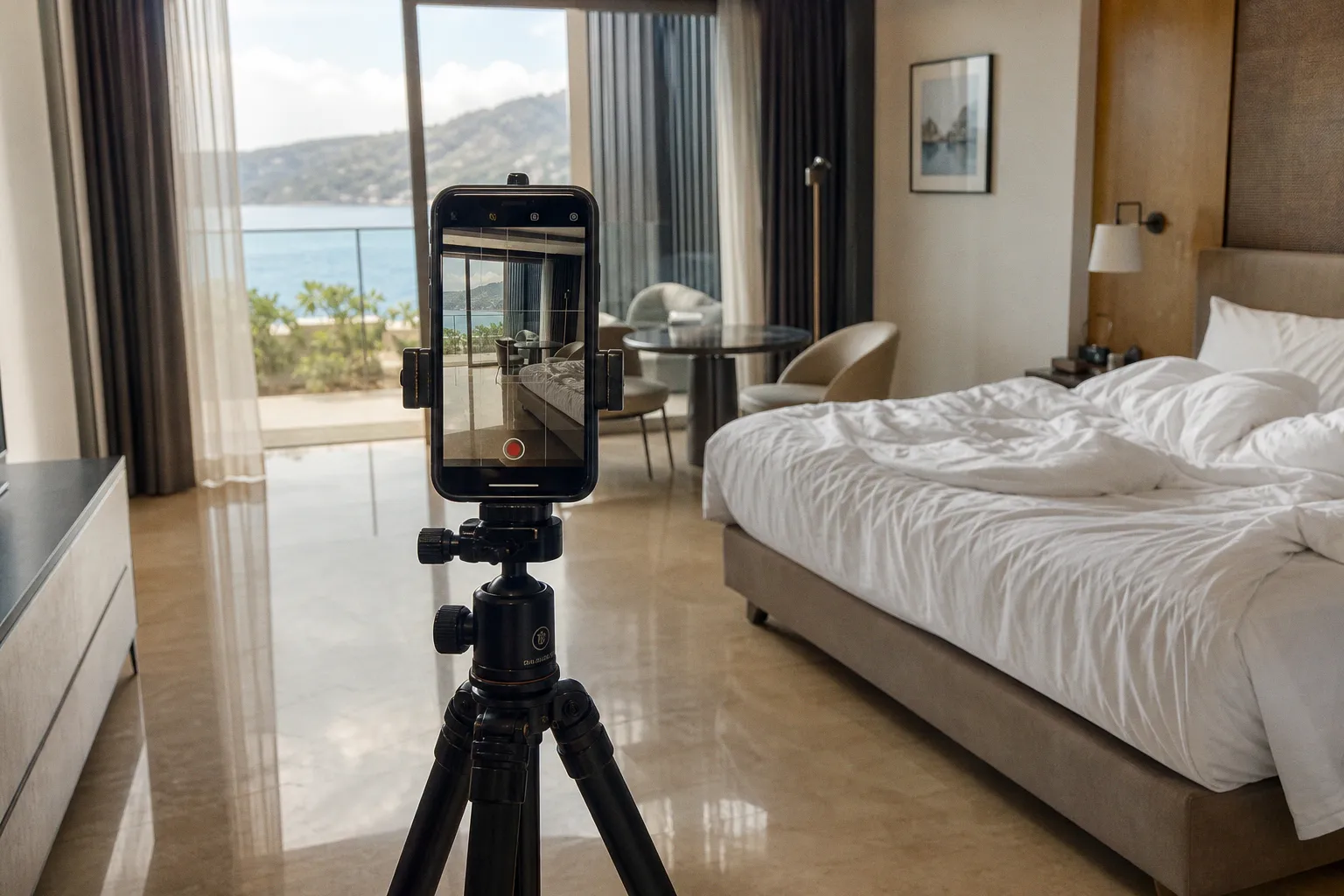
TikTok Video Reuse on Instagram Reels: Hotel Strategy That Doesn't Burn Your Reach
That little “Share to Instagram” arrow on TikTok is convenient, but convenience is not the same thing as a clean publishing workflow. It can leave your hotel with a Reel carrying visible TikTok branding, TikTok-native audio, and a format that was built for another platform’s recommendation system. Your suite walkthrough still uploads. Your restaurant showcase still appears on the grid. But the content may arrive on Instagram looking like a hand-me-down rather than a piece made for the audience you want to reach.
Here’s what many hoteliers still get wrong: cross-posting TikToks to Reels is not a copy-paste job. It is a translation job. Different platform, different recommendation signals, different audio licensing, different audience behavior. Treat the two channels as interchangeable and you can lose distribution on both ends — along with the discovery and consideration that distribution is supposed to create.
The efficient workflow is simple in principle: shoot or edit from an original clean source file, then prepare a version for each platform. The footage can be shared. The final export should not always be.
The Watermark Tax: What Instagram Actually Does to Cross-Posted Content
Instagram has repeatedly signaled that Reels carrying visible watermarks from other platforms are less likely to be recommended broadly. That does not mean every watermarked video is automatically buried, or that Instagram publishes a fixed penalty for every logo in every situation. It means a TikTok-branded export is a poor bet if your objective is non-follower discovery.
The Reel still posts. Existing followers can still see it. It can still collect comments, saves, and shares. But a visible TikTok trace can make the video look recycled, reduce its chances of being treated as native content, and weaken the first impression for someone discovering the property through Explore or the Reels feed.
That distinction matters for hotels because the most valuable viewer is often not the person already following the account. It is the traveler who has never heard of the property, sees a 20-second room tour while scrolling, saves it for a future trip, and later checks rates. If the content never reaches that person, the production effort is doing less work than it should.
Cross-posting is not duplication. It is platform-specific re-engineering — or it is a reach donation to nobody.
The penalty is not always obvious from the account dashboard. You may see normal engagement from your existing audience while discovery quietly softens. The video is technically live, but it is not doing enough prospecting. That is how a hotel team ends up saying, “The content performed fine,” when what they really mean is that a familiar audience watched it.
A clean export will not guarantee reach. It removes one avoidable liability.
Use the original source file, not a downloaded platform copy
The most dependable workflow is to keep the clean original footage or edit project outside TikTok. Shoot with a camera or phone, edit in your normal production tool, export a master without platform marks, and create separate uploads for TikTok and Instagram.
If the video was already assembled inside TikTok, go back to the original camera clips or the clean project file when possible. Do not build the hotel’s entire content library around a version that has already passed through one platform’s interface.
That gives the team control over:
- The crop and safe zones for each app.
- The caption placement and timing.
- The final bitrate and resolution.
- The audio track used on Instagram.
- The order of clips when a platform-native trend does not translate.
- The call to action shown to a viewer who has never encountered the property before.
A clean source file also protects future reuse. A clip shot for a seasonal package may later become a paid social asset, a website section, a story sequence, or part of a longer destination video. A platform-watermarked download is a dead end. The original file is an asset.
What to remove and what to keep
- Do not rely on the TikTok-to-Instagram sharing flow as your default publishing method when the export carries visible TikTok branding.
- Do not screen-record as a routine workaround. It can reduce sharpness, alter the crop, capture interface elements, and create sync problems.
- Do use the original clean camera file or a clean export from the editing project.
- Do re-edit the video for Instagram rather than uploading the TikTok version unchanged.
- Do add the hotel’s own brand treatment only when it helps recognition and does not cover the subject of the shot.
- Do check the finished Reel on a phone before publishing. A lower-third that looks restrained in the edit suite can cover the room feature viewers need to see.
A hotel’s own logo is not the same thing as a TikTok watermark. Brand identification and platform attribution serve different purposes. The practical goal is not to avoid all marks; it is to avoid making the Reel look as if it was exported from a competing app five minutes earlier.
The Sound of Silence: Why TikTok Audio Goes Mute on Meta Platforms
Watermarks are the obvious problem. Audio licensing is the one that can make a finished video fail after publication.
A song available for a TikTok post is not automatically cleared for use in an Instagram Reel. The rights attached to platform music libraries are often platform-specific, territory-specific, account-specific, or limited to particular uses. A hotel account also needs to think like a commercial publisher, not a personal creator. The fact that a sound appears in a trend does not, by itself, tell you that the property has the right to carry that audio from one platform to another.
When a TikTok export contains music that Instagram cannot use in the same way, the Reel may be muted, the audio may be replaced, or the post may lose some of the value the edit was built around. Even when the video remains live, a silent hotel walkthrough is not a neutral outcome. Music often sets pace, signals mood, and makes a pool, bar, or spa clip feel like an experience rather than a sequence of property images.
The safer approach is to separate the visual edit from the platform audio decision.
| Audio workflow | What it means for a hotel Reel |
|---|---|
| TikTok audio baked into the exported video | May be muted or restricted on Instagram; licensing is not automatically transferable |
| A trend identified on TikTok but rebuilt with original sound | The visual idea can travel without carrying the licensing problem across platforms |
| Audio selected from Instagram’s available commercial options | Better fit for the account and the platform, with rights handled inside the publishing workflow |
| Original hotel sound, voiceover, or ambient audio | Distinctive, reusable, and often more credible for service and behind-the-scenes content |
| Track from a properly cleared brand or commercial library | Useful when the team needs consistent music across multiple channels and campaigns |
Instagram-native audio can be useful when it genuinely fits the concept, but trend-chasing should not become the entire strategy. A hotel does not need to attach itself to every viral sound. A property can build recognition through recurring formats, recognizable staff voices, ambient sound, and a consistent editorial point of view.
For a boutique hotel, the sound of a lobby at breakfast may do more persuasive work than a generic trending track: coffee being poured, plates moving across the pass, a door opening onto the terrace, rain against the windows. Those details communicate place. They also give the viewer something that cannot be copied from a competitor’s content calendar.
Build two audio versions when the idea deserves it
Some concepts are worth preparing in two forms:
1. A TikTok version using the platform’s native sound or trend structure.
2. A clean visual master with original audio, voiceover, or a track that can be selected legally inside Instagram.
The cuts do not need to be identical. A TikTok might open with a text-led hook and a fast trend transition. The Reel might begin with the strongest room reveal, use a shorter caption, and let the hotel’s own ambient sound carry the first few seconds.
This is not needless duplication of labor. It is a small investment that prevents one platform’s rights and conventions from dictating what the other platform receives.
The 21–35 Second Sweet Spot and the Caption Multiplier
TikTok’s business guidance has often pointed marketers toward short video, and the 21–35-second range is a useful working window for many hotel concepts. It is not a law of hospitality content and it should not become a target that overrides the story. A room tour may need 18 seconds. A chef explaining a dish may need 42. A guest itinerary can earn a longer cut if every moment moves the viewer forward.
The real question is not, “Did we hit the correct duration?” It is, “Did the video deliver a clear reason to keep watching?”
Hotel viewers usually need to understand three things quickly:
- What kind of place is this?
- What experience or detail is being shown?
- Why should I save, share, or investigate it now?
A room walkthrough that spends its opening seconds on a slow exterior logo animation is already asking too much patience from a cold viewer. Start with the view, the unusual room feature, the breakfast moment, or the detail that makes the property specific. Establish context after you have earned attention.
Design for sound-off viewing without making the video lifeless
Captions are not an accessibility checkbox added at the end. They are part of the edit.
Many viewers encounter short-form video in public, at work, while traveling, or in situations where sound is unavailable. If the meaning disappears when the audio is off, the content is dependent on a behavior the hotel cannot control. Captions, concise on-screen text, and visual sequencing make the idea legible without flattening it into a brochure.
A useful caption pass depends on the format:
- Room tours benefit from short, timed labels: “corner suite,” “late-afternoon light,” “walk-in rain shower,” or “breakfast served on the terrace.” If there is voiceover, caption the meaning rather than covering every frame with a wall of text.
- Behind-the-scenes staff moments need context. “Meet the person behind the welcome drink” gives a viewer a reason to care before the staff member starts speaking.
- Food and beverage clips can use dish names, ingredients, service times, or a clear booking detail. A specific detail often earns more saves than “you have to try this.”
- Pool, spa, and amenity videos should identify what the viewer is seeing and when it is available. A beautiful treatment room is more useful when the audience knows whether it is part of a day package, a stay, or a bookable experience.
- Destination content should connect the property to the surrounding area without making a vague claim about “the perfect getaway.” Name the walk, market, beach, trail, or neighborhood experience if the hotel is genuinely close to it.
Keep text away from the interface areas where captions, buttons, and profile information may cover it. Test the Reel in the actual app, not only in the editing software. The most carefully written call to action is worthless if it sits behind the share controls.
Optimize for conversion without turning every Reel into an advertisement
A hotel Reel rarely converts through one aggressive booking line. More often, it creates a sequence of small decisions:
1. The viewer stops because the opening image is specific.
2. They understand the property’s atmosphere or offer.
3. They save the video or visit the profile.
4. They compare rooms, dates, reviews, and location.
5. They return through another piece of content or a tagged guest post.
6. They book when the trip becomes real.
That means not every Reel needs “Book now” in large text. Some videos should make the property memorable. Others can answer practical questions: how early breakfast starts, whether the pool is adults-only, what a standard room looks like at night, or which suite has the terrace shown in the opening shot.
A good content mix gives viewers both desire and evidence. Desire makes them stop. Evidence helps them decide.
The 1–3 Per Week Rule: Why Sustainable Beats Spammy
Hotels are good at content sprints. A team captures seven videos during one busy shoot, posts them all in a week, watches the views arrive, and then disappears for a month because the next shoot never made it onto the calendar.
That pattern is difficult for the audience and difficult for the team. The account becomes unpredictable, and the property loses the accumulated effect of repeated exposure. Consistency does not mean publishing on autopilot. It means building a rhythm the hotel can maintain through high season, low season, staffing changes, and ordinary operational pressure.
For many boutique properties, independent hotels, and lifestyle-led resorts, one to three strong short-form videos per week is a practical operating range. It is not a universal algorithmic requirement. It is a cadence that gives the team enough room to think, edit cleanly, obtain permissions, and create different kinds of content without turning front-of-house staff into an unpaid production department.
A balanced weekly mix might include:
- One room or suite walkthrough. Give it a point of view rather than reproducing the listing gallery. Show the morning light, the work-friendly corner, the bath ritual, or the view at the time guests actually use it.
- One staff or behind-the-scenes moment. Let the concierge explain a local route, the chef introduce a seasonal plate, or the housekeeping team show the detail guests rarely notice.
- One guest-experience or UGC-led post. Repost tagged content with permission, assemble a short itinerary from guest clips, or respond to a recurring question with footage from the property.
The mix is more important than the volume. Three room tours in one week make the account feel like a real-estate catalog. One room tour, one human story, and one guest-perspective video create a more complete picture of hospitality.
Build a content system around the operation
The most sustainable hotel content is usually collected during work that already has a reason to happen. The chef is preparing the signature dish anyway. The grounds team is opening the garden anyway. The room is being prepared anyway. The task is to identify moments worth capturing without interrupting service or staging every detail beyond recognition.
A simple production system can help:
- Keep a rolling list of recurring guest questions and turn each into a visual answer.
- Capture several opening shots whenever the team is already filming on property.
- Record clean room tone and ambient sound alongside the main footage.
- Store original files with clear names, dates, location tags, and usage notes.
- Separate footage that includes identifiable guests from footage that can be used freely.
- Create a small library of establishing shots, staff introductions, amenities, and destination details.
- Review which posts generated profile visits, saves, shares, direct questions, and booking-page activity — not just views.
The point is not to turn the hotel into a content factory. It is to stop starting from zero every time the social calendar needs a post.
Larger properties with dedicated social teams or agency partners can publish more frequently, but more posts do not automatically create more demand. Repetition without a new angle trains the audience to scroll past. A high-volume feed still needs editorial judgment: what is different today, who is speaking, and what does the viewer learn or feel that they did not get from the previous post?
The 77% Problem: Why Your Reels Feed Is Now Part of the Booking Funnel
A hotel’s social feed is no longer only a place to announce offers. For younger travelers, it can be part of the property’s first inspection.
One survey cited in the hospitality conversation found that 77% of UK Gen Z respondents considered a venue’s Instagram and TikTok presence when making a booking decision. That should not be read as a guaranteed booking rate or as proof that every member of the cohort uses social platforms in the same way. It is a signal about consideration: the way a property appears on a vertical screen can influence whether the viewer moves closer to booking or moves on.
Other survey findings point in the same direction. Respondents reported that Instagram and TikTok influence venue choice, while a separate figure often quoted in this context says that 32% of surveyed users reported booking a hotel or resort they had discovered on TikTok. That is a user-reported behavior result. It is not a 32% hotel booking discovery rate, not a conversion rate for hotel accounts, and not a promise that a particular Reel will generate a booking.
The distinction is not academic. A survey about what users say they did cannot be used as a property-level performance benchmark. It can, however, tell hotel marketers that TikTok discovery is capable of moving beyond entertainment and into travel consideration.
The journey often looks something like this:
1. A traveler sees a room, view, restaurant, or destination moment in the feed.
2. They save the video or send it to a travel companion.
3. They open the hotel’s profile and scan several more posts.
4. They look for tagged guest content, recent comments, and evidence that the atmosphere matches the promise.
5. They check the website, availability, location, reviews, and terms.
6. They book when the trip, dates, and price align.
Your Reels feed is therefore doing several jobs at once. It is a visual introduction, a mood board, a lightweight portfolio, a source of social proof, and sometimes the beginning of the booking path. The content does not need to behave like a sales page, but it does need to withstand inspection.
Authentic does not mean careless
The appeal of guest and staff content is not that it is technically imperfect. It is that it carries evidence of real use.
A guest clip can show how the property feels at breakfast, how close the room is to the beach, or what the pool looks like when people are actually using it. A concierge video can answer a question with more credibility than a generic destination caption. A housekeeping detail can communicate standards without saying “we care about every detail.”
But “raw” should not become an excuse for poor judgment. Authentic hotel content still needs permission, accurate captions, respectful framing, and a clean enough image for the viewer to understand what they are seeing. Do not publish identifiable guests without consent. Do not imply that a guest’s opinion is an official endorsement. Do not crop out context that changes the meaning of the experience.
A practical UGC pipeline includes:
- A clear process for asking permission to repost.
- A record of who approved the use and on which channels.
- A clean export or original file whenever the creator can provide one.
- Credit that is visible but does not overwhelm the property’s own message.
- A review for privacy, safety, and factual accuracy.
- A follow-up message when the hotel wants to use the clip in paid media or on its website, where different permissions may apply.
Influencer partnerships belong in the same discipline. Hospitality brands may use creators to extend reach, but a large creator audience does not automatically mean a good fit for the property. Look at audience location, travel intent, tone, comment quality, and the creator’s ability to show the hotel in a way that feels believable. A beautifully filmed collaboration that reaches the wrong travelers is still an expensive mismatch.
Give Gen Z a reason to save the post
A booking decision rarely comes from atmosphere alone. Young travelers may want atmosphere, but they also want usable information: where to eat nearby, whether the room works for a long weekend, what the hotel’s quiet spaces are like, or how to spend a day without renting a car.
Content with save value can include:
- A concise neighborhood itinerary.
- Three breakfast options explained by the chef.
- A room comparison shown through actual use rather than feature labels.
- A seasonal packing or planning note tied to the destination.
- A “what I would do with 24 hours here” sequence.
- A transparent explanation of an amenity, access rule, or arrival detail.
This is where the hotel’s personality and utility meet. The account should make the property desirable, but it should also help a traveler imagine the stay in enough detail to act on it.
The Bottom Line: Stop Cross-Posting, Start Translating
Cross-posting TikToks to Reels is not dead. The lazy version of it is.
The hotels creating durable results across both platforms are often working from the same footage, but they are not treating one exported file as the finished product everywhere. They keep the original clean source, make a platform-appropriate cut, review the audio rights, adjust the captions, and give each audience a reason to continue watching.
Remove avoidable TikTok branding. Do not carry platform-specific music across apps without checking whether it is cleared. Use Instagram-native or properly licensed audio when appropriate. Let original hotel sound and staff voices do more of the work. Keep many clips short enough to sustain attention, but do not force every story into one duration. Publish at a cadence the team can maintain. Build a UGC process that respects permission and preserves trust.
And be precise with the numbers. If 32% of surveyed users reported booking a hotel or resort they discovered on TikTok, that tells you the platform can influence real travel behavior. It does not mean hotels are achieving a 32% booking discovery rate. If 77% of surveyed UK Gen Z respondents say social presence factors into venue choice, that shows the feed has entered the consideration process. It does not replace pricing, reviews, location, availability, or the guest experience itself.
The opportunity is real, but it is not magical. TikTok and Instagram are two different languages that happen to share a visual grammar. Your footage can travel between them. Your publishing decisions should not.