Hotel brand video launch: a roadmap to direct bookings
OTA commissions are bleeding hotel revenue at 15–30% per booking. A direct booking generates 62% higher revenue per room and cancels at half the rate (10.6% vs. 21.8%). This is the economic battlefield.
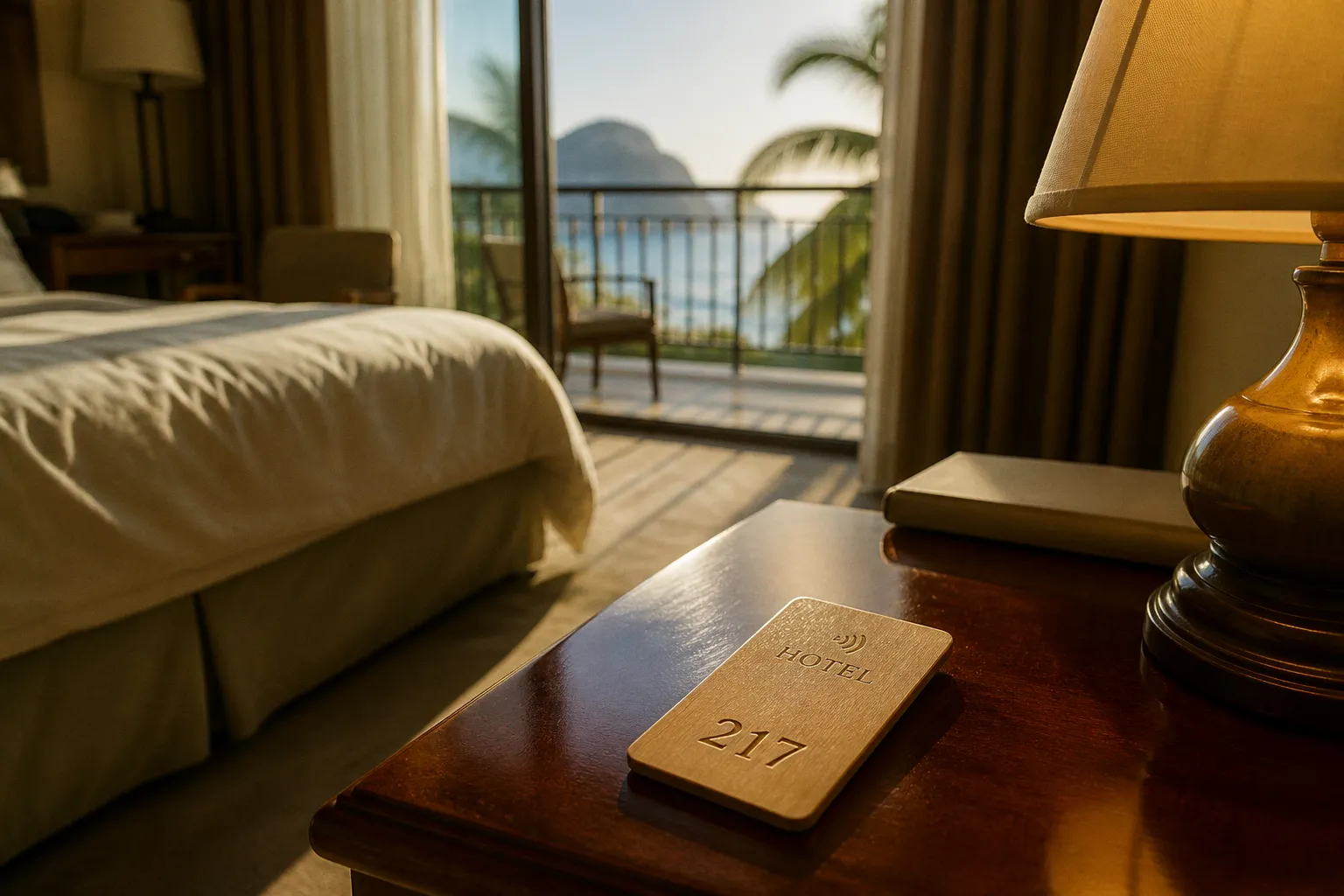
A hotel brand video isn't a creative asset; it's a conversion weapon engineered to shift this ratio. The launch roadmap is the tactical plan to deploy it.
The Economics of Direct Bookings: Why Video is Your Best Asset
The math is non-negotiable. Every room sold through an OTA bleeds margin and unstable revenue. Direct bookings aren't just a nice-to-have; they are the profit center. The problem? OTA platforms own the top of the funnel with massive ad spends. You cannot outspend them. You must out-smart them with higher-friction, higher-trust content.
Static photography is table stakes. It communicates room dimensions, nothing more. Video generates 2.1 to 4.6 times more reach than static images. The medium is 1200% more shareable. This isn't about getting more eyeballs. It's about capturing qualified intent. A video that demonstrates the guest experience—walks the viewer through the lobby at check-in, shows the pool at golden hour, frames the breakfast spread—pre-sells the stay. It builds the mental booking model before the user ever clicks "Reserve."
Social proof is the new currency. 52% of travel decisions are influenced by social media. A staggering 61% of guests who book after seeing a hotel on Instagram, and 32% first discover their stay on TikTok. Your video content is the lever. It bypasses the OTA's review aggregator and delivers your curated reality directly to the decision-making cortex.
Applying the C.O.R.E. Framework to Hospitality Content
C.O.R.E. is a content architecture, not a creative brief. Each component maps to a specific booking psychology trigger.
Connection: Show your team. The receptionist greeting a guest by name. The chef inspecting produce. This isn't about warmth; it's about operational credibility. It signals that the property is staffed by accountable humans, not a faceless management company.
Operations: Behind-the-scenes footage of housekeeping turning over a room or engineering maintaining the pool's chemistry. This is radical transparency. It answers the silent question: "How clean and well-maintained is this place?" It preempts the fears that drive users to scour negative reviews.
Reality: Show the space in use. A family using the kids' club. A couple at a lounge table with laptops. The sterile, empty room shot is a conversion killer. Reality shots provide social proof and help the viewer project themselves into the scene. Data confirms this error is widespread.
Engagement: Every video must have a clear, singular call-to-action (CTA). "Check availability." "Book your suite." "See our seasonal rate." The CTA must be verbal, on-screen text, and embedded in the description. No exceptions.
Mobile-First Distribution: Optimizing for the 3-Second Hook
60% of hotel bookings happen on mobile. This dictates the entire technical and creative specification.
The first 3 seconds determine view duration. Your hook is the primary visual—a stunning focal length shot of the ocean view from a balcony, a time-lapse of the sunset from the rooftop bar, a close-up of a signature cocktail being made. It must be visually arresting without context. No logos. No slow fade-ins.
85% of social video is watched on mute. Your hook cannot rely on audio. Use dynamic text overlays: "Your private beach escape." "Suite upgrade available." "Complimentary breakfast." The on-screen text must carry the value proposition.
Load time is a conversion metric. A 7-10% drop in conversion rate per extra second of booking-engine load time is documented. Your video landing page must be a lean, optimized asset. Host the video natively on your booking engine page or use a fast-loading embed. Do not link out to a separate YouTube page. Every click is a friction point that increases bounce rate.
Social reels must be 15–30 seconds. Each platform (TikTok, Reels, Shorts) requires a tailored aspect ratio and edit. Do not repurpose the same cut. A vertical 9:16 edit for mobile feeds is mandatory.
The 3-second rule isn't creative advice; it's a load-time metric for the user's attention span. Your video either captures a booking-intent signal or it's dead weight.
Technical Execution: Avoiding Sterile Rooms and Audio Pitfalls
Failure here is technical malpractice.
Lighting and Composition: Never shoot an empty room with wide-angle, overhead lighting. This creates the "sterile gallery" effect. Shoot at a 35-50mm focal length equivalent to mimic human perspective. Use natural light mixed with practicals (table lamps, bedside lights) to create depth and dynamic range. Frame shots to lead the eye—the desk, the window, the bed.
Audio: Bad audio is an instant credibility killer. If you're doing a voiceover or capturing ambient sound, use a dedicated lavalier or shotgun mic. Wind noise on exterior shots must be eliminated. If you cannot guarantee professional audio, default to the silent-with-text-overlay format.
Personnel: Cast real staff, not models, for performance authenticity. Coach them on simple actions: walking naturally, interacting with a prop (a coffee cup, a tablet), looking directly into the camera for one beat. Stiffness reads as untrustworthy.
Measuring Success Beyond Vanity Metrics: Conversion and Retention
Views and likes are vanity metrics. They measure reach, not intent.
Primary Metric: Click-Through Rate (CTR) from video to booking engine. This is the first conversion filter. If your video has 10,000 views but a 0.1% CTR, it's a branding video, not a booking tool.
Secondary Metric: Booking Engine Conversion Rate from video traffic. Compare this to your site's average (typically 1-2%). If video traffic converts below average, the video is setting incorrect expectations or the landing page is misaligned.
Tertiary Metric: Direct Booking Share. Track the percentage of total revenue from direct channels over a 6-month rolling period post-launch. This is the ultimate ROI calculation.
Checkpoint: A/B Test Video Cuts. Split-test the opening 3 seconds. Test a static amenity shot vs. a guest-action shot. Test a text-overlay hook vs. a voiceover hook. Let the click-through data dictate the winning creative.
Final Technical Launch Checklist
- Primary asset: 15-30 second hero video, 9:16 aspect ratio, 3-second hook with text overlay.
- C.O.R.E. alignment: At least two segments (e.g., Connection + Reality) are visibly represented.
- Audio: Professional voiceover or perfectly clean ambient sound. Silent version with burned-in captions is generated.
- Platform cuts: Minimum three tailored cuts for Instagram Reels, TikTok, and YouTube Shorts.
- Booking engine integration: Video embedded directly above the room selector or date picker on the booking page.
- Load test: Video landing page loads in under 2 seconds on a 4G mobile connection.
- Tracking: UTM parameters are set on all video links. Google Analytics goals are configured for video-to-booking CTR.
- CTA clarity: "Book Now" button is visible within 1 second of the video's end, both on the platform and the landing page.