Hotel Video Production Paths: Agency, In-House, or UGC
I want to start with a confession: three years ago, I would have told every independent hotelier I worked with to hire an agency and never look back. The production value alone justified the spend.
Brand films, room tours, those gorgeous slow-motion pours of local wine at golden hour—none of that happens without a serious crew.
Compare car rental deals in United Kingdom
See available offersPartner link — DiscoverCars comparisonAnd I still believe that, mostly.
But the booking landscape has shifted underneath us in a way that many hospitality marketers have not fully reckoned with. A polished hero film can still define a property. It cannot, on its own, keep up with a guest’s feed, a local event calendar, a creator’s spontaneous check-in, or the daily accumulation of proof that a hotel feels as good as it claims to.
That is the real tension in the hotel video production agency vs in house debate. It is not simply a choice between expensive and affordable, or premium and authentic. It is a choice about what kind of content machine your property actually needs—and whether that machine matches how travelers now make decisions.
The Economics of Professional Agency Production vs. In-House Teams
This is where the conversation usually goes sideways, because the sticker price lies.
A professional hotel video production project can be a meaningful one-off investment. An in-house team carries salaries, equipment, management time, editing capacity, and the quiet operational cost of keeping people creatively sharp after the first few months. A UGC retainer may look lighter on paper, but it requires creator sourcing, permissions, usage-rights discipline, brand guidance, and someone who knows the difference between “authentic” and simply off-brand.
The useful question is not, “Which option costs less?”
It is: “Which option produces the kind of content, at the pace and volume, that our distribution strategy can actually use?”
| Production Path | Cost Structure | What It Does Best | Where It Usually Breaks |
|---|---|---|---|
| Agency production | Project fee or monthly retainer | Brand films, destination pieces, polished room and F&B visuals | Slow response time; expensive if every social asset needs a crew |
| In-house team | Ongoing payroll and operating cost | Daily publishing, property knowledge, local relevance | Can become repetitive or technically uneven without senior creative direction |
| UGC or creator partnerships | Retainer, per-creator fee, hosted stay, or hybrid | Social proof, paid social variations, real guest perspective | Quality and message control vary; rights management can get messy |
| AI-assisted video from existing assets | Lower-cost production support | Quick refreshes, versioning, lightweight visual experiments | Cannot replace real atmosphere, genuine guest experience, or original footage |
A hotel that produces a single beautiful campaign every quarter is not automatically underinvesting. It may be investing exactly right—if it has a narrow audience, a long booking window, a strong direct channel, and a property whose visual identity needs to feel elevated and composed.
But that same cadence is a poor fit for a city hotel trying to win weekend demand, react to cultural moments, promote restaurant covers, or build awareness through short-form video. There, the issue is not the quality of the campaign. It is the empty space between campaigns.
An agency can make a property look like a world worth entering. An internal team can make that world feel alive on a Tuesday afternoon. UGC can make it believable.
Those are different jobs. Too many hotel teams hire one vendor and expect all three.
Content that never reaches the guest at the moment of consideration is not premium content. It is just expensive inventory.
The most reliable way to compare hospitality video marketing options is to map output against actual distribution. Where will the video live? How often does that channel need refreshing? Who approves it? Is it meant to create desire, answer a booking objection, or give a traveler permission to trust what they are seeing?
A cinematic lobby film may earn its place on a homepage for years. A reel about a local festival may matter for a weekend. Treating both assets as if they require the same production process is how content budgets become strangely hard to defend.
Why UGC Is Now a Booking Requirement for Millennial Travelers
The most damaging misconception about user-generated content is that it is a cheaper substitute for professional work.
It is not.
UGC is a different kind of evidence.
A brand film says: this is who we are. A guest video says: this is what it feels like when you are actually here. One is a promise; the other is corroboration. Travelers need both, but they do not give them equal weight at every stage of the decision.
For younger travelers especially, polished assets without any lived-in proof can feel suspiciously incomplete. They want to see the room in ordinary light. They want to understand whether the breakfast is actually worth waking up for, whether the rooftop gets crowded, whether the neighborhood is walkable, whether the pool looks as good after a guest has put a towel on a lounger.
That does not mean every hotel should flood its channels with unedited phone footage. The point is not imperfection for its own sake. The point is specificity.
The strongest UGC programs give potential guests a textured view of the stay:
- a creator showing the route from the station to the lobby;
- a guest filming the first few minutes in a room, including the details the brand shoot did not dwell on;
- a local voice explaining what happens outside the hotel after dark;
- a couple documenting a meal, a spa treatment, a morning swim, or a rainy-day itinerary;
- a staff member reposting and contextualizing guest content instead of leaving it to drift through tagged posts.
A small inn with excellent photography can still feel distant if every image is perfectly empty, perfectly lit, and perfectly controlled. Adding permissioned guest content to the site, social channels, or paid creative can make the same property feel easier to choose—not because the building changed, but because the decision became less abstract.
The important word here is permissioned. Hospitality marketers have become more sophisticated about sourcing creator content, but some still treat anything posted with a location tag as free inventory. It is not. Get clear consent, define usage rights, credit where appropriate, and establish how long an asset can be used. A good UGC operation is not casual. It only looks casual to the guest.
Guests do not book the room you photographed. They book the version of themselves they can already see inhabiting it.
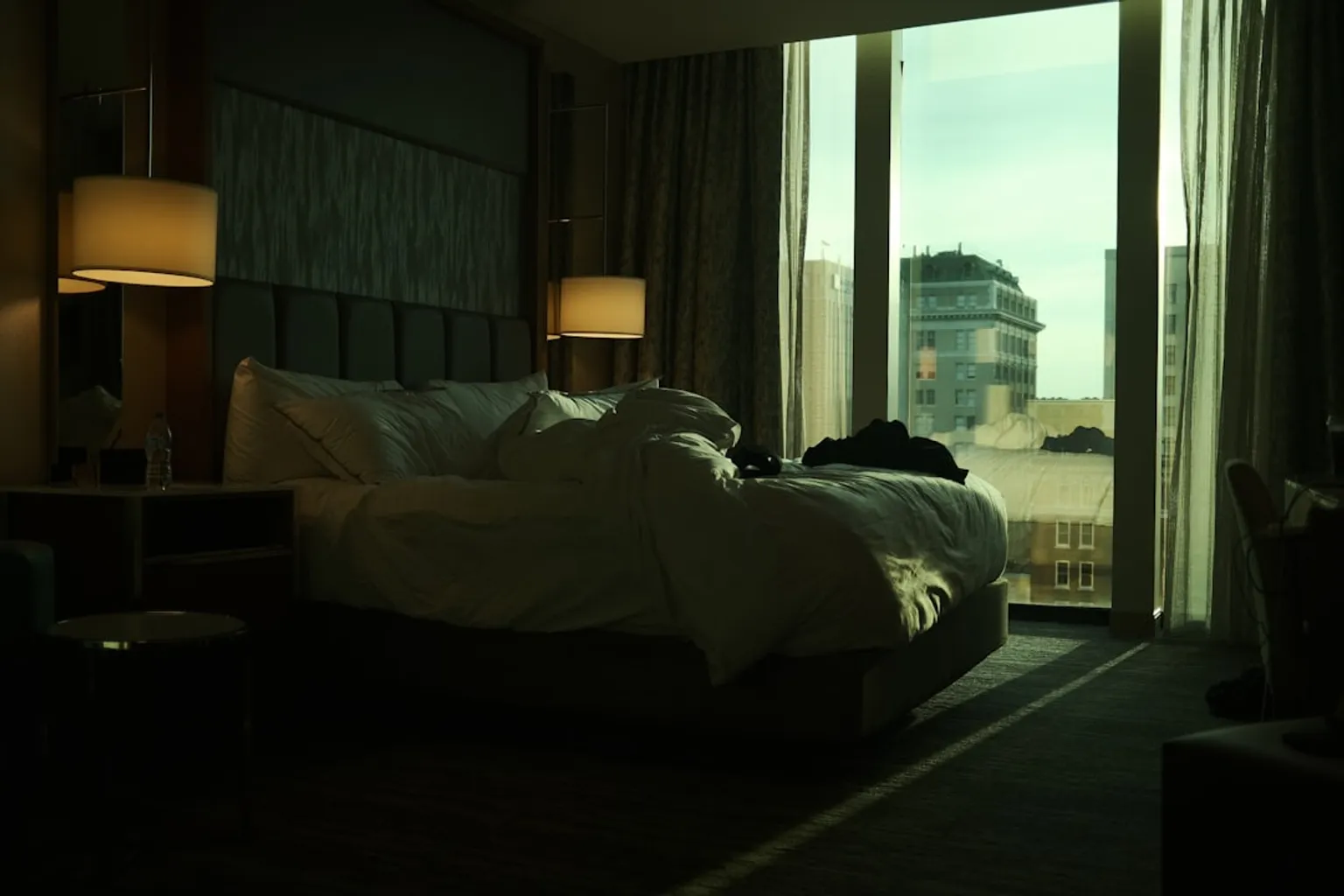
The visual texture matters. A coffee cup on the nightstand. A slightly rumpled bed after a slow morning. A quick clip of the elevator doors opening onto a rooftop at sunset. These are not replacements for art direction. They are the cues that make the art direction credible.
Speed and Agility: The 24-Hour Turnaround Advantage of Internal Creators
There is a category of hotel content that agencies are structurally not built to own: the content whose value expires before the approval chain is complete.
A weather shift. A sudden run of terrace bookings. A gallery opening around the corner. A chef’s special that looks particularly good that day. A local event that changes the energy of the neighborhood. These moments do not wait for a production brief, a shot list, a post-production round, and three layers of stakeholder feedback.
An internal creator can see the opportunity in the morning, shoot it before lunch, edit it in the afternoon, and publish while the moment still has heat. That is not a small tactical advantage. It changes the hotel from a business that occasionally advertises into a business that participates in its own location.
The conventional agency loop is not bad; it is simply designed for different work. Agencies need briefs because briefs protect quality. They need approvals because approvals protect the brand. They need production schedules because people, equipment, travel, and post-production are real constraints.
But a local event does not care about your approval process.
A useful hypothetical illustrates the difference. Say two comparable city hotels have a major cultural weekend happening nearby. One waits for its next planned campaign asset. The other has a content lead who publishes a sequence of quick, useful reels: where to park, the best pre-event drink, the quietest breakfast slot, the view from the rooftop as the neighborhood wakes up. None of these need to become cinematic masterpieces. Their job is to make the property relevant while the guest is actively choosing where to stay.
That relevance compounds. The more consistently a hotel can publish with local intelligence, the more it develops a recognizable point of view. Guests start to understand that the property is not merely located in the city; it is connected to it.
Still, speed without judgment is just noise. An in-house hotel videographer or agency debate often gets reduced to turnaround time, as if faster is automatically better. It is not. The internal creator needs guardrails: visual standards, a clear understanding of the hotel’s guest, access to approved music and templates, and enough editorial confidence to know when not to post.
The best internal teams are not content factories. They are editors of the property’s daily life.
Strategic Hybrid Models: Balancing High-End Brand Films with Authentic Social Reels
Almost no serious hotel I work with operates purely on one production path anymore. The smartest operators have stopped trying to make one supplier solve every creative problem.
They run a tiered system.
1. Agency-led hero work defines the visual world.
This is the destination film, the flagship room story, the seasonal campaign, the restaurant launch, the founder narrative. It belongs on high-intent landing pages, in sales materials, on screens at trade events, and anywhere the hotel needs to make a lasting first impression. Here, production value is not vanity. It is part of the product.
2. Creator-led and UGC content supplies proof.
This is the “what it is actually like” layer: guest routines, local experiences, honest reactions, short-form room reveals, and social-first clips that can be adapted for paid media. Its power comes from proximity to real experience, not from expensive lighting.
3. In-house content handles the living present.
This is the daily rhythm: weather, arrivals, dishes, events, staff energy, neighborhood moments, and the small changes that make a hotel feel current. It needs access, speed, and a person who understands the building from the inside.
4. A central editorial owner keeps the layers from fighting.
This may be a marketing lead, a brand director, or an experienced external partner. Someone has to decide what the hotel should sound and look like across all these formats. Otherwise the agency film says quiet luxury, the UGC says chaotic party weekend, and the daily social feed says nothing at all.
The hybrid model works because it stops asking every video to do every job.
A boutique hotel could, hypothetically, retain a UGC partner each month, commission a higher-end agency shoot once a quarter, and maintain a lean internal social function. If the UGC work costs $8,000 monthly, agency hero shoots cost $15,000 per quarter, and the in-house social function costs $12,000 monthly, the average monthly outlay is about $25,000 before any additional production, travel, paid media, or staffing overhead.
That number is not a universal benchmark. It is simply a way to see the arithmetic clearly. Quarterly agency spend should be spread across the quarter when comparing it with recurring monthly costs. A hotel should also account for the costs that tend to disappear from first drafts: freelance editing, equipment replacement, creator hosting, content licensing, music usage, project management, and the internal hours spent approving assets.
The point is not that every property should spend at that level. The point is that outsourcing hotel video marketing and building internal capability do not have to be mutually exclusive. A smaller property may use an agency only for an annual anchor shoot, work with a handful of carefully chosen local creators, and empower one trained staff member to capture daily footage. A larger resort may need a full-time internal team plus specialist agency support.
The shape of the model should follow the shape of demand.
Calculating the True ROI of Influencer-Led Content in Hospitality
The ROI conversation gets messy fast because many hoteliers are still measuring cost per asset.
That is a useful production metric. It is not a business metric.
A low-cost reel that produces no qualified traffic is not efficient. A creator stay that seems expensive at first may be very efficient if it generates strong paid-media variations, improves conversion on a landing page, builds a reusable asset library, and introduces the hotel to an audience that genuinely fits the property.
The starting point is to separate the possible returns.
Direct booking return
Use trackable links, creator codes where appropriate, dedicated landing pages, and booking-engine data. This will not capture every conversion, but it will show whether the partnership is generating meaningful intent rather than applause.
Content-library value
A creator collaboration may produce a package of clips, stills, testimonials, and short-form edits that can be repurposed across organic social, paid social, email, and on-site pages. The value is not only in the creator’s initial post. It is in what the hotel can legitimately use afterward.
Audience fit
Follower count is the laziest proxy in influencer marketing. The better questions are less glamorous: Where does the audience live? What kind of trips do they take? Do they save hotel recommendations? Do they comment with actual travel intent? Does the creator’s visual language make sense for this property?
A mountain lodge should not select a creator purely because their audience is large. A design hotel should not host someone whose feed has no relationship to design, food, culture, or the city it inhabits. Reach can be rented. Relevance is harder to manufacture.
Operational value
Some creator partnerships expose useful friction in the guest journey. A creator may reveal that the arrival instructions are unclear, the best room feature is being underexplained, or the restaurant is more compelling at breakfast than dinner. This is not the headline ROI, but it can be one of the most valuable outcomes if the hotel pays attention.
The right creator does not make content about your hotel. They make content your ideal guest already wanted to watch—and your hotel naturally belongs inside it.
The strongest partnerships are rarely one-off vanity trips. They are built around a clear exchange: the creator gets a genuine experience worth sharing, the hotel gets useful and rights-cleared assets, and the audience gets something more specific than another generic room reveal.
That requires a proper brief, but not an over-scripted one. Give creators the truth of the property: what matters, what is new, what guests consistently love, what the neighborhood offers. Then leave enough room for their own perspective to survive. If every line is approved into blandness, the audience will feel it immediately.
The Strategic Choice That Actually Matters
The choice between agency, in-house, and UGC is not really a production question. It is a distribution question.
Travelers do not encounter your hotel in one neat funnel. They may first see a creator’s breakfast reel, then search the neighborhood, then land on your website, then check recent guest posts, then compare rates, then return to your social feed because they are trying to decide whether the property has the atmosphere they want.
Each stage asks for different evidence.
The agency film gives the brand its shape. The internal team gives it a pulse. UGC gives it credibility. None of these formats can fully replace the others, and none will work if the property has not decided what story it is actually telling.
If your hotel is built around silence, ritual, design, and retreat, the content should make that promise tangible. If it is built around a lively restaurant, a central location, and the energy of the city, the content should move at that pace. The formats may change, but the point of view cannot.
The hotels getting this right are not choosing one path. They are choosing alignment: between the property’s identity, the guest’s decision journey, and the kind of video that can carry both.
Agency, in-house, UGC, AI-assisted edits—these are instruments. Strategy is the part that has to come from the hotel. Get that right, and the production choice becomes much less mysterious.