Resort Video Shoot Prep: What to Gather Before Filming
Let’s kill the romantic idea right now. The magic in hospitality video does not happen when the camera arrives.
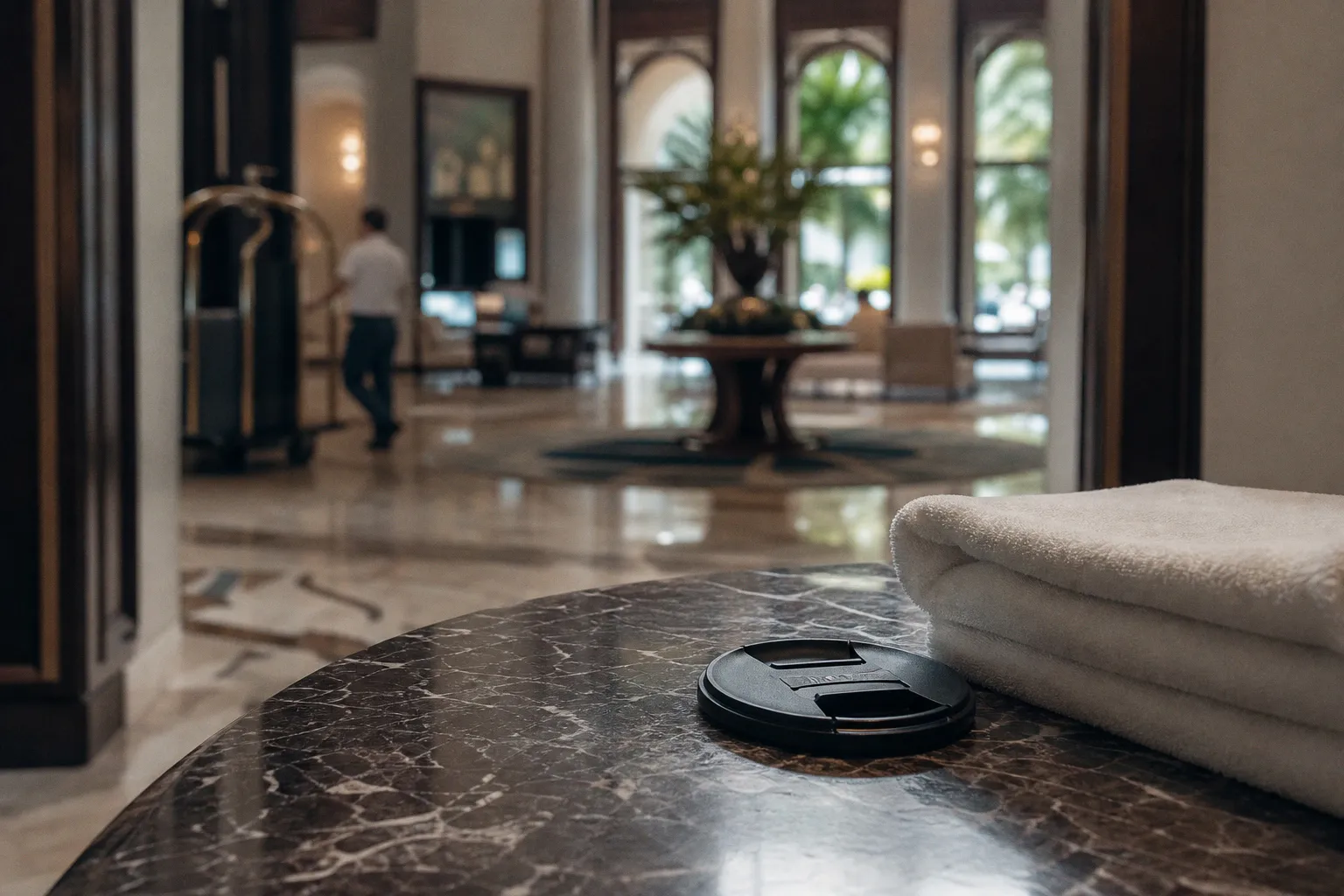
It happens beforehand, in a string of unglamorous operational decisions: which rooms are protected, who holds the keys, where the housekeeping carts go, whether the bulbs agree with each other, and whether breakfast is being filmed in usable daylight instead of a blue-grey cave.
A production crew can make a beautiful property look exceptional. They cannot make an unprepared property look intentional. If the resort is running at full operational noise—guests crossing frames, maintenance requests piling up, temporary signage everywhere—the footage will carry that noise into every edit, cutdown, ad, and listing asset that follows.
This resort video shoot preparation checklist is not about making the crew comfortable. It is about making the property filmable.
A video crew is not a fix for operational chaos. They are a mirror. If the property is messy, the footage will be messier.
Inventory Management and Room Blocking Protocols
The first myth to retire: that you can shoot a resort film around normal room turnover without consequences. Sometimes you can get away with it for a single detail shot. You cannot build a reliable production day around it.
A room on the shot list needs to be treated as a working set, not as a room that might happen to be empty when the crew arrives. That means protecting it from check-ins, late checkouts, housekeeping interruptions, maintenance visits, minibar restocks, and the well-meaning manager who decides to “just pop in for a second.”
Start with the actual room categories required for the campaign. Not every room needs to be filmed, but every category that guests are likely to book needs a clear visual representation. Pull the relevant inventory from the PMS, match it against the shot list, and block rooms with enough breathing room for styling, lighting, filming, and resets.
The exact block length depends on the property and the complexity of the scenes. A simple standard room with a straightforward daylight setup may move quickly. A villa with a pool, multiple bedrooms, food service, talent, and several angles is another animal entirely. The point is not to choose the shortest possible block. The point is to avoid building the day around luck.
| Room or Area | What Needs Protecting | Practical Prep Focus |
|---|---|---|
| Standard room | Access, housekeeping timing, hallway traffic | Bed styling, bathroom reset, window exposure, clean sightlines |
| Suite | Multiple connected spaces and higher styling needs | Living area, terrace, minibar, hero details, consistent lighting |
| Villa or specialty accommodation | Privacy, exterior access, service coordination | Pool, outdoor furniture, guest-facing amenities, staff access |
| Lobby and public spaces | Guest flow and operational interruptions | Front desk visibility, luggage traffic, signage, music, lighting |
| Spa and fitness areas | Privacy and treatment scheduling | Towels, lockers, therapist coordination, equipment staging |
| F&B outlets | Service timing and table availability | Table settings, buffet reset, kitchen access, staff movement |
The front desk needs the same information as the production team. If a room is blocked but the desk does not understand why, someone will eventually assign it. If housekeeping has not been briefed, someone will knock during the cleanest take of the day. If maintenance is unaware, the crew may arrive to find an engineer changing a thermostat or testing an outlet.
Use a visible internal protocol. It does not need to be sophisticated. A shared schedule, a room-blocking note, a property map, and a simple “do not enter without clearance” instruction can prevent most of the avoidable interruptions. If your property uses radios, make the language clear: these spaces are locked for production until the on-site lead releases them.
The other piece is sequencing. Do not block every room at once if the property cannot absorb it. Block according to the shooting order, and make sure the next location is ready before the crew finishes the current one. That is how a resort stays operational while still giving the camera department a fighting chance.
Visual Staging: Eliminating Clutter and Standardizing Lighting
Clutter is the silent killer of hospitality footage. A camera sees what the human eye has learned to ignore: a plastic water bottle on a side table, a power strip under a desk, a stack of menus by the host stand, an emergency cone tucked behind a plant, a promotional tent card that will be irrelevant next season.
The issue is not that these objects exist. Hotels need operational tools. The issue is that they do not belong in a frame meant to sell an experience.
Walk every filming location with someone who has permission to move things. That last part matters. The person doing the pre-walk cannot merely point at the clutter and hope it disappears. They need access to storage, authority over public spaces, and enough understanding of the brand to know what stays.
Remove or relocate:
- Temporary signage, directional stands, promotional collateral, and event notices
- Seasonal decorations that conflict with the intended campaign window
- Visible cables, charging stations, power strips, and loose AV equipment
- Plastic cups, half-used water bottles, tissue boxes, cleaning supplies, and operational paperwork
- Housekeeping carts, laundry bags, bins, service trays, and maintenance tools
- Anything branded for a partner, event, or promotion that is not part of the campaign
- Furniture that blocks a clean pathway through the room or breaks the composition
Do not confuse “clean” with “empty.” A resort room should still look lived in, but in a controlled way. A folded robe, a book on a terrace table, a drink placed with intention, a towel with a little texture—those details create warmth. Randomness does not. The difference is whether an object supports the experience or merely proves that humans have been working nearby.
Lighting needs the same discipline. Mixed colour temperatures are one of the fastest ways to make a premium property feel cheap on screen. Warm bedside lamps beside cool ceiling bulbs can turn skin tones strange, make white linens look inconsistent, and force the post-production team into a rescue mission that should never have been necessary.
Before filming, inspect each location in the conditions in which it will be shot. Check:
- Whether all visible fixtures are working
- Whether bulbs in the same frame produce compatible light
- Whether curtains, blinds, and sheers can be controlled consistently
- Whether practical lamps create unwanted glare on glass, artwork, or television screens
- Whether outdoor light changes the room dramatically at different times of day
- Whether dimmers create flicker on camera or uneven pools of light
Bring spare matching bulbs where possible. Identify lamps that need to be switched off rather than corrected. And do not leave the final lighting decision to the first setup of the day, when the crew is already watching the clock.
Lighting inconsistency is the detail that says “amateur” louder than almost anything else in hospitality video.
Exterior Coordination and Entryway Logistics
The exterior carries a disproportionate amount of responsibility. It is often the opening frame, the transition between scenes, the thumbnail image for a social cutdown, and the first proof that the destination is real.
It is also the one part of the property you control least.
A perfect facade can be wrecked by a delivery van, a parked guest vehicle, a bell cart, a maintenance lift, or a cluster of people checking in at exactly the wrong moment. None of this is dramatic in real life. On camera, it becomes the whole story.
Exterior prep needs a separate conversation with valet, security, engineering, landscaping, and the front office. Confirm where vehicles can wait, which entrance lanes need to remain clear, where equipment can be staged without appearing in wide shots, and what guest activity cannot be interrupted.
For a hero entry sequence, establish a controlled window rather than hoping the drive is empty. The crew should know when to move quickly, and the on-site contact should know how to hold the frame for a short period without making guests feel managed around a commercial.
Pay attention to the smaller visual leaks too:
- Flags, banners, and temporary event branding
- Overfilled bins or ashtrays near an entrance
- Hoses, gardening equipment, and maintenance carts
- Pool furniture arranged inconsistently
- Exterior lights left on during a daylight setup
- Windblown cushions, menus, umbrellas, and loose towels
- Staff vehicles or vendor vans visible in a key sightline
Drone footage can add scale, context, and a sense of arrival, but it should never be treated as a casual add-on. Confirm local airspace rules, property permissions, weather contingencies, privacy concerns, and the operator’s required approvals well before filming. Coastal properties, locations near transport infrastructure, protected landscapes, and dense urban settings may come with restrictions that affect what is possible.
Have a grounded alternative for every aerial ambition. A strong entrance shot from a stabilized camera, a terrace reveal, or a slow approach through landscaping can still do the job if the sky is unavailable.
Optimizing F&B and Lifestyle Scenes for Natural Light
Food and beverage scenes are where a resort can look alive—or strangely abandoned. The common mistake is treating service hours and filming hours as the same thing. They are not.
A breakfast service filmed too early may avoid guests, but it can also produce weak daylight, empty-looking windows, tired staff, and a room that reads as more functional than inviting. A packed service, meanwhile, may have energy but no control. The camera catches every dropped napkin, every guest who did not consent to be filmed, and every table that has just been cleared.
The better approach is to identify the point when the room still looks fresh but the operational pressure has eased. In many properties, late morning offers a workable balance: daylight is established, breakfast styling can be maintained or reset, and the team has more room to move. But the schedule should follow the actual orientation of the room. A restaurant with east-facing windows behaves differently from a bar designed for evening atmosphere.
Do a location scout at the same time of day you intend to shoot. Watch where the sunlight lands. Notice whether the tables closest to the windows blow out while the rest of the room falls flat. Check reflections in glassware and polished tabletops. A beautiful dining room can become difficult very quickly when direct sun hits every plate like a spotlight.
For F&B prep, gather more than food. Gather the elements that make the scene believable:
- Fresh, camera-ready dishes that can hold their appearance through multiple takes
- Backup plates and garnishes for resets
- Clean glassware without water marks or fingerprints
- Table linen, napkins, menus, cutlery, and florals that match the intended service style
- A plan for steam, ice melt, condensation, and anything else that changes fast on camera
- Staff wardrobe that feels polished but natural to the property
- Clear instructions for what should be served, poured, carried, or left untouched
Lifestyle footage needs similar care. People should have a reason to be in the frame. A couple walking toward a pool, friends sharing a meal, a guest receiving a spa treatment, a family arriving at a villa—these actions are more useful than generic smiling at the camera.
Direct talent toward an activity, a view, or another person. Constant eye contact with the lens can make the scene feel like an ad audition. A relaxed gaze gives viewers space to imagine themselves inside the experience.
If guests, children, staff, or identifiable visitors are filmed, releases and permissions must be settled before production begins. Do not let legal clearance become the thing that prevents your strongest footage from being used.
Operational Efficiency: The Role of the On-Site Point of Contact
The most expensive waste on a resort shoot is not usually a missing prop. It is indecision.
A crew waiting for access to a suite, confirmation from a manager, a replacement key, approval to move furniture, or a quick answer about whether the pool can be cleared is a crew burning time. And when the schedule slips, the first thing to suffer is usually the footage with the least margin: the exterior at the right light, the sunset terrace, the dining room before service, the quiet spa sequence.
One person needs to own the operational side of the day.
Not a committee. Not four department heads copied on a group chat. One on-site point of contact with a radio, keys or access authority, the day’s schedule, and permission to make small decisions without escalating every detail.
That person is not expected to direct the film. They are there to remove friction. They should know:
1. Which locations are filming first, next, and later in the day.
2. Who can unlock, reset, clean, or clear each area quickly.
3. Which spaces cannot be disrupted and when.
4. Where talent, staff, and production equipment can wait between setups.
5. What the fallback location is if weather, guests, or operations change the plan.
6. Who has final authority if a decision affects guest experience or revenue operations.
Brief the point of contact before shoot day. Walk the property together. Review the shot list, call sheet, access routes, room blocks, and any delicate areas such as spa treatment rooms, private villas, kitchens, or guest-only amenities.
A printed map is still useful. So is a phone. So is a radio. The format is less important than the fact that nobody should be learning where the next location is while the crew is waiting for them to find it.
Strategic Shot List Requirements for OTA Compliance
Bookable content and brand content overlap, but they are not the same thing.
Brand footage is allowed to be selective. It can linger on a cocktail, a hand against a curtain, sunlight on stone, a slow walk toward the ocean. It creates desire.
Listing footage has another job. It reduces uncertainty. A potential guest wants to understand the room, the bathroom, the pool, the restaurant, the arrival experience, and the spaces that matter to their stay. If a property only supplies atmospheric footage, it may look beautiful while still leaving the booking decision unsupported.
Online travel platforms have their own evolving guidance and display formats, so do not build a production plan around a blanket claim that every channel demands the same fixed asset count or rewards listings in the same way. What does hold true is simpler: complete, current, clearly categorized visual coverage gives distribution teams more useful material to work with and gives guests fewer reasons to hesitate.
Treat shot counts as planning guidelines, not universal platform law.
| Asset Category | Useful Coverage Guideline | What the Footage Should Answer |
|---|---|---|
| Each room category | Several distinct angles | What does the guest actually get, and how does the layout feel? |
| Suites, villas, and specialty stays | Broader coverage than standard rooms | Which spaces, views, outdoor areas, and amenities justify the upgrade? |
| Lobby and reception | A wide view plus details | What does arrival feel like, and where does the guest orient themselves? |
| Exterior and arrival | Multiple usable conditions where possible | What does the property look like from the approach and at its strongest light? |
| F&B outlets | Wide, table-level, food, and atmosphere options | Is this a place guests will want to spend time? |
| Spa, pool, fitness, and signature amenities | Functional and emotional coverage | What is available, and what does using it feel like? |
| Meeting and event spaces | Multiple layouts when relevant | Can the space support the kind of event being marketed? |
| Local context | Selective, truthful destination material | What is nearby without overpromising what the resort controls? |
The important phrase is “distinct angles.” Three versions of the same room view are not three useful assets. Show the bed area, the bathroom, the seating zone, the balcony or view if it matters, and a detail that communicates the property’s character. Give the editor room to build a sequence rather than forcing them to recycle one usable frame.
Build the hospitality video shoot checklist in two layers. First, cover the guest decision points: room types, arrival, key amenities, food and beverage, and the experiences that make this property different. Then add the brand layer: mood, movement, people, texture, place.
Do not sacrifice the first layer in pursuit of the second. A slow-motion glass of champagne is a fine asset. It is not a substitute for showing the suite guests are considering booking.
The Week Before Is Where the Film Is Won
The pattern behind weak resort video is rarely a lack of talent on the crew. It is the assumption that production begins when the cases roll through the lobby.
It does not.
Production begins when rooms are blocked properly, when the operations team knows what is happening, when clutter is removed without stripping the property of life, when lighting has been tested, when food scenes are scheduled around the building rather than wishful thinking, and when one person is empowered to keep the day moving.
The crew is not the deliverable. The useful, flexible asset library is the deliverable: footage that can support a brand film, room-category edits, paid social, email campaigns, property pages, and booking-oriented placements without making the resort look like a different place in every format.
Get the property ready to be seen before asking a camera to see it. That is the whole job.