Boutique hotel video strategy: from concept to bookings
Hotel websites typically convert only 1–2% of visitors into direct bookings. OTAs often convert hotel traffic at 4–6%. That gap is not explained by room quality alone.
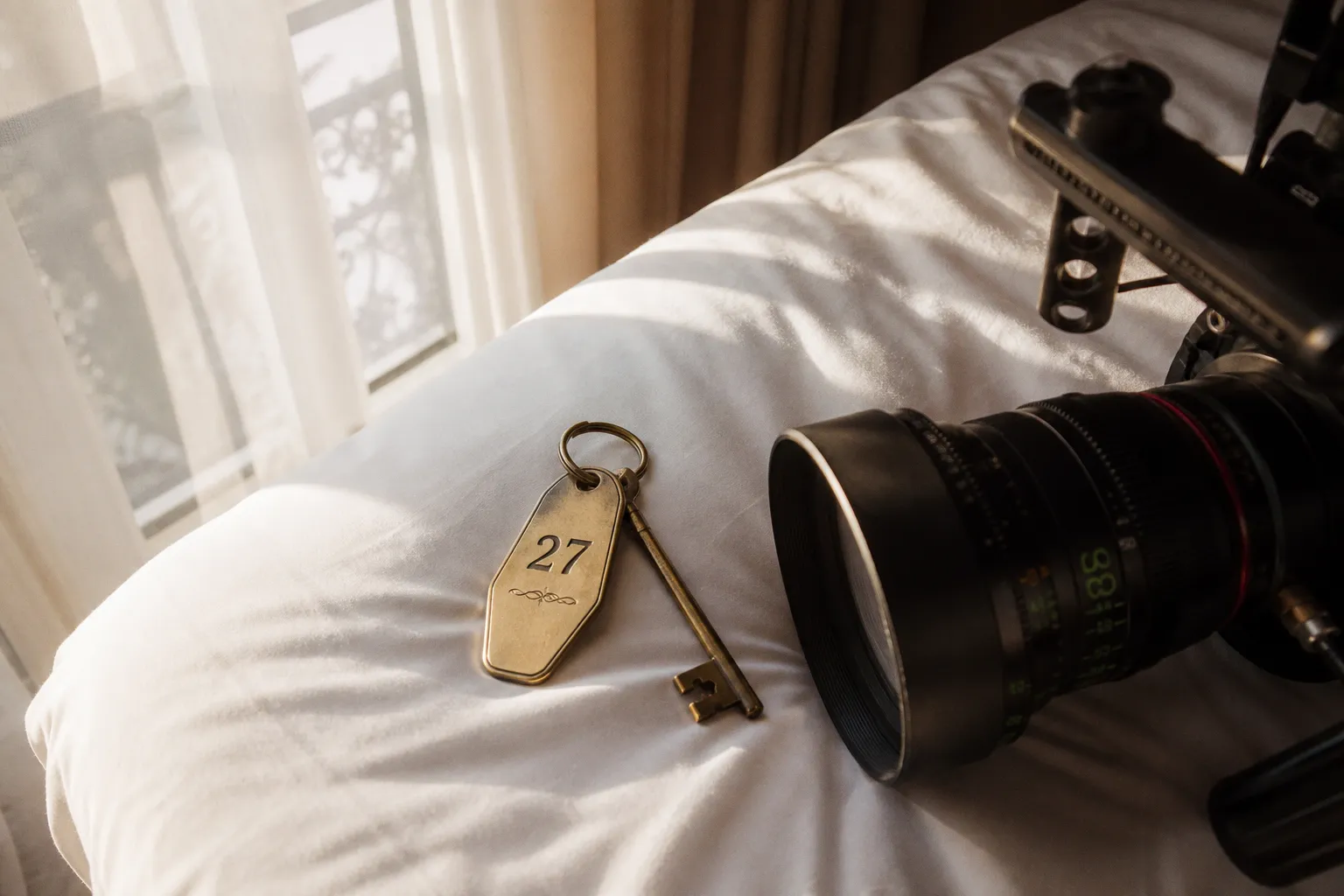
It is usually a combination of weak proof, poor mobile execution, slow booking flows, and content that shows the property without resolving the traveler’s decision friction.
Video can improve the first part of that equation. Embedding video on a landing page has been associated with conversion increases of up to 80%, while users spend 2.6 times longer on pages that include video. Those numbers do not mean that any hotel video will generate bookings. A slow booking engine can erase the gain. A generic montage can produce views without commercial intent. A cinematic sequence with no clear room, location, or booking path is decoration.
A workable boutique hotel video marketing strategy roadmap connects four layers:
- The property’s commercial position.
- The video content and production system.
- The distribution channels.
- The booking experience and measurement model.
Remove one layer and the system becomes difficult to audit. You can still collect reach. You cannot reliably attribute revenue.
The conversion gap: why video outperforms static imagery
Static photography answers one question: what does the property look like?
That is not enough for a direct booking decision. Travelers also need to estimate movement, scale, access, privacy, noise, service, and fit. A 24-millimeter interior photograph can make a room appear larger than it feels. A wide-angle image cannot show how the route from the entrance to the bed actually works. Video can expose spatial relationships that still images compress.
The advantage is not visual motion for its own sake. It is information density.
A well-constructed hotel video can show:
- The distance between the bed, bathroom, balcony, and entrance.
- The transition from street or driveway to reception.
- The actual walking route to the beach, restaurant, lift, or meeting space.
- The difference between a standard room and a premium category.
- How daylight changes across the room.
- Staff interaction at the points where service expectations are formed.
- The property’s relationship with its destination.
This matters most for boutique hotels because the product is often defined by spatial details that do not fit neatly into an OTA image grid. A converted townhouse, remote lodge, design-led guesthouse, or small resort needs to communicate its operating logic. The guest is not only buying a bed. The guest is buying a specific configuration of access, design, service, and location.
Video also improves message retention. The cited benchmark is 95% retention for video-delivered messages compared with 10% for text. The number should not be treated as a license to replace copy with video. Text remains essential for search visibility, accessibility, room details, and transactional clarity. The point is narrower: video can carry a positioning message faster than a paragraph.
Reach is not conversion
Video posts generate approximately 2.1–4.6 times more reach than static hotel images on social media. That is a distribution advantage. It is not a booking metric.
Reach becomes commercially useful only when the content is mapped to an audience and a next action. A vertical video showing a rooftop breakfast may attract destination browsers. It does not necessarily attract a traveler comparing two room categories for dates next month. The creative needs a route from attention to intent.
Use separate content roles:
| Content role | Primary job | Useful signal | Typical failure |
|---|---|---|---|
| Discovery video | Create qualified awareness | Reach, three-second views, completion rate | Broad reach with no destination or property relevance |
| Consideration video | Explain the stay | Watch time, saves, profile visits, room-page clicks | Attractive sequence with no practical detail |
| Conversion video | Reduce booking friction | Booking-engine clicks, assisted conversions, direct revenue | Strong offer but slow or confusing landing page |
| Retention video | Support repeat stays and referrals | Email clicks, repeat visits, UGC submissions | One-way promotion with no guest participation |
The production brief should state the role before anyone chooses a lens, soundtrack, or transition. Otherwise, the project defaults to visual polish.
Video does not fix a weak booking funnel. It makes the funnel’s strengths and failures easier to see.
Building the six-step hotel video marketing roadmap
A practical framework has six steps: define the audience, set measurable objectives, select content themes, choose distribution channels, establish production cadence, and allocate budget. The sequence matters. Starting with “we need a film” is not a strategy. It is a production request.
1. Define the audience by booking friction
“Luxury travelers” is not a usable segment. It does not identify the concern blocking the booking.
A boutique hotel should segment by decision problem. Examples include:
- Couples deciding between a central property and a remote retreat.
- International guests uncertain about transport and arrival logistics.
- Business travelers evaluating workspace, Wi-Fi, and check-in speed.
- Families comparing room layouts, access, and nearby activities.
- Event or wedding planners assessing the property as a venue.
- Repeat guests looking for a reason to return outside peak season.
Each segment requires different evidence. A couple may need room scale and privacy. A business traveler may need a fast visual explanation of workspace and connectivity. A planner needs capacity, circulation, wet-weather options, and service infrastructure. One hero film rarely resolves all of these.
Create an evidence matrix before production:
- Audience segment.
- Booking objection.
- Visual proof required.
- Content format.
- Landing page destination.
- Primary conversion event.
That matrix becomes the foundation of the hospitality video content plan template. It also prevents the common failure mode of filming every attractive feature without establishing why it matters.
2. Set objectives that connect to revenue
The objective should describe a measurable change in user behavior. “Increase awareness” is too broad. “Generate more video views” is often too weak.
Useful objectives include:
- Increase qualified traffic to a specific room-category page.
- Improve engagement on a destination landing page.
- Increase booking-engine starts from paid or organic social traffic.
- Reduce exits between the room page and the booking engine.
- Increase direct bookings from a defined campaign audience.
- Build a reusable asset library for email, social, paid media, and on-site conversion.
Use a primary objective and secondary diagnostic metrics. Do not assign equal weight to every platform metric.
A direct-booking campaign might use this hierarchy:
1. Direct booking revenue attributed to the campaign.
2. Booking-engine starts and completed reservations.
3. Landing-page conversion rate.
4. Click-through rate from video placements.
5. Qualified watch time and completion rate.
6. Reach and impressions.
This order keeps the reporting close to commercial value. Reach still matters. It simply does not get to impersonate ROI.
3. Select content themes with a defined job
The most efficient boutique hotel video campaign steps usually produce several short assets rather than one large film. The asset set should cover the full decision journey.
A core set can include:
1. Property orientation video
Establishes the route through the hotel. Show arrival, reception, circulation, key public spaces, and the relationship between them. This is a spatial audit, not a montage.
2. Room-category walkthroughs
Use consistent camera height, focal length, and sequence order. The viewer should be able to compare categories without interpreting different visual language in every clip.
3. Destination access video
Show the real route to relevant attractions, transport points, and local services. Avoid vague claims such as “close to everything.” Time and distance must be visible or stated.
4. Service process video
Document check-in, breakfast, concierge support, wellness treatment, or transfer arrangements. Process reduces uncertainty.
5. Staff-led specialist clips
A chef explains the breakfast service. A host explains late arrival. A guide explains a local route. This introduces useful specificity without manufacturing a scripted brand personality.
6. Guest-generated content
Use real guest perspectives when they show details the brand would not naturally prioritize: room storage, charging points, morning light, family logistics, or the walk from parking.
7. Seasonal and offer assets
Adapt the core footage to shoulder-season packages, events, local festivals, or longer-stay demand. The campaign should not require a new production every time the commercial priority changes.
The technical setup should remain consistent enough to support comparison. Record room walkthroughs with controlled exposure. Keep vertical and horizontal versions in the plan. Preserve highlight detail in windows and exterior views. Excessive dynamic range processing can make interiors look artificial and hide the actual light conditions.
4. Choose channels according to intent
Each channel has a different job in the hotel video marketing roadmap.
Website and landing pages are conversion environments. Use the strongest explanatory video near the first decision point, but do not force users to watch before accessing room rates, availability, or essential information. Autoplay should be muted. Load performance must be tested on mobile.
Instagram, TikTok, and short-form platforms are discovery and consideration channels. Use vertical clips with a clear first frame. The first two seconds should identify the property, location, room, or use case. Abstract opening shots create friction.
YouTube supports longer explanations, destination searches, and remarketing. It is suitable for room walkthroughs, access guides, and property tours where sequence matters.
Email is controlled distribution. Use video thumbnails and landing-page links rather than assuming every email client will render embedded playback. Segment by booking status. A pre-arrival clip has a different job from a lapsed-guest campaign.
Paid media requires multiple hooks and controlled testing. Do not promote the same hero film to every audience. Match the message to the user’s stage and the landing page to the promise made in the ad.
The authenticity advantage: branded production versus UGC
Travelers do not evaluate branded and user-generated content by the same standard. Branded video demonstrates control. UGC demonstrates independent observation.
According to the cited 2024 UGC report, 92% of travelers trust user-generated content more than traditional brand advertising. User-generated hotel content also earns approximately 2.8–5.1 times more engagement than branded posts. That does not make UGC automatically better. It makes it valuable for a different type of proof.
Branded footage is useful when precision is required:
- Room layouts.
- Accessibility features.
- Arrival routes.
- Meeting spaces.
- Food presentation.
- Design details.
- Seasonal campaign assets.
- Brand identity and visual consistency.
UGC is useful when credibility is required:
- How guests use the room.
- What the view looks like at ordinary times.
- The practical experience of breakfast or check-in.
- The neighborhood around the property.
- Small details that staff may overlook.
- Reactions to a package or activity.
The correct system is not branded content against UGC. It is a controlled mix.
Build a UGC operating model
Unstructured UGC creates rights, quality, and consistency problems. A hotel needs a process.
Define:
- How guests are invited to contribute.
- Which platforms and formats are accepted.
- What usage permission is collected.
- Whether the hotel can edit, crop, subtitle, and reuse the material.
- Which claims require verification.
- Who approves publication.
- How negative or misleading content is handled.
- How contributors are credited.
Do not edit UGC until it resembles an advertisement. Excessive grading, cropping, and scripted overlays destroy the reason the content was trusted. Basic stabilization, subtitles, logo treatment, and factual corrections are usually sufficient.
A useful split-test compares a polished branded cut with a guest-generated cut on the same landing page or audience segment. Keep the offer, placement, and call to action constant. Compare booking-engine starts and completed bookings, not only view-through rate.
Use architecture as evidence
Architectural photography and video should not be separated from conversion analysis. The frame controls the information the user receives.
Technical variables matter:
- Focal length: Wide lenses reveal circulation but can distort room proportions.
- Camera height: A low camera can exaggerate furniture and ceiling height. A high camera can make the room feel less usable.
- Movement speed: Fast gimbal movement increases visual stimulation but reduces spatial comprehension.
- Dynamic range: Retain exterior and window detail. Clipped highlights can hide the actual view or daylight condition.
- Color management: A room that changes color between website, social, and OTA assets creates credibility friction.
- Shot duration: Hold enough time for the viewer to identify the object and its relation to the room.
- Sound: Use speech, ambient sound, or captions when they carry information. Music should not mask operational details.
The production objective is not to make every room appear larger. It is to make the property easier to understand.
Optimizing the digital journey from social reach to booking
A video campaign can win the feed and lose the booking page. This is a common technical failure.
Mobile devices account for 62% of hotel website visits, yet the cited median conversion rate is 1.4% on mobile compared with 2.9% on desktop. The gap is not necessarily caused by user preference. It often reflects interface friction, slow loading, weak room comparison, and payment or date-selection problems.
Every additional second of booking-engine load time can reduce conversion by approximately 7–10%. This makes performance part of the video strategy. Large video files, uncompressed thumbnails, third-party scripts, and delayed booking widgets should be tested together.
Audit the journey in this order:
- Video click or swipe.
- Campaign landing page.
- Room-category selection.
- Availability search.
- Rate and policy review.
- Guest details.
- Payment.
- Confirmation and post-booking communication.
Track the exits between each step. A video may produce high-quality traffic that fails at the room selector. In that case, replacing the video is not the first intervention.
Place video where it reduces uncertainty
The strongest placement is not always above the fold. It depends on what the page needs to explain.
Use video near:
- The first room-category decision.
- A complicated arrival or access explanation.
- A venue or event-space comparison.
- A destination itinerary that supports a package.
- A section where static imagery has produced repeated exits.
- A direct-booking offer that needs context.
Do not hide essential information inside video. Rates, cancellation policies, bed configuration, accessibility, occupancy, and availability must remain readable and searchable.
Use poster frames that communicate the content without requiring playback. Many users will not start a video. The poster must still carry a decision signal.
Match the landing page to the creative promise
If the video shows a sea-view suite, send traffic to that suite. If it promotes a weekend package, show the package terms and availability. If it describes the destination, do not send the user to a generic homepage.
Message mismatch increases bounce rate. It also contaminates attribution because the campaign appears to generate traffic without creating meaningful progress.
A clean campaign structure contains:
- One audience hypothesis.
- One primary message.
- One landing page.
- One main conversion event.
- One controlled test variable.
The test variable might be the opening shot, headline, UGC versus branded footage, thumbnail, or booking call to action. Change one variable at a time. Otherwise, the result cannot be diagnosed.
Measuring hotel video ROI beyond vanity metrics
Hotel video ROI tracking requires a defined attribution model. Platform dashboards report impressions and clicks. The property’s commercial system needs to connect those interactions to booking behavior.
At minimum, capture:
- Campaign source and medium.
- Creative ID.
- Audience or segment.
- Landing-page session.
- Video engagement.
- Booking-engine start.
- Search completion.
- Booking completion.
- Revenue and stay dates.
- New versus returning guest status.
Use tagged URLs and preserve campaign parameters as users move into the booking engine. If the booking engine strips source data, the report will overstate the number of “direct” bookings and understate campaign contribution.
Separate direct, assisted, and operational impact
Not every useful video interaction ends in an immediate booking. A traveler may watch a room video, leave, return through organic search, and book later. Treating the first visit as a failure creates a distorted conclusion.
Use three reporting layers:
Direct conversion: The session or campaign path receives clear credit for the booking.
Assisted conversion: The video interaction appears earlier in the journey, but another channel receives the final conversion credit.
Operational impact: The content reduces support questions, clarifies room selection, or improves pre-arrival communication. This can lower friction without appearing as a direct booking event.
The attribution model should be documented before the campaign starts. Otherwise, teams tend to select the metric that makes the campaign look strongest.
Metrics that reveal where the system breaks
A practical dashboard should include:
- Three-second and ten-second view rates.
- Completion rate by video length.
- Average watch time.
- Click-through rate.
- Landing-page bounce rate.
- Mobile versus desktop conversion.
- Booking-engine load time.
- Booking-engine start rate.
- Room-category exit rate.
- Completed booking rate.
- Revenue per session.
- Cost per direct booking.
- Assisted booking value.
- UGC engagement compared with branded engagement.
Watch the relationship between metrics. A high completion rate with low click-through may indicate that the content satisfies curiosity but does not create intent. High click-through with low booking-engine starts may indicate a landing-page problem. High booking-engine starts with low completion may indicate rates, policies, payment friction, or speed problems.
The diagnosis is more valuable than the headline number.
Budget, production cadence, and the six-month operating model
Boutique hotels often make one of two budget errors. They spend the entire allocation on a single hero film, or they publish low-cost clips without a content system. Both create gaps.
A better approach is modular production. Capture a primary shoot that produces:
- One property overview.
- Multiple room-category walkthroughs.
- Short service clips.
- Destination sequences.
- Vertical cutdowns.
- Still frames extracted for social and landing pages.
- Testable opening shots and thumbnails.
- Seasonal footage that can be reused.
Then schedule distribution rather than treating publication as an event.
A simple six-month cadence may look like this:
1. Month one: Audit the booking funnel, define segments, and establish baseline conversion data.
2. Month two: Produce the core property, room, service, and destination assets.
3. Month three: Launch discovery and consideration campaigns. Test branded footage against UGC where available.
4. Month four: Move the strongest assets to conversion landing pages. Test page placement, poster frame, and call to action.
5. Month five: Retarget engaged users and segment email distribution by booking status.
6. Month six: Review direct, assisted, and operational results. Reallocate production budget to the content roles with the strongest commercial evidence.
The schedule is not fixed. If the booking engine remains slow, prioritize technical remediation before buying more reach. If room-category exits are high, produce clearer walkthroughs and revise the comparison page. If UGC earns engagement but does not generate qualified traffic, improve the call to action and destination targeting.
The technical close: audit the system before scaling it
A boutique hotel video campaign is ready to scale only when the content and booking path survive measurement. Use this final audit:
- The primary audience segment has a defined booking objection.
- Every video asset has a commercial role.
- Room and destination claims match the actual product.
- Branded footage and UGC are governed by separate production rules.
- Vertical and horizontal formats are available where channel requirements demand them.
- Video files, poster frames, and scripts have been tested for mobile load performance.
- The landing page matches the promise in the creative.
- Booking-engine parameters persist through the reservation path.
- Mobile and desktop conversion are reported separately.
- Booking-engine load time is monitored with campaign traffic.
- Direct and assisted conversions are not merged into one unexplained number.
- Split-tests change one variable at a time.
- Revenue, not reach, determines the next budget decision.
The objective is not maximum video output. It is lower decision friction between first exposure and confirmed reservation.
A strong hotel video marketing roadmap makes the property easier to understand, gives each audience the evidence it needs, and sends qualified traffic into a booking system that can convert it. The camera is only one component. The measurable asset is the complete path from frame to reservation.