Hotel TikTok content paths: three setups for your brand
A hotel can have beautiful rooms, a thoughtful service culture, and a genuinely distinctive sense of place — yet still disappear on TikTok because nobody has decided who is responsible for turning…
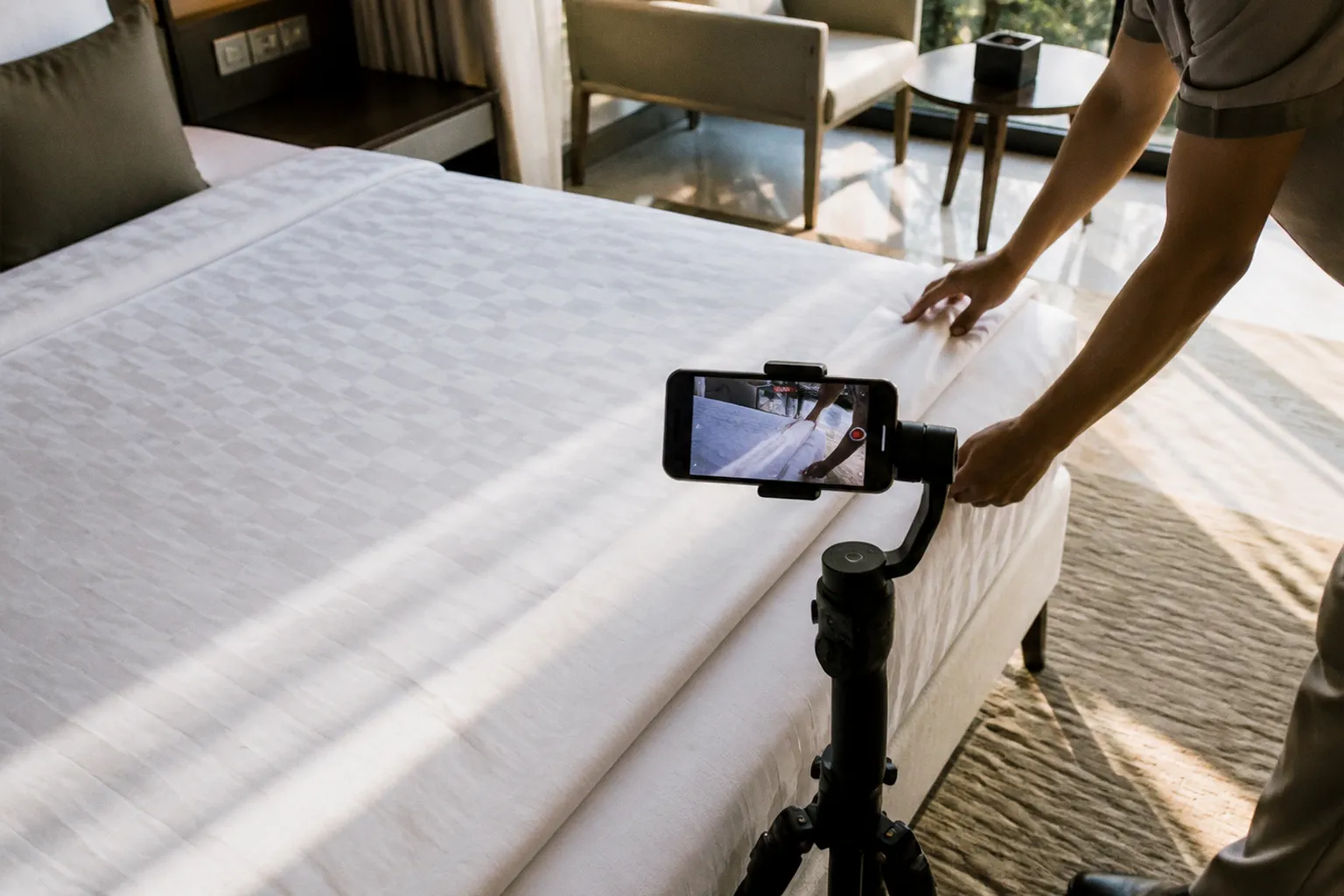
A hotel can have beautiful rooms, a thoughtful service culture, and a genuinely distinctive sense of place — yet still disappear on TikTok because nobody has decided who is responsible for turning that experience into a daily visual narrative.
That is the real starting point for hotel TikTok content creation options. The question is not simply whether your property should post more videos. It is whether the content will be created by your own team, shaped by an external agency, or brought to life through creators and user-generated content. Each path changes the speed, cost, brand alignment, and relationship with the audience.
A staff member filming a morning coffee ritual on a phone is not doing the same job as an agency building a multi-platform campaign. A travel creator staying for two nights is not a substitute for the people who understand the hotel’s guest journey from check-in to checkout. The strongest hospitality TikTok strategy models recognise these differences instead of treating every short-form video as interchangeable.
TikTok is now part of the travel decision-making context for a substantial audience. Booking.com data cited by WebRezPro indicates that 30% of travelers use TikTok for travel inspiration, while a Phocuswright study found that 49% of travelers aged 18 to 34 use social media as their primary travel research tool. That does not mean every booking begins with a viral clip. It does mean the platform increasingly shapes the emotional shortlist — the places people remember, save, send to a partner, and eventually investigate more seriously.
The three hotel TikTok content paths
Most hotels settle into one of three operating setups:
1. In-house, staff-led content — the hotel team plans and films content internally.
2. An external agency or specialist partner — strategy, production, publishing, and often community management are handled outside the property.
3. Creator, influencer, or UGC-led content — independent creators produce videos designed to borrow their own voice, audience relationship, and lived perspective.
There is no universally superior model. The right choice depends on the hotel’s positioning, the confidence of its internal team, the pace of the operation, the target guest, and the amount of strategic support required.
A design-led boutique hotel with a strong general manager and an enthusiastic front-office team may build a distinctive channel in-house. A multi-property group may need an agency to protect consistency across locations. A resort launching a new experience may benefit from creators who can show the property through the eyes of a guest rather than through the language of a brand department.
The best TikTok setup is not the one that produces the most content. It is the one that can repeatedly turn real hotel experiences into content with a recognisable point of view.
A practical comparison
| Setup | Best suited to | Main strength | Common weakness | Brand control |
|---|---|---|---|---|
| In-house staff-led | Independent hotels with accessible teams and a clear local personality | Speed, authenticity, and immediate access to the property | Inconsistent output when operations become busy | High |
| External agency | Hotels needing strategy, production discipline, or multi-channel management | Reliable planning, specialist skills, and broader campaign thinking | Can feel detached from the daily guest experience | Medium to high, depending on the workflow |
| Creator, influencer, or UGC-led | Properties targeting discovery, aspiration, and social proof | A fresh guest perspective and access to an existing audience | Variable brand alignment and less control over the final tone | Medium to low |
The comparison becomes more useful when you look beyond the label. “In-house” can mean one confident marketing manager filming twice a week, or a wider team contributing footage through a structured content system. “Agency” can mean a full strategic partner, or simply a production crew arriving once a quarter. “Creator-led” can mean a carefully briefed professional influencer, or a collection of licensed guest videos gathered from social platforms.
The operating details matter more than the category name.
Path one: building an in-house hotel TikTok creator system
The most compelling argument for staff-led content is context. Your team knows which suite receives the afternoon light, when the bakery brings out the first pastries, which corner of the lobby is quiet enough for a conversation, and what guests repeatedly ask before they arrive.
That knowledge is difficult to brief into an external production day. It is also what gives a hotel channel texture rather than polish alone.
An in-house hotel TikTok creator does not need to become a full-time performer. In many properties, the most effective person is someone who understands the guest journey and can communicate naturally on camera — a receptionist who knows the neighbourhood, a reservations specialist who can explain room categories clearly, a chef who is comfortable showing process, or a marketing manager who can connect the details into a larger narrative.
The role needs boundaries, however. Without a simple editorial system, staff-led content quickly becomes a collection of disconnected clips: a room pan on Monday, a cocktail close-up on Wednesday, a trend copied on Friday. The individual videos may be attractive, but the account does not build memory.
A useful in-house structure begins with a small number of repeatable content territories:
- The arrival experience: entrance, reception, luggage flow, check-in details, welcome amenities, and the first view from the room.
- The room in context: not only the bed and bathroom, but how the space works at different times of day — where a guest works, reads, gets ready, or watches the city change outside.
- The people behind the stay: housekeeping rituals, kitchen preparation, concierge knowledge, maintenance details, and the quiet expertise guests might otherwise never see.
- The local sense of place: nearby walks, market mornings, rainy-day routes, seasonal events, and the practical details that help a visitor feel oriented.
- The reason to return now: a temporary exhibition, a new menu, a seasonal package, or a change in the surrounding neighbourhood.
This is where the 80/20 content principle becomes useful. Around 80% of the content should provide value or entertainment — local guidance, behind-the-scenes access, useful room explanations, and moments of atmosphere. The remaining 20% can carry direct promotional messages such as packages, room offers, or booking prompts.
That balance is not a moral rule. It is a way to protect the account from becoming a digital brochure. People may want to see your hotel, but they do not open TikTok to be handed a continuous stream of sales language.
What makes the in-house model work
The hotels that sustain this approach usually make content part of the operating rhythm rather than an occasional extra. A short filming window can be attached to existing moments: breakfast preparation, the daily flower arrangement, a room refresh, a neighbourhood walk, or the handover between shifts.
The workflow should answer five practical questions:
1. Who owns the channel? One person needs final responsibility for the calendar, approvals, and publishing, even if several colleagues contribute footage.
2. Who can appear on camera? Staff should be invited rather than pressured, with clear consent and an understanding of how the footage will be used.
3. What can be filmed in occupied areas? Guest privacy, room access, reflections in mirrors, visible names, and incidental conversations need to be part of the process.
4. How quickly can a trend be adapted? A trend is useful only when it has a connection to the property; copying it after its moment has passed rarely creates meaningful attention.
5. What happens when the creator is on leave? A content system that depends entirely on one person is a fragile system.
The cost advantage of in-house production is often overstated. The hotel may avoid an agency fee, but staff time is still an investment. Planning, filming, editing, captioning, comment responses, approvals, and reporting all take attention away from other work. The model is efficient when the team can capture content naturally and consistently. It becomes expensive when the same person is expected to be a full-time social strategist on top of a demanding operational role.
Path two: working with a TikTok agency for hotels
An external agency brings a different kind of value: distance. That distance can be useful because a partner is less likely to assume that the hotel’s internal language is already clear to the audience.
Many properties describe themselves with phrases such as “luxury,” “unforgettable,” “exceptional service,” and “perfectly located.” These statements may be true, but they do not yet provide a visual narrative. An experienced agency can translate them into observable moments — the sound of the tram outside a city hotel, the route from the pool to the breakfast terrace, the particular quiet of a library lounge, or the rhythm of a room prepared before arrival.
This is the central distinction in the hotel TikTok agency vs in-house decision. An agency is not automatically better at filming your property. It is potentially better at creating a repeatable strategic system around the filming.
That system may include:
- audience and positioning work;
- a channel concept and recurring series;
- monthly or quarterly content planning;
- on-site production;
- editing for TikTok, Instagram Reels, and YouTube Shorts;
- caption and hook development;
- publishing and scheduling;
- community management;
- creator coordination;
- performance reporting and iteration.
The agency model is particularly useful when the hotel has several audiences to serve. A business hotel may need weekday convenience content, while a leisure audience responds to neighbourhood discovery and room atmosphere. A resort may need family planning content alongside couples’ escapes and wellness experiences. Without a clear hierarchy, the channel can become visually attractive but strategically crowded.
A partner can also help establish alignment across touchpoints. The tone of a TikTok video should not promise an intimate, design-led stay if the booking page is generic and the arrival experience feels purely transactional. Social content is part of the pre-stay guest journey. It sets expectations before the guest sees the lobby in person.
The risks of outsourcing
The first risk is detachment. An agency that visits the hotel for one production day every few months may produce technically polished footage while missing the small operational details that make the property persuasive.
The second is overproduction. TikTok does not require cinematic equipment or a glossy advertising treatment. Informal smartphone footage can outperform carefully staged material when it feels immediate and truthful. The strongest agency relationships do not force every clip into the same polished finish. They create a visual system that allows for different textures — planned room sequences, spontaneous staff moments, creator footage, and guest reactions.
The third is approval friction. If every video must pass through several layers of management, the channel loses the responsiveness that makes short-form content feel current. The hotel needs a clear approval framework: what requires sign-off, what the agency can publish independently, and what must never be shown without permission.
Before appointing an agency, I would ask to see not only its portfolio but also its thinking. Can the team explain why a particular hotel video works? Can it distinguish reach from useful engagement? Can it show how content connects to a booking journey without pretending that every reservation can be attributed to one clip?
A strong proposal should make clear:
- who will be on site and how often;
- whether filming, editing, publishing, and comment management are included;
- how many revision rounds are allowed;
- who owns the raw footage and final assets;
- how staff and guests will be handled on camera;
- how the agency will adapt content for each platform;
- which outcomes will be reported beyond views.
Views are a surface signal. Saves, shares, profile visits, direct questions, website behaviour, and the quality of the conversations in the comments often reveal more about whether the content is helping a hotel enter a guest’s consideration set.
Path three: creator, influencer, and UGC collaborations
Creator-led content adds something neither staff nor agencies can fully replicate: a perspective that already belongs to an audience.
A creator can show how the property feels to enter for the first time, how long it takes to reach the old town, whether the room works for a family with luggage, or what a weekend itinerary actually looks like. This is especially powerful when the creator’s audience closely matches the hotel’s desired guests.
The case for this model is supported by more than reach. A Stackla study found that 80% of consumers say user-generated content strongly influences their purchasing decisions. That does not mean every creator video will generate bookings. It means content that feels lived-in and independent can carry a different kind of credibility from a brand-produced room tour.
The important distinction is between influencer reach and UGC production.
An influencer collaboration is built around access to the creator’s audience. The creator posts to their own channel, and the hotel benefits from discovery, association, and potentially direct traffic.
UGC production is built around the creation of usable assets. A creator may produce several vertical videos for the hotel’s own TikTok, Instagram, or paid media, even if the creator’s personal following is modest. The value lies in the quality, relevance, and licensing of the content rather than in the size of the audience alone.
Both approaches can be valuable, but they should not be briefed in the same way.
Choosing the right type of creator
The most obvious mistake is choosing by follower count. A creator with a large general travel audience may bring less useful attention than a smaller creator whose viewers actively plan design-focused city breaks, family holidays, wellness stays, or food-led itineraries.
Look for alignment across several layers:
- Audience fit: geography, age, travel habits, spending context, and interests.
- Visual fit: whether the creator’s texture, colour, pacing, and framing sit comfortably beside the hotel’s identity.
- Narrative fit: whether they can explain an experience rather than simply display it.
- Commercial fit: whether the audience responds to recommendations, guides, and practical details.
- Operational fit: whether the creator understands arrival times, filming boundaries, occupied rooms, and guest privacy.
TikTok’s audience is broader than the old assumption that it is only a Gen Z channel. Current demographic data indicates that 40% of users are aged 25 to 34 and 25% are aged 18 to 24 — an important purchasing audience for hospitality brands, particularly when travel decisions involve couples, professionals, and young families.
There is also a psychological dimension to the content. Survey data reported by Imperial Leisure found that 41% of TikTok users say lifting their spirits is a key factor motivating a purchase decision. For hotels, that points toward content with emotional lift: a generous breakfast, a spontaneous local discovery, a room with a restorative view, or the small relief of arriving somewhere that has anticipated the guest’s needs.
That is not permission to make every video artificially cheerful. It is a reminder that hospitality content should communicate how the stay changes the guest’s day.
Creator content works best when it answers the question a future guest is already carrying — not when it simply proves that the hotel has attractive rooms.
The terms that need clarity
Creator partnerships become difficult when the hotel and creator have different assumptions about what is being delivered. The brief should establish:
- the number and format of videos;
- the platforms where the content will appear;
- whether the creator must post to a personal account;
- the publication dates and any exclusivity period;
- the permitted use of the content in organic and paid media;
- whether raw footage is included;
- who handles music rights and platform licensing;
- how revisions and factual corrections will work;
- what happens if the stay or filming schedule changes.
For UGC, usage rights deserve particular attention. A hotel may have permission to repost a video organically but not to use it in paid advertising. It may have a limited term, a platform restriction, or a requirement to credit the creator. These details affect the real value of the collaboration.
The best creator relationship still needs a strong hotel brief. Give the creator room to interpret the stay, but provide the context they cannot infer: the property’s positioning, priority experiences, practical guest information, non-negotiable brand boundaries, and the action you would like viewers to take.
Before and after: what changes when the setup becomes deliberate
In my consulting work, the recurring before-state is rarely a complete absence of content. More often, the hotel already has footage — plenty of it. The problem is that the footage does not form a guest journey.
The account shows a room but not the reason to choose that room. It shows a cocktail but not the evening it belongs to. It announces a package but does not help the viewer understand who it is for. Staff appear occasionally, but there is no consistent voice. A creator is invited, but the resulting video is disconnected from the property’s wider content.
The after-state begins with alignment. Each setup has a defined job.
- The in-house team captures immediacy, access, and local knowledge.
- The agency provides structure, editorial discipline, and platform expertise.
- Creators provide perspective, social proof, and a version of the stay that feels personally experienced.
This does not require three separate budgets or three parallel content calendars. A small hotel might use an in-house lead for daily moments, commission a specialist for quarterly strategy, and invite two carefully selected creators for a seasonal campaign. A larger brand might centralise strategy with an agency while giving local teams the authority to capture their own sense of place.
The shift is from choosing one permanent identity to designing a useful operating mix.
How to decide which path fits your hotel
Start with the property’s actual constraints rather than an idealised marketing plan. The right setup has to survive a busy Saturday, a staff absence, a full house, a delayed approval, and a month when the general manager is focused on operations.
Consider these questions:
- Does the hotel already have someone who can own content week after week?
- Can that person access the property without disrupting guests or service?
- Is the brand personality clear enough for staff to interpret consistently?
- Does the hotel need a new audience, or does it mainly need a stronger expression of its existing identity?
- Are several locations or languages involved?
- Does the team need production skills, strategic direction, or both?
- Is the campaign promoting a specific experience that a creator could demonstrate more credibly?
- Can the hotel respond to comments and direct messages with real local knowledge?
- Are paid media rights and content licensing part of the available budget?
- What will success look like beyond a high view count?
A simple decision pattern often emerges:
Choose in-house when context is your advantage
Staff-led content is the natural fit when the hotel has a strong personality, an accessible team, and enough internal confidence to publish regularly. It is especially effective for behind-the-scenes content, local recommendations, service rituals, and the small details that change from day to day.
The risk is not amateur production. The risk is inconsistency — in cadence, framing, tone, and follow-through.
Choose an agency when structure is the missing ingredient
An external partner is worthwhile when the hotel knows it needs a stronger social presence but cannot create the planning and production rhythm internally. It is also useful for a repositioning, a multi-property system, a major opening, or a campaign that needs paid and organic content to work together.
The risk is losing the property’s living texture. The agency should be treated as a strategic extension of the hotel, not as a distant content factory.
Choose creators when perspective and discovery matter most
Creator and UGC collaborations are a strong fit for launches, destination storytelling, seasonal campaigns, and audiences who need to see how a stay feels in real use. They can shorten the distance between inspiration and consideration.
The risk is confusing attention with alignment. A creator can make a beautiful video that attracts the wrong audience or sets expectations the hotel cannot deliver consistently.
Building a mixed model without losing the plot
The three paths can work together when the content architecture is clear.
One useful arrangement is to let the in-house team own the daily pulse of the hotel: staff knowledge, current conditions, local recommendations, and spontaneous moments. An agency can provide the monthly structure, edit key content, manage reporting, and support platform-specific strategy. Creators can be brought in for selected campaigns where an outside perspective adds genuine value.
The hotel should still maintain one central narrative. That narrative may be built around design, restoration, food, neighbourhood access, family ease, wellness, or a particular kind of arrival. Every contributor does not need to use the same style, but the audience should feel the same underlying promise.
This is where visual alignment matters. A luxury hotel can include handheld footage and still feel considered if the framing, language, and subject selection are coherent. A relaxed independent property can commission polished photography without becoming stiff. The medium can vary; the sense of place should remain recognisable.
Social scheduling then becomes a support system rather than a prison. Plan recurring themes and campaign moments in advance, but leave room for what is genuinely happening at the hotel. A sudden change in the weather, a chef’s special, a local festival, or a newly opened gallery may be more valuable than a perfectly timed generic post.
TikTok’s development also points toward a closer relationship between content and booking infrastructure. The platform launched dedicated Travel Ads globally on September 29, 2025, with AI-supported tools across hotel, flight, and destination catalogues. As discovery and transaction become more closely connected, hotels will need content that does more than create atmosphere. It must also make the next step clear — what the property is, where it is, what kind of stay it offers, and why the viewer should continue the journey.
The operating details that protect the brand
Whatever setup you choose, a few practical systems prevent avoidable problems.
Create a content permission routine
Guest privacy cannot be treated as an afterthought. Avoid filming identifiable guests without consent, and review mirrors, screens, paperwork, room numbers, and background conversations before publishing. Staff should understand where content may appear and how long it may be used.
Keep a living bank of hotel language
Build a shared document with approved descriptions of room types, amenities, local landmarks, accessibility details, transport information, and service policies. This gives staff, agencies, and creators a reliable factual base without forcing every caption into corporate wording.
Separate content performance from booking attribution
A video can contribute to a booking without receiving the final click. Someone may discover the hotel on TikTok, visit Instagram later, search the property name, compare dates, and book through a different device. Report on a group of signals: reach, watch quality, saves, shares, profile activity, direct questions, branded search, referral behaviour, and bookings where tracking is available.
Review comments as guest research
Community management is not only reputation protection. Questions reveal friction in the guest journey. If viewers repeatedly ask whether a room suits a family, how far the hotel is from the station, or whether breakfast is included, the channel is telling you what your future guests need to know.
Make the call to action proportionate
Not every video needs to push a booking. A local guide may invite a save. A room walkthrough may direct viewers to compare room categories. A creator video may encourage exploration of the property profile. A limited package can carry a direct booking message. The action should match the viewer’s level of intent.
The decision is operational before it is creative
Hotel TikTok content creation options are often discussed as a choice between authenticity and professionalism. That is too simple. Staff-led content can be highly strategic. Agency content can feel warm and immediate. Creator content can be meticulously planned. The real difference is who holds the context, who carries the responsibility, and how the work continues after the first successful video.
A hotel should not choose an agency because it feels more serious, or an influencer because the follower count looks impressive, or an in-house model because it appears inexpensive. Choose the setup that can protect the guest journey from first impression to booking — and can keep doing so when the property is busy.
For many hotels, the most resilient answer is a deliberate combination: internal knowledge at the centre, external expertise where the team needs structure, and creator perspective where social proof can open a new door. The result is not simply more TikToks. It is a clearer visual narrative — one that gives future guests enough atmosphere to feel drawn in, enough context to trust the promise, and enough practical information to take the next step.