TikTok commercial audio: how hotels avoid muted videos
A hotel can spend a day filming a property tour, another hour cutting it into a tight TikTok, and still lose the post before most of the audience hears a second of it. The usual cause is not poor editing.
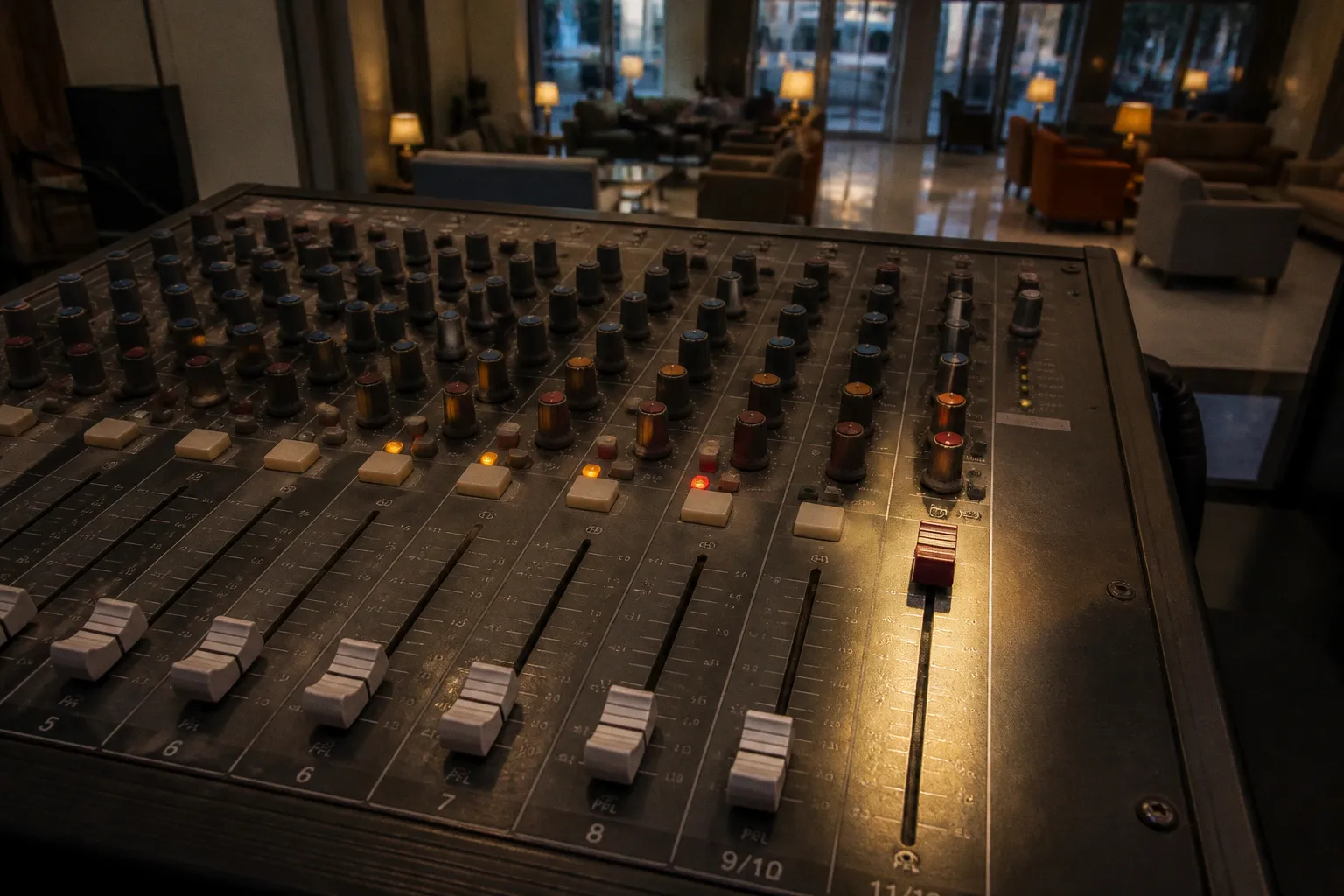
It is an audio decision made at the beginning of the workflow: treating a sound that is available in TikTok as automatically cleared for commercial use.
That assumption is unreliable. A sound can be visible in search, usable from one account type, and still be unsuitable for a hotel promoting rooms, dining, events, or direct bookings. For business accounts, the distinction between TikTok’s general music offering and its commercial library is especially important. The wrong choice may result in a blocked sound, a muted post, or a copyright notice after publication.
The practical rule is simple: if the video is marketing a hotel, choose audio on the basis of commercial clearance, not popularity.
The Legal Reality of Business Accounts and Copyrighted Audio
TikTok does not offer one universal audio catalogue to every account. In broad terms, the platform separates its general music library from the Commercial Music Library (CML), which is intended for businesses and commercial content. The exact catalogue, search options, and account features can change by market and app version, but the distinction remains central to a hotel’s publishing workflow.
Business accounts generally have access to commercial sounds rather than the full selection of music available to personal users. A Creator account should not be treated as identical to a Business account: account type, region, content purpose, and current TikTok settings can all affect what is available. The relevant question is not simply, “Can I attach this sound?” It is, “Am I authorised to use this sound in this commercial post?”
That distinction matters because a hotel’s TikTok video is usually promotional even when it looks editorial. A room tour, a poolside montage, a chef introduction, or a clip built around a booking offer is marketing communication. The fact that the video is short, organic, or published without paid amplification does not automatically make the music non-commercial.
TikTok’s licence for a sound is also not a blanket licence for every possible use. The platform may have permission to make certain music available in a particular context, while the rights holder may retain control over commercial synchronisation, advertising, territory, duration, or use outside TikTok. A hotel using a popular recording in a promotional video may therefore need permissions beyond the account’s normal in-app access.
This is why a sound appearing in the app is not proof of clearance for a hotel brand. It only proves that TikTok is making the sound available under some set of conditions.
Audio availability is not the same thing as commercial permission. For a hotel, the account type and the purpose of the video matter as much as the sound itself.
What the account type changes
A Business account is designed for organisations using TikTok to promote products, services, and locations. Its audio access is consequently more limited than the access available to many personal users. A Creator account is a separate account category and should not be automatically folded into the same restriction. If the publishing setup changes, check the current permissions in the account itself rather than relying on an old workflow or a colleague’s personal feed.
The confusion usually begins in the discovery phase. A social media manager sees an effective sound while browsing TikTok personally, saves it, and assumes the hotel account can use it later. That assumption breaks when the sound does not appear in the hotel’s selector—or when it appears through an indirect route but is not cleared for the commercial post.
A more dependable process separates inspiration from approval:
- Use personal or creator feeds to notice formats, pacing, and emerging creative patterns.
- Check the sound again from the hotel’s publishing account.
- Confirm that it is available through a commercial catalogue or covered by a separate licence.
- Keep evidence of the source and the applicable usage terms.
- If the sound’s status is unclear, replace it with audio whose clearance is easier to establish.
This may feel conservative when a trend is moving quickly. It is still less expensive than building a production around audio that cannot be used.
Why hotels are particularly exposed
Hospitality content often combines several types of commercial activity in one post. The video may show the property, include a call to book, promote a restaurant, feature a paid partnership, and later be reused in an advertisement. One piece of audio can therefore be exposed to more than one rights question.
The risk increases when:
- the hotel is part of a group with central brand guidelines;
- the video is later used in paid media;
- the same edit is exported to other platforms;
- the content features a partner, event, or third-party brand;
- the post remains live as an evergreen asset rather than a short-lived trend.
A sound selected for a casual organic post may not be suitable for a paid campaign or an edited version distributed elsewhere. The safest workflow records the intended use before the edit is finalised.
Navigating the Commercial Music Library for Hospitality Brands
The Commercial Music Library is not a consolation prize for hotels that cannot access every chart track. It is a different creative resource. Its strongest use is not to imitate a personal creator’s feed exactly, but to build a repeatable audio system around the property’s visual identity.
For hotels, that system can be more useful than chasing the same recognisable chorus as every other account. A quiet suite tour, for example, needs a different sound from a late-night bar montage. A spa video benefits from space and restraint; a pool-party edit can carry more movement. The CML makes that kind of deliberate matching possible through genre, mood, and energy rather than through the latest mainstream release.
Match the sound to the job of the video
Audio should support the viewer’s reason for watching. If the video explains something, the music should leave room for the explanation. If the edit is primarily visual, the track can carry more of the rhythm.
For common hotel formats:
- Room and suite tours: ambient, acoustic, soft electronic, or restrained instrumental tracks usually leave enough room for captions and voice-over.
- Food and beverage content: a more pronounced beat can help cuts land on preparation, plating, or service moments, but it should not overwhelm the natural sound of the kitchen or dining room.
- Pool and leisure footage: brighter, faster-moving music can support movement and sunlight without turning the edit into a generic travel montage.
- Spa and wellness content: slower tracks with a consistent texture help preserve the sense of calm that the visuals are trying to sell.
- Events and nightlife: energetic music can work, but the edit still needs a clear progression. A loud track cannot compensate for footage that lacks a beginning or payoff.
- Destination storytelling: local ambience, spoken detail, or original field recordings may create a stronger sense of place than a broadly recognisable song.
The important test is not whether the track is fashionable. It is whether the track helps the audience understand the property in the few seconds available.
Build a working catalogue, not a random favourites folder
The CML can still produce an inconsistent feed if every editor chooses a different sound for every post. A hotel does not need to use one track repeatedly, but it should know what kinds of audio belong to the brand.
Create a small internal catalogue with notes such as:
- suitable for voice-over;
- works with fast cuts;
- useful for room tours;
- better for food and beverage;
- calm without sounding sleepy;
- strong opening beat;
- appropriate for premium or understated positioning;
- approved for the current account and intended use.
This is not a rigid brand soundtrack. It is a practical starting point that saves the team from making the same decision from scratch every time. It also makes handovers easier when a freelance editor, property marketer, or agency joins the workflow.
A hotel with several locations can take the system one step further. The central team can define the approved audio categories while allowing each property to add locally relevant ambience or creator-led formats. That keeps the account recognisable without forcing every destination into identical content.
Listen beyond the first hook
A track can sound perfect in the first few seconds and become unusable once the edit reaches its middle. Preview enough of it to understand the structure. Does the energy stay level, build naturally, or drop away? Is there a vocal entrance that will compete with the room description? Does the ending give you a clean point for a call to action?
The answer affects the edit itself. If a track has a clear rhythmic change, cut the reveal to that moment. If it has no useful transition, do not stretch the video around it. Audio should guide the timing, but it should not dictate a weak story.
The CML is also not a guarantee of permanence. Tracks can be removed, reclassified, or become unavailable in particular markets. Save the name of the track and the date it was selected, and keep the project file flexible enough to swap audio without rebuilding the entire video.
Why Modifying Tracks Fails to Bypass Automated Detection
The familiar workaround is to take a copyrighted track and alter it: speed it up, lower the pitch, add reverb, hide it under a voice-over, or reduce it to background volume. None of these changes creates a commercial licence.
Platforms use automated audio-identification systems to compare uploaded material with reference recordings and rights-holder data. The precise implementation is not public and may change over time. It is enough to understand the practical result: changing the presentation of a recording does not reliably change its ownership or make it safe to use.
Common attempted modifications include:
- speeding up or slowing down the recording;
- shifting the pitch;
- lowering the volume;
- placing dialogue or environmental sound over it;
- adding echo, reverb, or distortion;
- reversing or cutting the track into short fragments.
These techniques can also damage the video. Quiet music under narration may still be recognised, while the narration becomes harder to understand. A distorted track can make a polished property film feel amateurish. A rushed edit built around a recognisable song may lose its rhythm when the platform removes the audio.
The better question is not, “How much of the track can I get away with?” It is, “What audio can I use confidently, and how can I make that choice part of the creative concept?”
Why “only a few seconds” is not a safe rule
There is no universal number of seconds that makes copyrighted music free to use in a hotel’s marketing video. A short excerpt can still be identifiable, and a short video can still be commercial. The length of the recording is only one element of the rights analysis, not a permission threshold.
The same applies to background music captured in a hotel lobby, restaurant, or event space. If a protected song is audible in the recording, the fact that nobody added it deliberately does not automatically remove the issue. When filming on location, record clean takes where possible and monitor what is playing in the environment.
Original sound is often the simplest solution. The clink of glassware, the opening of curtains, a lift arriving, water at the pool, or the low room tone of a lobby can give a video a more specific identity than a generic backing track. It also gives the editor control over the relationship between sound and image.
A sound workaround is not a rights strategy. If the recording is not cleared, changing its speed or volume only changes the risk profile—not the ownership.
Repeated copyright problems can create operational consequences beyond one muted post. Access to features may be affected, distribution may suffer, and the account team may lose confidence in a workflow that is difficult to audit. More importantly, every post becomes harder to repurpose. A hotel should not build a content library on audio that cannot travel with it.
Using the Built-in Copyright Check Tool Before You Publish
TikTok offers in-app checks that can help identify audio problems before publication. The exact name and location may vary between TikTok versions, account types, and regions, so the team should look for the copyright or sound-check option available in the current publishing interface or TikTok Studio.
This tool is useful, but it is not a replacement for licensing records. An automated check can identify a conflict in the uploaded material; it cannot turn an uncleared recording into an authorised commercial asset. It may also not reflect every future use, territory, or platform on which the video will appear.
A sensible pre-publish sequence looks like this:
1. Upload or edit the video in the publishing workflow used by the hotel account.
2. Confirm where every audible element came from: CML, original recording, commissioned music, or a third-party catalogue.
3. Run TikTok’s available copyright or sound check before posting.
4. If the tool flags the audio, replace the track rather than trying to disguise it.
5. Run the check again after making the change.
6. Save the project version and the relevant licence or catalogue information with the content record.
If the post contains voice-over, check the full mix rather than only the music layer. A licensed backing track does not resolve an uncleared sound effect, a sample from another video, or music captured accidentally during filming.
A pass is not permanent protection
A video can pass a pre-publish check and later encounter a problem. Rights arrangements can change. A catalogue entry can be withdrawn. A track can be restricted in a particular territory. Audio may also be added or replaced after the initial review.
For that reason, treat the check as one layer of control. The other layer is documentation. Keep a record of:
- the audio title and source;
- the account and platform for which it was selected;
- the date of approval;
- the licence or subscription terms, if applicable;
- whether paid promotion or cross-posting is planned;
- the editor or team member who approved the asset.
When a hotel works with an agency, this record prevents a common misunderstanding: “the agency selected it” is not evidence of clearance. The property still needs to know what it is allowed to publish and where.
If TikTok mutes the video
First, open the notification and identify the reason given. Do not immediately delete the post if the team may need the notice for an appeal or internal record. If the hotel has a valid licence or used an eligible commercial sound, submit the available appeal with the relevant documentation.
A useful evidence file may include:
- the catalogue entry or receipt;
- the licence terms in effect when the video was made;
- the original project file;
- proof that the audio was selected from the commercial library;
- a statement explaining the intended use and account type.
If the claim is valid, replacing the audio is usually more productive than arguing with the platform. Keep a version of the video without embedded music so that the team can make a clean replacement quickly. This is one reason not to export a single flattened master and treat it as the only source file.
Cross-Platform Licensing Risks: Why TikTok Audio Is Not Universal
TikTok clearance does not automatically follow a downloaded video to Instagram, YouTube, Facebook, or a hotel website. Each platform has its own agreements, enforcement systems, and commercial-use conditions.
This is where an otherwise careful TikTok workflow often breaks. The team selects a CML track, exports the finished video with the music embedded, and uploads the same file everywhere. The video may remain online on TikTok while being claimed, muted, or restricted elsewhere. TikTok’s permission covers the use described by TikTok’s terms; it does not serve as a universal licence for the recording.
The safest approach is to decide the distribution plan before the final export.
Three workable audio models
Platform-specific versions keep each upload within the relevant platform’s audio environment. The TikTok edit uses an eligible commercial sound, the Instagram version uses audio cleared for Meta’s environment, and the YouTube version uses an appropriate YouTube source. The visuals can remain almost identical, but the audio layers and sometimes the timing will differ.
This takes more preparation, but it is straightforward for recurring formats. The editor can keep one clean master, then create platform-specific audio versions during export.
A multi-platform music licence is useful when a hotel publishes the same content across several channels and wants one consistent track. The licence must expressly cover the intended platforms, territories, account types, and promotional uses. A subscription alone is not enough; the plan terms need to match the way the hotel actually publishes.
Pay particular attention to paid advertising. Some catalogues cover organic social posts but impose separate conditions on advertisements, boosted posts, client work, or use by a hotel group rather than an individual creator.
Original audio offers the most control. A hotel can record property ambience, commission a sound bed, or produce its own music with clear agreements from everyone involved. Original does not mean unregulated: if a musician, vocalist, composer, or contractor contributes to the recording, confirm who owns the work and which uses have been granted. Once that is clear, the audio can become a reusable part of the brand system.
A practical cross-platform matrix
| Audio source | TikTok Business account | Instagram and Facebook | YouTube Shorts | Main condition |
|---|---|---|---|---|
| TikTok Commercial Music Library | Generally intended for TikTok use | Not automatically cleared | Not automatically cleared | Follow TikTok’s current terms |
| Meta’s cleared music options | Not automatically cleared | Intended for eligible Meta use | Not automatically cleared | Check account and advertising restrictions |
| YouTube Audio Library | Not automatically cleared | Not automatically cleared | Intended for eligible YouTube use | Follow the track’s attribution and usage terms |
| Multi-platform catalogue | If covered by the licence | If covered by the licence | If covered by the licence | Verify platforms, commercial use, and territory |
| Original or commissioned audio | If rights are documented | If rights are documented | If rights are documented | Keep ownership and permission records |
The table is deliberately cautious. “Royalty-free” does not mean “free for every use,” and “available in the app” does not mean “portable to every channel.” Those labels describe a starting point, not the complete permission.
Do not export the platform soundtrack as your master
Keep the video without platform-specific music whenever possible. Then add the appropriate audio for each destination. This gives the team more options when:
- a track is removed from a library;
- a campaign moves from organic to paid;
- a property wants to reuse the footage on its website;
- a regional account has different audio access;
- a brand partner requests a different edit;
- a post needs subtitles or a new voice-over.
A clean master also protects the investment in the footage. The hotel may use the same lobby reveal for a seasonal offer, a destination page, an email campaign, and several social posts. Embedding one platform’s music into the only export unnecessarily narrows that asset’s future use.
Making Audio Compliance Part of the Hotel’s Creative Workflow
Audio should be selected at the same time as the format and distribution plan, not as the final decoration added five minutes before posting. The content brief can include a few practical fields:
- target account and platform;
- organic, paid, or both;
- planned territories;
- source of the music or sound;
- whether voice-over is required;
- whether the video will be repurposed;
- location of the licence record;
- owner of the final approval.
This is especially useful for hotel groups. A property-level team may have permission to post on its local account but not to use the same asset in a centrally managed advertising campaign. A sound approved for one region may also have different availability elsewhere.
The creative team should also agree on fallback options. If the preferred track disappears, what replaces it? If the voice-over is the key message, can the video work with original ambience? If the campaign is time-sensitive, is there a clean export ready for another platform?
These questions do not make hospitality content less creative. They protect the creative work from being held hostage by an audio decision.
The final publishing routine can remain short:
1. Confirm the account type and commercial purpose.
2. Identify the source and scope of the audio.
3. Check the full mix in TikTok’s available copyright tool.
4. Confirm whether the video will be reused elsewhere.
5. Export a clean master and platform-specific versions.
6. Archive the licence information and approved project file.
The process is simple enough to become habit, which is exactly what it needs to be. A hotel should not depend on a social media manager remembering which sounds were safe six months ago or which catalogue applied to a different account.
A polished property video with no sound is not merely an aesthetic disappointment. It can lose the narration, the rhythm of the edit, the emotional lift of the reveal, and the call to action that turns attention into a booking. The production may be excellent, but the delivery system has failed.
TikTok’s commercial audio restrictions are therefore not a minor platform nuisance. They are part of the production brief. Use the Commercial Music Library when it fits, use original or properly licensed music when the content needs more range, and treat every other platform as a separate rights environment.
The goal is not to avoid music. It is to make sure the soundtrack remains attached to the video after publication—and remains usable when the hotel takes that video somewhere else.