Hotel Video Strategy: Pre-Launch Checklist to Avoid Mistakes
Hotels keep lighting five-figure checks on cinematic video productions that nobody watches past the first three seconds.
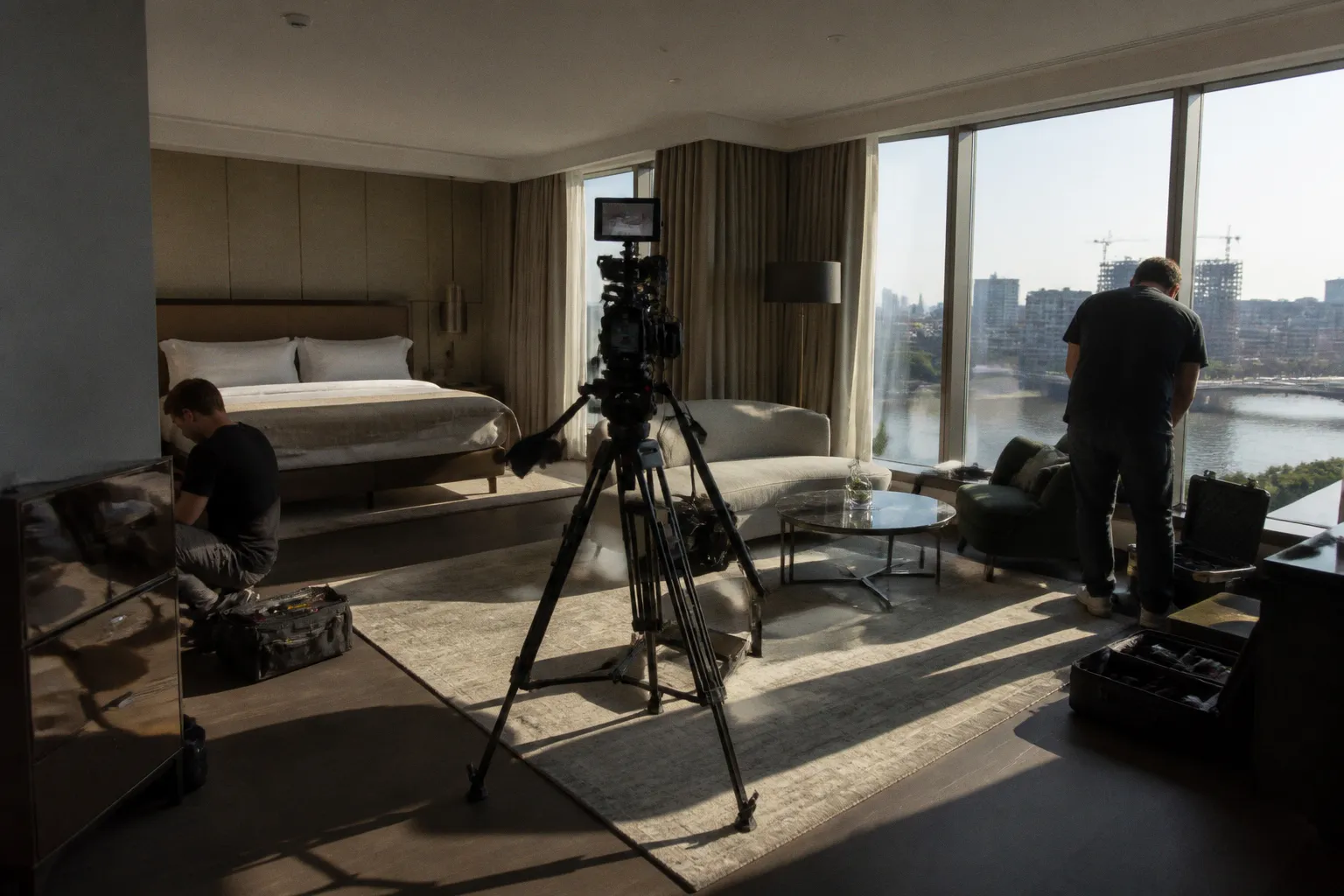
The bloated hotel video marketing strategy checklist your agency dropped on you last quarter — the one with twelve "discovery phases" and zero actual numbers — won't fix that. What saves you is grinding through the unglamorous, unsexy, technical decisions before a single frame gets shot. Blunt, fast, and built for how people actually book rooms today.
Over 80% of accommodation searches now happen on mobile. Treat that as gospel and most of your production choices collapse into obvious ones. If your footage doesn't scroll-stop on a 6-inch screen with the sound off, the algorithm buries you and your budget evaporates. Everything below flows from that single fact.
Make It Mobile, or Make It Invisible
Production teams default to 16:9 horizontal masters because it makes their reels look pretty in a portfolio review. Wrong instinct. Yes, you still capture a horizontal master for the website hero — but TikTok, Reels, Shorts, and Stories assets need 9:16 vertical cuts in-camera before the shoot wraps, not as a "post-production note" that quietly dies in a Slack channel three weeks later.
Action items before any camera turns on:
- Confirm camera bodies record vertical natively (Sony FX3, Canon R5C, iPhone 15 Pro, or comparable flagship smartphones) — cropping post hoc murders resolution and gives you that mushy smartphone-from-2014 aesthetic.
- Lock in a 1080×1920 deliverable at 30 fps minimum, with the 4K master as archival only.
- Cap vertical file sizes at 4–8 MB per 15-second clip. Above that, platform compression turns faces into impressionist paintings.
- Hard-caption everything. The bulk of social video is consumed with the sound off — feeds autoplay muted, captions are baked into the UI, and the swipe reflex is faster than the tap-to-unmute reflex. If your hook relies on a voiceover, you're cooked before the swipe.
Vertical 9:16, hard-coded captions, file under 8 MB — that's the entire mobile-first stack. Ignore the rest until those three are locked.
Bitrate matters more than camera brand. A clean 1080p vertical at 8 Mbps beats a noisy 4K downsample every time. Bring a portable SSD to dump cards daily — running out of storage mid-shoot is a hospitality producer's rite of passage, and it's avoidable. Confirm codec (H.264 for distribution, ProRes or BRAW for master) before day one. The agency "forgetting" the ProRes license is a tale as old as Premiere.
One more technical detail most checklists skip: test your export settings on actual devices before the shoot ends. Bring two phones to set — one iPhone, one mid-range Android. Export a 15-second vertical test clip and play it on both. If skin tones look wrong or text gets clipped on the cheaper screen, you catch it on day one instead of in a revision cycle that eats a week.
Staging Without Stagehands: What to Kill Before You Roll
You don't need a stylist charging $400 an hour to make a guest room camera-ready. You need a housekeeper with a clipboard and fifteen unsupervised minutes.
Walk every room with this list before the crew arrives:
- Trash cans out of frame. Always. No exceptions, even in bathrooms.
- Plastic cups, water bottles, room-service trays, in-room dining menus left from previous guests — gone.
- Door hangers ("Turn-down service," "We missed you") removed or flipped backwards.
- Telephone cords, lamp wires, TV cables, hair-dryer leads — bundled, taped, hidden behind the nightstand.
- Every visible bulb matched to the same Kelvin. Mixed warm and cool bulbs in a single shot screams "we didn't try."
- Bed runners pulled square. Pillows fluffed to an almost aggressive degree — that's the look.
- Bathroom amenities arranged with military precision. One tube of toothpaste, one folded washcloth, one robe, draped. Place extras in a drawer, off-camera.
Shoot guest rooms in the first two hours after sunrise, or in the golden hour before sunset. Midday light through cheap curtains creates unflattering hot spots on linen that no LUT rescues. Set a hard call time: 6:30 AM or 5:30 PM in summer, sliding seasonally. Skipping that call time is the single most common hospitality video production mistake on the books — and the easiest one to prevent with a calendar reminder.
Outdoor pools? Close them for at least one full hour before the camera rolls. Sign it, post it at the entrance, brief the lifeguard. Even a single swimmer in the background ruins the fantasy and creates a downstream consent headache covered in the next section. The same goes for fitness centers, spa wet areas, and co-working spaces with glass walls. If someone is visible through a window, you either own the rights to their likeness or you don't — there's no middle ground.
Common Staging Mistakes That Ruin Shots
A few that come up repeatedly on hospitality productions, based on what actually ends up on the cutting-room floor:
1. Visible signage with rates or policies. That rack card with Wi-Fi instructions, the minibar price list, the "Quiet Hours" placard — all of it dates the footage instantly and makes it unusable in six months when rates change.
2. Branded merchandise you don't own. A Coke bottle on the nightstand, a Starbucks cup at the pool, a newspaper masthead on the lobby table. Brands protect their marks. Clear the frame or face a licensing query you don't want to answer.
3. Staff uniforms that reveal turnover. If your concierge team changed uniforms last season, ensure the on-camera wardrobe matches current branding. Nothing undermines a "timeless luxury" edit faster than an outdated polo.
Models, Common Areas, and the Eye Contact Rule
Hotels want people in the shots. Fine. Where you place them is the difference between a cinematic commercial and a privacy complaint.
Industry working standard: models only in common areas — pool deck, lobby lounge, rooftop bar, restaurant, spa relaxation room. Never in the guest rooms being marketed. Never at the front of the building for an establishing shot. The optics are wrong and the legal exposure isn't worth the marginal aesthetic gain.
And the eye contact rule: models don't look at the camera. Ever. They laugh over a cocktail, read a book, glance out a window, lean into each other mid-conversation — but their gaze stays off the lens. Direct eye contact in a hospitality commercial breaks the documentary spell and reads instantly as an ad, which tanks trust scores on the first viewing. The audience wants to feel like a fly on the wall, not a target.
One more thing on talent: if you hire day-rate models, get usage rights in writing on the day, not two weeks later when the agency forgets. Specify digital, social, paid amplification, in-room TV, and website use for two years minimum, with a renewal clause. Anything less and you'll be re-cutting Q3 when the rights expire mid-campaign. This isn't theoretical — agencies lose track of talent releases constantly, and it's your property footage that gets pulled from circulation while legal untangles the mess.
Casting for Hospitality Specifically
Not all modelling translates. The talent pool that dominates fashion campaigns — angular cheekbones, editorial poses, zero body language — reads as cold and uninviting in a hospitality context. You want warmth, approachability, and the suggestion of a guest genuinely enjoying the space. That means casting couples who interact naturally, solo travelers who look comfortable alone, and families whose body language communicates ease rather than choreography.
Ask casting directors for "lifestyle" reels, not portfolio stills. A five-second clip of someone laughing genuinely tells you more than twenty retouched headshots. And always book a 30-minute buffer in the schedule for talent to warm up. The first takes of any hospitality shoot look stiff — the crew is setting, the talent is nervous, the light is still shifting. The magic happens at take four or five, and you need the schedule to absorb that.
Insurance and Legal: The Boring Stuff That Bankrupts Shoots
Skim this section and your production company definitely will. Don't skim it.
Top-tier venues — five-star properties in London, properties tied to global brand families, heritage buildings with strict property management — typically require video crews to carry £5 million to £10 million in public liability insurance as a hard floor. Independent boutique hotels usually ask for £2 million minimum. These thresholds vary by property and country, so verify the specific requirement with the venue's operations team well in advance. Verify the certificate of insurance before you set foot in the lobby. Sending one freelance videographer with a £1 million policy is how you get kicked off-site an hour before sunrise — and how your shoot gets pushed a quarter.
Drones require separate insurance, separate permits, and a longer runway than you'd think. Regulations vary dramatically by jurisdiction: in the UK, the CAA requires specific permissions for commercial drone flights near buildings and people, and approval timelines depend on airspace classification. In the US, the FAA's Part 107 rules govern commercial use, with additional local restrictions in many cities. In the EU, EASA rules apply with member-state variations. Always contact your local aviation authority well in advance — lead times range from a few days to several weeks depending on location. Skip the paperwork, fly anyway, and you're looking at significant penalties, potential equipment seizure, and — worst of all — your hotel's name in the local news alongside the phrase "unauthorized drone flight." Not the traction you wanted.
Filming guest consent is non-negotiable. If a real guest wanders into the background of a lobby shot — and they will — you need a written location release or you blur the frame in post. The "we'll fix it later" approach has ended careers. Draft a standard location release form with your legal team once, and keep printed copies in the production kit. Brief the front desk: any guest who asks why cameras are rolling gets a polite explanation and the option to avoid the area. Coercion isn't consent, even in a five-star lobby.
Music licensing deserves its own line item. Budget per-track fees for licensed libraries like Artlist, Musicbed, or Epidemic Sound — rates vary by plan and usage tier, so check the specific terms of your subscription. If your agency cuts a popular song into the rough cut "temporarily," you'll face a steep licensing bill when the rights holder comes knocking — switch to properly cleared tracks before the edit goes final. Trap beats, lo-fi, indie acoustic — those libraries more than cover what hospitality content typically requires. Use them and sleep.
The boring paperwork is the actual production. The reel is the asset you keep. Flip that mental model and your shoots stop getting shut down mid-day.
One Footage Library, Five Cuts: Platform-Specific Formatting
Stop trying to make one master video "work everywhere." It doesn't. Format for the platform or get drowned by it.
| Platform | Aspect | Length | Hook Window | Captions |
|---|---|---|---|---|
| Instagram Reels | 9:16 | Under 30s | 0–1.5s | Hard-coded |
| TikTok | 9:16 | 15–30s | 0–1.0s | Hard-coded |
| YouTube Shorts | 9:16 | Under 60s | 0–2.0s | Hard-coded |
| YouTube (long-form) | 16:9 | 2–3 min | 0–5.0s | Subtitles optional |
| Website hero loop | 16:9 | 8–15s loop | 0–1.0s | Subtitles optional |
| In-room TV / lobby screen | 16:9 | 60–90s | 0–3.0s | Subtitles optional |
The "hook window" column is doing the real work here. On Reels and TikTok, you get roughly one second before the user swipes. That means the most expensive shot of your property — the infinity pool, the master suite, the skyline at blue hour — opens the clip. No logo bumper. No slow build. No "Welcome to." Cut straight to the money.
YouTube long-form is where full property tours and testimonial edits live. Two to three minutes is the sweet spot. Below that, viewers don't trust the recommendation. Go much longer without earning every scene with a fresh visual beat or a new talking head, and audience retention falls off a cliff. Pacing is everything: a two-minute tour that resets the viewer's attention every 12–15 seconds (new room, new angle, new caption) holds. A three-minute single-track montage of the same infinity pool from seven angles does not.
The website hero loop is the asset most hotels get wrong, every single time. They drop a 90-second sizzle reel as the homepage autoplay and wonder why bounce rate climbs. Wrong move. Eight to fifteen seconds of slow, looping beauty shots — cut to a beat, no audio dependency — that's what converts a curious scroller into a guest. Think of it as a living photograph, not a video. The moment it requires the visitor to commit more than a glance, you've lost them to the back button.
Platform-Native Editing vs. Cropped Repurposing
Here's the trap: your editor takes the 16:9 master, crops the center to 9:16, and calls it a Reel. Technically legal. Visually catastrophic. The composition falls apart — heads get clipped, the pool vanishes below the crop line, and the carefully staged foreground element (that cocktail, that robe, that flower arrangement) is nowhere in frame.
Shoot vertical as a separate setup. It costs fifteen extra minutes per scene and saves fifteen hours of post-production grief. Position the camera on a vertical bracket or a dedicated phone mount alongside the main rig. Have the DP call "vertical take" and reframe the shot intentionally. The vertical edit should look like it was always meant to be 9:16 — because it was.
UGC vs Polished: The Stat That Should Terrify Your Producer
Here's the part of the hotel video marketing strategy checklist that producers don't want you to read.
EHL Hospitality Insights research, 2026: 79% of consumers say user-generated content strongly affects their purchasing decisions. UGC is 9.8 times more impactful than influencer content for actual bookings. Let that number land. Almost ten times.
This doesn't mean your cinematic hero shots are useless — those still own the upper funnel, paid acquisition, and the website. But the bottom funnel? The moment at 11 PM when a traveler is comparing your property against three competitors on their phone? That's UGC territory. An authentic iPhone clip of a real couple laughing on your terrace will outperform an expensive drone shot of an empty courtyard more often than not. Authenticity wins the cart. Stale campaigns lose it.
The actual play, line by line:
- Commission polished hero content for brand awareness and paid acquisition only.
- Build a UGC pipeline through post-stay guest outreach, branded hashtags, and small paid bounties ($100–$300) to real guests in exchange for signed usage rights.
- Repurpose the best UGC into Reels and Shorts with captions, your logo watermark, and a clear CTA to book direct.
- Track which format drove the booking. Last-click attribution underfunds UGC and overfunds the drone team every single quarter — that's how hoteliers end up with beautiful videos and flat revenue.
Building a UGC Funnel That Actually Runs
A pipeline only works if it's systematized. Here's what that looks like operationally:
Post-stay email, 36 hours after checkout. Subject line: "Share your stay, earn a $150 gift card." Body keeps it simple: send us a 15–30 second clip from your stay, sign a one-page digital usage release, and we'll send you a voucher for your next visit. Link the release form directly — don't make them ask for it.
Branded hashtag on property. A small, tasteful card in the room or at checkout that says: "Tag us @[handle] and #StayAt[Property] — we might feature you." Costs nothing. Generates a passive stream of discoverable content.
Quarterly content audit. Every 90 days, pull the top-performing UGC clips from tagged mentions, paid bounties, and DM submissions. Re-crop to current specs, refresh captions, retire anything older than 12 months that no longer reflects the product. A UGC library that goes stale stops performing — the content was born from a specific moment in time, and that moment has an expiration date.
Paid amplification of organic winners. When a piece of UGC outperforms your polished assets, push paid spend behind it. Boost the post directly, retarget lookalike audiences to the original organic engagement, and let the algorithm find the cart. The same content that won organically usually wins paid — the audience doesn't care who produced the footage, only that it looks real.
Stop buying reels nobody watches. Buy the unglamorous decisions instead: vertical masters shot in-camera, hard-coded captions, staged rooms with no stray signage, real insurance and signed releases, platform-native cuts, and a UGC pipeline that runs without you chasing it every week. That's what a hotel video marketing strategy checklist looks like when the producer isn't trying to sell you on their next reel. The cinematic stuff still matters — but only after the unsexy foundations are poured.