Leveraging AI Video Tools to Elevate Hospitality Marketing Narratives
According to a recent cluster of industry coverage, AI video tools are moving from experimental add-ons toward a more integrated role in business content production.
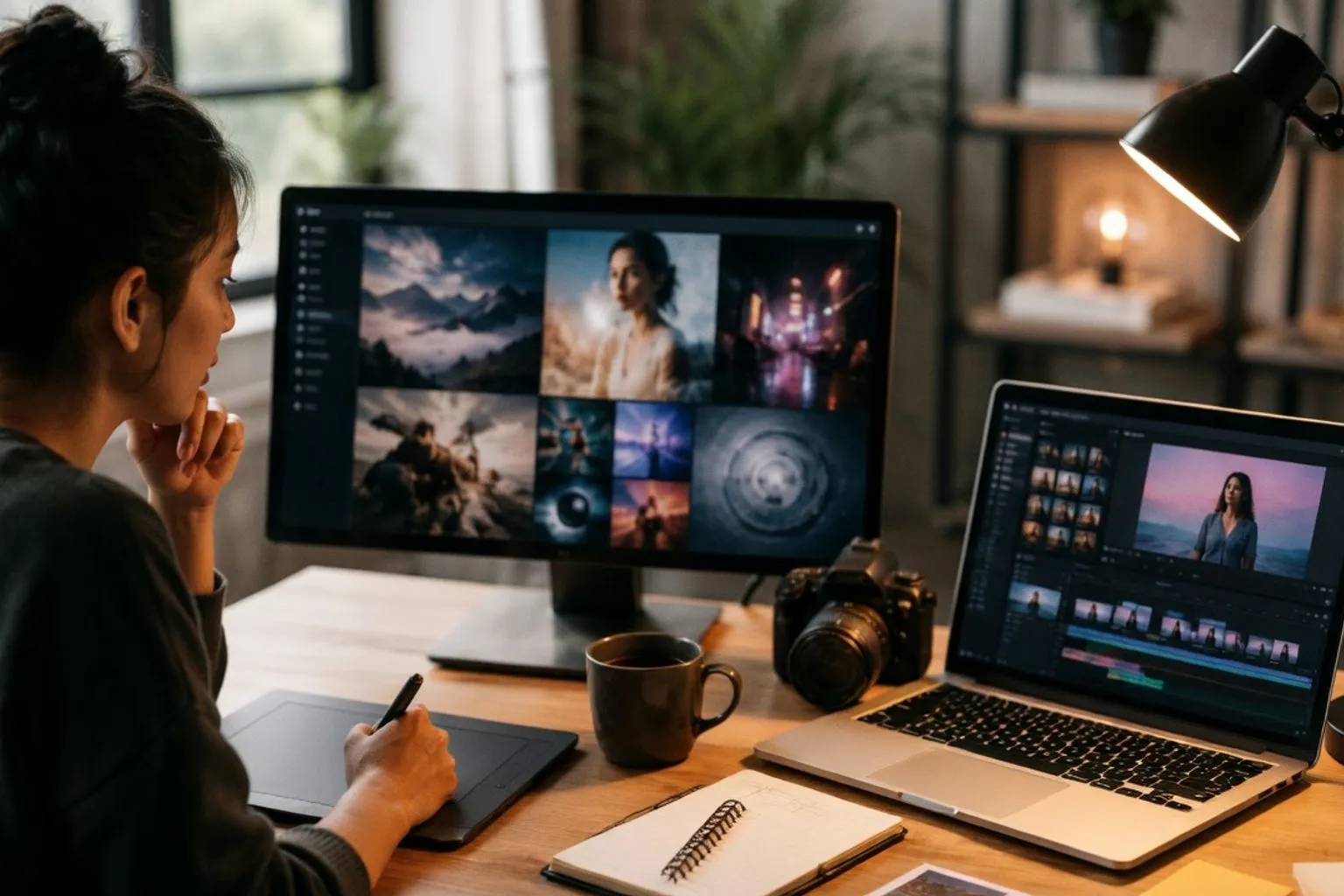
For hospitality brands, that matters because the guest journey is increasingly shaped before arrival—through short-form video, destination storytelling, room imagery, and the visual consistency of every channel. The opportunity is real, but the practical question is not whether to use AI; it is where it can strengthen the story without flattening the sense of place.
The shift is from isolated tool to connected workflow
Dynamic Business reports that 85 percent of marketers now use AI tools in their content workflows, compared with 61 percent three years earlier. The publication’s 2026 guide reviews 40 tools across five areas: writing, copy and SEO, image generation, video generation and editing, and audio or voice production.
That distinction is important for hotel and destination marketers. “AI content creation” is not one product category, and a tool selected for social graphics may have little relevance to a team producing video campaigns. The stronger approach is to begin with the guest-facing task—building anticipation for a destination, showing the relationship between rooms and shared spaces, or adapting one campaign for multiple platforms—and then assess which part of the workflow needs support.
The reported change is less about generating a first draft and more about connecting several production steps. According to Dynamic Business, current tools can work with brand voice guidelines, generate images, edit accompanying video, and create reformatted versions for multiple platforms. For a hospitality team, this could make a single visual narrative easier to extend across a booking page, social feed, email campaign, and destination content—provided the original story and visual standards are already clear.
Where hospitality teams should be careful
The appeal of AI video is speed, but speed can create a polished version of the wrong message. A hotel’s strongest content is rarely just a sequence of attractive frames; it carries texture, context, and a credible sense of arrival. If a generated scene changes the proportions of a room, invents a view, or makes a destination feel generic, the result may look efficient while weakening the alignment between marketing promise and guest experience.
I would therefore separate production assistance from visual truth. AI may be useful for editing, repurposing, or exploring a visual direction, while the defining assets—architecture, landscape, food, people, and local atmosphere—still need a disciplined source of truth. The more distinctive the property, the more important that boundary becomes. A boutique hotel cannot afford to replace its sense of place with a library of interchangeable cinematic images.
The source coverage also suggests that tool selection should be treated as a live decision rather than a one-time purchase. Dynamic Business states that OpenAI Sora is not included in its guide because its web and app experiences are reportedly being discontinued in 2026, with the API expected to follow later in the year. It identifies Google Veo 3.1 and Runway Gen-4.5 as alternatives for cinematic video use cases. Because the available evidence is based on source reporting rather than a direct company announcement in this pack, that information should be verified before it influences a production roadmap.
A more useful test than “does it look impressive?”
For hospitality brands, the first evaluation should be a small, bounded workflow. Take one existing campaign and test whether an AI tool can help create several channel versions while preserving the same property details, tone, pacing, and visual priorities. Review not only the finished video but also the amount of correction required from the creative team.
The practical benchmark is alignment: does the tool help the brand express its identity more consistently, or does it introduce another layer of approval and cleanup? A destination campaign may benefit from quicker editing and adaptation, but it still needs a human decision-maker who understands why a particular view, transition, or moment belongs in the story.
The current coverage points to a broader market shift, with AI tools becoming more capable and more deeply embedded in content operations. For hotel marketers, the advantage will not come from generating the most content. It will come from building a workflow in which technology handles repeatable production tasks while the brand protects the details guests are actually booking—the light in the room, the rhythm of the arrival, and the unmistakable character of the place.