Leveraging Commercial Real Estate Video Strategies to Boost Hotel Direct Bookings
According to PC Tech Magazine, video documentation has become a stated component of Seattle's 2026 commercial real estate marketing playbook.
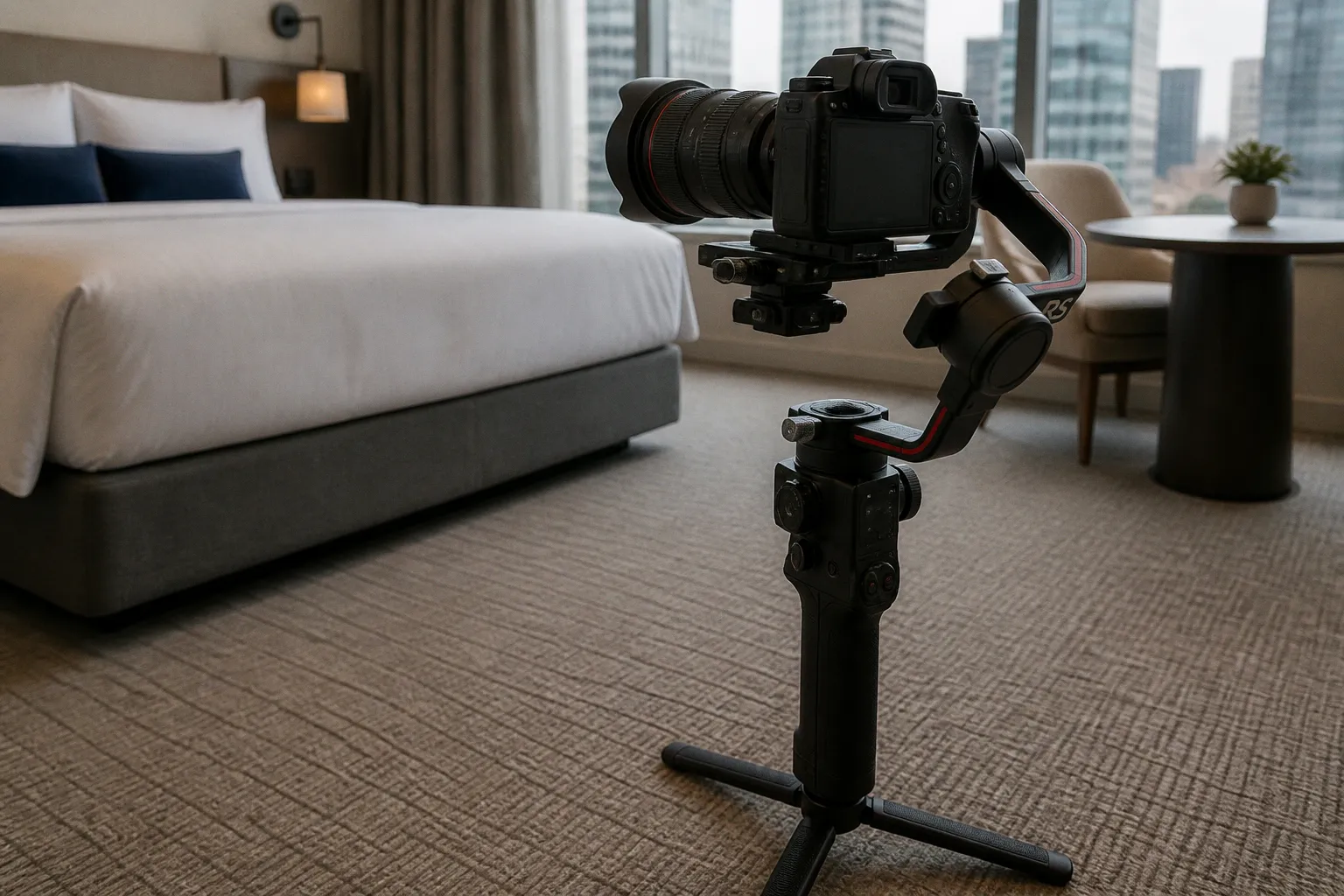
The reported outcome: brokers using structured property video are closing larger deals. For hotel and short-stay operators running direct booking funnels, the mechanics translate directly — spatial documentation replaces static galleries, and the booking path mirrors the lease path. This is not a stylistic shift. It is a conversion infrastructure shift.
Why the CRE signal transfers to hospitality
Commercial real estate and hospitality share identical conversion architecture: high-consideration purchase, visual-first decisioning, long consideration windows. According to PC Tech Magazine's reporting, Seattle brokers are scaling video not as a creative experiment but as a measurable input to close rates. The transfer to lodging is mechanical. A documented walkthrough delivers spatial information a carousel of stills cannot. If brokers can move deal size with video, the same lever applies to average daily rate and length-of-stay on a direct booking page.
The parallel supply-side signal
Two additional publications point to where production capacity is shifting. openPR.com and the Carroll County Mirror-Democrat both report that UGC Maker has expanded its AI UGC video platform with a Marketing Studio, a "Product in Hand" module, an AI Clothes Changer, and an AI Pose Generator. Read for what it means operationally: iteration cycles compress, cost-per-asset drops, and the dependency on scheduled shoot days for every new creative variant dissolves. For property teams running weekly seasonal refreshes across multiple listing pages and OTAs, that is a throughput change, not a styling change. Volume per quarter goes up. Marginal cost per variant goes down.
Production audit before scaling video
Before wiring video into the booking funnel, audit the existing setup:
- Source resolution and codec — confirm platform minimums before any export decision.
- Focal length consistency across cuts — mismatched optics break spatial trust and signal amateur production.
- Lighting dynamic range — bracket exposures when windows are in frame; clipped highlights destroy credibility.
- Audio: ambient room tone or muted, never vocal tracks layered over a tour.
- CTA placement — booking entry must appear before the mid-point of the asset, not appended at the end.
- Autoplay behavior — muted by default, with the hero room visible within the opening frames.
- Post-launch heatmap verification — confirm the CTA receives scroll-depth attention, not just view count.
The Seattle playbook is one documented case. The AI tooling expansion is another. Both point the same direction: video is moving from production line item to conversion infrastructure.