Hotel Instagram Reels: a roadmap for guest UGC campaigns
61% of travelers have booked a hotel after seeing it featured in their Instagram feed. That is not a vanity metric. It is a booking-path signal.
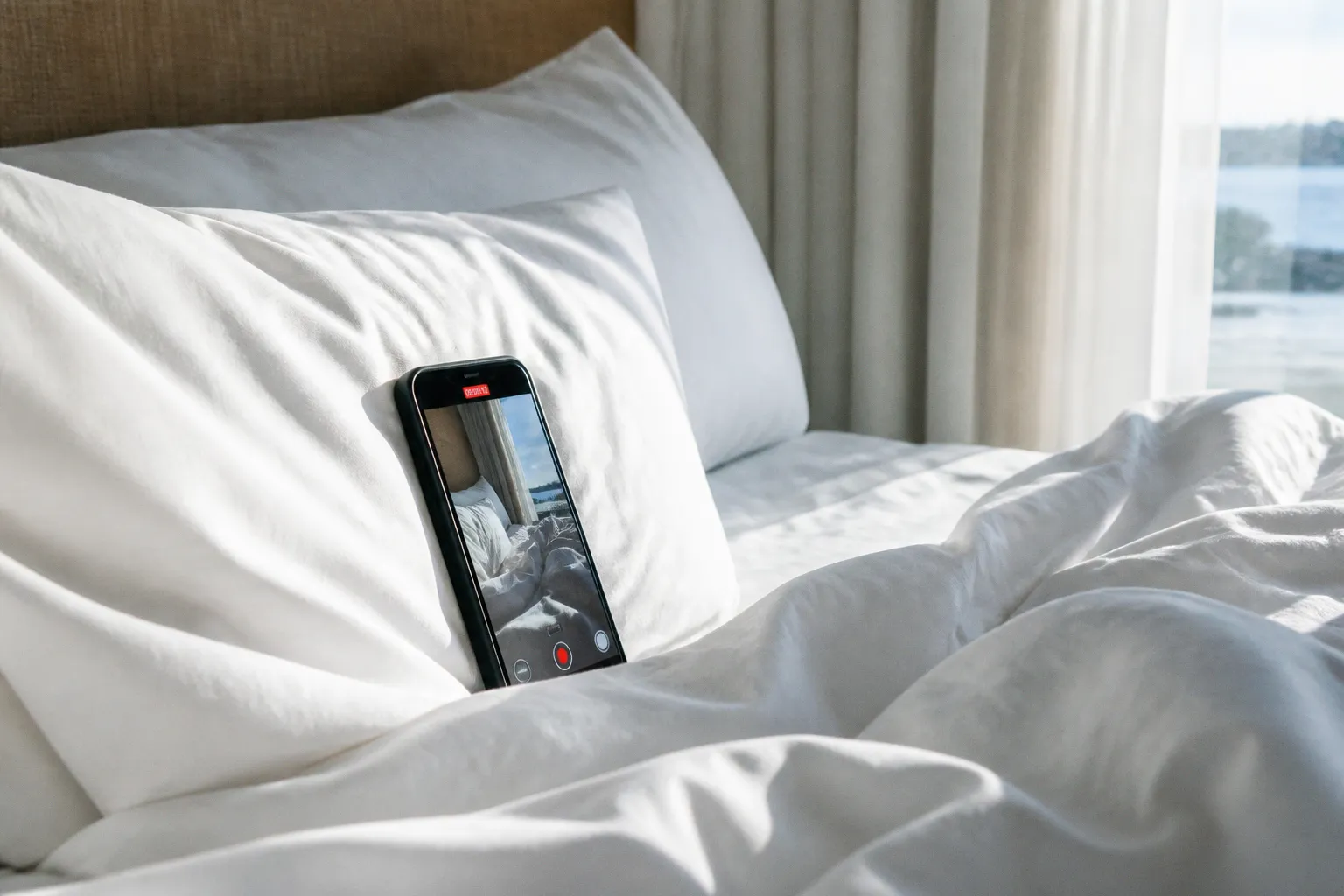
Guest-created Reels work because they reduce the distance between discovery and decision. A branded room tour presents a claim. A guest video presents evidence. Consumers are 2.4 times more likely to view user-generated content as authentic than brand-created promotional content. The difference affects trust, watch time, saves, profile visits, and eventually direct-booking behavior.
But a hotel Instagram Reels UGC campaign does not run on hashtags alone. It needs a capture system inside the property, a rights workflow, a content filter, and an attribution layer connected to the booking engine. Without those components, the hotel collects clips. It does not build a marketing asset.
The economics of social proof: why guest content outperforms branded ads
Hotel marketing has a recurring conversion problem. The property publishes polished content, reaches an audience, and then loses the user at the booking step. The content generates attention. The path to purchase creates friction.
Guest Reels solve part of that problem by supplying social proof at the point of consideration. They show the room from a human height. They reveal the actual scale of the lobby. They capture the breakfast queue, the view from the balcony, the pool at a realistic time of day, and the distance between the room and the beach. These are not minor details. They are the details that branded photography often excludes.
The strongest UGC does three jobs:
- It validates the visual promise. The room in the guest’s Reel should resemble the room in the hotel’s booking gallery.
- It reduces uncertainty. The viewer sees movement, sound, circulation, and context that static photography cannot fully communicate.
- It creates distribution beyond the hotel’s audience. Instagram Reels can be recommended to non-followers. Meta platforms receive more than 200 billion Reels plays per day, giving short-form video a materially larger discovery surface than a standard feed post.
The commercial case is also visible in conversion data. Hotels can achieve up to 67% higher booking conversion rates through video content compared with static images across social media platforms. That figure is not a guarantee for every property or every Reel. It indicates the upper performance potential of video when the creative, audience, and booking path align.
The distinction matters. A Reel can perform well in reach and still fail commercially. Views are not bookings. Follower growth is not revenue. A high-performing video with no trackable path is an unverified media event.
Guest UGC is not a replacement for hotel photography. It is a verification layer placed between visual discovery and booking intent.
A useful content mix separates the roles of each asset:
| Content type | Primary job | Conversion value | Typical weakness |
|---|---|---|---|
| Professional architectural photography | Establish spatial accuracy and brand standard | High during property evaluation | Can feel controlled or overproduced |
| Hotel-produced Reel | Explain the property quickly and consistently | Strong for discovery and retargeting | May lack perceived neutrality |
| Guest Reel | Supply social proof and real-use context | Strong during consideration | Variable quality and incomplete information |
| Influencer collaboration | Extend reach into a defined audience | Useful when audience fit is proven | Reach can exceed attributable revenue |
| Review or testimonial overlay | Resolve a specific objection | Useful near booking | Depends on credible, relevant wording |
The error is treating these formats as interchangeable. They are not. A guest video should not be forced to carry the full burden of property explanation. It should support professional assets by answering a narrower question: Does this place look and function like a real stay I would want to book?
Designing in-property prompts that produce usable video
The hotel cannot control whether every guest creates content. It can control the number of opportunities presented to them.
A generic request such as “Tag us in your stay” creates weak output. It gives the guest no shot list, no reason to participate, and no indication of what the hotel wants to reshare. The result is usually a landscape view, a mirror clip, or a branded amenity with no location context.
The prompt must be specific enough to guide behavior without turning the guest into a production assistant.
Good prompt locations include:
- The arrival sequence, where the lobby, check-in desk, and first visual impression are naturally recorded.
- The room entry, especially the transition from corridor to window, terrace, or view.
- A distinctive spatial feature such as a staircase, rooftop, pool edge, courtyard, or restaurant counter.
- The first-use moment for a service: breakfast delivery, spa treatment, beach transfer, or room service.
- The departure point, where guests are more likely to summarize the stay or recommend the property.
Each prompt should lead to a simple action. “Show the view from your room.” “Film your route from the lobby to the rooftop.” “Capture the breakfast spread in one continuous pan.” This creates a recognizable content pattern and increases the chance that the hotel can identify the property when the clip appears in a feed.
The physical prompt needs a digital counterpart. Use a visible but restrained sign, a card in the room, a QR code on a check-in message, or a post-stay email. The destination should not be a dead social profile. It should explain:
1. What to film.
2. Which account to tag.
3. Which campaign hashtag to use, if one is necessary.
4. Whether the hotel may repost the content.
5. What incentive, if any, is available.
6. Where the guest can find booking information for a future stay.
The incentive should support participation without contaminating the evidence. A small room upgrade, dining credit, or chance to be featured can work. The hotel should not imply that positive coverage is required. The campaign needs content that looks voluntary. Otherwise the social proof loses value.
There is also a practical distinction between a creator brief and a guest prompt.
A creator brief can specify:
- Minimum duration.
- Required location.
- Opening frame.
- Spoken or on-screen message.
- Booking link placement.
- Delivery format.
- Usage rights.
- Disclosure requirements.
A guest prompt should be shorter. The guest is not being hired to execute a campaign. The guest is being given a low-friction reason to document a real experience.
The visual brief should match the property’s conversion priorities
Not all hotel spaces deserve equal UGC attention. Build the prompt around the pages that influence booking behavior.
If the booking engine receives high traffic on room-category pages, prioritize:
- The first view on entering the room.
- Bed width and circulation space.
- Bathroom layout.
- Balcony or window outlook.
- Storage and work surfaces.
- The relationship between the room and its outdoor space.
If the property competes on facilities, prioritize movement through those facilities. A static pool shot shows shape. A Reel can show access, scale, occupancy, and the sequence from room to pool.
If the hotel sells a location advantage, ask for route-based content. A short walk from the entrance to a landmark, beach, ski lift, or transit point may be more commercially useful than another isolated room clip.
The content must remain honest. Do not prompt guests to hide construction, operational limitations, or crowd levels. A Reel that creates an inaccurate expectation may improve the click-through rate and damage the conversion rate later. That is a poor trade.
Building a workflow for tracking and curating guest Reels
A hashtag is not a measurement system. It is a discovery aid.
The hotel needs a repeatable workflow from publication to approved reuse. Otherwise content disappears into notifications, staff accounts, and inconsistent folders. The workflow can be simple, but each step must have an owner.
1. Capture every relevant mention
Monitor:
- Account tags.
- Location tags.
- Campaign hashtags.
- Direct messages.
- Mentions in captions.
- Collaborator posts.
- Creator submissions from contracted partnerships.
Do not rely on one search surface. Guests may tag the property incorrectly, use an outdated account, or omit the hotel name from the caption. Location and visual review catch content that a hashtag misses.
2. Record the asset in a content library
Each candidate Reel should receive a record containing:
- Creator handle.
- Publication date.
- Property or outlet shown.
- Room category, if identifiable.
- Content format and duration.
- Organic performance at the time of review.
- Permission status.
- Brand-safety status.
- Potential use: organic repost, website, paid social, email, or internal reference.
- Destination link or booking code, if included.
This can be managed in a social media scheduling platform, a digital asset manager, or a structured spreadsheet. The tool is less important than the metadata. A clip without rights status is not ready for paid use.
3. Separate permission from visibility
A public post is not automatic permission for every marketing use. The hotel should request explicit approval for reposting and distinguish between organic social use and paid advertising. Paid usage may have a different commercial scope and duration.
The permission request should be clear. State the channels, the intended use, and whether the hotel will edit, crop, caption, or combine the content with other assets. Keep the approval record attached to the asset.
4. Score the content against conversion criteria
A Reel should not be selected because it has the highest view count. Reach can be inflated by a creator’s existing audience, an unrelated trend, or a format that attracts viewers with no hotel intent.
Use a practical scorecard:
- Property clarity: Can a viewer identify the hotel and the space?
- Spatial information: Does the video reveal layout, scale, access, or a meaningful feature?
- Expectation accuracy: Does it represent the current guest experience?
- Audience fit: Does the creator reach people who could realistically book the property?
- Retention signal: Do watch-time indicators or completion rates suggest the content held attention?
- Action signal: Did it generate profile visits, saves, direct messages, link clicks, or booking-path activity?
- Rights status: Can the hotel legally use it in the intended placement?
This is where a heatmap mindset helps. Do not examine only the top-line number. Map the sequence. Identify which opening frame holds attention, where viewers drop, and whether the call to action appears before or after the main proof point.
A Reel that begins with an exterior establishing shot may create recognition. A Reel that begins with the room door opening may create stronger retention. A split-test can determine which opening produces more profile visits or booking-engine sessions for the same property and audience.
5. Respond while the content is still active
Community management is part of distribution. A fast, specific response can extend the conversation and make the creator more likely to publish again. “Thanks for staying with us” is low-information. A better response identifies the feature shown and directs future viewers toward a relevant room or booking page.
Keep the tone operational. Do not overstate the experience. Do not promise availability in a specific room category unless the booking team has confirmed it.
Strategic repurposing: from organic Reel to booking path
Repurposing is where UGC becomes a campaign asset instead of an isolated mention.
The first rule is to preserve context. A Reel showing a penthouse should not be used to sell a standard room. A clip filmed during a seasonal event should not run year-round without qualification. A video showing one restaurant dish should not imply that the full menu is available at every service.
Organize repurposing by funnel stage.
Discovery
Use guest Reels with strong visual hooks and clear property identification. The objective is qualified reach. The content should make the location legible within the first seconds, but it does not need to carry a detailed offer.
Useful formats include:
- A fast route through a distinctive space.
- A room-entry reveal.
- A short view from the property.
- A guest itinerary using hotel facilities.
- A location-based sequence tied to a destination activity.
The metric is not merely impressions. Track profile visits, new qualified followers, saves, and outbound clicks.
Consideration
At this stage, the viewer needs evidence. Combine guest footage with concise overlays that answer operational questions:
- Room category.
- Location.
- Included service.
- Seasonal condition.
- Distance to a key point of interest.
- Booking window or offer terms.
Use the hotel’s professional photography to establish the baseline, then use guest UGC to demonstrate lived context. This combination is stronger than either format alone. The architectural image controls accuracy. The guest Reel supplies credibility.
Conversion
Near the booking action, remove friction. Link to the relevant landing page, not the homepage. Use a UTM structure that identifies:
- Platform.
- Campaign.
- Creator or content ID.
- Placement.
- Audience.
- Creative version.
For creator collaborations, use individual tracking links or promo codes. Follower counts do not correlate directly with booking revenue. Attribution requires a measurable path.
A booking path should answer the same question as the Reel. If the video shows a family suite, the link should land on the family-suite page. If the content focuses on a spa package, do not send the user to a generic room search. Each mismatch adds friction and increases bounce rate.
Retargeting
Organic viewers who watched, saved, or interacted with a Reel can form a retargeting audience where platform policy and consent requirements allow. Test UGC against brand-produced creative rather than assuming one will always win.
The test should isolate variables. Keep the audience, offer, landing page, and run period stable where possible. Change one factor:
- Guest footage versus hotel footage.
- Spoken explanation versus text overlay.
- Room reveal versus facility sequence.
- Creator face present versus property-only edit.
- Direct offer versus itinerary-led message.
Measure the full chain. A cheaper view is irrelevant if the booking conversion rate falls.
The evidence for cross-channel use is strong but not unlimited. Integrating UGC across digital touchpoints can increase conversion rates by up to 100.6%, but the result depends on placement, audience, creative quality, and booking-path integrity. Treat the figure as potential, not a benchmark for every property.
Measuring the impact on direct bookings
The measurement model should separate exposure, engagement, intent, and revenue. Combining them into one “engagement rate” hides the failure point.
A practical dashboard can include:
| Funnel stage | Metrics | Diagnostic use |
|---|---|---|
| Exposure | Reach, impressions, non-follower reach | Determines whether distribution is expanding |
| Attention | Average watch time, completion rate, early drop-off | Tests the opening frame and edit structure |
| Engagement | Shares, saves, comments, profile visits | Indicates relevance and social proof |
| Intent | Link clicks, booking-engine sessions, room-page views | Measures movement toward purchase |
| Conversion | Completed bookings, revenue, booking value | Measures commercial output |
| Efficiency | CPA, ROAS for paid usage, revenue per creator or asset | Compares content investment with return |
Do not report organic and paid results as if they were the same. Organic distribution can create assisted conversions that are difficult to attribute. Paid UGC may have clearer delivery and spend data, but it can also reach users with different intent.
Use several attribution views:
- Last-click: useful for evaluating the final booking path.
- First-click: useful for identifying discovery sources.
- Campaign or position-based attribution: useful when UGC assists consideration but is not the final click.
- Post-stay survey: useful for capturing influence that analytics cannot see, including Instagram discovery without link interaction.
The 61% Instagram booking figure demonstrates the importance of the channel. It does not identify the conversion rate of one organic Reel for one hotel. That property-level rate remains unknown unless the hotel tracks it directly.
The same discipline applies to creator partnerships. A campaign that delivers 8 million impressions and a 31% increase in Instagram followers, as reported for Le Méridien’s targeted creator and photography collaborations, has achieved distribution and audience growth. It has not automatically proven booking ROI. The missing variables are attributable bookings, booking value, cost, and the time lag between exposure and purchase.
Build a content-level control group
If the hotel wants a credible read on UGC performance, compare it with a defined baseline. The baseline might be:
- Existing hotel-produced Reels.
- Static room photography.
- A previous campaign with the same offer.
- A matched audience receiving no UGC variation.
- A separate property or room category with similar demand conditions.
The comparison period must account for seasonality, occupancy, events, pricing, and inventory. A Reel published during a high-demand weekend cannot be evaluated against a low-season post without adjustment.
Track not only direct bookings but also assisted behavior. UGC may influence users who later return through branded search, email, or direct navigation. This is why a single last-click report can understate the asset’s commercial role.
The operating model: make UGC repeatable
A hotel Instagram Reels UGC campaign should run as a production loop:
1. Select the commercial priority. Choose the room type, package, facility, or destination advantage that needs demand.
2. Design the guest prompt. Define the exact moment or route guests can film with minimal effort.
3. Prepare the rights language. Separate organic reposting from paid and off-platform use.
4. Capture and classify content. Monitor mentions, tags, locations, hashtags, and creator submissions.
5. Score for evidence. Select clips that show the property accurately and answer a booking concern.
6. Edit for the funnel stage. Keep discovery edits fast. Add operational detail for consideration. Remove booking friction near conversion.
7. Connect the destination. Match every Reel to the relevant landing page, UTM, creator link, or promo code.
8. Run the test. Compare the guest asset with a controlled hotel-produced variation.
9. Review the full chain. Examine retention, action, booking sessions, conversion, revenue, and cost.
10. Feed the result back into the property. If guests repeatedly film one space, that space may have a stronger content and sales role than the current marketing plan recognizes.
The hotel’s content team should also maintain a rejection log. Record why assets fail:
- Incorrect room category.
- Obstructed or inaccurate view.
- Visible guest privacy issue.
- Outdated facility.
- Poor audio that cannot be captioned effectively.
- Unclear property identity.
- Missing permission.
- Promotional claim that cannot be verified.
- Content that creates an expectation the operation cannot meet.
This is not bureaucracy. It protects the booking promise.
The highest-value Reel is not the one with the most views. It is the one that removes a specific uncertainty and sends the viewer to a matching booking page.
Final technical checklist
Before publishing or repurposing any guest Reel, confirm:
- The property is identifiable within the opening sequence or caption.
- The room, facility, view, and service shown are current.
- The content does not misrepresent availability, scale, or condition.
- Permission covers the channel and use case.
- The creator is credited where required.
- The opening frame has a clear retention purpose.
- Captions communicate the essential information without audio.
- The call to action matches the content.
- The landing page matches the room, package, or experience shown.
- UTM parameters identify the campaign and asset.
- Creator links or promo codes are unique where attribution is required.
- Organic and paid performance are reported separately.
- Watch time, profile visits, clicks, booking sessions, and revenue are reviewed together.
- The asset is compared with a relevant baseline.
- The next in-property prompt is adjusted according to the data.
Guest content is not a substitute for technical photography, brand control, or a functional booking engine. It sits between them. Professional imagery establishes spatial accuracy. UGC tests credibility. The booking path converts intent.
When those three layers are aligned, Instagram Reels stop being a feed obligation. They become measurable evidence in the route from discovery to direct booking.