Hotel promotional video brief: essential assets to gather first
Most hotel video projects do not go off the rails because the camera operator forgot how to use a camera.
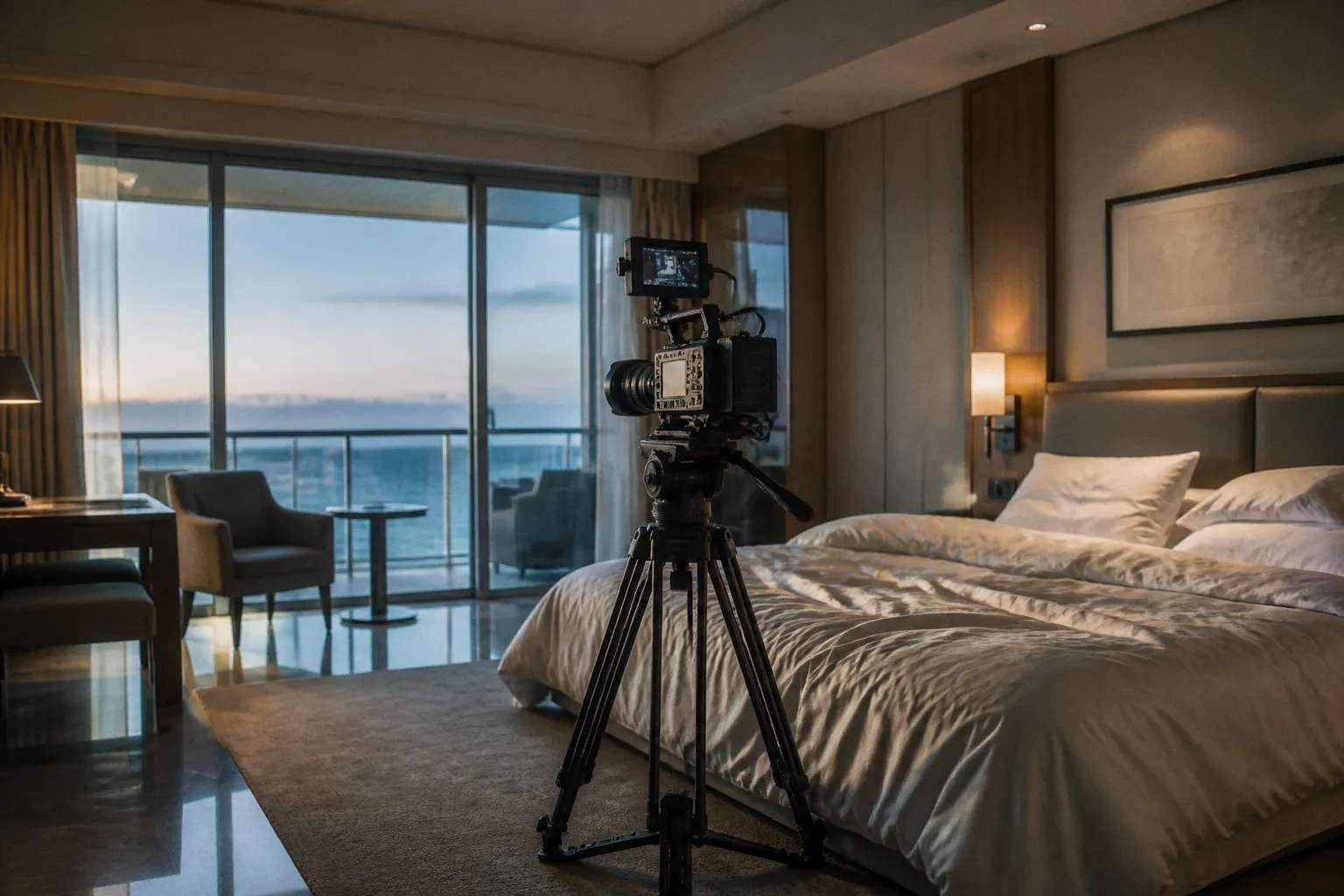
They stall because nobody decided which room types matter, who can unlock the spa, what music is legally usable, or whether the final video is meant for YouTube, Reels, paid ads, email, or all of the above.
That is the real starting point for a hotel promotional video brief: not “make the property look beautiful,” but define what needs to be captured, where it will appear, who it must persuade, and what action the viewer should take next. Miss those details and the shoot becomes an expensive scavenger hunt. Get them right and production moves faster, edits get sharper, and the finished video has a much better chance of driving bookings instead of collecting polite likes.
The essential assets for hotel video production fall into five areas: creative scope, brand materials, technical delivery specifications, on-site logistics, and legal rights. Gather them before the crew arrives. Not halfway through the shoot. Not when the editor asks for them. Before.
Start with the job the video must do
The most common mistake in hotel marketing video planning is starting with the property rather than the audience.
A hotel has a lobby, rooms, a restaurant, a pool, a spa, meeting spaces, views, staff, food, architecture and probably several brand claims that sound interchangeable with every competitor’s. “Luxury.” “Unforgettable.” “A unique experience.” The camera can capture all of that. The problem is that the viewer does not need all of it at once.
A family booking a school-holiday stay is looking for different proof than an event planner sourcing a conference venue. A couple comparing boutique hotels cares about atmosphere, room details and dining. A business traveller wants location, speed, workspace and frictionless arrival. A destination wedding planner needs capacity, flow, ceremony spaces and evidence that the operation will not collapse under pressure.
Before writing the shot list, define:
- The primary audience: families, couples, business travellers, event planners, wedding guests, wellness travellers or another commercially meaningful segment.
- The booking barrier: price uncertainty, weak trust, unclear room quality, poor understanding of the location, or simply a lack of emotional pull.
- The desired action: direct booking, an enquiry, a group-sales call, a wedding consultation or a visit to a specific landing page.
- The distribution channels: website, YouTube, Instagram, TikTok, paid social, email, digital displays or sales presentations.
- The campaign window: evergreen brand content, a seasonal offer, a new opening, a renovation launch or a time-sensitive resort marketing campaign.
This is the core of the hotel promotional video brief requirements. If the team cannot answer these questions, it is not ready to brief a production company. It is still collecting opinions.
A hotel video is not a visual inventory of the building. It is a sales argument with moving images.
One audience. One job. One CTA.
A video can support several channels, but it should not try to speak to every audience in the same cut. That is how hotel content becomes bland: the family message softens the business message, the luxury language obscures the practical details, and the final edit says nothing strongly enough to anyone.
Choose one primary call to action. “Book direct” is clear. “Enquire about your event” is clear. “Explore the spa” can work when the campaign is designed around wellness. Five CTAs competing at the end of a 30-second video are not helpful. They are visual clutter wearing a marketing lanyard.
The brief should specify the landing destination as well as the wording. A direct-booking video needs to land on the relevant booking page, not the hotel homepage where the viewer has to start searching again. An event video should point to an enquiry form or sales contact. The closer the video’s promise is to the page that follows, the less likely the viewer is to lose momentum.
Video can strengthen landing-page performance and email engagement, but only when the surrounding journey makes sense. A strong hook followed by a vague homepage is still a leaky funnel.
Build the creative scope before the shot list
A shot list is useful. A shot list without a defined creative scope is just a long wish list with camera angles.
The brief needs a concise creative direction that tells the production team what kind of attention the video should earn. Fast-paced and social-first is not the same as cinematic and atmospheric. A destination resort film may allow room for wide establishing shots and slower transitions. A paid social ad may need the strongest visual proof in the first two seconds.
Define the following before production:
- The central message: what should the viewer remember after one viewing?
- The emotional register: energetic, calm, playful, premium, intimate, adventurous or practical.
- The proof points: room design, sea view, walkable location, family facilities, signature dining, meeting capacity, spa treatments or service details.
- The visual priorities: people using the space, architectural details, food, movement through the property, landscape or operational convenience.
- The exclusions: areas under renovation, outdated room categories, closed facilities, back-of-house zones or any view that creates a promise the hotel cannot consistently deliver.
- The deliverables: hero film, social cut-downs, paid-ad versions, vertical clips, still frames, thumbnail assets and captions.
This is where a hotel marketing video project scope becomes practical. “Show the hotel” is not a scope. “Show how a family moves from arrival to pool to dinner, with a direct-booking CTA, in a 60-second hero film and three 15-second vertical cut-downs” is a scope.
Authenticity is not an excuse for weak preparation
Hospitality teams sometimes hear “authentic” and conclude that anything can happen on camera. That is not a strategy. Authenticity means the experience feels believable. It does not mean leaving dirty glasses in the room, filming a half-stocked breakfast buffet or hoping a quiet pool spontaneously fills with photogenic guests.
Prepare the spaces. Do not over-style them into a showroom. The right balance is lived-in but intentional: a robe placed naturally, a breakfast table that looks usable, a room with enough detail to communicate comfort without looking staged for a furniture catalogue.
The same applies to people. Guests and staff can create scale, warmth and movement, but they also introduce scheduling and rights requirements. Decide whether the production will use real guests, hired talent, staff, or a combination. Each route changes the brief, the release process and the amount of control on the day.
Gather the brand assets before anyone starts grading colour
Brand consistency is not a finishing touch added by the editor. It starts with the files the editor receives.
Send the production team the current brand guidelines, not a logo downloaded from a website or copied from an old brochure. At minimum, the asset pack should include:
- Primary and secondary logos in usable formats.
- Approved colour palette, including digital colour values where available.
- Typography rules and font files or licensing information.
- Brand photography examples that show the intended visual standard.
- Guidance on tone, language and on-screen messaging.
- Existing campaign templates, lower-thirds or title-card treatments.
- Rules for logo placement, clear space and partner branding.
- Approved taglines, service claims and property descriptions.
- Any restrictions around showing sub-brands, ownership groups or affiliations.
Vector logo files are preferable for graphics. A tiny compressed logo pulled from a booking portal is not a production asset; it is a future quality-control complaint.
The team also needs to know whether the video belongs to the hotel brand, a wider group brand, a specific resort, or a campaign with its own identity. A property can be visually elegant and still look disconnected from the rest of its digital ecosystem if the fonts, colours and messaging drift between the website, social ads and email campaigns.
Create a simple asset register
Do not bury important files in a folder called “Final Final New.” Build a clear register so the production team knows what each item is and whether it is approved.
| Asset | What to provide | Why it matters |
|---|---|---|
| Logo package | Light, dark, horizontal and stacked versions | Prevents improvised or distorted branding |
| Brand guidelines | Colours, fonts, spacing and usage rules | Keeps graphics and titles consistent |
| Property plans | Room layouts, venue capacities and floor plans | Helps plan movement, coverage and event sequences |
| Existing imagery | Approved photography and previous campaign video | Establishes the visual benchmark |
| Claims list | Verified descriptions and measurable amenities | Reduces risky or inaccurate on-screen promises |
| Contact details | Correct booking, sales or enquiry information | Makes the CTA usable after publication |
| Campaign dates | Launch, offer and expiry details | Keeps time-sensitive edits accurate |
| Access documents | Floor plans, restrictions and service schedules | Prevents avoidable delays on location |
One more thing: separate approved content from reference material. A competitor’s film may be useful to explain pacing or mood. It is not a template to copy, and it should not quietly become the creative direction because nobody wrote one.
Specify every format before the cameras roll
“Make it work for social” is not a technical specification. Social platforms do not share one shape, one duration or one viewing environment. A video designed for a website hero banner will not automatically perform in a vertical feed. Cropping it later may remove the room, the person, or the entire point of the shot.
The video production brief for hospitality should list every required format and its intended channel.
| Use case | Recommended format | Typical role |
|---|---|---|
| Website hero or YouTube | 16:9 landscape | Main property story, room tour or brand film |
| Instagram Reels, TikTok and YouTube Shorts | 9:16 vertical | Fast hooks, guest moments, amenities and campaign clips |
| Meta feed advertising | 1:1 square or platform-specific feed format | Paid testing and mobile-first conversion content |
| Email video preview | Short teaser or thumbnail-led placement | Drives the click to a landing page |
| Sales presentation | 16:9 landscape | Meetings, group business and event venue promotion |
Define the delivery requirements in the brief:
- Aspect ratio for each final asset.
- Resolution and export format.
- Maximum file size where relevant.
- Caption and subtitle requirements.
- Whether text must remain inside safe areas.
- Whether the video needs a sound-off version.
- Thumbnail requirements.
- File naming and versioning conventions.
- Delivery deadlines for the hero film and cut-downs.
For standard landscape delivery, 16:9 is the usual route for websites and YouTube. Vertical 9:16 is built for Reels, TikTok and Shorts. Square 1:1 can still be useful for Meta placements. None of these formats is a universal winner. Adapt the edit to the channel instead of asking one master file to do every job badly.
Plan the edit around attention, not internal approval cycles
Hotel promotional videos are competing with messages, notifications, price comparisons and an endless supply of short-form content. The viewer owes the hotel nothing. The opening needs to earn the next second.
A practical delivery plan might include:
- A hero version up to two minutes for YouTube or the website, when the story genuinely needs that length.
- A 60-second campaign cut with a clear commercial message.
- A 30-second version for paid and organic social.
- A 15-second version focused on one proof point or offer.
- Vertical adaptations rather than lazy crops.
- Short clips built around individual amenities, room types or experiences.
Average shot lengths in hotel promotional videos often sit below three seconds when the edit is designed to maintain momentum. That does not mean every shot should be chopped into visual confetti. A slow reveal can be effective when it delivers a view, a room detail or a human interaction worth watching. The rule is simple: hold attention with meaning, not motion for its own sake.
Design the first three seconds deliberately. Lead with the strongest visual proof, a clear benefit, or a moment that creates immediate curiosity. Do not spend the opening on a logo animation unless the logo is somehow more compelling than the property. It usually is not.
Prepare for sound-off viewing
A large share of social video is encountered with the sound muted or unavailable. The brief should state whether captions, subtitles or on-screen text are required. It should also identify which information must remain understandable without narration.
Music needs equal attention. A track that is popular on a personal account may not be cleared for commercial hotel use. Secure the appropriate commercial licence or use music supplied with the relevant rights. Do not build the edit around a song and ask about permissions later. That is how a finished campaign becomes unusable or requires an expensive re-edit.
Voice-over scripts, pronunciation notes, language versions and subtitle translations should be approved before the edit is locked. If the hotel serves international markets, decide early whether the deliverables need multiple languages or burned-in captions versus separate subtitle files.
Turn the property into a shootable route
A hotel is operationally complex. Guests arrive, staff move, kitchens open, deliveries appear, music plays, rooms turn over and facilities have schedules that do not care about your call sheet.
The on-site plan should identify exactly how the crew will move through the property and who is responsible for making that movement possible.
The essential logistics include:
- A named hotel contact with authority to make decisions on the day.
- A secondary contact in case the primary person is pulled into operations.
- Access times for the exterior, lobby, rooms, restaurants and amenities.
- A rooming plan showing which categories are available to film.
- Door, lift and service-access arrangements.
- Parking, loading and equipment storage instructions.
- Staff call times and guest-flow management.
- Times when background music can be paused or controlled.
- Housekeeping coordination and room reset windows.
- Pool, spa, gym and restaurant operating schedules.
- Weather alternatives for exterior and drone-related shots.
- Areas that are restricted, private or unavailable to the crew.
- A plan for protecting guests’ privacy during filming.
Assign responsibility clearly. Someone must unlock doors. Someone must turn off background music when clean audio is needed. Someone must guide guests away from a shot or secure consent when guests are intentionally included. Someone must know whether the rooftop is accessible, whether the spa treatment room can be reset, and whether the restaurant can produce the dish shown in the final edit.
If those people are not named in the brief, the crew will spend the day locating them. The clock will continue billing while everyone searches for the person with the master key.
Build a shot list that follows the guest journey
A comprehensive shot list should cover the property’s commercial priorities, not merely the spaces that are easiest to film.
A useful route usually includes:
1. Arrival and exterior: approach, entrance, signage, architecture, parking or transfer experience where relevant.
2. First impression: reception, lobby flow, welcome detail and the visual cues that establish the brand.
3. Room categories: hero room, entry-level room and any distinctive suites or accessible rooms that need representation.
4. Room details: bed, bathroom, view, workspace, storage, amenities and the details guests use to judge value.
5. Dining: arrival, service, preparation, signature dishes, breakfast and the atmosphere at the relevant time of day.
6. Amenities: pool, spa, gym, kids’ facilities, beach access, gardens or other booking drivers.
7. Events and meetings: room scale, layouts, breakout areas, service, technology and guest flow.
8. Human moments: staff interaction, check-in, a meal being served, a treatment beginning or a guest using the space naturally.
9. Location context: nearby landmarks, transport, views and experiences that support the hotel’s positioning.
10. Conversion assets: direct-booking CTA, contact details, offer framing, end card and platform-specific variants.
This is not about filming every object in every room. It is about capturing enough evidence for the viewer to understand the experience and enough flexible material for the edit to work across multiple channels.
Prioritise what differentiates the property. A generic bed shot can appear in almost any hotel video. A room with direct access to a private terrace, a breakfast service that begins before an early departure, or a meeting space that converts from theatre seating to dinner setup tells the viewer something specific.
Think in sequences, not isolated beauty shots
The most useful hotel footage often shows a sequence:
- Guest arrives.
- Door opens.
- Room detail appears.
- View confirms the promise.
- Coffee is poured.
- Guest moves to breakfast.
- Pool or spa becomes the next reason to stay.
- CTA closes the loop.
That sequence gives the editor rhythm and the viewer a simple mental model of the stay. A collection of unrelated drone shots and empty corridors may look expensive, but it does not necessarily explain why someone should book.
Do this: capture actions that show how the property is used.
Not that: collect static wide shots and assume the viewer will invent the experience.
Do this: film the room at the height and angle a guest would actually see.
Not that: make every space look artificially enormous with an ultra-wide lens.
Do this: show a signature amenity with context and scale.
Not that: film a pool without showing how it feels to use it, who it serves, or why it is better than the pool next door.
Get people, privacy and music rights in order
Legal preparation is not glamorous. Neither is removing a staff member from a campaign after discovering there is no written permission to use their image. Deal with it early.
Anyone intentionally featured in the video should have an appropriate model release or written consent. This applies to hired talent, staff and guests. A person walking through the background is not automatically the same as a person being directed, framed and used as a central character in a promotional asset.
The release process should cover:
- Permission to record and use the person’s image and voice.
- The platforms and territories where the content may appear.
- The duration of usage.
- Paid advertising use, not only organic social publication.
- Whether edits, cut-downs and translated versions are permitted.
- Any age-related consent requirements for minors.
- Approval procedures if the hotel requires them.
Staff participation needs special care. Do not assume that employment equals blanket permission for promotional filming. Written consent should be secured before the shoot, with the usage clearly explained.
Music licensing requires the same discipline. Commercial rights can vary by track, platform, territory and campaign duration. Keep records of licences and usage terms with the project files. If the edit uses sound effects, voice-over, stock footage or third-party graphics, those assets need rights documentation too.
The project file should include a simple rights register:
| Asset type | Permission needed | Record to keep |
|---|---|---|
| Staff or guest appearance | Written model release | Signed release and usage terms |
| Hired talent | Talent agreement | Fee, term, territory and media |
| Music | Commercial licence | Track, licence scope and expiry |
| Stock footage or images | Commercial usage rights | Invoice, licence and source |
| Drone footage | Operator and local permissions | Operator documentation and approvals |
| Third-party logos | Brand or location permission where required | Written approval |
| Minor appearing on camera | Parent or guardian consent | Signed consent form |
Drone footage deserves a separate check because regulations and property restrictions vary by jurisdiction. The brief should identify whether aerial footage is essential, who will operate the drone, and what permissions or insurance documentation the operator must provide. Do not assume that a clear sky means unrestricted filming.
Make the project measurable before it goes live
A hotel video should have a job beyond “increase awareness.” Awareness is useful, but it is too vague to guide creative decisions or judge performance.
Set the measurement plan in the brief:
- Which landing page receives traffic.
- What booking or enquiry event counts as a conversion.
- Whether the campaign uses tracking links or platform pixels.
- Which versions will be tested.
- What audience segments will see each cut.
- How long the campaign will run.
- Which metrics matter at each stage.
For awareness, watch completed views, view-through rate and reach. For engagement, examine watch time, saves, shares and profile actions. For acquisition, track click-through rate, landing-page behaviour, booking-engine sessions and enquiries. A high view count with no qualified traffic is not automatically a win. It may simply mean the video entertained people who were never going to book.
The production brief should preserve enough flexibility for testing. A 15-second cut can test a room-led hook against a food-led hook. A vertical edit can lead with the view, the pool or the arrival experience. A paid campaign may need several opening variations while keeping the same CTA and landing page.
This is where video connects with broader hotel digital marketing. The asset should live alongside search, email, retargeting, social content and the booking journey. A polished film cannot compensate for a slow booking engine or a landing page that contradicts the offer. But a well-structured video can give those channels a stronger asset to leverage.
If the video appears in an email campaign, prepare a thumbnail and a click-through route rather than assuming every inbox will play embedded video. For a website, plan the hero placement, load behaviour, mobile fallback and accessibility. For paid social, prepare captions, safe-area text and several opening frames. Distribution is not an afterthought. It is part of production.
The pre-production checklist that prevents expensive rework
Use this as the final handoff before confirming the shoot date.
Creative and commercial
- Primary audience is named.
- One central message is approved.
- Booking barrier or commercial opportunity is defined.
- Primary CTA and destination URL are confirmed.
- Campaign dates and offer details are accurate.
- Creative tone and visual references are approved.
- Areas to exclude from filming are listed.
- Required deliverables are written in the scope.
Brand
- Current brand guidelines are supplied.
- Approved logos are provided in usable formats.
- Fonts, colours and graphic rules are available.
- Approved claims and property descriptions are confirmed.
- Existing campaign assets are labelled as approved or reference-only.
- Correct booking, sales and contact details are included.
Technical
- 16:9 requirements are defined for website and YouTube use.
- 9:16 requirements are defined for Reels, TikTok and Shorts.
- 1:1 or other feed formats are defined for paid placements.
- Target durations include 15-second, 30-second and 60-second versions where needed.
- Maximum length for the main YouTube or website film is agreed.
- Caption, subtitle and sound-off requirements are clear.
- Thumbnail size and file requirements are confirmed.
- Export formats, resolution and naming conventions are agreed.
Production logistics
- Hotel production lead is named.
- Backup contact is named.
- Access schedule is approved.
- Room categories and amenities are available.
- Housekeeping and operations teams are briefed.
- Staff call times are confirmed.
- Guest flow and privacy plan is ready.
- Background music and audio-control needs are planned.
- Weather backup plan is documented.
- Parking, loading and equipment storage are arranged.
Rights and compliance
- Staff releases are signed.
- Guest or talent releases are signed.
- Guardian consent is secured for minors where applicable.
- Music licence is confirmed for every intended channel.
- Stock assets have commercial usage rights.
- Drone operator documentation and permissions are checked.
- Third-party logos and locations are cleared where required.
- Rights records are stored with the project.
Measurement and distribution
- Tracking links or campaign parameters are prepared.
- Landing page is live or has a confirmed launch date.
- Booking or enquiry conversion is defined.
- Audience segments are mapped to deliverables.
- Paid and organic placements are assigned.
- Testing variations are planned.
- Reporting owner and review dates are agreed.
The cheapest time to solve a production problem is before the crew travels. The second-cheapest time is before the edit begins. After launch, it is just a bill.
The brief is the control system
A hotel promotional video brief is not administrative paperwork designed to slow down creative work. It is the control system that protects the creative work from predictable operational chaos.
Gather the brand files. Define the formats. Name the audience. Write the shot list around the guest journey. Confirm who opens the doors, who manages the flow, and who has permission to appear on camera. Secure the music rights. Decide what success means before the first frame is filmed.
Then let the production team do what it is there to do: create footage with a hook, a point of view and enough flexibility to earn traction across the channels where guests actually scroll.
Do not commission one beautiful video and hope the algorithm handles the rest. Build a usable content system from the start: a hero film, sharp cut-downs, vertical edits, clear conversion paths and rights that do not expire the moment the campaign starts working. That is how hotel video moves from decorative brand content to a practical booking asset.