Sony OCELLUS: Marker-Free Tracking for Immersive Hospitality Content
OCELLUS tracking unit drops the markers. Five image sensors. Visual SLAM. Marker-free tracking indoors and outdoors. That spec sheet matters for anyone building room-scale virtual tours or AR previews on a booking page.
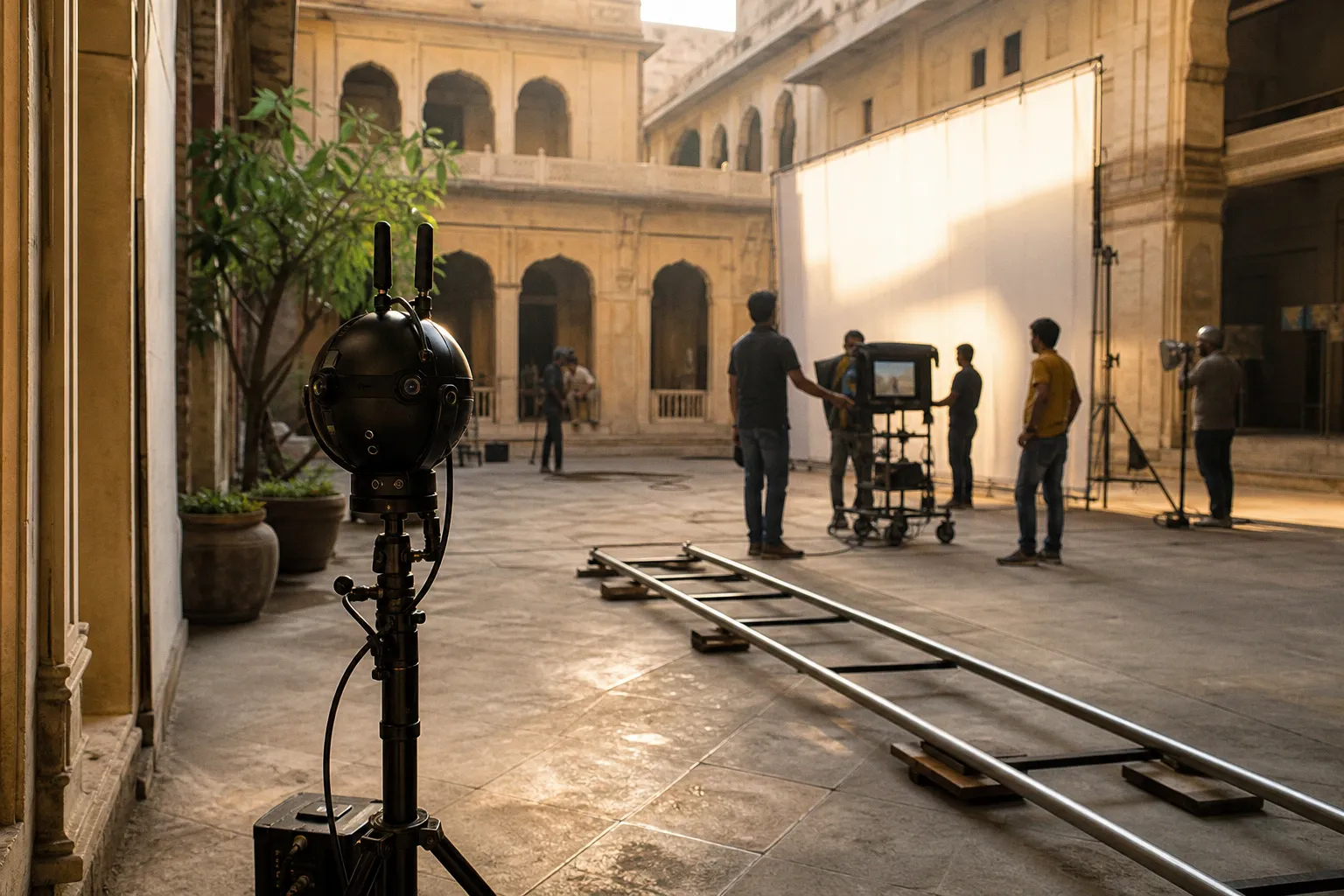
Per Sony India's announcement, OCELLUS (ASR-CT1) outputs camera position and orientation in real time while shooting. The system bundles a sensor unit, a processing box, and three lens encoders. It mounts on Sony Cinema Line cameras, system cameras, and non-Sony bodies. When paired with Sony cameras, focus, iris, and zoom metadata read via SDI and stream over Ethernet to external renderers. For lenses lacking in-camera metadata, the encoders collect that data directly.
Hardware breakdown
- Five image sensors feed Sony's Visual SLAM engine. Reference map auto-generated from the environment.
- No physical markers on walls, ceilings, or floors.
- Records tracking data, lens metadata, timecode, and filenames. Post-production gets a unified log.
- Target use cases: broadcast, cinema, live production — and by extension, any walk-through shoot.
Sony positions OCELLUS as a response to rising demand for immersive visual storytelling, describing the system as combining portability, precision, and seamless workflow integration.
Booking-funnel impact
Marker-free tracking is the unlock. Earlier virtual tour rigs required QR-coded stickers, reference props, or pre-surveyed space maps. Each marker added setup time. Each misaligned marker added reconciliation time. Both costs hit the production budget before the photographer framed a single room.
OCELLUS removes the marker layer. A solo architectural shooter can walk a lobby, a spa, a rooftop bar — and capture tracking-accurate footage without pre-installing a grid of tracking targets. Pre-production hours drop. A whole category of on-site friction disappears.
For booking pages, the downstream effect is measurable:
- Virtual walk-throughs rendered against actual camera path data. Parallax errors drop.
- AR previews of room layouts overlay correctly on user devices. Tracking drift becomes visible and fixable, not buried in post.
- Multi-property shoots — multiple properties per session, each space mapped independently — get operationally cheaper per asset.
Pre-purchase verification checklist
- Compatibility: which camera bodies and lens lines pull full metadata through SDI. Non-Sony rigs get encoder-based data only.
- Indoor-outdoor transition points: glass-walled lobbies, skylit atriums. Visual SLAM performance in those zones needs a controlled test before committing to a production day.
- Post-pipeline hand-off: file naming, timecode embedding, and tracking-data format must align with your existing compositor or virtual production engine.
- Hardware footprint: sensor unit plus processing box adds weight and cable count to a gimbal or handheld rig.
For hospitality brands weighing OCELLUS against current virtual tour pipelines, the math is straightforward. Fewer markers. Faster setups. Cleaner tracking data. The ROI depends on shoot volume per quarter and how much of the current budget is consumed by marker placement and cleanup.