Tourism Partnership Video Campaigns: Prep Checklist
Most tourism partnership videos do not fail because the destination is boring. They fail because the campaign is vague, the creator is chosen by follower count, the usage rights are hand-waved, and…
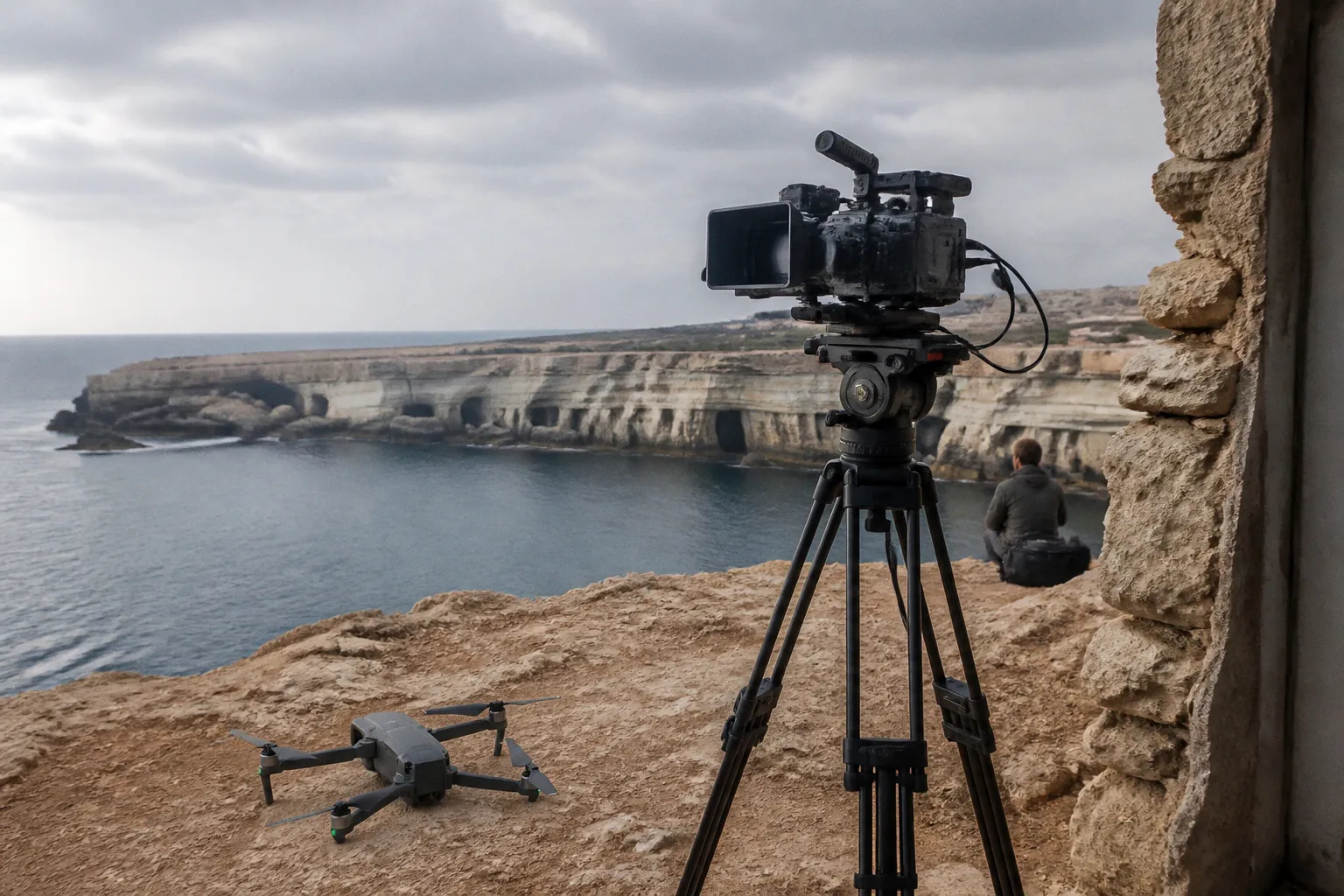
Most tourism partnership videos do not fail because the destination is boring. They fail because the campaign is vague, the creator is chosen by follower count, the usage rights are hand-waved, and somebody discovers the missing UTM parameters after launch.
That is not a creative problem. It is a preparation problem.
A proper tourism partnership video campaign checklist should cover more than a shot list and a hopeful caption. It needs to lock the commercial objective, define the deliverables, match talent to the destination, protect usage rights, and make the final content technically usable across every channel that matters. Otherwise, you are paying for attractive footage that generates attention but cannot be tracked, repurposed, or converted into bookings.
Social video content generates 1,200% more shares than text and image content combined. Video on a landing page can boost conversion rates by up to 80%. Those figures explain why destinations, tourism boards, hotels, attractions, and local operators keep investing in video partnerships.
They do not explain why so many campaigns still ship without a clear audience, a working link, or permission to use the footage anywhere beyond the creator’s original post.
Start with the campaign outcome, not the content format
The first mistake is asking, “What video should we make?”
That question is too early. Start with: “What should the viewer do after watching?”
A destination video collaboration might be designed to:
- Increase awareness of a region among travelers in a specific origin market.
- Drive traffic to a booking page, itinerary, hotel website, or tourism board hub.
- Promote a shoulder-season visit rather than peak-season demand.
- Build credibility for a new attraction or local experience.
- Position a neighborhood as an alternative to an overcrowded landmark.
- Support a hospitality co-branding campaign between a hotel and nearby businesses.
- Generate a reusable library of vertical clips for paid and organic distribution.
These outcomes require different creative decisions. An awareness campaign can tolerate a softer call to action and a broader destination story. A conversion campaign cannot. It needs a clear offer, a frictionless landing page, trackable links, and enough detail for the viewer to understand what happens next.
A creator can make a place look desirable without making it bookable. That distinction is where many campaigns quietly lose traction.
Turn the objective into a one-page brief
Before contacting creators or production teams, write a short campaign brief that answers:
1. Who is the audience?
Define the origin market, traveler type, language, trip motivation, and likely booking window. “International travelers” is not an audience. It is a fog bank.
2. What is the destination selling?
Is the hook food, coastline, design, nightlife, wellness, heritage, outdoor access, or convenience? Pick the strongest reason to care. A video that tries to sell every attraction usually sells none of them.
3. What action should follow the video?
Choose one primary action: visit a landing page, book an experience, save an itinerary, request information, or follow a destination account.
4. Where will the content appear?
List creator channels, destination channels, hotel accounts, paid social, website, email, digital displays, and partner platforms. Do not assume that a video made for one feed will automatically work everywhere.
5. How will success be measured?
Set the tracking method before production. That may include UTM parameters, platform-specific links, landing-page events, booking codes, saves, qualified traffic, or completed inquiries.
The brief is not bureaucracy. It is the filter that stops a campaign from becoming a pile of disconnected clips.
A beautiful destination video without a defined next action is usually just expensive wallpaper with music.
Build the Scope of Work before the shoot exists
The Scope of Work, or SOW, is the operating system of the campaign. If it is vague, every later conversation becomes a negotiation.
A usable SOW should specify what is being created, who is responsible for each part, where the content will be published, and what happens when the first cut misses the brief. “One campaign video and social assets” is not a deliverable. It is an invitation to argue about what those words mean.
The SOW should lock these details
Deliverables
Name every asset separately. For example:
- One hero video in a defined duration range.
- A set number of vertical cutdowns for short-form platforms.
- A specific number of story frames or still extracts.
- Alternate edits for paid media or partner accounts.
- Caption copy, subtitles, voice-over, thumbnails, and cover frames.
- Raw footage, selected b-roll, project files, or no source files.
- Language versions and subtitle files.
- Thumbnail variations for testing.
Avoid phrases such as “a selection of images” or “multiple short clips.” They sound flexible until someone expects twelve clips and receives three.
Format and platform specifications
Specify the technical requirements in the SOW, not in a last-minute message sent during export.
At minimum, identify:
- Aspect ratio: vertical, square, horizontal, or several versions.
- Resolution and frame rate.
- Maximum duration for each platform placement.
- Subtitle requirements.
- Safe areas for text and logos.
- File format and compression standards.
- Naming conventions and delivery folders.
- Whether the edit must work with sound off.
- Whether a clean version without text or branding is required.
The master edit is not the campaign. The campaign is the complete set of versions that can actually be published in the intended placements.
A 16:9 landscape film may look excellent on a website and weak in a vertical social feed. A vertical edit may perform well organically but crop badly in a paid placement with different interface overlays. Plan the aspect ratios at concept stage. Do not let the algorithm become your post-production supervisor.
Responsibilities
Assign ownership for the details that regularly fall between teams:
- Who provides access to attractions and properties?
- Who arranges permits, tickets, transport, and local guides?
- Who supplies brand assets and approved claims?
- Who checks translations?
- Who manages talent communication?
- Who approves the rough cut?
- Who handles music licensing?
- Who uploads the final assets?
- Who adds tracking links and tests the landing page?
- Who responds if weather, closures, or travel delays disrupt the schedule?
A tourism campaign involves more moving parts than a standard brand shoot. Attractions have opening hours. Guides change availability. Weather ignores your content calendar. If nobody owns the contingency plan, the schedule is already unstable.
Use milestones that create actual control
An effective approval path normally includes:
1. Concept approval — the angle, audience, locations, talent, and call to action are agreed.
2. Production plan approval — the itinerary, access, shot priorities, schedule, and risk points are confirmed.
3. Rough cut review — the campaign team checks story, accuracy, pacing, brand fit, and destination representation.
4. Revision round — feedback is consolidated and delivered through one decision-maker.
5. Final delivery — all agreed formats, captions, thumbnails, links, and supporting files are supplied.
6. Launch verification — every link, tracking parameter, placement, and caption is tested before publishing.
The number of revision rounds should be explicit. So should the deadline for feedback. A campaign can lose its launch window because six stakeholders each send a different version of “one small change.”
Use one consolidated approval document or one accountable approver. Creative feedback by committee is where sharp concepts go stale.
Choose talent for destination fit, not vanity metrics
Follower count is an easy number to compare. That is precisely why it gets overused.
A creator with a large audience may have weak relevance for the destination, low trust in the target market, or an audience that watches but never travels. A smaller creator with strong regional credibility, high saves, and a proven travel-planning audience may be more useful. Reach matters. It just does not work alone.
The 2025 Cyprus Travel Influencers Collaboration scheme, for example, required creators to have between 50,000 and 90,000 followers depending on the target country group. That threshold may be relevant to eligibility for a specific program. It is not proof that a creator will deliver destination ROI.
The campaign still needs contracted deliverables, distribution commitments, and tracking.
A better talent filter
Review candidates against five practical questions:
- Audience location: Are followers concentrated in the markets the destination wants to reach?
- Audience intent: Do people engage with trip planning, itineraries, accommodation, food, and experiences, or are they mainly watching lifestyle entertainment?
- Content behavior: Does the creator produce useful, specific destination content or generic travel montages?
- Brand compatibility: Can the creator represent the destination without making every place look like the same beige, over-filtered mood board?
- Execution reliability: Do they deliver on time, follow briefs, disclose partnerships correctly, and handle revisions without drama?
Also inspect recent content rather than relying on a media kit. Look at the last several travel-related posts. Check whether comments show genuine questions and planning intent. See if the creator can explain where a place is, what to do there, and why the experience is worth the trip.
A polished feed can hide weak campaign discipline.
Do this, not that
| Weak selection habit | Better selection move |
|---|---|
| Choose the largest account available | Match audience geography and travel intent to the destination objective |
| Judge performance by likes alone | Review saves, shares, comments, link activity, and qualified traffic where available |
| Approve a creator based on one viral post | Study recent work across several formats and destinations |
| Ask for “authentic content” without defining it | Define the audience, story angle, required experiences, and creator freedom |
| Assume the creator will distribute everywhere | Contract the exact channels, posting windows, tags, links, and paid permissions |
| Treat a media kit as proof | Request current audience data and examples of comparable partnerships |
Authenticity is not the absence of a brief. It is the result of a brief that leaves room for the creator’s real voice while protecting the campaign’s purpose.
If the destination wants a local attraction video partnership, do not force the creator through a rigid list of slogans. Give them the non-negotiable facts, access requirements, safety rules, and commercial call to action. Let them find the human hook.
That is how you avoid content that sounds like a tourism board trying to impersonate a person.
Pre-filter creators against the actual destination
Build a shortlist using a simple scoring framework. The exact weighting will depend on the campaign, but the categories should include:
- Audience fit.
- Destination relevance.
- Storytelling quality.
- Short-form editing ability.
- On-camera presence or voice-over quality.
- Reliability and production maturity.
- Previous partnership performance.
- Distribution capability.
- Rights flexibility.
- Cost relative to the required asset package.
Do not confuse a creator’s personal popularity with production capacity. Someone may be excellent at spontaneous phone content and less capable of delivering subtitles, clean exports, alternate ratios, raw footage, and legally cleared music on schedule.
Those are different jobs.
Put legal terms in writing before anyone travels
Legal preparation is not the glamorous part of a tourism campaign. It is also the part that determines whether you can use the footage after the original post disappears.
The agreement should cover the relationship between the destination, tourism board, hotel, attraction, creator, production company, and any other participating partner. If multiple organizations are involved, decide who has approval rights and who receives usage rights. “Everyone can use it” is not a rights strategy.
Usage rights need more detail than “perpetual”
Define:
- The platforms where the content may appear.
- Organic and paid media permissions.
- Geographic territory.
- Duration of the license.
- Whether partners may edit, crop, subtitle, translate, or adapt the footage.
- Whether the destination may use still frames from the video.
- Whether the creator must approve future edits.
- Whether the content can appear in tourism board presentations, trade events, websites, email, or digital advertising.
- Whether raw footage and project files are included.
- Whether the creator can reuse the material in a portfolio.
- Whether exclusivity applies to competing destinations, hotels, attractions, or travel brands.
A creator may agree to publish a video on their own account and still retain control over paid usage. A destination may receive permission to repost but not to cut the footage into a new advertisement. Those distinctions are not technicalities. They are the campaign.
Universal legal rules for creator usage rights do not exist across every international jurisdiction, so local counsel may be necessary when the campaign crosses borders. The agreement should also address advertising disclosure, music and image licensing, releases, privacy, location permissions, and the use of recognizable people.
Handle destination-specific risk
Tourism content often includes people, properties, public spaces, transportation, food, alcohol, adventure activities, and culturally sensitive locations. Each can introduce a separate permission or liability issue.
The production plan should identify:
- Required location releases and access permissions.
- Talent and participant releases.
- Restrictions at museums, heritage sites, beaches, parks, or religious venues.
- Drone permissions and operator requirements.
- Safety procedures for water, height, vehicles, wildlife, or outdoor activities.
- Responsibility for accidents, cancellations, and damaged equipment.
- Weather and force majeure terms.
- Procedures for inaccurate, outdated, or misleading destination claims.
Do not let a creator promise an attraction, seasonal event, transport route, or opening schedule that the destination cannot guarantee. The edit may be visually perfect and commercially damaging if the viewer arrives to discover the experience is unavailable.
Make the payment schedule match the production risk
Payment terms should reflect the actual work, not just the final publication date.
A practical creator partnership structure uses:
- A deposit when the contract is signed.
- A midpoint payment when the rough cut is submitted.
- The final balance when the approved final assets are delivered.
This structure gives the creator funding to begin, gives the client a meaningful review point, and ties the final payment to completion of the agreed deliverables.
The contract should also define what counts as delivery. Is it one exported video, or the full package of aspect ratios, subtitle files, thumbnails, captions, raw footage, and usage documentation? If the campaign requires ten assets, the invoice should not be triggered by the arrival of one preview link.
Clarify the treatment of:
- Travel and accommodation.
- Meals, local transport, entry fees, and production expenses.
- Cancellation or postponement.
- Reshoots.
- Overtime.
- Additional edits.
- Additional platforms.
- Paid media usage.
- Whitelisting or creator-account advertising access.
- Currency, taxes, and invoicing requirements.
Budgets for local destination marketing partnerships vary widely by market, scope, talent, production quality, and rights. There is no universal global budget limit to rely on. Price the package from the required outcome and asset list, then compare proposals on what they actually include.
A low quote can become expensive once every missing version and usage right is added later.
Design the content around the viewer’s decision
Destination video should not simply show a sequence of attractive places. It should reduce uncertainty.
Travelers want to know what the experience feels like, how it fits into a trip, what makes it different, and what they can do next. The strongest travel guide content answers those questions quickly without turning into a brochure.
A useful structure often includes:
1. The hook: A specific reason to stop scrolling. Not “discover paradise.” That phrase has been used into the ground.
2. The proof: Show the actual experience, not only establishing shots.
3. The context: Explain where it fits, who it suits, or how long it takes.
4. The detail: Add sensory or practical information that makes the destination memorable.
5. The action: Direct the viewer to the next step with a trackable route.
The hook might be an unusual neighborhood, a local food ritual, a short route from a hotel, or a practical alternative to an overcrowded landmark. The point is not to create artificial drama. The point is to offer a reason to care now.
Build a shot list that supports conversion
A destination production plan should include a mix of:
- Human interaction with the experience.
- Wide location context.
- Close details that communicate texture, food, design, or activity.
- Wayfinding and arrival moments.
- Timing or seasonal cues where relevant.
- Accessibility and practical details when they are part of the decision.
- Partner visibility without turning the frame into a logo parade.
- Vertical-safe compositions for mobile crops.
- Clean shots without text overlays or heavy branding.
A hotel room can look impressive in a slow pan, but the viewer may also need to see how it connects to the destination. A restaurant collaboration can show a plated dish, but the useful hook may be the market, producer, route, or local tradition behind it.
The content has to sell the experience, not just the surface.
Keep the destination credible
Over-staging is not authenticity. It is a trust problem wearing nice lighting.
Avoid showing conditions that are impossible to reproduce: an empty landmark at the busiest time of day, a weather-dependent activity presented as guaranteed, or an itinerary that ignores distance and transport. Travelers are increasingly good at spotting content that has been polished beyond recognition.
That does not mean every shot must be raw. It means the creative treatment should preserve the truth of the experience. Use professional framing, intentional pacing, and strong sound design. Just do not erase every useful detail in pursuit of a fantasy version of the destination.
Technical execution: the small misses that sink the launch
Nearly 60% of marketing campaigns reportedly fail to achieve their primary objectives because of minor execution oversights, including missing UTM parameters and untested templates. The creative may be finished. The campaign still fails because the infrastructure around it was never checked.
This is the unglamorous work that creates traction.
Audit the launch path before publishing
Before any asset goes live, test:
- Every URL on mobile and desktop.
- UTM parameters for each creator, platform, and placement.
- Booking forms and inquiry flows.
- Promo codes and destination-specific offers.
- Deep links inside social apps.
- Landing-page load time and video playback.
- Captions and subtitles on different devices.
- Logo placement and text safe areas.
- Thumbnail crops.
- Audio levels and sound-off readability.
- Tracking events in analytics tools.
- Partner tags, mentions, and account handles.
- Disclosure language for sponsored content.
- Availability claims, dates, prices, and booking conditions.
Use a separate tracking link for every meaningful distribution path. One generic URL will tell you that traffic arrived. It will not tell you which creator, edit, platform, or partner generated it.
Do not wait until launch day to discover that the destination landing page redirects incorrectly on mobile or that the call-to-action text is hidden behind a platform interface.
Prepare for multiple versions
The campaign should have a versioning plan before the first export:
- Hero edit for the destination or hospitality website.
- Short vertical edit for discovery feeds.
- Faster cut for paid placements.
- Story sequence with clearer calls to action.
- Captioned version for sound-off viewing.
- Local-language or market-specific version.
- Clean edit for partner reuse.
- Cutdowns focused on individual attractions or neighborhoods.
This is where the SOW and rights agreement meet. You cannot promise a network of hospitality partners a full asset library if the contract only allows one original post and no adaptations.
Make file delivery boring. That is a compliment. Use clear filenames, version numbers, aspect-ratio labels, subtitle files, thumbnails, and a final approved folder. Creative teams should not spend launch morning guessing which file is actually final_final_3.
Build a contingency plan
Destination shoots are vulnerable to factors outside the creator’s control:
- Weather.
- Flight delays.
- Event cancellations.
- Seasonal closures.
- Overcrowding.
- Staff or guide availability.
- Permit restrictions.
- Equipment failure.
- Health and safety issues.
- Sudden changes to opening hours.
Create priority tiers for the itinerary:
- Tier one: essential locations or experiences that define the campaign.
- Tier two: strong alternatives that preserve the story.
- Tier three: flexible b-roll and atmosphere shots.
If the headline attraction closes, the campaign should not collapse. The team should know which alternate experience supports the same destination objective and who can approve the change.
This is also why a detailed itinerary matters. Travel time, access windows, golden-hour assumptions, and meal breaks all affect what can realistically be filmed. A schedule that looks efficient in a spreadsheet may be impossible once parking, security, walking distance, and setup time enter the picture.
The tourism partnership video campaign checklist
Use this as the final pre-production pass. If an item is not answered, it is not ready.
Strategy
- The target traveler and origin market are defined.
- The destination’s primary hook is specific.
- One primary viewer action is selected.
- Success metrics are connected to that action.
- The landing page or booking path is live or has a confirmed launch date.
- The distribution plan covers creator, partner, owned, and paid channels.
Scope of Work
- Every deliverable has a quantity, format, duration, and deadline.
- Aspect ratios and platform specifications are documented.
- Captions, subtitles, thumbnails, copy, and raw files are clearly included or excluded.
- Revision rounds and approval deadlines are defined.
- One person owns final approval.
- Responsibilities for access, transport, permits, and uploads are assigned.
- Weather and schedule contingencies are planned.
Talent
- Audience geography matches the campaign market.
- Recent travel content demonstrates relevant storytelling.
- Engagement quality has been reviewed, not just follower count.
- The creator can deliver the required formats and turnaround.
- Previous brand work has been checked for reliability and fit.
- Posting dates, channels, tags, links, and disclosures are contracted.
- The creator’s freedom and the destination’s non-negotiable facts are both clear.
Legal and financial terms
- Usage territory, duration, platforms, and paid permissions are written down.
- Adaptation, cropping, translation, and partner reuse rights are addressed.
- Music, location, participant, and talent releases are covered.
- Safety, cancellation, reshoot, and expense terms are clear.
- Payment milestones match deposit, rough cut, and final delivery.
- Taxes, currency, invoicing, and additional costs are confirmed.
Launch operations
- UTM links are created for each distribution path.
- Landing pages, forms, codes, and analytics events are tested.
- Every video export has been reviewed on the intended platforms.
- Subtitles and sound-off viewing work properly.
- Partner tags and disclosures are correct.
- Final files are organized and labeled.
- A post-launch owner is assigned to monitor performance and respond to issues.
Final position: preparation is the creative advantage
The myth is that tourism video campaigns win because someone captures one magical shot.
Sometimes they do. More often, campaigns win because the team made a series of unglamorous decisions before the camera came out: the audience was clear, the creator was relevant, the experience was real, the rights were usable, the links were trackable, and the final assets were built for the platforms where people actually scroll.
That is the difference between content and a campaign.
So do this, not that: define the action before the hook; write the SOW before booking talent; assess audience fit before follower count; secure usage rights before delivery; test the tracking path before launch. Then publish the strongest version, watch where the traction comes from, and use the data to sharpen the next destination story.
The algorithm is unpredictable. Your preparation does not have to be.