Daily itinerary vs thematic trail video formats
When a boutique hotel owner in a coastal town tells me their Reels aren't converting to direct bookings, I usually ask one question before we touch the camera: what story are you actually telling?
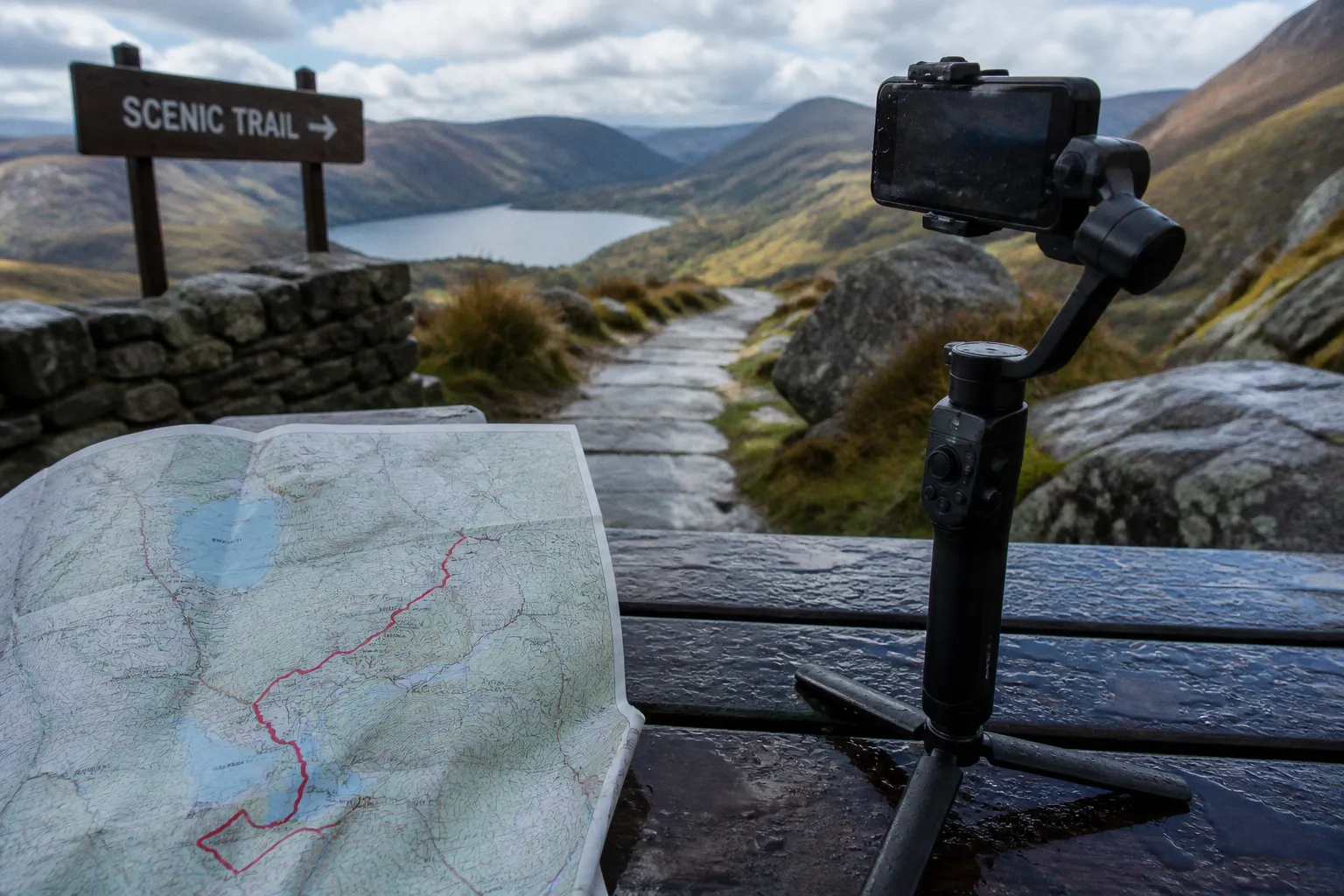
Nine times out of ten, the issue isn't the production quality or the lighting — it's that the format is doing two different jobs at once, and the audience can feel the friction. The daily itinerary format and the thematic trail format aren't rivals in the same category. They're different tools — and choosing the wrong one for the moment in the guest journey is the silent leak in most destination video strategies.
Over the past few years working with hoteliers, tourism boards, and small hospitality brands, I've watched both formats evolve from quirky content experiments into core pillars of destination video marketing. The question I hear most often — and the one that drives this entire comparison — is how to decide which format earns the next shoot day. So let's walk through what each one does best, where it breaks down, and how to weave them together without doubling your budget.
Chronological storytelling: the mechanics of daily itinerary videos
The daily itinerary format walks a viewer through a place the way a day unfolds — morning coffee at one spot, a market by mid-morning, a hidden overlook before lunch, golden hour at a viewpoint, dinner somewhere intimate. The structure mirrors the rhythm of a real trip, and that mirror is the entire reason it works.
What I love about this format — and what my hotelier clients consistently underestimate — is how it sells time, not just sense of place. When a potential guest watches a "24 hours in [destination]" video, they're not really planning a trip. They're imagining themselves moving through someone else's morning, and the brain does something particular with that: it starts budgeting. How long would that lunch take? Is the museum nearby? Could I do this with kids? A chronological structure gives the viewer permission to think practically, and practical thinking is what tips scrollers into bookers.
Mechanically, the format thrives on a tight opening — a 1–2 second hook that names the place and stakes the promise, something along the lines of "one perfect day in Sintra, starting at sunrise." From there, 5–8 themed clips run in sequence, each carrying its own micro-context — the smell of the bakery, the texture of the cobblestones, the bartender's nod. The clarity that drives performance here is practical advice baked into the arc: morning versus night visits, queue patterns, transit times. A daily itinerary video that skips those specifics becomes wallpaper. One that includes them becomes a planning tool the viewer saves and returns to.
This is also why the format performs so well on short-form platforms like Reels and TikTok — the natural attention curve matches a real morning. You arrive somewhere, you're shown the next thing, and the dopamine is the momentum of motion.
But here's the tension I see in real briefs: a strict chronological structure is a wonderful way to make one place feel livable, and a difficult way to make many places feel essential. If your destination has ten worthy stops and your video budget only covers six, the chronological format forces you to choose what gets cut. And the cuts often hurt the local businesses that didn't make the morning.
Curating interest-based discovery through thematic video trails
Thematic trails solve that cut problem — and they do it by abandoning the clock entirely.
Instead of "a day in," you build a curated set around an interest: five artisan bakeries stitched across a neighborhood, six independent galleries along a tram line, a string of tasting rooms for natural wine drinkers, a Saturday route through the best flea markets. The connective tissue isn't time — it's affinity. You're not telling the viewer when to go; you're telling them what kind of traveler they'll be when they arrive.
This format has matured into something structural for destination marketing organizations. Fáilte Ireland and Smart Dublin, for instance, formalized a Digital Trails Toolkit to help DMOs and local creators build exactly this kind of thematic compilation — multiple stops, real business partners, content designed to be picked apart rather than consumed as a single narrative arc. The toolkit exists because the format works, but only when it's curated like a thoughtful recommendation rather than a list.
The deeper mechanism is audience segmentation. A chronological video speaks to "anyone planning a trip." A thematic trail speaks to "people who already know they care about X." That second group — the ones already inside their interest — converts differently. They're not deciding whether to visit; they're deciding which stop to start with. The video becomes a map, and maps drive movement rather than daydream.
I worked with a small hotel brand last year that had been producing the same weekly "24 hours" format for eighteen months with diminishing returns. We shifted one quarter of their production to thematic trails — a coffee trail, an architecture trail, a sunset spots trail — and the change wasn't about better lighting or bigger creators. It was that each video now answered a more specific search query, and the algorithm rewarded specificity. The thematic videos didn't replace the daily itineraries; they absorbed the audience the itineraries were always going to lose once the destination moved out of pure novelty.
A chronological video sells a place. A thematic trail sells a way of moving through it.
Strategic traffic distribution: how trails influence visitor movement
This is where I want to slow down, because it's the part most hoteliers miss when they're deciding between formats.
Daily itinerary videos concentrate attention. A viewer watches one morning unfold, picks the two moments that resonated, and quite often books around those moments — which usually means a single neighborhood, a single cluster of businesses, and a single interpretation of the destination. That's not a flaw; that's the format doing its job with surgical precision.
Thematic trails distribute attention. By design, they spread the foot traffic across multiple stops that share a logic — coffee enthusiasts visit five different roasters; architecture lovers trace a whole district; food pilgrims move between three restaurants in one evening rather than eating the same two that every "best of" list recommends. That distribution matters enormously for local partnerships and for the tourism board campaigns that need to lift entire sectors, not just marquee attractions.
If your video strategy is sitting alongside a campaign that includes five small businesses — a bakery, a bookshop, a ceramics studio, a wine bar, a gallery — the thematic trail is almost always the format that serves them. Each partner gets screen time, each partner gets contextual relevance, and the visual narrative reads as discovery rather than ranking. The daily itinerary would have to choose two or three of those partners to feature in sequence, and the other two would carry no creative reason to exist inside that frame.
There's a structural elegance to the trail format that comes straight from narrative design — roughly 65% of analyzed destination marketing campaigns lead with narrative as their central theme, and many of them are organized as what researchers call the Petal structure: a single thematic core with multiple stops radiating outward, each one self-contained but linked to the same central idea. That's exactly what a thematic trail does at video scale. The Hero's Journey framing shows up in longer-form destination storytelling, but the Petal structure is the native architecture of the trail — and once you see it, you can't unsee how well it maps onto real travel behavior.
Optimizing video structure for short-form platforms and audience intent
Format choice without platform structure is just theory, so let me get practical about how each one actually performs on the channels that matter.
For Reels and TikTok, the daily itinerary format has a natural advantage in the first three seconds. The hook is built in — "one day in" is a phrase the algorithm understands, the search intent is obvious, and the viewer knows the payoff structure (a complete day) before the first cut. Length sweetens around one to three minutes, and the clip rhythm — that 5–8 themed segment cadence — matches the way these platforms reward momentum. A well-built itinerary video saves well, shares well, and converts well into "I should go here" energy.
Thematic trails on the same platforms need a more careful entry point. The hook can't be the place — it has to be the interest. "Five roasters every serious coffee person needs to try in Lisbon" outperforms "five places in Lisbon" almost every time, because it pre-qualifies the viewer. Once they're in, the structure of 5–8 short themed segments works exactly the same way, but the drop-off risk at the opening is higher if the interest isn't named early. The lift comes from search alignment — coffee trail videos match the way people actually search when they're already inside the planning phase.
On YouTube, where you have longer attention and stronger intent to plan, both formats stretch differently. A daily itinerary video can become a longer vlog with deeper context. A thematic trail can become a five-minute curated show with more cultural texture — a neighborhood explained through its makers, its food, its small institutions. The five-minute mark is roughly where the thematic trail hits its stride on long-form; the chronological version can stretch to eight or ten if the destination warrants it.
The honest distinction here is intent. Daily itineraries catch viewers earlier in the funnel — they're dreaming, browsing, building the case. Thematic trails catch them later — they're committed, they're comparing, they're building the actual itinerary. Your mix depends on which stage your destination most needs to feed.
Here's a compact view of how the two formats stack up against each other across the dimensions that actually decide the brief:
| Dimension | Daily itinerary | Thematic trail |
|---|---|---|
| Funnel stage | Early, dreamer phase | Mid-to-late, planning phase |
| Primary hook | Time-based ("one day in…") | Interest-based ("five roasters for…") |
| Best platform fit | Reels, TikTok, YouTube vlog | Reels search, TikTok search, YouTube show |
| Sweet spot length | 1–3 minutes short-form | 1–3 minutes short-form; ~5 minutes long-form |
| Narrative structure | Chronological arc | Petal structure (thematic core) |
| Audience type | Broad, browsing | Segmented, comparing |
| Partner coverage | Concentrated on a few stops | Distributed across many stops |
| Search alignment | Place-name queries | Interest + place queries |
| Sensory hook | The arc of a day | The texture of a scene |
Leveraging local voices to build sensory connections
Both formats die without texture, and texture comes from people — which is where I want to talk about local voices, because this is where most destination videos fail quietly.
Visit Bentonville's video strategy has become a quiet masterclass in what this looks like. Instead of hiring a polished host to narrate the destination, they built the content around the actual practitioners — local chefs talking about their produce, mountain bikers describing their favorite loop, artists explaining the gallery wall in their own words. The result is a sensory connection that no voiceover can manufacture, and — critically — that content drives traffic directly to the partner businesses the local voices are attached to.
This approach works powerfully in both formats, but it changes how each one is built. In a daily itinerary video, local voices become the spine — the barista who opens the day, the chef who closes it. The chronological frame gives each voice a clear moment, and the viewer trusts the day because the people inside it feel like residents, not hosts.
In a thematic trail, local voices become the connective tissue. Each stop carries a real practitioner, and the curation feels less like a list and more like a community introduction. A coffee trail with five roasters interviewed on their own floors reads as a portrait of a scene. The same five stops with a generic voiceover reads as a directory.
The lesson I'd hand any hotelier thinking about this is simple: texture isn't a production choice — it's a casting choice. The chef's hands, the gallery owner's laugh, the bartender's quiet pause before answering — those details are what make either format memorable, and they're why short-form destination videos that lean into specific human voices tend to outlast the trends that shape everything else on the feed.
Choosing the right format for the moment
So — daily itinerary or thematic trail?
The honest answer, the one I give hoteliers sitting across from me with their content calendar open, is that the question is slightly wrong. These aren't competing formats. They're two instruments in the same band, and the work is knowing which one to bring out for which song.
If you're trying to introduce a destination to someone who's never considered it — early funnel, broad audience, the dreamer phase — start with the daily itinerary. It sells the experience of being there. It gives the viewer a complete, believable day, and that believability is what opens the door.
If you're trying to convert someone who's already planning — mid-funnel, segmented audience, the comparison phase — the thematic trail does the heavier lifting. It matches the search behavior, distributes the attention across the partners who need it, and turns the video into a tool rather than a mood.
Most of the brands I work with end up running both, deliberately. The daily itinerary sits as the anchor piece — the once-a-quarter flagship, the longer Reel, the front-of-channel introduction. The thematic trails fill the weeks between — sharper, faster, more search-aligned, more partner-friendly. Together they cover the full guest journey from curiosity to confirmation, and the destination stops feeling like a single recommendation and starts feeling like a place with depth.
Match the format to the moment in the journey, not to the latest trend — that's where destination video starts paying back.
The format isn't the strategy. The format is the vessel — and the destination is the only thing that genuinely matters inside it.