Eco-tourism video campaigns: asset and permit checklist
If you are a hotelier or tourism marketer planning an eco-tourism video campaign and your preparation list starts with “buy a drone and find a pretty forest,” you are already exposing the project to unnecessary risk.
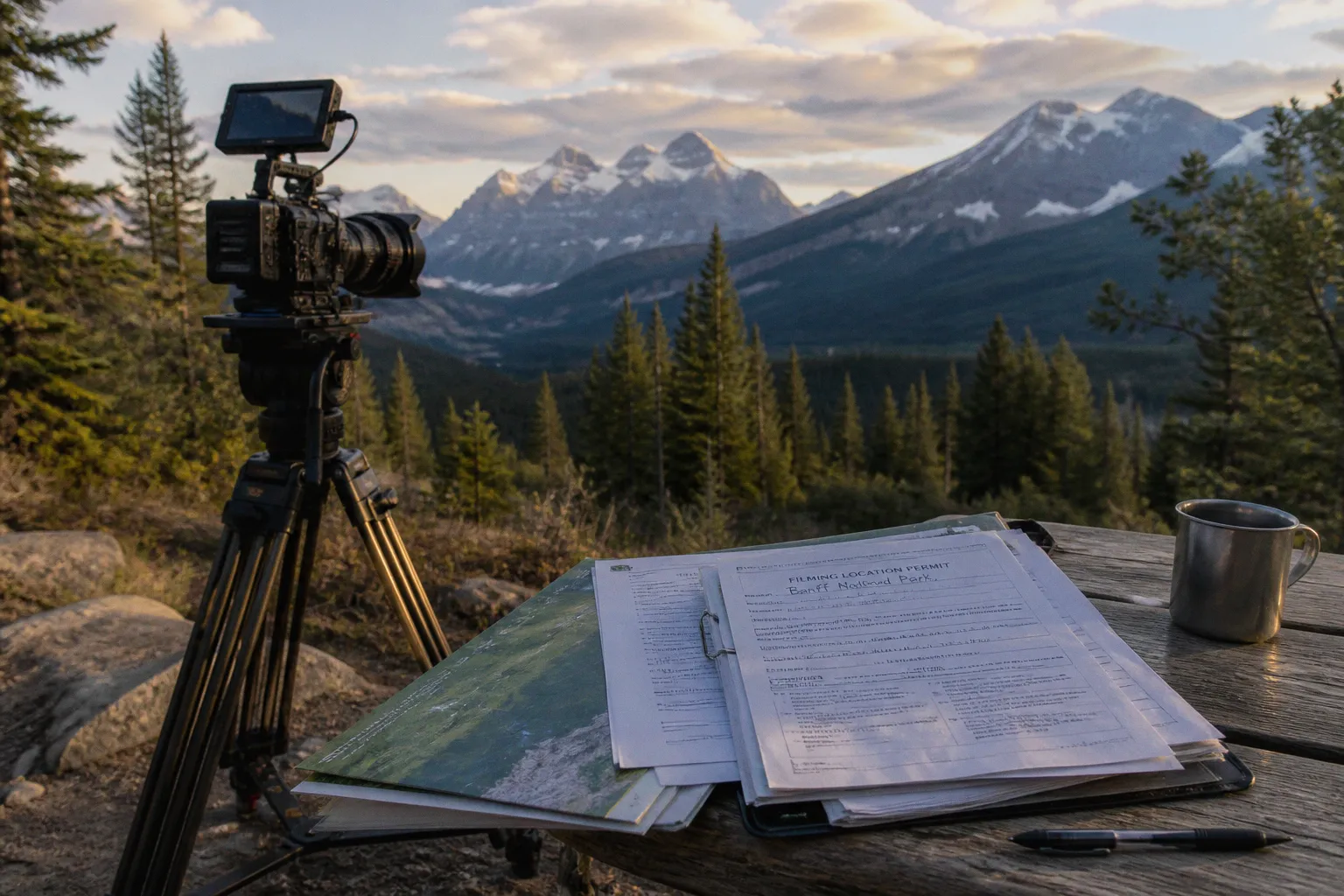
The fastest way to derail a destination video is rarely bad lighting. It is a permit problem, a restricted-access zone, an unapproved flight, or an environmental condition discovered after the crew has arrived.
The rules changed in the United States in 2025, but the larger lesson is not limited to American parks: a small, low-impact production may qualify for a lighter process, while a larger or more intrusive shoot can trigger several separate approvals. The work is not finished when the footage looks good. For an eco-tourism campaign, the permits, production records and environmental evidence are part of the deliverable.
Navigating the 2025 EXPLORE Act and Small-Crew Exemptions
The most useful change for small U.S. productions is also the one most likely to be misunderstood. The 2025 EXPLORE Act changed how certain commercial filming, photography and audio recording activities are treated on National Park Service and National Forest lands. It did not create a universal permission to film anywhere with a small camera. It created a narrower exemption for qualifying low-impact operations.
Under Section 125, codified at 54 U.S.C. 100905, some commercial filming and recording on federal land can proceed without the usual filming permit or fee when the production uses hand-carried equipment, remains in open public areas, does not claim exclusive control of a location and creates no adverse environmental impact. The exact application still depends on the land-management agency, the site and the activity. A producer should treat the exemption as a legal route to verify, not as a shortcut that needs no verification.
A compact hotel campaign may fit the practical profile: a content director, director of photography, sound operator and an in-house marketing lead moving through an open public area with cameras, tripods or a small gimbal. That is very different from arriving with a lighting truck, a generator, a catering unit, a talent holding area and a plan to keep visitors out of a scenic viewpoint.
The exemption becomes less likely to apply when the production:
- blocks or redirects public access;
- requires exclusive use of a trail, overlook, beach or other site;
- uses equipment that cannot reasonably be carried by the crew;
- brings in generators, vehicles, large lighting packages or temporary structures;
- operates in designated wilderness, a restricted zone or a sensitive habitat;
- exceeds the applicable crew or operational limits;
- creates noise, soil disturbance, waste or other environmental effects;
- uses aircraft or drones, which are governed by separate aviation and site rules.
This is where production planning needs to become specific. “Small crew” is not a complete description. The authority may also look at the type of equipment, the number of vehicles, the way the site is occupied and whether the shoot changes how other visitors can use the area.
The EXPLORE Act did not eliminate permits. It made it more important to understand when the exemption actually applies.
For a production that does not qualify, the standard commercial route generally involves a Special Use Permit or equivalent authorization from the relevant park or land-management office. Fees, insurance requirements, review time and operating conditions vary by location. A park superintendent or district office may also request a site plan, call sheet, equipment list, proof of insurance, waste plan or details of how the crew will protect visitors and natural resources.
The practical comparison looks like this:
| Parameter | Qualifying small-crew operation | Standard commercial production |
|---|---|---|
| Crew and footprint | Small team using a low-impact setup | Larger team, more vehicles or a more complex footprint |
| Equipment | Hand-carried cameras, tripods, gimbals and similar gear | Trucks, generators, extensive lighting, tracks or temporary structures |
| Site access | Open public areas without exclusive control | Controlled locations, closures or reserved areas |
| Environmental impact | No adverse impact expected | Requires formal mitigation and site controls |
| Fees and permit | May be exempt, subject to local confirmation | Usually requires an application and applicable fees |
| Advance planning | Verification before travel is still essential | Lead time depends on the authority and sensitivity of the site |
| Drone work | Not automatically included | Requires separate aviation and site authorization |
The mistake is not asking for a permit when one is unnecessary. The mistake is assuming that a ground-filming exemption covers every element of the production. It does not automatically cover drones, road closures, exclusive access, commercial activity outside the filming itself or work in a sensitive area.
Before booking flights, keep a written record of the agency’s response. Save the relevant guidance, the name of the office contacted, the date of the confirmation and a description of the planned operation. If the concept changes later, ask again. Adding a drone, a vehicle, a larger crew or a controlled setup can change the compliance position.
Regional Compliance: From Canada’s Registration to Botswana’s MoAs
The U.S. approach is only one jurisdictional model. Eco-tourism campaigns often move between a hotel, a protected landscape, a reserve, a cultural site and a public road in the same production week. Each may be managed by a different authority. A national tourism board’s support does not replace a park permit, landowner consent or aviation approval.
The production file should begin with a jurisdiction map, not a shot list. For every planned scene, identify:
- who owns or manages the land;
- whether the location is public, private or protected;
- whether commercial filming is treated differently from personal photography;
- whether a registration, notification or formal permit is required;
- whether vehicles, generators, temporary structures or road access change the process;
- whether local community, cultural or conservation permissions are needed;
- whether the location has seasonal restrictions;
- which authority controls the airspace.
Canada: registration is still a compliance step
Canada’s mountain parks, including Banff, Jasper and Yoho, operate under their own filming and commercial-activity procedures. A small travel-media team using handheld or tripod equipment in public areas may not face the same process as a large commercial unit, but that does not mean the production can simply arrive and start filming.
For qualifying small-scale work, project registration or advance coordination may be required. In practice, Parks Canada may ask for information about the crew, dates, locations, equipment, vehicles and intended use of the footage. A registration window of around 20 business days is commonly associated with this type of planning, but the production should confirm the current requirement with the specific park before relying on it.
Drones need separate treatment. A filming registration does not automatically authorize an aircraft operation, and a park’s permission does not replace the aviation requirements that apply to the pilot and aircraft. Wildlife sensitivity, visitor safety, emergency operations and local park restrictions can make an apparently simple aerial shot impossible.
Finland: public access is not the same as production access
Finland’s Everyman’s Right, or Jokamiehenoikeus, allows certain low-impact activities in nature without individual permission. It is useful context for location scouts because it explains why a person can often move through and photograph public natural areas without negotiating a conventional location release.
Commercial production still needs a more careful reading. Private property requires the landowner’s consent. A road, path or lane used for tracking shots may require traffic management or police authorization if the production affects public movement. A larger crew, vehicles, temporary installations, amplified sound or commercial activity can also fall outside the simple assumptions associated with low-impact public access.
The right to be in a natural area is not a blanket right to occupy it for a production. If the shot depends on moving people out of frame, parking several vehicles beside a trail or setting up equipment in a way that changes the site, contact the landowner or managing authority before the shoot.
Botswana: wildlife operations demand a different level of planning
Commercial filming in Botswana’s wildlife reserves can involve a formal Memorandum of Agreement between the production entity, or a registered local fixer, and the Government of Botswana before the filming permit is issued. The agreement may address the crew, vehicles, access, conservation conditions, operational conduct and financial arrangements connected with the reserve.
This is not the kind of approval to leave with a location manager who is already traveling. The production needs to establish who is authorized to sign, which entity is responsible locally and what supporting documents are required. In some cases, the process can take 60 to 90 days or longer depending on the reserve, the season and the complexity of the shoot.
Wildlife filming also changes the creative brief. A vehicle cannot necessarily stop wherever the director wants. A drone may be prohibited even when the same reserve permits other forms of commercial filming. A scene involving animals, water access or night operations can raise additional restrictions. The most beautiful shot may be the least acceptable one if it changes animal behavior or brings the crew too close to a sensitive area.
South Africa: treat CapeNature as a local rule, not a global threshold
CapeNature’s requirements illustrate why environmental staffing thresholds must never be presented as universal industry law. For some CapeNature-managed operations, an Environmental Control Officer may be required when the production reaches 30 or more people. That is a CapeNature-specific rule or condition, not a global line that applies to every conservation authority.
Other reserves and land managers may use different thresholds, or may require an ECO because of the location, equipment, duration, environmental sensitivity or expected disturbance rather than headcount alone. A 20-person shoot with generators on a vulnerable site may present more risk than a 35-person interview setup inside an existing facility.
The ECO’s role is not decorative. Depending on the authority and the appointment, the officer may monitor access routes, waste, refueling, soil disturbance, protection of vegetation, restoration and compliance with the approved method statement. Build the role into the schedule early enough for the ECO to review the plan before the crew arrives.
| Region | Authority or framework | What the production should verify | Drone position |
|---|---|---|---|
| U.S. national parks and forests | NPS, USFS and site-specific guidance | Whether the small-crew, hand-carried exemption applies to the exact operation | Separate FAA and land-manager requirements |
| Canadian mountain parks | Parks Canada and the relevant park office | Registration, permit, location and visitor-management requirements | Separate aviation and park approval |
| Finland’s public natural areas | Everyman’s Right plus local land and traffic rules | Landowner consent, commercial activity, access and road controls | Aviation rules and protected-area restrictions apply |
| Botswana wildlife reserves | Government and reserve authorities | MoA, filming permit, fixer, vehicles, conservation conditions and timing | Reserve-specific restrictions may prohibit flights |
| South Africa, including CapeNature sites | CapeNature or another managing authority | ECO conditions, crew threshold, method statement and site controls | SACAA requirements plus reserve consent |
The common thread is simple: a tourism board may help open a door, but it is rarely the only door that matters.
Sustainable Production Standards and Environmental Impact Assessments
Sustainable production is often treated as a paragraph in the pitch deck. On location, it becomes a set of decisions about transport, energy, water, waste, accommodation, crew size and access. If the campaign is selling a destination as responsible, the production itself should be able to explain how it avoided creating a contradictory footprint.
The carbon profile of a shoot is not limited to the camera package. Transport, flights, accommodation, fuel, catering, freight and generator use can dominate the impact. A production does not need to claim that it is impact-free. It needs a credible method for reducing, recording and communicating its impacts.
A useful production brief should define:
- which travel is essential and which can be replaced by local hiring;
- how many crew members genuinely need to travel;
- whether local production partners can source equipment;
- how batteries will be charged without relying on unnecessary diesel generation;
- how many vehicles are required for people, equipment and safety;
- where catering waste, wastewater and packaging will go;
- how sensitive areas will be avoided;
- who records environmental incidents and corrective actions;
- what evidence is needed before the client makes a sustainability claim.
Build the asset plan around evidence
The visual assets are only one part of an eco-tourism campaign. The production should also create a supporting evidence package that allows the hotel, destination or tourism board to use the material responsibly.
That package can include:
- permits, registrations and written confirmations;
- location releases and landowner permissions;
- drone approvals and pilot documentation;
- crew and vehicle manifests;
- an equipment list showing the size of the operation;
- waste and catering records;
- transport and accommodation information for emissions accounting;
- ECO notes or environmental sign-offs where required;
- restoration photographs and incident logs;
- a concise explanation of the production’s environmental controls.
This material does not all have to appear in the finished film. It gives the marketing team a defensible basis for statements such as low-impact production, local crew support or reduced transport. Without documentation, a sustainability claim can become broader than the production can support.
Practical measures that reduce impact
The most effective measures are usually operational rather than glamorous:
- Use battery-powered lighting and audio systems where they meet the creative and safety requirements.
- Hire local crew for specialist roles that do not require the director or core creative team to travel.
- Consolidate freight and avoid sending multiple small shipments to remote locations.
- Use shared transport hubs and reduce empty vehicle movements.
- Choose reusable catering equipment and eliminate unnecessary single-use packaging.
- Provide refillable water systems rather than distributing individual plastic bottles.
- Keep waste streams separate and document the responsible removal of waste.
- Limit lighting, vehicles and personnel in sensitive areas.
- Schedule location moves to avoid repeated access over fragile ground.
- Use existing paths, platforms and facilities wherever possible.
- Record unavoidable emissions and define how the client intends to address them.
An Environmental Impact Assessment may be required by the authority, particularly for a large, complex or sensitive operation. Even when it is not formally mandated, a proportionate environmental assessment improves the production plan. It should identify likely effects, the controls that will prevent them and the person responsible for monitoring those controls.
A short interview shoot in an existing hotel facility does not need the same assessment as a multi-day wildlife production with vehicles, generators and temporary structures. The point is not to produce a large document for its own sake. The point is to match the level of assessment to the level of risk.
Avoid absolute language in the campaign itself. “Carbon neutral,” “zero impact,” “fully sustainable” and similar claims require a robust basis. A more precise production note can explain that the team used local crew, reduced vehicle movements, avoided single-use catering materials and documented waste removal. Specific claims are usually stronger than broad promises.
For an eco-tourism campaign, the production record is part of the creative asset. The footage tells the story; the documentation makes the story credible.
The Reality of Drone Regulations and Restricted Access Zones
Drones create the most common gap between a producer’s understanding of a permit and the authority’s understanding of it. A filming approval generally concerns the act of filming at a location. An aircraft operation concerns airspace, safety, wildlife, privacy, security and the conditions under which the aircraft is flown. Those are separate questions.
The U.S. small-crew exemption does not automatically authorize drone work. A ground crew may qualify for a low-impact filming route while the drone remains subject to FAA Part 107 requirements, NPS restrictions and park-specific rules. The same principle applies internationally: a filming permit, reserve permission or tourism-board letter does not necessarily authorize an aircraft flight.
Before promising aerial footage, confirm all of the following:
1. Which aviation authority regulates the flight in that country.
2. Whether the pilot holds the required local or recognized qualification.
3. Whether the aircraft must be registered or insured.
4. Whether the location falls inside controlled, restricted or protected airspace.
5. Whether the park, reserve, hotel or landowner allows takeoff and landing.
6. Whether wildlife, nesting, migration or breeding restrictions apply.
7. Whether the flight requires a risk assessment, operational authorization or waiver.
8. Whether the location has additional rules for visitors, roads, borders or emergency services.
9. Whether visual line of sight, altitude, timing and weather conditions limit the shot.
10. Whether the production can still tell the story without the flight.
The last question belongs in the creative meeting, not as an emergency question on the second day of the shoot. If the campaign depends on a sweeping aerial shot, build a ground-based alternative into the storyboard. A cable camera, elevated viewpoint, stabilized long lens, licensed stock footage or an existing destination archive may solve the editorial problem without creating a new compliance problem.
Restricted access is wider than a no-fly zone
A site can be accessible to visitors and still be unsuitable for filming. Restrictions may apply to:
- nesting beaches and breeding areas;
- wildlife corridors and watering points;
- caves, cliffs and unstable ground;
- sacred or culturally sensitive sites;
- border areas and security installations;
- roads where a vehicle or tripod would obstruct traffic;
- areas under restoration;
- locations closed during fire, flood or other seasonal risks.
Location scouts should record the boundaries of the usable area, not just the scenic reference point. Add access routes, parking, loading points, emergency exits and the nearest facilities to the location file. If the crew must cross a fragile area to reach the shot, the shot is not low-impact simply because the camera remains still.
Printed or offline copies of approvals are sensible in remote locations, but paperwork is not a substitute for operating within its conditions. The crew should know the permitted dates, access route, maximum personnel, vehicle limits, flight restrictions and contact number for the authority. A permit held by the producer is not useful if the drone operator or location manager does not know what it allows.
Logistics for Large-Scale Shoots: When to Hire an Environmental Control Officer
A larger crew produces a larger footprint, but headcount alone does not determine the compliance burden. The relevant threshold may be set by the conservation authority, the reserve, the location permit or the environmental conditions attached to the shoot.
CapeNature provides a clear example: an ECO requirement can apply once a production reaches 30 or more people under the relevant local rules. That number should not be exported as a universal standard. Another authority may use a different threshold, require an ECO for a smaller but more intrusive operation, or impose environmental supervision because of the site’s sensitivity.
Ask for the local rule in writing and include the answer in the production file. If the authority has not specified a threshold, use a risk-based decision instead of waiting for a crew-count problem. An ECO or equivalent environmental professional is worth considering when the shoot includes several vehicles, generators, temporary structures, night work, significant catering, repeated movement across natural ground, water access, wildlife interaction or a location with a history of restrictions.
For a large or sensitive production, the working plan may include:
- an ECO or equivalent environmental officer on site;
- a pre-shoot environmental assessment or method statement;
- clearly marked access routes;
- limits on parking, loading and vehicle movement;
- refueling procedures and spill-containment equipment;
- waste, wastewater and greywater controls;
- protection for vegetation, watercourses and wildlife;
- daily briefings for crew and local suppliers;
- an incident log and escalation process;
- end-of-day checks against the approved plan;
- restoration actions agreed with the managing authority.
The ECO should be involved before the call sheet is locked. A late appointment often turns the officer into a person who merely records damage rather than someone who helps prevent it. They can identify where vehicles should stand, whether a proposed lighting position is acceptable and which route will cause the least disturbance.
The same applies to restoration. Do not invent a universal filing deadline. Some authorities may require a close-out report, restoration evidence or a final sign-off; others may specify a different period or no formal report at all. The production should ask what the site manager expects and follow the permit conditions. Where no formal report is required, photographs, notes and receipts for approved restoration work still provide useful evidence for the client.
A 30-person ECO threshold belongs to the authority that created it. Everywhere else, the location, activity and local rules decide when environmental supervision is necessary.
The close-out process should be practical. Photograph access points before and after the shoot. Record any incident, even if it was corrected immediately. Note where waste was removed, where temporary markings were taken down and whether the authority requested follow-up work. A clean restoration file can protect the client when questions arise months after the campaign has gone live.
Build the production file before the shoot closes
The strongest eco-tourism campaigns do not separate creative planning from compliance planning. The shot list should tell the location manager what the crew needs; the permit file should show the authority how those needs will be met without unnecessary disturbance.
Before travel, assemble a location-by-location file containing:
1. Jurisdiction and ownership. Identify every park, reserve, municipality, private property, road authority and aviation regulator involved.
2. Crew and equipment profile. List people, vehicles, generators, lighting, temporary structures, animals, water access and any equipment that may affect the site.
3. Permit status. Record whether each location is covered by a permit, registration, written exemption, landowner consent or another authorization.
4. Drone status. Keep aviation approval separate from filming approval and specify where takeoff, landing and flight operations are allowed.
5. Environmental controls. Include waste, fuel, catering, transport, access, wildlife and restoration procedures.
6. Named responsibilities. Assign a person to permits, a person to environmental compliance and a person to stop or alter the operation if conditions change.
7. Close-out evidence. Prepare templates for daily notes, incident records, photographs, ECO sign-offs and any report requested by the authority.
Run a final review when the creative plan changes. A new sunrise location, a larger cast, an extra vehicle or a last-minute drone shot can invalidate assumptions that were correct when the first application was submitted.
The useful question is not whether the campaign looks sustainable in the pitch deck. It is whether the production can demonstrate responsible choices when the client, park manager, tourism board or audience asks how the footage was made.
Eco-tourism video work is not made more credible by adding the word “green” to a call sheet. It becomes credible when the team maps jurisdictions, registers early, hires locally where possible, protects the location, separates aviation approvals from filming permissions and keeps an honest record of what happened on site.
That is the asset and permit checklist in practice: not a stack of paperwork detached from the creative work, but the production infrastructure that allows the footage to be used, defended and scaled across the campaign.