National park filming permits: a pre-shoot checklist for creators
"Filming in a national park requires a permit" is the kind of blanket "rule" creators repeat until it becomes gospel. It is also, as of January 4, 2025, flat-out wrong for most of the small-scale shoots actually driving destination content today. The U.S.
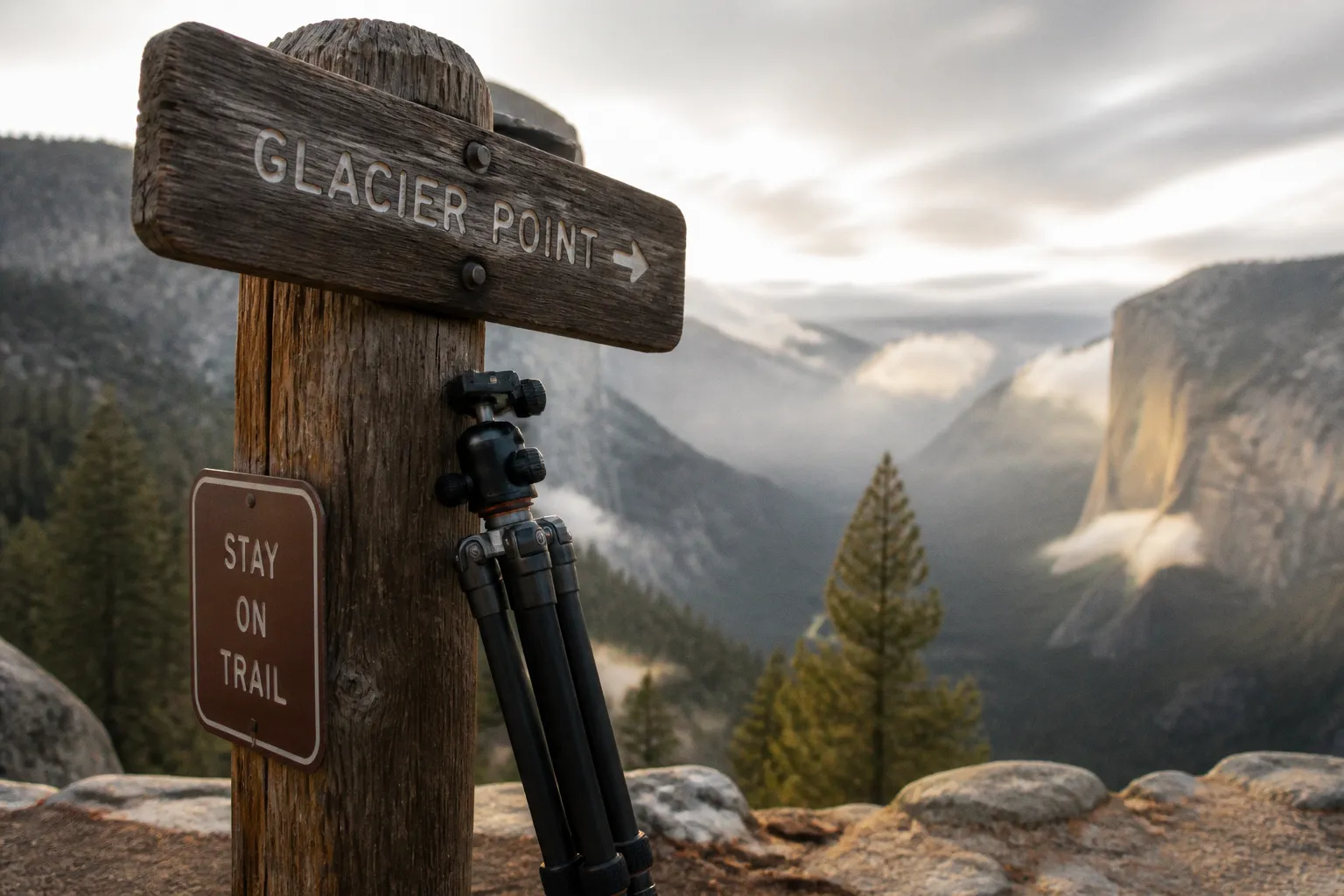
EXPLORE Act rewrote the script, and most international parks have quietly had similar carve-outs for years. Stop asking permission you don't need. Start planning for the permissions you actually do.
If you produce travel video, run destination content for a hotel group, or shoot tourism board campaigns, this is the boring logistics that quietly decides whether your launch hits on schedule or dies in a Slack thread six weeks before release. The good news: it's not as labyrinthine as the internet makes it sound. The bad news: skipping it costs real money and real reputational damage when a park ranger shows up.
The 2025 U.S. EXPLORE Act: New Thresholds for Small-Scale Shoots
The biggest shift in U.S. public-land filming just happened, and a lot of creators missed it. The EXPLORE Act — Public Law 118-234, codified at 54 U.S.C. § 100905 — was signed on January 4, 2025, and it explicitly tells the National Park Service when NOT to charge you.
Under the Act, the NPS generally cannot require permits or fees for filming, still photography, or audio recording when:
- You have eight or fewer individuals involved. That is the crew threshold.
- You're shooting in public areas — not closed-off or restricted zones.
- You're using hand-carried equipment only.
- You don't require exclusive site use.
- You don't adversely impact natural or cultural resources or other visitors.
And here is the part that breaks a long-standing myth: the Act treats all filming the same regardless of whether it's commercial, non-commercial, content-creation, or news gathering. That distinction — which the NPS spent two years trying to formalize under the interim guidance issued in October 2022 — is now legally irrelevant for small crews. The "commercial vs. creator" loophole hunt is over.
What this means in plain English: a solo creator with a gimbal and a mirrorless camera shooting a hotel's brand reel in Yosemite, Acadia, or Zion is not the same regulatory case as a 40-person production truck shoot. One is paperwork-free. The other is a permitting project. Knowing which side of that line you're on is step one.
The EXPLORE Act didn't "loosen" park rules. It codified what most small creators already knew — that a permit process designed for feature films has no business regulating a content creator with a backpack.
Do this: confirm crew count, equipment class, and site access before you book flights. Not that: assume your commercial hotel client automatically triggers a permit because they're paying you.
Navigating International Permit Requirements and Notification Windows
The U.S. isn't the only country quietly carving out space for content work. If your campaign is multi-destination — say, a tourism board promoting reef-to-rainforest across Australia, or a hotel brand spanning North American parks and Canadian resorts — the rules shift per jurisdiction, and the lead times are the actual production risk.
Queensland, Australia. Commercial filming or photography in national parks with 10 or fewer people and without prescribed structures doesn't require a Commercial Activity Permit (CAP). It does require an online notification submitted at least 14 days before you enter the area. Skip the notification, and you don't have a "loophole" — you have a violation.
NSW National Parks, Australia. Commercial filming applications need at least 7 business days of lead time for low-impact shoots. Medium- or high-impact shoots, and anything involving drone use, need at least 10 business days. Drone use is its own category here, not an add-on.
Parks Canada — Mountain National Parks. If you're capturing footage or stills to sell, or running a commercial shoot (wedding videography included), you need a business licence or commercial film permit. There is no small-crew exemption on the books at the federal level.
| Jurisdiction | Crew threshold for exemption | Minimum notice | Drone specifics |
|---|---|---|---|
| U.S. NPS (EXPLORE Act) | 8 or fewer | None required if criteria met | Not addressed in the exemption; flight rules apply separately |
| Queensland Parks | 10 or fewer, no prescribed structures | 14 days (online notification) | Standard CASA flight rules; no park-level permit needed for exempt crew |
| NSW National Parks | None — all commercial needs application | 7 business days (low-impact), 10 business days (medium/high or drone) | Drone use triggers the longer window |
| Parks Canada (Mountain Parks) | None — commercial shoot always requires authorization | Varies by park unit and season | Permit required as part of commercial authorization |
The takeaway: don't transplant your U.S. assumption onto international shoots. A "small crew" exemption in Queensland doesn't transfer to Banff or Jasper, and treating Canadian park rules as a soft version of U.S. rules is how shoots get shut down at the trailhead.
Defining Impact: When Hand-Carried Equipment Triggers Authorization
Most permitting drama isn't about whether you're filming. It's about whether your shoot changes the visitor experience. That's the real test the regulators are writing around — "adverse impact" and "exclusive site use" are not vague vibes, they're the line items that flip you from exempted to permitted.
Hand-carried equipment. Camera bodies, lenses, tripods, gimbals, handheld audio — all standard. A dolly on wheels is hand-carried. A reflector arm that blocks a trail is not. Drone cases are interesting: a drone is technically hand-carried to the launch point, but flight operations themselves are a separate authorization layer in most jurisdictions, even where small crews are otherwise exempt. Treat aerial capture as its own permit track.
Exclusive site use. If your shoot requires closing a viewpoint, blocking a boardwalk, or staging talent in a way that prevents other visitors from using the same space, you've crossed into "exclusive use." That's a permitted activity, full stop, regardless of crew size. Hotel content teams love staging couples on scenic overlooks — and that staging, if it chases away other visitors for more than a moment, is exactly what gets rangers involved.
Adverse impact. Litter, off-trail movement, damage to vegetation, disturbance to wildlife — all obvious. Subtle versions: lighting that affects wildlife behavior, audio capture that requires you to stop other visitors from crossing a frame, drone flight that creates noise over nesting sites. None of these are theoretical — they are the documented reasons small shoots have been shut down or fined. And in destination marketing, a citation travels faster than your content does.
Impact, not intent, is what triggers authorization. A "quick" shoot that blocks a popular viewpoint for 20 minutes is, to the park ranger on duty, a permitted activity that failed to obtain a permit.
Managing Liability and Insurance for Commercial Destination Content
Once you cross from "exempted" to "permitted," insurance becomes the make-or-break document. The numbers aren't symbolic — they're gating.
Queensland requires a minimum of AUD $20 million in public liability insurance for any commercial activity permit. That's not negotiable for most operators. For a single-creator shoot, the right policy is usually a one-off event coverage rider attached to existing professional indemnity or public liability — much cheaper than a fresh annual policy, and usually faster to issue.
In the U.S., insurance thresholds vary by park unit, activity, and the specific district issuing the permit, but commercial film permits typically demand minimum public liability coverage in the low-to-mid seven figures, with higher tiers for shoots involving aircraft, stunts, or commercial drone operations. Carrying the certificate of insurance isn't optional, and naming the U.S. government as an additional insured is often required at the permit stage.
Two practical notes. First, standard travel or equipment insurance does not satisfy permitting requirements — these are liability policies, not gear policies. Second, certificate turnaround is the bottleneck most creators underestimate. Brokers don't always have permit-specific riders on file; you may need a 10-day runway just to secure the document before you can even submit the application.
For destination marketing teams working across multiple jurisdictions, the insurance stack gets expensive fast. Budget for it during pitch, not after the script lock. Insurance failure is the most common reason otherwise-permitted shoots get cancelled the week of production — and the client will remember that, not the explanation.
Strategic Lead Times: Planning Your Production Calendar for Public Lands
Permit timelines are not arbitrary. They're the lead time a park authority needs to evaluate impact, schedule resource officers, and route the application. Treat them as production milestones, not bureaucratic afterthoughts.
For U.S. NPS under the EXPLORE Act exemption: zero days. Show up with hand-carried gear, a small crew, and no exclusive use. You're done. This is the new normal for the majority of creator-driven destination content, and the smartest tourism boards are already rewriting their production guidelines around it.
For Queensland exemption: 14 days. Submit the online notification, wait for confirmation, shoot. Calendar this as a fixed milestone, not a "we'll get to it" task.
For NSW low-impact commercial: 7 business days. For NSW medium/high or drone: 10 business days. Drone use is the variable that doubles your runway in many jurisdictions — build a separate track for aerial content with its own deadline.
For Parks Canada commercial: varies by park unit and season. Mountain parks in peak summer can stretch well beyond a month for complex shoots. Winter shoulder seasons often move faster, but weather risk replaces permitting risk.
Practical calendar logic: count backwards from delivery date, not forwards from concept. If your tourism board client wants launch assets for shoulder season in March, the Queensland aerial content for the campaign needed permit confirmation in late January — not in February when you're "ready to shoot." Most permit-driven production delays are just miscounted backward planning, and the algorithm doesn't reward late drops the way it used to.
The Real Checklist
Before any national park shoot for destination content, run this:
- Crew count. Eight or fewer (U.S.) or ten or fewer (Queensland) puts you in the exemption lane. Above that, you're permitting.
- Equipment class. Hand-carried only. Drones are a separate authorization in nearly every jurisdiction.
- Site use. Public access preserved. No closed viewpoints, no blocked trails, no exclusive staging.
- Activity type. Commercial vs. non-commercial is no longer the regulatory line in the U.S. — impact is.
- Notification windows. 14 days Queensland, 7 to 10 business days NSW, variable in Canada.
- Insurance. AUD $20 million public liability for Queensland commercial permits. Higher minimums common for U.S. NPS commercial permits. Certificate of insurance usually required at submission.
- Drone ops. Always separate authorization. Always longer lead time. Always a different calendar track.
If you can't tick all seven, you don't have a filming plan. You have a hopeful outing — and the algorithm punishes late arrivals harder than it rewards early ones.
The national parks didn't become more permissive in 2025. The law caught up to what small creators have actually been doing for a decade.
The boring logistics of public-land filming is the unglamorous backbone of every destination campaign that ships on time. Skip it, and the algorithm punishes you with a delayed launch your client doesn't forgive. Run it as a real checklist — crew size, equipment class, impact, notification, insurance, drone — and your production calendar stops being a wishlist and starts being a schedule.