Neighborhood video guides: a hotel roadmap to local content
A hotel can show a beautiful room without showing guests how it feels to stay there. The room proves the property exists. It does not always prove that the hotel understands the neighborhood outside its doors.
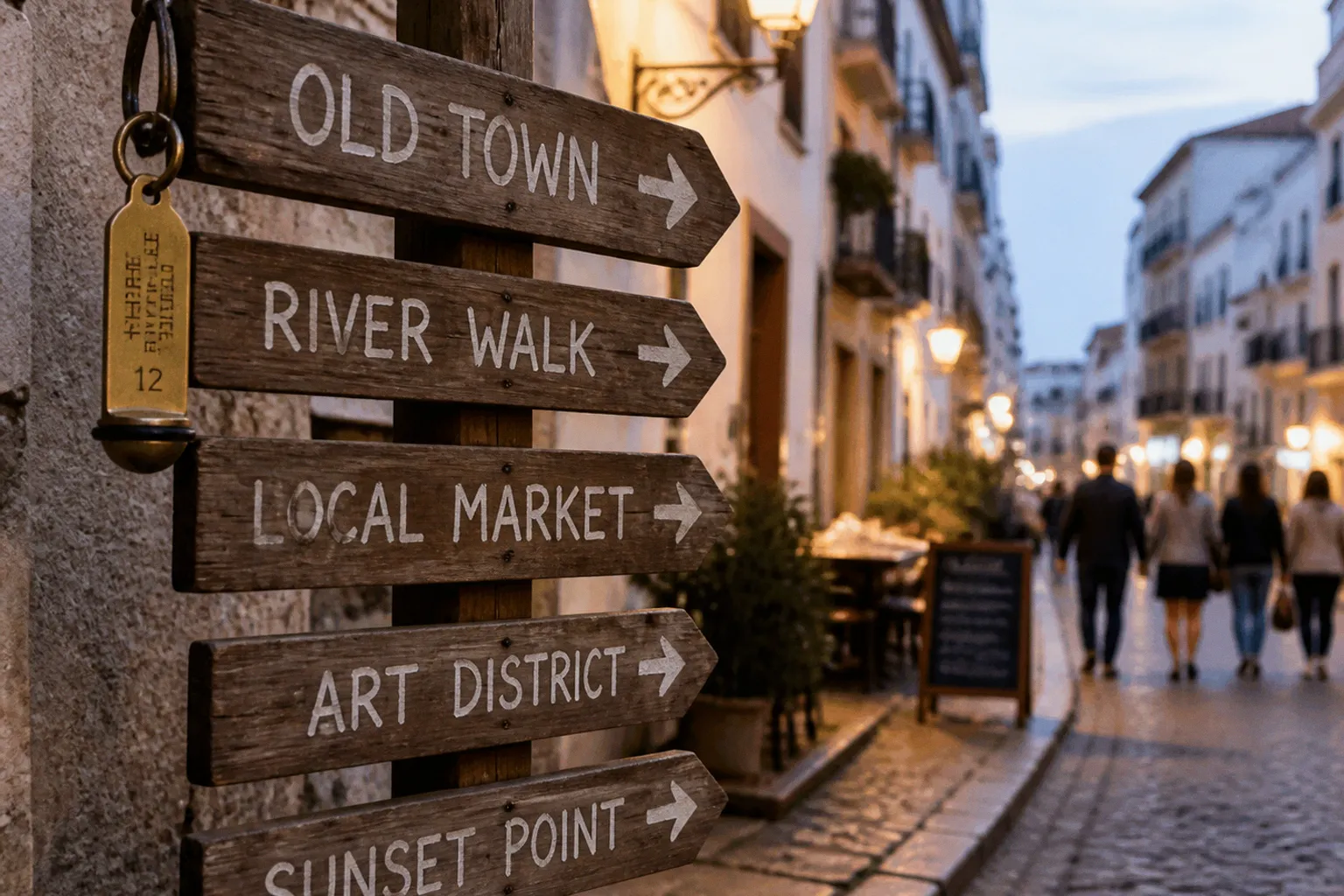
That distinction matters at the moment when travelers move from browsing to imagining. They want to know whether breakfast is actually walkable, which street feels comfortable after dark, where locals go for coffee, and whether the hotel team can give advice more useful than a generic list copied from a tourism site. This is where hotel neighborhood video guide production becomes more than a content exercise. Done well, it turns local knowledge into a practical part of the booking experience.
The strongest neighborhood travel guides for hotels do not attempt to cover an entire city. They make a small area legible. A staff member walks the route, points out the useful detail, explains what is worth ordering, and acknowledges the friction that polished destination footage tends to hide. The result is not a tourism commercial. It is a credible invitation to stay in this particular place.
The Shift to Localized Storytelling: Why Travelers Crave Authenticity
The booking funnel has a gap that many hotel websites leave untouched. A guest lands on a property page. The room photographs are clean, the pool is blue, and the amenities are listed in familiar language. The guest can see what the hotel looks like. What remains uncertain is whether the hotel belongs to the destination in a meaningful way.
Static property photography closes the first half of that loop. It proves the room exists and gives the brand a visual identity. It does not necessarily answer the questions that shape a city stay:
- Can I walk to a good restaurant without spending an hour researching?
- What does the route from the hotel to the station actually look like?
- Is this café a convenient morning stop or a destination worth planning around?
- Which attractions are genuinely close, and which are only “nearby” on a booking page?
- Will someone at the hotel have a useful recommendation when plans change?
A neighborhood video guide can close that second half. It provides context around the property and gives the hotel a role beyond selling beds. The hotel becomes a local interpreter: not the owner of the neighborhood, and not a substitute for independent judgment, but a knowledgeable starting point.
The distinction is important because “authenticity” is often used too loosely in hospitality marketing. A handheld camera does not automatically make a video authentic. Nor does filming a staff member in front of a recognizable landmark. Credibility comes from useful specificity. The person on camera needs to know why a place is recommended, when it works best, what to order, how long the walk takes, and when the recommendation may not suit the guest.
A 20-second clip showing the walk to a neighborhood bakery can be more useful than a sweeping montage of the city. It can show the corner where visitors usually turn too early, the entrance that is easy to miss, or the fact that the bakery is busiest after a certain hour. Those details reduce uncertainty. They also give the viewer a reason to remember the hotel as the source of the recommendation.
The strategic value of local content rests on three connected shifts:
- Positioning. The hotel becomes a source of neighborhood knowledge rather than a lodging container surrounded by anonymous attractions.
- Discovery. Videos can address destination-intent searches and social browsing that a conventional room page is not designed to capture.
- Differentiation. When nearby properties offer similar rooms and amenities, the quality of their local guidance becomes part of the guest experience before arrival.
This is not storytelling in the soft, brand-agency sense. It is information design with a human voice. The content should help a traveler make a decision, orient themselves, and picture a stay with fewer unanswered questions.
The useful unit of local content is not the landmark. It is the decision the guest can make because the landmark has been explained.
A hotel local guide video strategy should therefore begin with guest situations, not filming locations. “Best things to do near us” is too broad to direct production. “A quiet first morning after a late arrival,” “a rainy afternoon with children,” or “a three-hour window before a train” produces a much more useful brief.
Build a guide around routes, not attractions
Individual attraction videos can be valuable, but routes often perform better as hospitality content because they connect the destination back to the hotel. A route has a beginning, a sequence, and a practical endpoint.
Consider the difference between these two concepts:
- “Three famous sights in the historic center”
- “A two-hour walk from the hotel with coffee, one gallery, a market stop, and an easy route back”
The second concept gives the viewer a plan. It also creates natural opportunities to show distance, pacing, accessibility, opening-hour considerations, and the hotel’s own recommendation.
For each proposed guide, define:
1. The guest need. What problem does this route solve?
2. The starting point. Where does the guest leave the hotel?
3. The useful sequence. Which stops belong together geographically and experientially?
4. The friction. What might confuse, disappoint, or slow the guest down?
5. The return path. How does the route connect back to the hotel or the next part of the day?
That structure keeps the video from becoming a collection of disconnected clips. It also gives the editor a narrative spine without forcing the material into a scripted advertisement.
Applying the C.O.R.E. Framework to Destination Content
The C.O.R.E. framework—Connection, Operations, Reality, and Engagement—works well for neighborhood video content because it keeps the production tied to the hotel’s actual role. The framework is not a formula for making every clip look the same. It is a way to check whether a guide has a human source, a credible process, a clear sense of place, and a useful next step.
Connection: put local knowledge on screen
The face of a neighborhood video can be the face of the hotel, but the choice should be based on knowledge rather than title. A concierge may be the obvious presenter. A front-desk lead, bartender, breakfast manager, or reservations colleague may have a more natural relationship with the route being filmed.
The presenter does not need to perform expertise. They need to explain one thing well. “This is the best restaurant in the city” is a weak claim and an unnecessary burden. “I send guests here when they want a relaxed dinner within walking distance” is more believable because it describes a use case.
A strong presenter can answer small questions in plain language:
- Is a reservation usually necessary?
- Is the route easy with luggage or a stroller?
- What time does the street become busy?
- Is the place better for a quick stop or a long meal?
- What should a first-time visitor avoid ordering or overlooking?
This is also where the hotel can acknowledge limits. A recommendation is more trustworthy when it includes a condition: good for an early breakfast, less suitable for a large group, worth visiting on weekdays, or not the easiest option for guests with mobility concerns.
Operations: reveal how recommendations are made
The operations layer shows that local knowledge is maintained rather than invented for a campaign. The hotel might film a team member updating a neighborhood map, checking a venue’s current opening pattern, or comparing two nearby options for different types of guests.
This does not mean publishing internal discussions without editing. The point is to show the care behind the recommendation. A short clip can explain why the hotel keeps several coffee options on its map, why a restaurant is recommended for one kind of evening but not another, or how the team handles a venue that has recently changed.
Operational content is especially useful when the property has more than one staff member contributing. A guide feels less like a single spokesperson’s personal preference and more like a living service when the audience sees that recommendations are shared, reviewed, and updated.
A practical production system can assign each guide a simple owner:
- one person confirms the recommendation and current details;
- one person appears on camera or records the voice track;
- one person checks accessibility, walking time, and guest relevance;
- one person manages publishing, captions, and updates.
The roles can belong to the same employee in a smaller property. What matters is that responsibility is visible internally. Local content becomes unreliable when nobody owns the details after publication.
Reality: show the place as a guest encounters it
Neighborhood video content should not be confused with low effort. The camera may be close to the ground and the movement may be natural, but the route still needs to be planned. The viewer should be able to understand where they are, what they are looking at, and why the next step matters.
Show the ordinary details that glossy destination footage removes:
- the actual hotel entrance and the first turn;
- the slope, stairs, crossing, or narrow pavement on the route;
- the doorway of a café that is easy to miss;
- the view from a particular table rather than a generic interior;
- the handwritten specials board or market sign;
- the difference between a quiet side street and a busy main road.
These details are not visual clutter. They are spatial information. They help a guest build a mental map before arrival.
Reality also means avoiding claims that the footage cannot support. If the video shows a walk taking several minutes, do not describe the venue as “right next door.” If the presenter likes a restaurant, say why, rather than presenting personal taste as an objective citywide ranking. The most effective local attraction video marketing is specific without pretending to be universal.
Engagement: create a useful next action
Every neighborhood video needs an endpoint, but the endpoint does not always have to be a booking button. It may be a map, a saved itinerary, a written guide, or a prompt to ask the hotel team for a tailored recommendation. The action should match the viewer’s stage of intent.
For someone discovering the destination, the next step might be saving the guide or exploring another route. For someone already comparing hotels, it might be checking availability. For a guest who has booked, it might be opening a map or sending a question to the concierge.
The mistake is not having a soft call to action. The mistake is sending every viewer to the same generic homepage. A video about a neighborhood wine bar should lead to a relevant local page, map, or booking context—not force the viewer to reconstruct the connection themselves.
A clear action can be built into the final seconds:
- “Save this route for your first morning.”
- “Open the map for all five stops.”
- “Ask our front desk team for the rainy-day version.”
- “Check room availability if you want to walk this route from the hotel.”
Technical Production Standards for 2026: Lighting, Angles, and POV
Production quality for neighborhood guides follows different rules from architectural photography. The goal is proximity and comprehension. The viewer should feel able to follow the route, not as though they are watching a destination commercial from a helicopter.
Format and duration
Use different versions for different jobs rather than forcing one master video across every channel.
- Reels, TikTok, and YouTube Shorts: short vertical clips, usually focused on one location, one decision, or one stretch of the route.
- Website guide: a longer compilation or route film with enough context to explain the sequence and connect it to the hotel.
- Blog or local landing page: the video accompanied by written details, map links, opening-hour notes, and a clear booking or planning action.
- In-room or pre-arrival use: concise clips that answer practical questions, such as how to reach a market or where to find a late meal.
A short clip should not be expected to carry every detail. Its job is to earn attention and communicate one useful idea. The longer version can provide the route logic and caveats that a feed-based edit has no room for.
Lighting
Outdoor footage is easiest to read in soft light, whether that comes from an overcast day or a carefully chosen time of day. Harsh sun can create blown highlights on signs and deep shadows in doorways. If the route must be filmed in bright conditions, expose for the important detail and accept that the image may look less dramatic.
For interiors, the priority is a face and a location that remain understandable. A small, portable light can help in a dark café or bar, but it should not erase the atmosphere that makes the recommendation appealing. A neighborhood guide should look considered without looking detached from the place.
The same principle applies in post-production. Correct exposure and color so that the footage is coherent, but do not process every shadow and highlight into a synthetic version of the street. Texture, contrast, and imperfect light can carry useful information about the environment.
Angles and point of view
Guest-level point-of-view footage is useful because it communicates scale. A walking shot from eye level can show whether a route feels direct, crowded, steep, or confusing. It can also make a staff recommendation easier to trust: the viewer sees the presenter take the same turn a guest would take.
Movement should be stable enough to follow, but not so smooth that the route loses its human scale. A gimbal glide may work for a formal property film. For local guidance, a controlled handheld shot can feel more immediate. The choice should follow the content rather than a production fashion.
Close-ups are valuable when they answer a question. Film the menu detail that explains what to order, the street sign that confirms the turn, or the entrance that a visitor might overlook. Avoid close-ups that exist only because they look attractive. Every detail should either orient the viewer or strengthen the recommendation.
Drone footage has a limited role here. It can establish the relationship between the hotel and a major district, but it rarely explains how a guest reaches a bakery, gallery, or station entrance. Use elevated footage as orientation, not as a substitute for the walk itself.
Sound and captions
Ambient audio gives the guide a sense of place. Street noise, café conversation, a market stall opening, or the sound of a train arriving can sit beneath the presenter’s voice and make the footage feel located rather than generic.
Record clean speech separately when necessary. A lavalier microphone or a short voiceover can preserve clarity without removing the environment entirely. Music should support the edit, not cover the sound that makes the location recognizable.
Captions are essential for silent viewing and should be written for comprehension rather than treated as a transcript pasted onto the screen. Keep place names, directions, prices where relevant, and time-sensitive details easy to read. If a venue or route changes, update the captions as well as the spoken audio.
Budget reality
Neighborhood guides do not require a cinema camera package to be useful. A current smartphone, a small stabilizer or grip, an external microphone, and basic editing discipline can produce a strong starting point. The equipment matters less than the preparation: knowing the route, choosing the right presenter, capturing usable sound, and editing around a clear guest question.
The production budget should be judged against the role of the content. A single polished film may work as a brand asset, while a series of smaller guides can support search, social discovery, pre-arrival service, and on-site guest experience. There is no universal rule that one approach wins on every engagement metric. The right cadence depends on the property’s team, destination, seasonality, and ability to keep recommendations current.
Production budget should favor usefulness before polish. A beautifully shot guide with outdated directions is still a poor guest experience.
Strategic Website Integration: Placing Video Above the Fold
Distribution architecture matters as much as filming. A useful neighborhood guide hidden on an abandoned subpage will not help a guest who is comparing hotels. At the same time, placing a large autoplay video at the top of every page can slow the site and obscure the booking path. Integration requires judgment.
Give the main guide a clear home
A primary neighborhood video can sit on the homepage if it supports the property’s positioning and loads responsibly. The opening frame should show a recognizable local context and communicate what the viewer will receive. A generic lobby image says “hotel video.” A staff member beginning a route says “local guide.”
The homepage placement should not compete with the essential booking information. A concise introduction, a visible play control, and a nearby link to the full local guide are often more effective than making the visitor search for context inside a large media block.
A dedicated “Our Neighborhood” or “Local Guide” page can then hold the full series. Organize it by guest need rather than by a random list of venues:
- first morning;
- food and drink;
- culture and architecture;
- evening routes;
- rainy-day options;
- family-friendly stops;
- accessible or low-effort walks.
Each entry should include the video, a short written summary, the venue or route name, the relevant practical details, and a contextual action. If a detail can change—opening hours, reservation policy, temporary closure—include a process for reviewing it.
Connect video to written information
Video is good at showing movement, atmosphere, and scale. Text is better for addresses, accessibility notes, booking conditions, and information a guest may need to scan later. The two formats should not repeat one another word for word.
A written companion can explain what the video leaves implicit:
- the best time to take the route;
- how long the full walk usually takes;
- whether there are stairs or steep sections;
- what to do if the featured venue is full;
- which stop can be removed when the guest has limited time;
- how to return to the hotel by public transport.
This creates a more durable local resource and gives search engines clearer textual context. It also makes the guide useful after the viewer has forgotten the exact sequence of the video.
Keep the booking path nearby
A guest watching a neighborhood restaurant guide may be in the research stage, while another may already be deciding between two hotels. The page should support both without interrupting the content.
A booking widget or relevant CTA should be visible without making the guest abandon the guide. It can sit beside the video on desktop, beneath the opening section on mobile, and again after the route details. The language should connect the action to the content: “Stay within walking distance of this route” is more relevant than a generic “Book now.”
The path from local content to availability should be short, but not every visitor should be pushed directly into dates. A map, itinerary download, or room comparison can be the more appropriate next action for an earlier-stage visitor.
| Placement | Format | Primary role |
|---|---|---|
| Homepage | Short introduction or compiled guide | Establish the hotel’s local point of view |
| Social channels | Single-location vertical clip | Discovery and first engagement |
| Dedicated local guide page | Organized video series with text | Planning, search visibility, and internal linking |
| Blog or destination article | Embedded clip plus written context | Capture video and text-based intent |
| Pre-arrival email or guest messaging | Short practical route video | Reduce questions and improve arrival confidence |
| In-room content | Concise local recommendations | Support the stay after check-in |
Optimizing for Discovery: Metadata and Search Visibility
A neighborhood video has two audiences: people and systems. Viewers need a clear reason to watch. Search platforms need enough context to understand the place, subject, and relationship to the hotel.
Metadata cannot rescue a vague video, but it can prevent a useful one from disappearing. The title, description, page copy, captions, thumbnail, and internal links should all describe the same recommendation in natural language.
YouTube and video platforms
A dedicated upload can give a guide a longer life than a single social post, especially when the video answers a recurring destination question. Use the neighborhood and city in the title, then add the specific subject:
“An Easy Morning Walk Through [Neighborhood] | Local Guide from [Hotel Name]”
The description should explain what the viewer will see and include the practical information that supports the video. Mention the featured venues, route, approximate walking context, and the hotel’s relationship to the starting point. Link to the relevant local guide page rather than sending every video to the same homepage.
Chapters are useful for longer route films. They help viewers move to the section they need and make the structure visible before playback. Tags and hashtags should be relevant, not a long inventory of loosely related travel terms. A neighborhood name, city, venue category, and hotel attribution are usually more useful than generic claims about hidden secrets or luxury travel.
On-site structured data
Pages hosting video can use appropriate VideoObject structured data, provided the visible page actually contains the information represented in the markup. Include an accurate title, description, thumbnail, duration, upload information, and the page relationship where applicable. Structured data is a way to clarify the content for search engines; it is not a promise of rich-result placement.
The page itself still needs substance. A video without accompanying text, location context, or a clear purpose gives both users and crawlers very little to work with. Add descriptive headings, accessible transcripts or captions, relevant internal links, and a clear explanation of how the guide relates to staying at the hotel.
Social discovery
Short-form distribution works best when each clip has one identifiable subject. The first seconds should establish the place or question, not spend the opening on a logo animation. A useful hook might be the turn most visitors miss, the reason a local chooses one market entrance over another, or the best use of a short gap between check-in and dinner.
Use the same venue name and neighborhood reference across platforms, while adapting the caption to the channel. Keep subtitles readable on a phone, avoid placing essential text beneath interface controls, and check how the thumbnail appears in the profile grid. Search visibility on social platforms increasingly depends on spoken words, on-screen text, captions, and the surrounding description—not only on hashtags.
Keep metadata honest
Do not call a place “secret” if it is a major tourist stop. Do not describe a route as “five minutes away” unless the wording accounts for the actual starting point and walking conditions. Do not leave old venue names, seasonal information, or closed recommendations in a video simply because the original edit performed well.
A small update note on the written page can preserve useful content while making its status clear. If a major fact has changed, replace the video or record a short update. Local authority is built through accuracy over time, not through the appearance of certainty.
Measurement: What to Track and When
Neighborhood video guides are measurable, but they should not be reduced to one engagement number. A high view count can indicate curiosity without indicating hotel consideration. A lower-volume route video may influence a booking or reduce a pre-arrival question even if it attracts little public attention.
Separate the metrics by role:
- Reach and discovery: impressions, plays, completion patterns, saves, shares, and searches that lead viewers to the content.
- Content quality: average watch time, drop-off points, caption use, replay behavior, and the sections viewers skip or revisit.
- Planning behavior: clicks to maps, itinerary downloads, local guide page depth, venue-link interactions, and use of related routes.
- Commercial proximity: visits from the guide to room pages, booking-engine starts, availability checks, and assisted conversions where the analytics setup can support them.
- Guest experience: concierge questions, pre-arrival message themes, and feedback about whether the recommendations were easy to follow.
A reported finding of engagement reaching up to 4.7 times that of static photo posts can be useful as an upper-bound signal in a particular study or platform context. It should not be presented as a universal benchmark for every hotel, audience, or video. Performance depends on the creative, distribution, audience intent, comparison post, and measurement window. Use the figure to justify testing video against existing assets, not to promise a fixed return.
The same caution applies to watch-time and click-through targets. A threshold can help a team notice a problem, but it is not a law of hospitality marketing. If viewers leave before the recommendation is explained, inspect the opening and pacing. If they watch but do not click, check whether the next action is relevant and visible. If the guide receives saves and map interactions but few booking starts, it may be working as an early-stage planning asset rather than a direct conversion ad.
Review the content on a regular cycle, with a separate check for factual accuracy. Ask four practical questions:
1. Did the video reach the kind of traveler it was intended to reach?
2. Did viewers understand the recommendation and route?
3. Did the next action match their stage of planning?
4. Is every local detail still accurate?
The answers should shape the next production decision. A weak opening may require a new edit. A strong route with outdated venue information needs an update. A popular restaurant clip may suggest a series about different dining occasions, while a low-performing landmark montage may reveal that the concept is too broad.
Make the neighborhood part of the stay
A hotel neighborhood video guide is not a replacement for good service, a useful front desk, or an accurate website. It is a way to extend those strengths into the places where travelers make decisions before arrival.
The best guides are modest in their claims and precise in their help. They show the route, name the trade-off, introduce the person making the recommendation, and give the viewer a sensible next step. They do not need to make the neighborhood look perfect. They need to make it understandable.
That is the opportunity in hospitality neighborhood video content. The hotel can become part of the destination conversation without pretending to own it. When local knowledge is filmed with care, maintained like a service, and connected thoughtfully to the website and booking journey, the content does more than decorate a property page. It gives future guests a reason to trust the people waiting for them there.