POV tours vs hosted videos for destination marketing
A destination can be visually irresistible and still fail to answer the question a traveler is actually asking: What will it feel like to be there? That gap is where video format starts to matter.
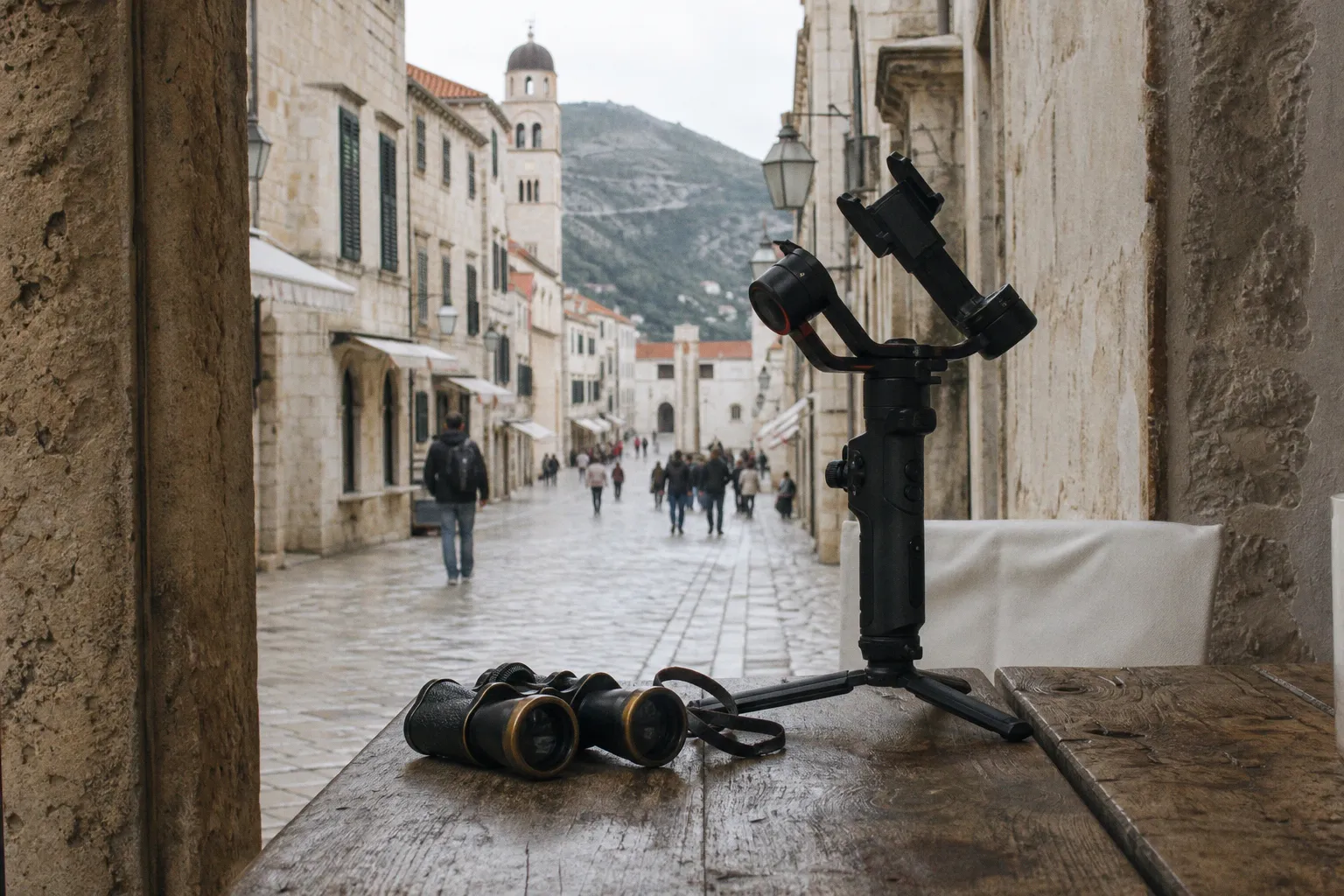
Independent hotels, tourism boards, and neighborhood-lifestyle brands are usually choosing between two very different approaches: the silent or lightly narrated POV walking tour, and the personality-driven hosted travel guide. Both can make a place more desirable. They simply do different jobs. One lets the viewer rehearse an experience from the inside; the other gives the destination a human voice and a reason to share the story with someone else.
Compare car rental deals in United Kingdom
See available offersPartner link — DiscoverCars comparisonThe mistake is treating them as interchangeable. A polished hosted guide is not automatically the best tool for a booking page, just as a beautifully composed walking tour is not necessarily the fastest way to introduce an unknown destination to a cold social audience. The useful question is not which format is superior. It is where each format belongs in the traveler journey, and how much production effort that job deserves.
The Psychology of Immersion: Why POV Content Drives Travel Intent
There is a reason viewers will stay with a five-minute POV clip of someone walking through a Kyoto alley at dawn: the screen moves at walking pace, wet stone catches the light, a paper lantern swings into frame, and the route unfolds without being rushed into a highlight reel. The viewer is not only looking at a destination. They are tracking a sequence of small decisions and sensory details that resemble the way a real visit is experienced.
That does not require us to claim that the format produces a specific neurological response or that a viewer literally stores the footage as a lived memory. The more defensible point is simpler: first-person framing can make a destination easier to imagine from the traveler’s own point of view. The camera is not observing a person having the experience. It is moving through the experience, which gives the viewer more material for mentally rehearsing it.
This is especially useful in neighborhood travel guide video production, where the value is rarely concentrated in one landmark. A hotel may be five minutes from a bakery, a tram stop, a museum, or a difficult-to-find viewpoint. A conventional hero video can show all of those things in beautiful fragments. A POV tour can explain their relationship to one another: leave the hotel, turn left, cross the square, pass the market, and arrive at the place the guest has been wondering about.
Research on immersive travel video points in the same direction. When the perspective is first-person and the action is activity-centric, the viewer has an easier time picturing themselves in the setting. That can support travel intention, particularly when the video provides enough concrete information for the viewer to understand what they are seeing. The distinction matters. Immersion is not created by piling on adjectives. It is created by giving the audience a route, a pace, and a point of view they can follow.
The narration should therefore orient rather than perform. “The bakery opens at seven, and the queue usually forms on this side of the street” gives the viewer a useful anchor. “Feel the romance of this hidden corner” tells them what to feel without giving them much to work with. The first line supports mental simulation; the second may sound like generic destination copy.
For a hotel or destination brand, the strongest POV material often includes details that would be invisible in a still image:
- The time of day when a street is quiet or crowded.
- The route from the property to a practical local stop.
- The slope, stairs, cobblestones, or crossing that a guest may want to anticipate.
- What is visible at eye level rather than only from a drone.
- The small transition between spaces: lobby to street, station to neighborhood, waterfront to restaurant.
- The ambient rhythm of the place, including pauses where nothing spectacular happens.
Those pauses are not dead air. They are part of the promise. A destination that feels calm in a video should not suddenly be represented online as a nonstop sequence of attractions. Likewise, a lively neighborhood should not be edited into a silent postcard if the energy is one of its main reasons to visit.
POV tours sell the arrival before the traveler ever clicks “Book.”
The phrase “sell the arrival” is useful as long as we understand what it does and does not mean. A POV tour can reduce uncertainty, strengthen place attachment, and help a potential guest imagine the practical shape of a stay. It does not guarantee a booking, and the format comparison does not establish a universal conversion lift. The commercial value has to be evaluated alongside the landing page, pricing, availability, brand fit, and the rest of the booking experience.
The Vlogger Effect: Leveraging Personality for Social Engagement
Now turn the camera around and put a person in the frame. The equation changes immediately.
A hosted travel guide gives the audience a recognizable interpreter. The host can make a judgment, reveal a preference, admit that a famous attraction is overrated, or explain why an ordinary-looking street is worth the detour. The destination becomes part of a relationship between the viewer and the presenter. That relationship is one reason hosted content tends to perform strongly in social environments, where recommendation, personality, and shareability matter as much as visual quality.
Travel vlogs generate roughly four times the social engagement of other travel video formats, and they account for about 48% of travel channel subscriptions on YouTube, while travel tours and footage sit closer to 16%. Those figures describe audience behavior at the channel and engagement level; they should not be translated automatically into hotel bookings. A format can win attention without winning the final transaction, especially when the audience is still deciding where to go.
The trust argument also needs clean sourcing. A 2024 study on travel creator statistics reported that 92% of consumers trust recommendations from vloggers. The separate figure that 75% of consumers trust influencers more than traditional travel agencies comes from the 2025 LAB Focus survey, not from that 2024 study. Keeping those findings separate matters because credibility in destination marketing is built not only through the content itself, but through the precision of the claims surrounding it.
A more recent 2025 survey also found that 90% of respondents prefer video content because it feels more direct and transparent. That preference helps explain why a host can be so effective at the awareness stage. A person looking into the camera can compress context, opinion, and invitation into a few seconds. They can say what the destination is good for, who will enjoy it, and what kind of day the viewer might have there.
The host does not need to behave like an advertisement. In fact, the strongest hosted guides often have a point of view that is slightly more specific than the destination’s official messaging. “This is the best area for a slow morning, not a late-night itinerary” is more useful than “there is something for everyone.” “Skip this street at noon and come back after dinner” gives the audience a reason to trust the presenter’s judgment.
That personality is also the format’s main vulnerability. If the host’s following is the only reason people watch, the property may disappear as soon as the presenter leaves the frame. The brand needs to decide how much of the value should live in the creator’s identity and how much should be attached to the place itself.
A hosted travel guide works best when the presenter acts as a bridge rather than a substitute for the destination. The audience should remember the person’s recommendation, but also retain a clear sense of the hotel, neighborhood, or experience being recommended. That requires deliberate brand integration:
1. Introduce the destination or property early enough that the audience understands the subject.
2. Give the host a real reason to be there rather than using the location as interchangeable background.
3. Let the presenter express a point of view, while anchoring opinions in observable details.
4. Build in scenes that can stand alone when cut into short social clips.
5. End with a next step that suits the audience’s intent: save the itinerary, explore the neighborhood, check availability, or learn more.
The hosted format is therefore not merely “video with a face.” It is editorial packaging. It turns a place into a story that can travel through a social network because viewers have a person to quote, tag, or send to a friend.
Production Economics: Scaling Content Without Professional Talent
Here is the part that almost never makes it onto a marketing panel, and it is often the deciding factor for an independent property: the production economics are radically different between the two formats.
A hosted travel guide is more demanding on paper. You need a presenter who is comfortable carrying a scene, whether that person is a creator, a staff member, a local expert, or a professional actor. You need some version of a script or structured outline. You need a crew that can direct performance without making it feel stiff. You may also need support for casting, wardrobe, grooming, sound, releases, scheduling, and reshoots.
None of that makes hosted content impractical. It simply means the production has more dependencies. If the host is unavailable, the shoot may move. If the presenter cannot deliver the key information naturally, the edit becomes expensive. If the brand changes the offer after filming, the most prominent section of the video may become outdated.
POV content removes one of those dependencies by making the camera the central presence. The person operating it can remain invisible. That may be a hotel staff member, a junior marketer, a local filmmaker, or a small crew with a stabilized rig. You do not need to cast a defined protagonist, coordinate a wardrobe, or record every line as a performance.
That does not mean POV is automatically cheap or effortless. The format shifts the burden rather than eliminating it. A convincing walking tour requires route planning, sound control, image stabilization, permissions where necessary, and an editorial understanding of what the viewer needs to notice. The camera must move at a pace that feels human. The route must have a beginning and an end. The audio cannot be treated as an afterthought if footsteps, traffic, doors, and street activity are part of the experience.
There is also a difference between filming a walk and designing a useful POV video. A raw continuous recording may document the route, but it may not communicate why the route matters. The viewer needs orientation: where they are, what they are approaching, how long the transition takes, and what details are worth retaining. Simple on-screen labels can do much of that work without turning the piece into a narrated sales pitch.
For a property working with a limited budget, POV can make a repeatable content system possible. One shoot can produce a full walking tour, shorter route-based clips, arrival footage, seasonal updates, and snippets for email or booking-page use. The advantage is not that every asset will outperform a hosted guide. The advantage is that the format can be refreshed without rebuilding an entire cast-and-crew structure each time.
Hosted and POV production can also be combined without forcing one video to do everything. A creator might introduce a neighborhood and explain the itinerary, while the practical sections use first-person footage to show the actual walk. Or a hotel can produce one personality-led flagship video and use a series of quieter POV pieces to document nearby experiences. That hybrid approach is often more realistic than asking a single format to deliver awareness, reassurance, orientation, and conversion at once.
The budget conversation should include more than the shoot itself. Consider:
- How often the route, opening hours, or local businesses change.
- Whether the video needs subtitles and multiple aspect ratios.
- How many cutdowns will be needed for social platforms.
- Whether the property can reshoot without external talent.
- How much of the footage can be reused across a website, email, and paid campaign.
- Whether the audience needs information in several languages.
- How quickly the content will become visually or commercially dated.
A hosted guide may create a larger awareness moment. A POV library may create a more durable set of practical assets. The right choice depends on whether the current problem is lack of attention or lack of confidence.
Strategic Alignment: Matching Video Formats to the Traveler Journey
This is where the format decision becomes a marketing decision rather than a production preference.
At the inspiration stage, the traveler may not have chosen a city, neighborhood, or hotel. They are scrolling with loose intent. They need a reason to stop, and then a reason to imagine a trip. Hosted travel guides are well suited to this environment because personality gives the content an immediate social hook. The host can establish context quickly, create momentum, and make the destination feel recommended rather than simply displayed.
At the consideration stage, the traveler’s questions become more specific. They may already know the destination and be comparing neighborhoods, properties, or types of experience. This is where a POV walking tour can be particularly useful. It shows the relationship between the hotel and its surroundings, the texture of the route, and the practical reality that glossy destination footage often edits out.
At the decision stage, both formats can contribute, but neither should be asked to carry the full burden of the booking journey. A hosted video can clarify the brand promise and establish confidence. A POV piece can answer questions about the setting and arrival experience. The booking interface still has to do its own work: clear room information, transparent pricing, availability, policies, and a frictionless path to purchase.
After the stay, the role changes again. A POV tour can become a memory prompt, especially when it captures the details guests noticed on foot: the sound of a market opening, the route to a favorite café, the view from a familiar corner. Hosted content can support advocacy by giving guests a story or itinerary they want to share. At this point, the content is less about introducing the destination and more about keeping the relationship active.
A useful way to frame the choice is:
| Traveler stage | Stronger starting format | What the format contributes |
|---|---|---|
| Inspiration and discovery | Hosted travel guide | A human point of view, social energy, and a clear reason to pay attention |
| Destination consideration | Hosted guide or hybrid | Context, recommendations, and a sense of what kind of trip the place supports |
| Neighborhood or hotel comparison | POV walking tour | A grounded view of routes, surroundings, pace, and practical details |
| Booking-page reassurance | POV walking tour with clear labels | Orientation that complements, rather than replaces, the booking information |
| Post-stay engagement | POV tour or hosted recap | Memory, itinerary ideas, and reasons to revisit or share |
The mistake I see most often is a property pouring its entire video budget into hosted guides because the engagement metrics look spectacular, then wondering why the website still leaves prospective guests with basic unanswered questions. The opposite mistake is producing beautiful walking footage that never reaches people who are not already searching for the destination.
The formats are not competing for the same moment. They are sequential, and sometimes complementary. A hosted guide can create demand. A POV tour can give that demand somewhere concrete to go.
Data-Driven Decisions: Balancing Scenery-Focused vs Hosted Narratives
The available audience data makes one point clear: travel video is not a marginal channel. Travel content on YouTube saw views climb by roughly 118% year over year in the period leading into 2024, while branded travel content viewership grew by about 394% in the same window. The opportunity is substantial, but the numbers do not tell a hotel which format to choose without context.
High engagement is not the same as high booking intent. A hosted video may attract comments, shares, and subscriptions because viewers enjoy the presenter. A POV video may earn fewer visible reactions while helping a traveler decide whether a location feels accessible, quiet, lively, central, or worth the walk. If the brand evaluates both pieces using only views or likes, it will systematically undervalue the quieter format.
The measurement plan should reflect the job assigned to the video. For hosted content, look at signals such as:
- Reach beyond the property’s existing audience.
- Average watch time and retention through the presenter’s recommendation.
- Saves, shares, comments, and tagged viewers.
- Growth in profile visits or searches for the destination and property.
- Traffic from creator channels and assisted visits over an appropriate window.
For POV content, examine a different set of signals:
- Completion rates for the route, not only the first few seconds.
- Clicks from the video to the neighborhood, rooms, or booking page.
- Engagement with practical chapters, captions, or route labels.
- Time spent on the page where the video is embedded.
- Questions from prospective guests about access, distance, noise, or nearby experiences.
- Whether the footage reduces repetitive pre-booking questions for the sales or reservations team.
Even these measures need restraint. Attribution is rarely clean in travel. A guest may watch a hosted guide, search for the destination later, see a retargeting ad, visit the hotel website twice, and book after comparing several properties. A POV video may assist that decision without being the last tracked click. The right conclusion is not that one format “caused” the booking, but that different formats can support different stages of a longer decision.
The rational-versus-emotional narration finding is worth carrying forward as well, because it is one of the levers hotels pull in the wrong direction. When the perspective is first-person, on-screen text or voiceover should generally describe what the viewer is seeing: what the building is, where the route leads, what time of day it is, and what sits around the next corner. The form already supplies a degree of atmosphere. Overwritten emotional language can make the experience feel less credible.
Hosted content has more room for interpretation. The presenter can say that a street feels cinematic, that a restaurant is worth booking early, or that a particular neighborhood suits travelers who prefer slow mornings. The host’s delivery carries the affective weight, while the visuals provide evidence. In a POV video, the visuals carry more of that weight, so the copy should help the viewer read the scene rather than compete with it.
Match narration to format: describe the scene in POV, express the feeling in hosted content.
A practical content portfolio might therefore look like this:
1. Create one strong hosted introduction for reach.
Give the destination or property a clear point of view and a presenter with a credible relationship to the place.
2. Build a series of POV routes around real traveler questions.
Film the walk from the property to a transport link, a market, a cultural site, or a cluster of restaurants. Do not choose routes only because they look attractive; choose them because guests actually need to understand them.
3. Use the same shoot for multiple levels of intent.
A hosted guide can generate discovery clips, while longer POV sequences can serve the website, email, and planning stages.
4. Label the footage with useful context.
Approximate walking time, route direction, opening-hour caveats, terrain, and natural stopping points can be more valuable than another beauty shot.
5. Review the content as a traveler would.
Ask whether the viewer can identify the place, understand the experience, and decide what to do next without relying on a voiceover full of generic adjectives.
6. Measure each format against its assigned task.
Do not demand that a booking-page walkthrough produce the same engagement profile as a creator-led social video.
Where I Land on This
If you are a hotel, a destination marketing organization, or a neighborhood brand choosing what to shoot this quarter, stop framing the decision as a binary. The real choice is sequence and emphasis.
A hosted travel guide is usually the stronger opening move when the brand needs attention, context, and a human recommendation. It can introduce a destination to people who have not yet formed a clear travel plan. A POV walking tour becomes more valuable as the traveler’s questions become concrete: How far is it? What does the route look like? What is the neighborhood like at the time I will actually be there? Can I picture myself moving through it?
That does not mean every property needs a creator with a massive following, or that every neighborhood requires a long, uninterrupted walk. It means the format should be chosen for the uncertainty it can remove. If the audience does not know why the destination matters, start with a host and a strong editorial angle. If the audience already wants to go but cannot picture the stay, give them a route, a pace, and enough detail to imagine the experience accurately.
For many independent properties, the most durable approach is a small portfolio rather than a single flagship video: one hosted guide to create awareness, supported by a sequence of POV pieces that make the surrounding experience legible. The hosted work supplies personality and reach. The POV work supplies orientation and texture. Their results should be evaluated separately, then considered together as part of the same path from discovery to decision.
The formats are not rivals. They are two voices in the same conversation. The brands that use them well are not asking which one can do everything. They are letting each format speak at the moment when its particular kind of evidence — a trusted opinion or an embodied sense of place — is most useful.