Statue of Liberty Tickets: Booking Options for Video Shoots
A Statue of Liberty shoot can look wonderfully simple on a mood board: ferry crossing, skyline behind the torch, a few wide shots on Liberty Island, perhaps a presenter walking toward the monument.
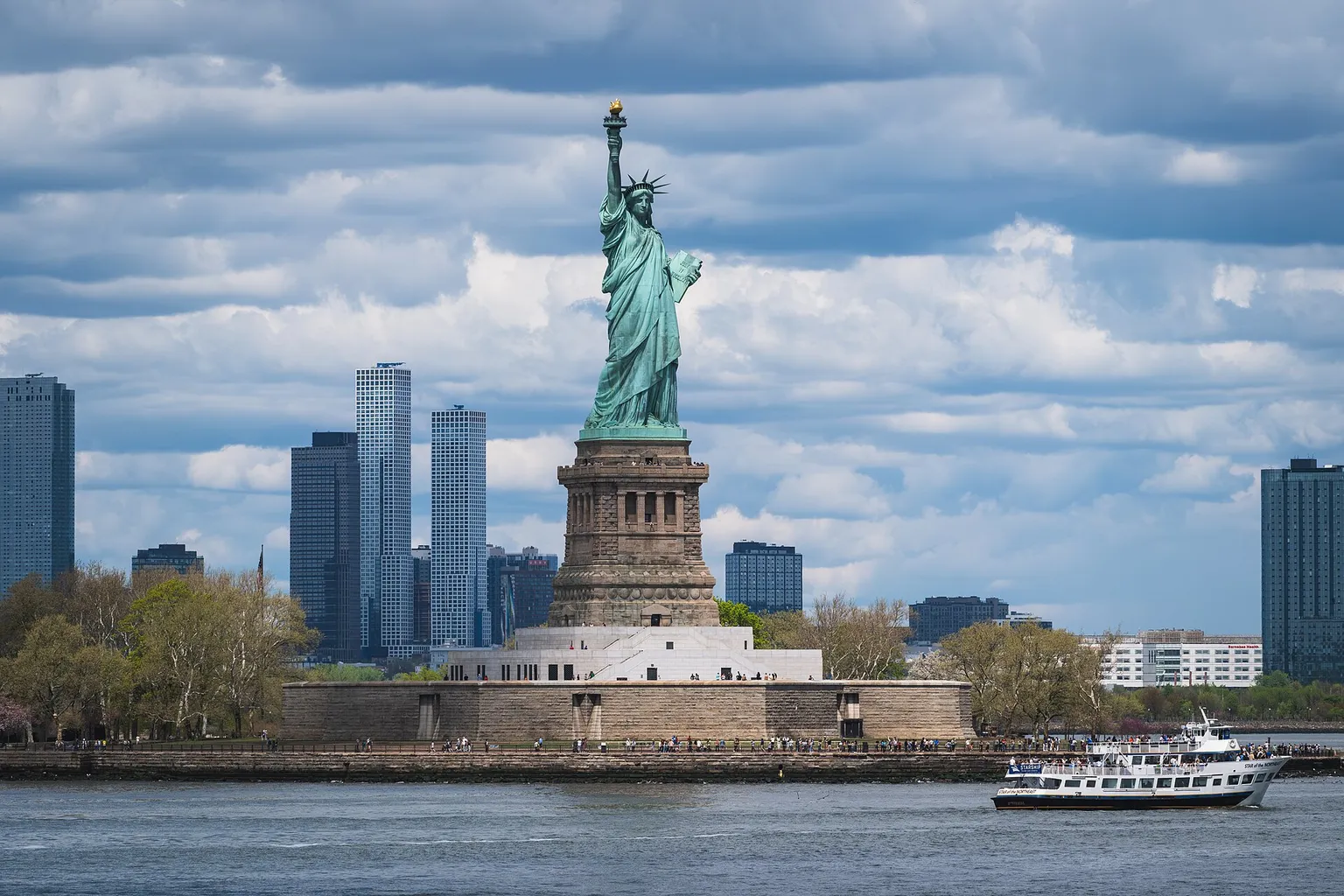
In practice, the booking decision affects almost every creative choice that follows — which spaces your team can access, how much equipment you can carry, whether you need a permit, and whether your carefully planned visual narrative will survive the crowds.
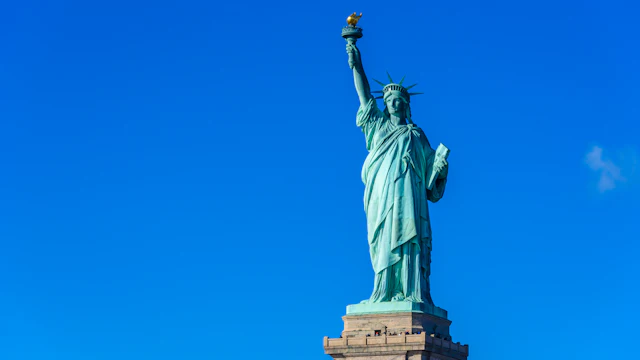 New York
Tickets and prices
Statue of Liberty
Official entry ticket with audio guide
fromUSD32.51
Book onlineCombo ticket · 2-hour sunset cruise
fromUSD45.28
Book onlineCombo ticket · Ferry cruise with private guide
fromUSD275.15
Book onlineOfficial ticket · Audio tour
The first point is the one that saves creators the most confusion: Statue City Cruises is the only authorized ferry operator providing direct access to Liberty Island and Ellis Island. Other boats may offer views from the water, but they do not replace ferry tickets when your production needs to step onto the islands.
If you are trying to book tickets for the Statue of Liberty for a branded hotel film, destination campaign, travel series, or social content package, the best route is not simply to choose the most impressive ticket. It is to align the ticket tier with the story you are filming — and then make sure the production itself fits National Park Service rules.
The access question comes before the camera question
Many Statue of Liberty shoots begin with a visual idea rather than an access plan. That is understandable. The monument has a powerful sense of place, and the ferry approach gives you an immediate opening sequence: Manhattan receding behind the vessel, the statue growing in scale, visitors gathering along the railings as the island comes into view.
But the ferry is not merely transportation. It is part of the location.
Photography and video recording on Statue City Cruises vessels do not require a filming permit when the activity does not interfere with vessel operations, crew responsibilities, or fellow passengers. That gives small teams a useful amount of creative flexibility. You can capture the crossing, arrival, atmosphere, and passenger experience without treating the ferry as a private studio.
The boundaries are practical rather than mysterious:
- Your camera operation must not obstruct crew duties or safety procedures.
- Equipment cannot take over passenger areas or create a disturbance.
- The shoot remains within the ordinary public experience rather than becoming an exclusive production.
- The ferry journey should be planned around the fact that you are sharing the space with other visitors.
This is where a little restraint improves the finished film. A compact camera, a few lenses, a small microphone setup, and a deliberate shot list will usually serve the guest journey better than a heavy production footprint. The ferry already supplies movement, texture, changing light, and the visual relationship between the city and the monument. Your job is to notice those elements without turning the crossing into a technical operation.
The strongest Statue of Liberty content usually comes from aligning the access plan with the visual story — not from bringing every piece of equipment available.
For hospitality brands, that distinction matters. A hotel does not need a generic landmark montage. It needs a sense of arrival, a credible connection to New York, and a visual narrative that helps a future guest understand what the destination feels like. The ferry crossing can do that work beautifully when it is filmed as part of the experience rather than treated as empty travel time.
Statue of Liberty ticket options: what each tier actually gives you
Statue City Cruises offers three primary ticket tiers: General Admission, Pedestal Tickets, and Crown Tickets. They are not interchangeable, and the differences matter considerably when you are building a production schedule.
General Admission provides access to Liberty Island and Ellis Island, including their respective museums. It does not include entry inside the pedestal or access to the crown. For many destination films, this is enough. The island grounds provide exterior perspectives, paths, waterfront angles, and the broader context around the monument — often the most useful material for a brand film.
Pedestal Tickets add access up to the pedestal observation balcony. This changes the visual language of the shoot. You are no longer working only at ground level; you can introduce elevation, architectural detail, and a stronger relationship between the statue's structure and the surrounding harbor. The access is more constrained, however, particularly in high-traffic areas. A pedestal ticket should never be treated as permission to stage an unrestricted commercial shoot.
Crown Tickets provide access to the crown via 162 steps, with no elevator access. That is a very different experience from visiting the island or the pedestal. It requires physical preparation, additional time, and a production approach built around the limitations of the space. The crown is not a location where a crew can casually spread out, reset repeatedly, or carry a substantial lighting package.
Here is the practical comparison:
| Ticket option | Visitor access | Creative value for a shoot | Production considerations |
|---|---|---|---|
| General Admission | Liberty Island and Ellis Island, including the respective museums | Broad flexibility for exterior storytelling, arrival sequences, waterfront context, and destination atmosphere | Does not include the pedestal or crown; permit-free filming must remain in allowed public areas and outside restricted high-traffic spaces |
| Pedestal Ticket | Access up to the pedestal observation balcony | Adds elevation, architectural texture, and more distinctive perspectives of the harbor and monument | A ticket allows visitor entry, not unrestricted filming; the pedestal and surrounding steps must be avoided for filming without a special permit |
| Crown Ticket | Access to the crown by climbing 162 steps; no elevator | Offers a rare visitor perspective and a highly specific sense of arrival | Physically demanding, space-restricted, and not an appropriate setting for non-permitted filming or expansive equipment setups |
The best way to book Statue of Liberty tickets depends on what your edit needs to prove.
If the film is about a hotel's proximity to New York landmarks, General Admission may give you more useful material than a crown visit. You can show the complete guest journey — departure, ferry, island, waterfront context, and return — without allowing one ambitious access point to dominate the schedule.
If the creative concept depends on the monument's interior architecture or a heightened, intimate perspective, the pedestal or crown may be relevant for the talent's visitor experience. But those options should be chosen because they serve the narrative, not because the higher tier sounds more valuable.
General Admission: the most adaptable choice
For small hospitality teams, General Admission is often the most workable foundation. The island itself offers multiple layers of visual information:
- The monument in relation to the harbor and Manhattan skyline.
- Visitors moving through the grounds, creating a sense of scale.
- Architectural details that support cutaways and transitions.
- The ferry arrival and departure moments that give the film a natural beginning and ending.
- Ellis Island material that can broaden a destination story beyond a single landmark.
One important distinction sits inside this otherwise flexible option: admission to a museum does not automatically authorize filming inside it. General Admission may take visitors into the Liberty Island Museum and the Ellis Island National Museum of Immigration, but permit-free filming must avoid both museums. The same rule applies to the surrounding steps and to the pedestal and crown areas. The ticket determines where the visitor may go; it does not turn every included visitor space into an available filming location.
That distinction is particularly useful when building a shot list. Mark the museums, pedestal, crown route, and surrounding steps as visitor-access locations rather than assuming they are part of the permit-free production footprint. If those areas are essential to the concept, resolve the permit question before committing the story to them.
General Admission is also useful when the final content needs to work across several formats. A long-form destination film, a hotel landing page, vertical social edits, and short paid placements all need different visual crops and pacing. Exterior coverage gives you more options to reframe the material without relying on a single interior viewpoint.
The limitation is equally clear: General Admission does not give you access inside the pedestal or crown. If those spaces are essential to the concept, selecting the basic ticket and hoping to improvise on the day will not solve the problem.
Pedestal access: more perspective, less room for production
The pedestal can add a valuable change in rhythm for a visitor-focused story. Ground-level images establish scale; an elevated view introduces context. You can see how the monument sits within the harbor rather than presenting it as an isolated icon.
That perspective is especially useful for a visual narrative built around place. New York is not only the statue. It is water, movement, dense architecture, shifting weather, ferries, bridges, and the relationship between historic landmarks and the modern city. The pedestal can help express that alignment.
The trade-off is crowd density and limited operational freedom. The pedestal and surrounding steps are specifically among the high-traffic areas that a filming group must avoid without a special permit. This is not a distinction between large cameras and small cameras. A handheld camera does not make filming in the pedestal area permissible under the permit-free rules. A small camera can be unobtrusive on the ferry or in an allowed public exterior area, but it does not create an exception for the pedestal, its surrounding steps, or other restricted spaces.
If the pedestal is important to the finished piece, treat it as a possible visitor experience for the presenter or talent, not as an assumed filming zone. The team may be able to capture the surrounding exterior from an allowed location, while the presenter visits the pedestal without the camera crew. Alternatively, the production can seek the appropriate special use or filming permit before planning coverage there.
Crown access: a visitor experience, not a conventional set
Crown Tickets are often the most romantic choice on paper and the most demanding in practice. The climb involves 162 steps and there is no elevator access. That affects talent selection, wardrobe, pacing, equipment, and the amount of material you can realistically capture.
A crown sequence can be compelling when the climb itself forms part of the story. It communicates effort and anticipation, and the restricted route gives the experience a clear progression. For a hospitality brand, that may be valuable if the content is designed to help guests understand the landmark rather than simply admire it from a distance.
It is much less suitable for a production that requires a full camera package, tripods or substantial support systems, multiple lighting fixtures, repeated takes in a confined visitor route, a larger directing, styling, or client team, or exclusive control over the environment.
The crown is also not an area where permit-free filming can be made acceptable simply by reducing the camera to a handheld device. Without the relevant special permission, the production must avoid filming in the crown area, just as it must avoid the pedestal, both museums, and the surrounding steps. A Crown Ticket lets an individual visitor enter the crown; it does not grant the production permission to record there.
Crown access should therefore be planned as a tightly contained visitor experience unless a permit has been arranged. Think about the climb, the physical demands, the time spent moving through the route, and the possibility that the most useful footage will come from the approach and aftermath rather than from inside the crown itself. The value may be in showing what the guest undertakes to reach the view, not in trying to turn the route into a conventional set.
How filming rules affect the booking decision
A ticket grants visitor access. It does not automatically grant commercial filming permission.
For filming on Liberty Island and Ellis Island, a permit is generally not required when all of the following conditions are met:
- The group includes no more than eight people.
- The equipment is handheld, with monopods and handheld lighting permitted.
- The activity takes place during regular public hours.
- The filming occurs in permitted public areas.
- The team does not require exclusive access.
- The production does not disturb visitors or park resources.
- The team avoids the pedestal and crown areas, both museums, and the surrounding steps.
That final point is essential. These locations are not available for permit-free filming merely because the camera is small, handheld, or operated by a group within the eight-person limit. The restriction is about the area as well as the equipment. A qualifying crew must plan its non-permitted coverage around those spaces and should not film there, even if the activity appears unobtrusive.
The definition is generous enough for many creator-led productions, hotel social campaigns, editorial travel pieces, and compact brand shoots. It is not broad enough to cover every production that happens to have a small headcount.
The number of people is only one part of the calculation. A group of six with a substantial lighting rig may create more operational impact than a group of eight carrying small handheld cameras. A group of five that blocks a staircase, directs visitors, or repeatedly resets in a high-traffic area may still be operating outside the spirit of the exemption. And a small group with handheld cameras still cannot use that exemption to film inside the pedestal or crown, in either museum, or on the surrounding steps.
This is why I recommend separating the visitor footprint from the creative ambition at the planning stage. You can have a polished, cinematic result with a small footprint — but only if the concept is designed around movement, natural light, available context, and precise coverage.
For a hotel team, the before-and-after shift often looks like this:
Before: the shot list includes multiple lenses, a tripod, large LED panels, several people behind camera, directed guest interactions, and a series of repeated takes around the pedestal.
After: the same narrative is reduced to a compact sequence — ferry approach, arrival, walking coverage in permitted exterior areas, architectural details, natural interactions, and one carefully selected skyline perspective. The story becomes less about controlling the location and more about showing the guest how the experience unfolds.
That second approach is not a compromise in the creative sense. It is usually closer to the truth of the destination, which makes the content more credible.
When a Special Use Permit becomes necessary
A Special Use Permit or Filming Permit should be part of the plan when the production exceeds the conditions for permit-free filming. That includes situations where the group is larger than eight people, the equipment goes beyond handheld gear and permitted monopods, the team needs exclusive access, or the activity would create a meaningful operational impact.
It is also necessary to seek authorization when the story requires filming in the pedestal or crown areas, either museum, or the surrounding steps. Those spaces should not be treated as optional exceptions for a small crew. If the camera team needs to enter them as part of the production, the permit question must be settled in advance.
The National Park Service permit coordinator can be contacted at (646) 356-2107 for filming-permit questions and application guidance.
Permit requirements are especially relevant for productions involving larger crews or client teams — once the headcount exceeds eight, the straightforward small-group exemption no longer applies. This includes crew, talent, clients, stylists, producers, and other participants who are part of the filming activity. Heavy or fixed equipment such as full tripods, larger lighting systems, extensive support gear, and other items beyond the permitted handheld approach may require authorization; a compact cinema camera does not automatically make the entire setup permit-free.
Exclusive or controlled access is another trigger. If the production needs an area held for the team, a section cleared of visitors, or a controlled environment for repeated takes, it is no longer simply documenting the public experience. The pedestal, crown areas, Liberty Island Museum, Ellis Island National Museum of Immigration, and surrounding steps require particular care. Without a special permit, the team must not film in those areas, whether the camera is handheld or supported. A branded campaign with staging, direction, production assistants, wardrobe changes, or a formal lighting plan may also need a more careful review even if the visible crew appears small.
The permit question should be resolved before tickets are booked, not after the team arrives in New York. Your ticket reservation controls visitor entry; the permit process addresses filming activity. They solve different problems.
A useful production decision is to choose between two clearly separate models:
1. Permit-free visitor coverage: a small group, handheld equipment, no exclusive control, regular public hours, no disruption, and a shot list limited to allowed areas.
2. Authorized production coverage: a larger or more controlled operation, or a concept that specifically requires the pedestal, crown, museums, surrounding steps, fixed equipment, or managed access.
The uncomfortable middle ground is assuming that a permit-free visitor shoot can quietly expand once the team is on site. That is where schedules break down. A second camera appears, a tripod becomes necessary, talent needs several takes, or the director decides that the museum entrance should become the next scene. None of those changes is automatically covered by the original ferry or attraction ticket.
At the same time, a permit does not erase the realities of the location. You still need to account for visitor movement, ferry timing, security procedures, weather, restricted spaces, and the physical effort involved in reaching certain areas. Authorization may make a production lawful and organized, but it does not turn Liberty Island into a private soundstage.
A permit gives you permission to operate within defined conditions; it does not give you ownership of the visitor experience.
Equipment: what supports the story and what creates friction
The most useful equipment decision for a Statue of Liberty shoot is often the one that removes something from the kit list.
Handheld equipment is permitted for qualifying small-group filming, and monopods and handheld lighting are also allowed within the stated conditions. That gives creators room to work with a professional visual standard without arriving with a full commercial rig.
A workable kit might include one primary camera body, a versatile zoom or two small lenses, lightweight audio equipment for controlled interviews or presenter moments, a monopod where appropriate, compact handheld lighting only when it can be used without disturbing visitors, extra batteries and storage media, weather protection for camera and sound, and a simple shot list organized by location and light. That is a complete, professional setup — not a stripped-down compromise.
A wide lens can establish the island and skyline, a normal focal length can follow a walk or capture a presenter without forcing the visitor flow to pause, and a monopod adds stability for longer takes without turning the crew into an obstacle. A small on-camera microphone may be useful for atmosphere, but important dialogue is often easier to control in a quieter setting before or after the island visit. Wind, ferry engines, crowd noise, and open water can overwhelm otherwise clean location sound.
The equipment rules should be understood as part of the creative brief. If the concept depends on a tripod locked at one point, a large soft light, a full audio team, or a camera movement system, that is not a minor logistical preference. It changes the permit position and may change which spaces can be used.
The same applies to support equipment that is easy to underestimate. A single stand, case, monitor, or rolling bag can occupy more practical space than the camera itself. In a crowded ferry queue or narrow visitor route, the total footprint is what other people experience. Pack for the route you will actually walk, not for an abstract studio version of the shoot.
A compact kit also makes it easier to respond to changing conditions. The strongest exterior angle may be on the opposite side of the island from the one listed in the original schedule. Weather may flatten the skyline or produce better reflected light along the waterfront. A team carrying only what it can move quickly has more freedom to adapt without creating a production problem.
Plan for weather, batteries, and timing
The harbor environment is not forgiving to an unprepared camera package. Wind can affect dialogue, stabilization, and handheld lighting. Bright sun can make an LCD difficult to read, while changing cloud cover can alter the visual continuity between shots. Bring protection for the equipment and build the visual plan around conditions that cannot be controlled.
Battery management deserves more attention than it usually receives. Ferry travel, security procedures, waiting periods, and repeated movement between locations can consume time without producing footage. Keep the kit simple enough that spare batteries and storage media are easy to access, and avoid assuming that every pause will provide a convenient charging opportunity.
Time should be allocated for the visitor experience rather than calculated only from the length of the final edit. A twenty-second social video may require arrival coverage, several attempts at a walking shot, natural sound, establishing frames, safety pauses, and enough flexibility to work around other visitors. A ticket schedule that looks sufficient on paper can become restrictive once the team is moving through a public attraction.
For crown access, add the physical cost of the route before promising a particular sequence. The 162-step climb, the lack of elevator access, limited space, and visitor pace all affect what talent and camera operator can realistically do. If the shot requires energy, a clean performance, and a technically precise take at the end of the climb, the creative idea may be asking the location to provide conditions it cannot provide.
Choosing the booking route for a hospitality production
The phrase “best way to book Statue of Liberty tickets” can suggest a simple comparison between prices or views. For a video team, the better question is operational: what does the ticket allow the audience or presenter to experience, and what can the camera legally and practically record?
Book through Statue City Cruises when the production needs direct access to Liberty Island or Ellis Island. Then separate the booking decision into three questions:
- Which ticket gives the talent the experience required by the story?
- Which areas can the camera team film under the permit-free conditions?
- Does the equipment, headcount, or degree of control require a special permit?
That separation prevents one of the most common planning errors: choosing Crown Tickets because the crown sounds like the most valuable visual asset, then discovering that the space is physically demanding, operationally restrictive, and unavailable for the planned non-permitted coverage.
For many hotel and destination campaigns, the strongest structure is more modest:
- Use the ferry for the opening movement and the relationship between Manhattan and the harbor.
- Film the island exterior in allowed public areas, keeping the group compact.
- Build scale with walking shots, waterfront compositions, architectural details, and natural visitor activity.
- Treat pedestal, crown, museum, and surrounding-step access as separate permit questions rather than automatic filming locations.
- Let the presenter experience restricted areas if appropriate, without assuming the camera crew can follow and record there.
- Capture enough clean atmosphere and transition material to support several edits.
This approach also protects the brand. Hospitality content should make the destination feel attainable and accurately represented. If the final video implies that guests can move freely through a quiet museum, occupy a pedestal staircase, or stage a controlled crown sequence, it may look impressive while setting up the wrong expectation. A credible film shows the appeal of the place without pretending that public access means unrestricted production access.
The booking decision is part of the edit
A Statue of Liberty production works best when the access plan is visible in the storytelling but invisible as a problem.
General Admission is often enough for a complete destination narrative, especially when the campaign is about arrival, location, atmosphere, and the relationship between a hotel and New York's landmark district. Pedestal and Crown Tickets can add value to the visitor experience, but they should not be mistaken for filming permissions. They introduce access for the ticket holder; they do not remove the restrictions on filming groups.
For permit-free work, keep the team within the allowed footprint: no more than eight people, handheld equipment with permitted monopods and handheld lighting, regular public hours, no exclusive access, no disruption, and no filming in the pedestal or crown areas, either museum, or the surrounding steps. If the concept requires any of those restricted locations or a more substantial setup, plan for a Special Use Permit before the shoot.
The most reliable Statue of Liberty content is not necessarily the content with the highest ticket tier. It is the content whose access, equipment, talent, and edit all agree with one another. Book the ferry tickets that serve the story, build the shot list around the rules, and leave enough room for the public experience to remain public. That is how a landmark shoot becomes useful destination marketing rather than an ambitious schedule that the location was never going to support.
Key facts
Built: 1886
Architect: Eugène Viollet-le-Duc
Height: 46 m
Heritage status: New York City Landmark
Official website: nps.gov
FAQ
What is the only ferry operator that provides direct access to Liberty Island and Ellis Island?
What does General Admission include at the Statue of Liberty?
Can I film at the Statue of Liberty without a permit?
Can I film inside the pedestal or crown with a small handheld camera?
How many steps are there to the Statue of Liberty crown?
Photo: Christian David / CC BY-SA 4.0 — Wikimedia Commons