Sustainable destination video: three production paths
A boutique resort in the Azores sent me their draft campaign reel last spring — lush drone work over the caldera, a hand-modelled breakfast spread, a couple walking hand-in-hand toward a hidden cove.
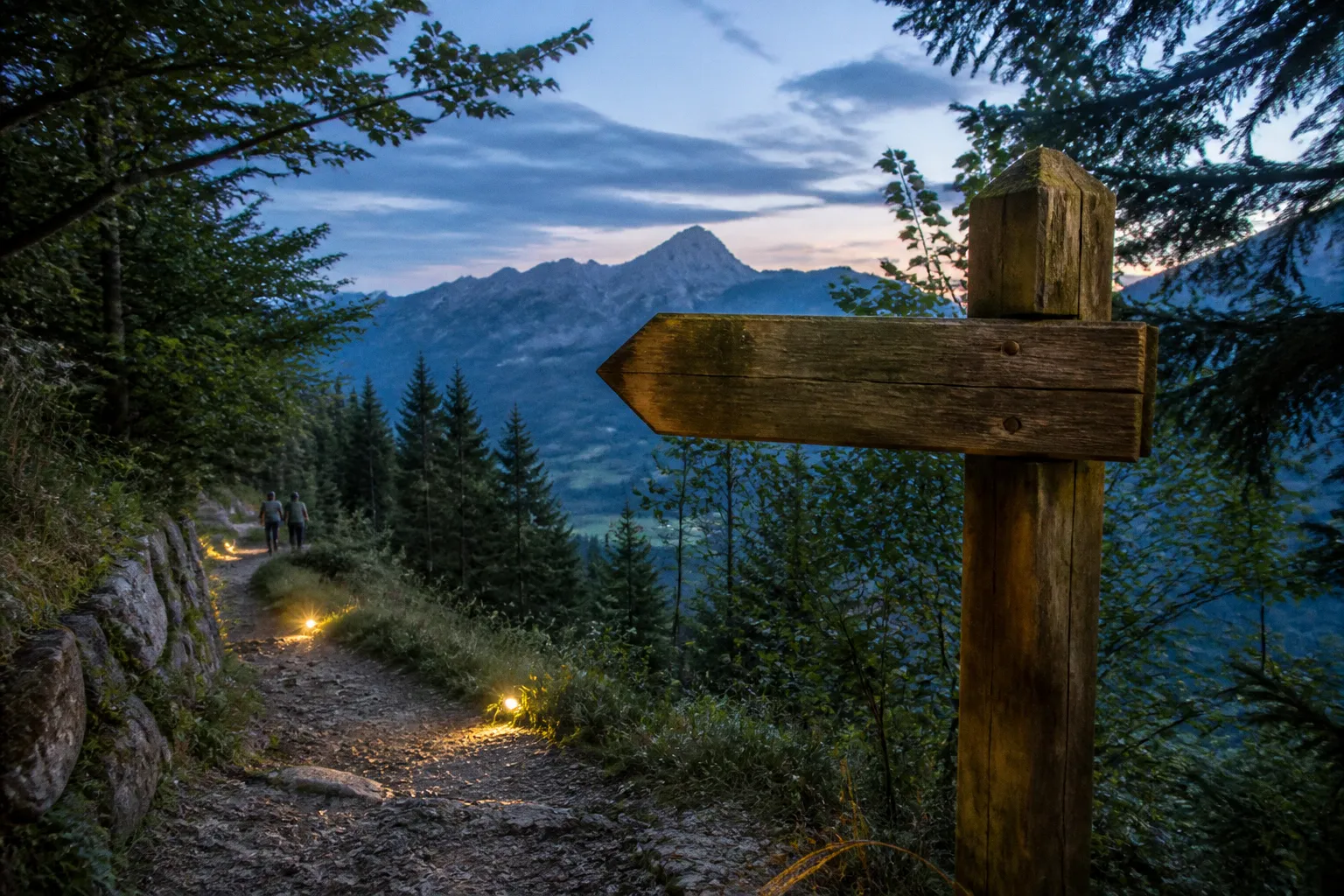
Beautiful, beautifully shot, and almost entirely flown in from Lisbon. The owner had told me she wanted to "go greener" this year. I had to be the one to point out that the carbon cost of getting the crew, the gear, and the talent to those cliffs had already exceeded the entire electricity budget of the property for the next decade. This is the tension I keep meeting across my consulting work: the desire to tell a destination story with cinematic weight — that texture of place, that sense of arrival — running headlong into the reality that traditional production is one of the most carbon-intensive things a hospitality brand can actually do.
The good news is that "sustainable destination video" is no longer a contradiction. There are now three genuinely viable production paths, and the choice between them shapes everything from your timeline to your visual narrative to the alignment between what you promise and what you actually do. Let me walk you through them — the way I walk my clients through them — with the honest trade-offs.
The Decentralized Model: Working With Local Creative Talent
The first path — and the one I recommend most often for destinations that have real, layered local context worth capturing — is to decentralize the production entirely. Instead of flying in a London or New York crew, you hire local cinematographers, local stylists, local drone pilots. The footage looks the same on screen. The carbon math is unrecognisable.
In one project with a small lodge collective in Slovenia, we replaced what would have been a five-person flown-in crew with a three-person local team supplemented by a local fixer. The final cut was indistinguishable from the original treatment — same lensing, same colour, same cinematic language. What changed was the production footprint: no transatlantic flights, no freight shipments of Pelican cases, no hotel rooms booked for two weeks. The savings on logistics alone ran into the mid-four-figure range, which we redirected into a longer post-production schedule and an additional vignette the budget had previously ruled out.
This path works because destination marketing lives or dies on authenticity — on the texture of light at a particular hour, on the cadence of the local market, on whether the bark of a tree or the patina of a wall reads right on screen. Local crews know that instinctively. They also know the permitting landscape, the seasonal quirks, and which café serves the right espresso for the morning arrival shot. The risk is consistency: if you hire loosely, the visual quality can drift between shoots. The mitigation is rigorous — and I mean genuinely rigorous — pre-production, with shared reference boards, locked shot lists, and a single creative director who signs off on every frame regardless of who shot it.
A secondary benefit that often gets overlooked: by hiring locally, you are — quietly, organically — investing in the creative ecosystem of the place you are trying to sell. That alignment between marketing message and community impact shows up in the way local partners talk about your campaign. It is not a line item. It is a long-tail asset.
Virtual Production and Asset-Based Workflows
The second path is the one with the most dramatic carbon profile — and, I want to be honest, the one most prone to overclaiming. Virtual production, asset-based editing, and the rising availability of high-quality stock and user-generated content can cut the emissions of a shoot day by up to 75% compared to a traditional production. That figure comes from like-for-like calculations run by Adgreen, and it is real. What it does not mean is that you can build an entire destination campaign by cutting and pasting stock footage and calling it sustainable.
What it does mean is this: the parts of your campaign that are atmospheric — establishing shots of a coastline, time-lapses of weather moving over a region, crowd shots of a market — can be sourced or rendered rather than flown to. The parts that need to be specific — the host greeting you at the door, the dish that arrives at the table, the actual light in the actual room — still require a physical capture. The strategic move is to be ruthlessly clear about which is which.
A destination reel built entirely from stock and UGC will feel generic. A destination reel that uses virtual and asset-based tools to handle the atmospheric layer — and reserves physical shoots for the specific, sensory moments of arrival — feels rooted and light at once.
I have used this hybrid approach with a regional tourism board that needed to refresh a hero film on a tight seasonal window. We shot one two-day on-location session for the human and architectural specifics — host, room, signature experience — and built everything else in post: skies, establishing drone work, transitions between vignettes. The total shoot footprint was a fraction of the original treatment, and the visual narrative held. The honest caveat is that this approach rewards brands with strong art direction and a clear creative reference. Without that, asset-based work drifts toward the generic very quickly — and generic is the death of destination branding.
Eco-Certified Physical Shoots: When You Need to Be There
Sometimes the destination story cannot be told any other way. A heritage property, a national park campaign, a culinary destination whose entire pitch is the specificity of its source — these demand physical presence with full cinematic production weight. The third path, then, is not to skip the shoot but to run it through an eco-certified framework from the first planning meeting to the final wrap.
The leading international frameworks — BAFTA albert, AdGreen, and Green the Bid — were built primarily for scripted and commercial production, but their tools translate cleanly to destination work. They give you a carbon calculator that runs alongside the production budget, a checklist of practical measures (LED lighting over HMI where possible, hybrid generators over diesel, shared transport between units, catering sourced locally and seasonally), and a certification trail you can show your partners and your guests. The Tourism Authority of Thailand did exactly this in 2020 with GLP Films, producing what was then the country's first sustainable tourism video campaign — and the framework gave the work a credibility that the visuals alone could not have carried.
| Path | Best For | Carbon Profile | Typical Cost Adjustment | Key Risk |
|---|---|---|---|---|
| Decentralised local crews | Destinations with layered local context and authentic texture | Lowest — eliminates flight and freight emissions | Often saves on logistics, redirects budget to post | Visual consistency across shoots if teams are loosely briefed |
| Virtual / asset-based | Atmospheric layers, hybrid campaigns, tight seasonal windows | Up to 75% reduction per shoot day (Adgreen-verified) | Neutral to slightly lower; rendering and licensing costs apply | Drifting toward generic if creative direction is weak |
| Eco-certified physical | Heritage, culinary, or landscape stories that demand presence | Reduced vs. traditional; offsetting does not reach zero | 1%–3% on top of standard budget | Carbon math becomes a marketing claim rather than a planning tool |
The honest framing here matters. Eco-certified does not mean carbon-neutral. It means measured, reduced, and aligned with a published framework — which is a different and more defensible thing.
Budgeting for Sustainability: The 1%–3% Reality
The question I get on every call is some version of: "Sarah, how much more is this going to cost me?" The answer, supported by the production data we have seen across hospitality projects, is that incorporating sustainability measures into a commercial video production typically adds around 1% to 3% on top of the standard budget. For a mid-sized destination campaign, that is rarely the make-or-break figure hoteliers assume it is. It is the cost of the carbon calculator subscription, the local catering uplift, the hybrid generator hire, the certification fee. It is not the cost of rebuilding the production from scratch.
And — this is the part I wish more owners heard early — the right sustainability choices sometimes reduce cost. Local crews cut freight and per-diem. Shared transport cuts vehicle days. LED lighting cuts generator fuel and electrical setup time. The budget conversation goes much better when it is framed not as a green tax but as a production discipline that happens to lower emissions as a byproduct.
Sustainability in destination video is not a surcharge. It is a production discipline — and disciplined production almost always costs less than the alternative.
Measuring Impact: Beyond the Offset
This is the section where I push back hardest on my own industry. Carbon offsetting — the purchase of tree-planting credits or renewable energy certificates to compensate for emissions produced — has a real place in a sustainability strategy, but it is not the strategy. Chocolate Films, for example, has publicly offset roughly 37 tons of CO2 by calculating against approximately 148 trees per year. That is a defensible, transparent figure. It is also, by their own framing, a supplement to active reduction — not a substitute.
For destination marketers, the temptation is to buy the offset, mention it in the press release, and move on. That move is increasingly visible to the guest who is paying attention. The credible posture is to lead with reduction — the local crew, the virtual production, the certified shoot — and treat offsetting as the final step in a measured chain. Anything else reads as decoration.
What I tell my clients at the end of every sustainability conversation is the same thing: pick the path that matches the story you are actually trying to tell. A heritage villa campaign that needs the weight of physical cinematography should run an eco-certified shoot and say so plainly. A regional tourism board refreshing a hero film on a seasonal cadence should build a hybrid virtual-and-physical workflow and treat it as production discipline, not a marketing hook. A remote lodge whose entire pitch is community and craft should hire locally and let the supply chain do the alignment work for free.
The carbon math is real. The budget adjustment is small. The strategic payoff — alignment between the story you sell and the way you make the story — is the part that compounds.